
Volkswagen ID Polo vs Skoda Epiq Comparison: Two electric siblings, but which one is the best?
Design and dimensions: two philosophies, one goal
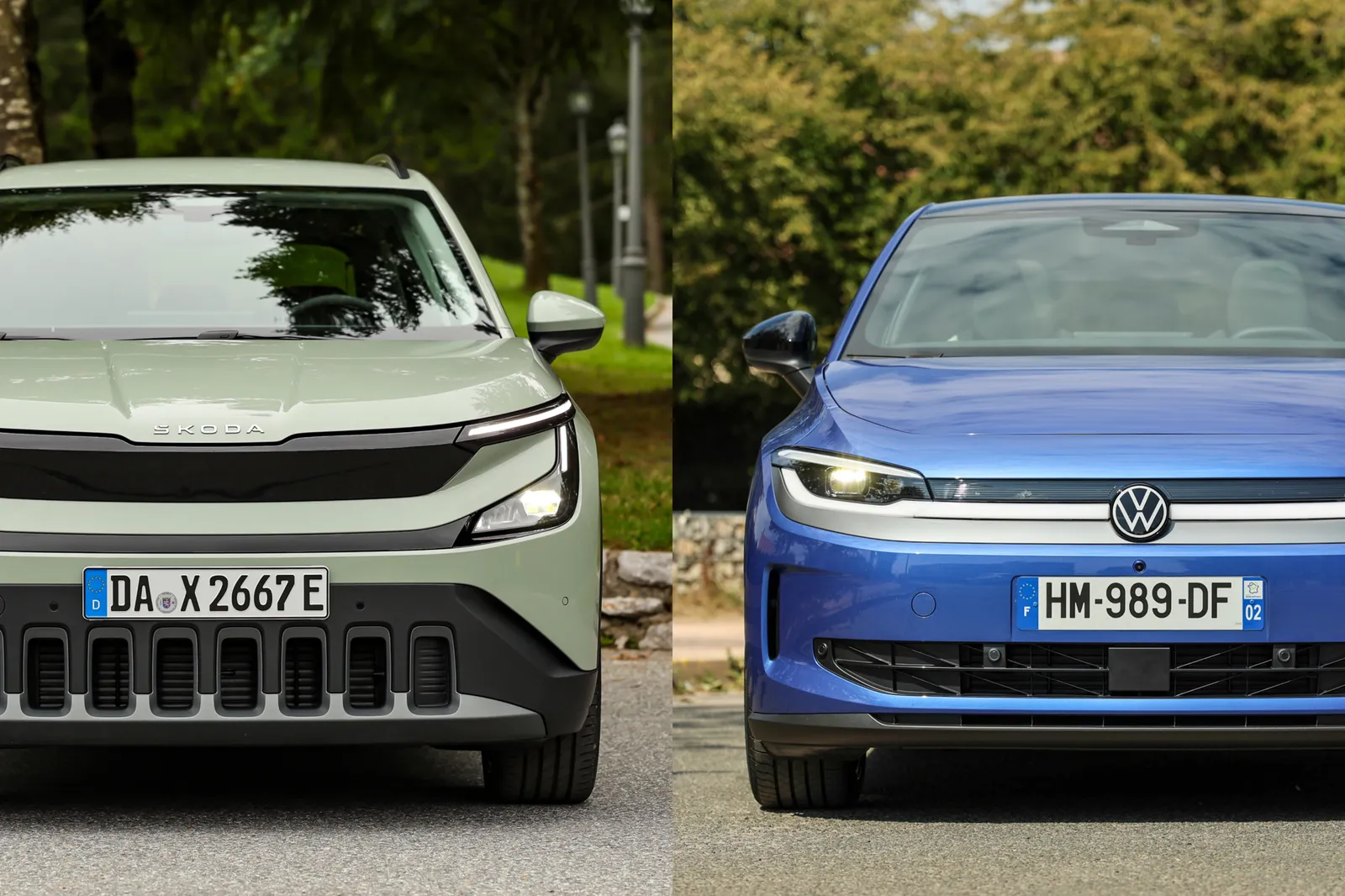
With the Volkswagen ID Polo, the German brand returns to a cleaner design language called Pure Positive. The lines are simple, the volumes subtly rounded, and the overall design maintains a sense of restraint. Its connection to the traditional Polo remains evident, despite a bulkier silhouette than expected. On the other hand, the Skoda Epiq adopts the brand’s Modern Solid design language. Its forms are more squared off, the body protections enhance its robust appearance, and its T-shaped headlights give it a distinct identity.
Two successful interpretations, blending urban chic with compact adventure SUV styling. While the ID Polo is more minimalist, the Epiq features some subtle touches such as side lettering and rugged-looking bumpers. The German model opts for a fully LED front end with a backlit logo, while the Czech version uses a more discreet “Tech Deck.”
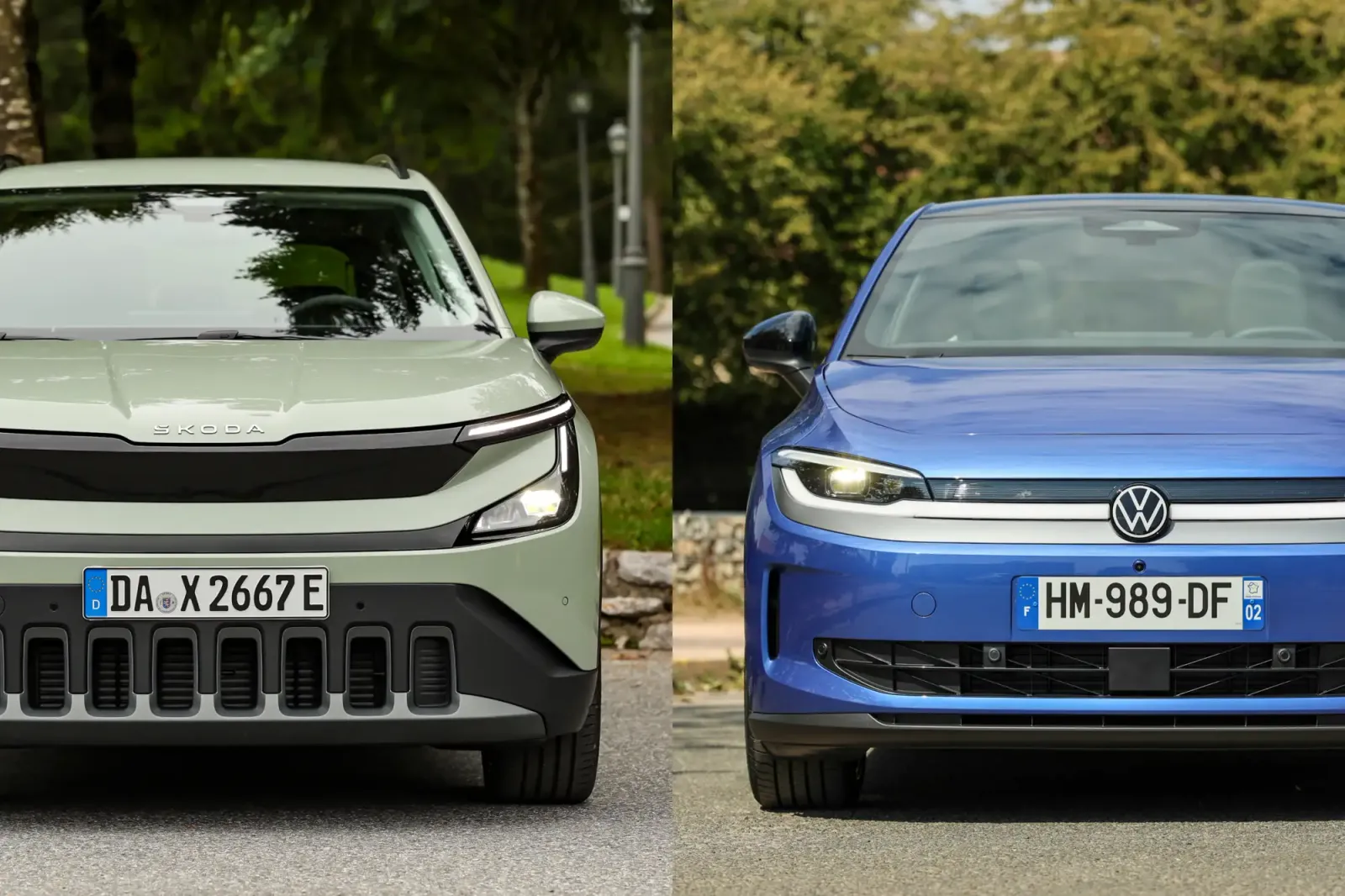
This difference is evident in their dimensions. The Volkswagen ID Polo is 4.05 meters long, 1.81 meters wide, and 1.53 meters tall. The Skoda Epiq, on the other hand, measures 4.17 meters in length, 1.80 meters in width, and 1.58 meters in height. However, both models share the same wheelbase of 2.60 meters. Despite their differing designs, the two vehicles remain similar for everyday use. The trunk capacity gives the Skoda model an advantage, with 475 liters compared to 435 liters in the German car. When the seats are folded down, the capacities rise to 1,345 liters and 1,240 liters respectively. The ID Polo still has a lower loading threshold, at 69 cm. Well, we’re being precise here, as the Epiq has a threshold of 70 cm.
Volkswagen ID Polo and Skoda Epiq: Exterior in Images
+13
Inside the cabin: German minimalism or the Simply Clever philosophy?
Aboard, both cars feature an ergonomic design that is very pleasant to use. There’s no intrusive touch interface: the climate controls remain easily accessible, the multifunctional steering wheels are well-equipped, and physical buttons are readily available. The Volkswagen ID Polo opts for a minimalist design with textile materials and solid construction. Its 10-inch digital dashboard is particularly easy to read, complemented by a 13-inch central screen. The Skoda Epiq offers a more refined and appealing interior, with some useful Simply Clever features such as umbrellas built into the door panels and 3D-printed accessories. Its central screen is also 13 inches, but its smaller 5.3-inch dashboard pales in comparison to that of its counterpart. This layout reminds us of the Opel Corsa GSE, among others.
The steering wheel of the Volkswagen ID Polo appears wider in the hand, especially due to its upper and lower contours. The circular steering wheel of the Skoda Epiq looks more classic and stylish. In terms of comfort, we preferred the seats of the German car, which provide better lateral support. The Skoda makes up for this with a higher driving position and better peripheral visibility, as the pillars of the ID Polo are more substantial. In the back, both models offer satisfactory space for their size, with a flat floor. The Czech model also pays attention to the small details, from clever storage solutions to cable routing in the console. Finally, its heated front seats and steering wheel are a nice addition in the Clever trim. Don’t forget the multimedia knob on the electric Polo, which is simple and efficient just as we like it.
Volkswagen ID Polo and Skoda Epiq: Interior - in images
+9
Driving and performance: excellent electric tuning on both vehicles
Mechanically, the two tested high-wheelbase versions share most of their components. Their APP290 engine (Axial Parallel Position, 290 Nm of torque) produces 211 horsepower, which is transmitted to the front wheels via the MEB+ platform. This setup is also found in the Cupra Raval. The Volkswagen ID Polo and its Czech counterpart achieve 0 to 100 km/h in 7.1 seconds. However, the Skoda Epiq focuses on a flexible, comfortable, and reassuring driving experience, with its higher seating position making urban driving easier.
In both cases, the power is more than sufficient for everyday use. The soft pedal response and gradual power delivery make driving particularly pleasant without compromising acceleration. However, the ID Polo still has an advantage in terms of quiet operation, offering a particularly quiet ambiance. On the road, both models deliver convincing handling performance.
The Volkswagen ID Polo appears more grounded, especially when accelerating through corners. Its lower body naturally limits movement, enhancing the sense of precision. The Skoda Epiq remains solid and efficient, without attempting to turn its SUV format into a sports car. Its suspension prioritizes versatility, which fits its purpose well, compared to the German car’s slightly firmer setup. Unfortunately, however, it produces significant wind noise at just 70 km/h. The standard roof rails are partly to blame for this, and they’re something one would gladly do without. This is especially notable since its larger sibling, the Skoda Peaq, omits such rails for aerodynamic reasons. In urban driving, the Epiq compensates with a turning radius of 10.68 meters, compared to 10.9 meters for the ID Polo!
Fuel consumption and range: which goes the farthest?
With their 52 kWh net NMC batteries, both cars offer very similar certified ranges. The Volkswagen ID Polo boasts up to 455 km WLTP, compared to 441 km for the Skoda Epiq 55. In real-world testing, the German model impressed us with an average of 13.2 kWh/100 km over more than 500 km. We recorded around 19 kWh/100 km at a constant speed of 130 km/h, but less than 10 kWh/100 km in urban conditions. The Czech model also performed excellently, achieving 13.8 kWh/100 km on a mixed 219 km route. Its long-term average was 15.8 kWh/100 km over 446 km under more demanding conditions.
In practice, the Volkswagen ID Polo can cover over 450 km in urban and suburban driving, but expect around 270 km on the highway. The Skoda Epiq can travel 350 to 400 km in mixed conditions, or even more when driving in urban areas. On the highway, its fuel consumption at 130 km/h is 18.5 kWh/100 km, with slightly higher figures on unlimited-speed roads. Note that this figure is not directly comparable to Volkswagen’s measurement at a constant 130 km/h. In both cases, these models exhibit remarkable fuel efficiency, along with a certain level of versatility. Of course, this is assuming one isn’t driving solely on the highway.
Charging: a tie on paper
For long trips, both cars can rely on their fast charging capability of up to 105 kW DC. Volkswagen and Skoda claim a charge from 10% to 80% in 24 minutes under optimal conditions. During our test, the Volkswagen ID Polo went from 15% to 61% in 21 minutes, absorbing 25.57 kWh of energy. However, the 150 kW charger was shared with another vehicle for part of the session. The Skoda Epiq promises similar performance, making comparisons easier. In either case, fast charging is sufficient for occasional trips, though a slightly higher maximum power would have been desirable. In this regard, the ID Polo and Epiq will always outperform a Jeep Avenger with 100 kW…!
+3
Whether at home or at a public AC charging station, both models support up to 11 kW. Thus, the Volkswagen ID Polo doesn’t have a significant advantage in this regard, despite its slightly higher WLTP range. The Skoda Epiq claims about 5 hours and 30 minutes for a full charge at 11 kW, with a similar duration for its counterpart. The Epiq can also be equipped with an optional V2L adapter to power electrical devices—a practical feature true to the Simply Clever philosophy. Finally, be aware of the standard equipment: a heat pump is not always included. Its cost must therefore be factored into your budget if you drive regularly in cold weather.
Price and Equipment: Pricing That Requires Close Inspection
The German city car starts at 24,995 € in the Trend trim, equipped with a 37 kWh LFP battery and an advertised range of 323 km. To get the larger 52 kWh battery, the price rises to at least 35,820 € in the Life trim. Our Volkswagen ID Polo Style Exclusive cost 40,870 € including optional wheels. On the other hand, the Skoda Epiq begins at 26,470 € with 116 hp and a 37 kWh battery. The 55 version with 211 hp starts at 32,070 € in the City trim, but climbs to 36,500 € for our top-tier Skoda Epiq 55 Clever trim. So while the starting prices are attractive, the most interesting versions quickly increase the cost. Naturally, there’s a significant difference between an electric Polo under 25,000 € and its higher-end version with a large battery costing over 40,000 €… it’s quite a shock.
Both manufacturers also differentiate their trims through various features. Volkswagen focuses on a clean design and ample instrumentation, while Skoda offers numerous practical accessories, particularly those printed in 3D. This aligns with its Simply Clever philosophy. However, some comfort features, such as the heat pump, remain optional depending on the configuration. Therefore, it’s necessary to compare prices with equivalent equipment rather than relying solely on the base price. Despite this, the Volkswagen ID Polo and Skoda Epiq have generated significant commercial interest, with their order books already fully booked. With dozens of thousands of orders per model, the German automaker seems to have found the right formula. The choice will therefore depend mainly on each person’s priorities: philosophy, simplicity, driving behavior and seating position, or cargo space.
Volkswagen ID Polo or Skoda Epiq: which one to choose?
It’s difficult to distinguish between these two electric siblings, as their performance is very similar. The Volkswagen ID Polo will appeal to those looking for a quiet, minimalist car that is particularly pleasant to drive. Its more dynamic handling, large digital dashboard, and comfortable seats set it apart. The Skoda Epiq, on the other hand, is better suited for drivers who prioritize a high seating position, excellent visibility, and ample trunk space. Its warmer interior and practical features are also attractive.
Ultimately, these two models perfectly illustrate the complementarity of the group’s brands, and can thus appeal to the same buyer. The German city car focuses on efficiency and driving pleasure, while the Czech compact SUV emphasizes versatility and practicality. It remains to be seen whether price and equipment differences will tip the scale. And you, which one would you choose?