
How can one still be opposed to electric cars in 2026?
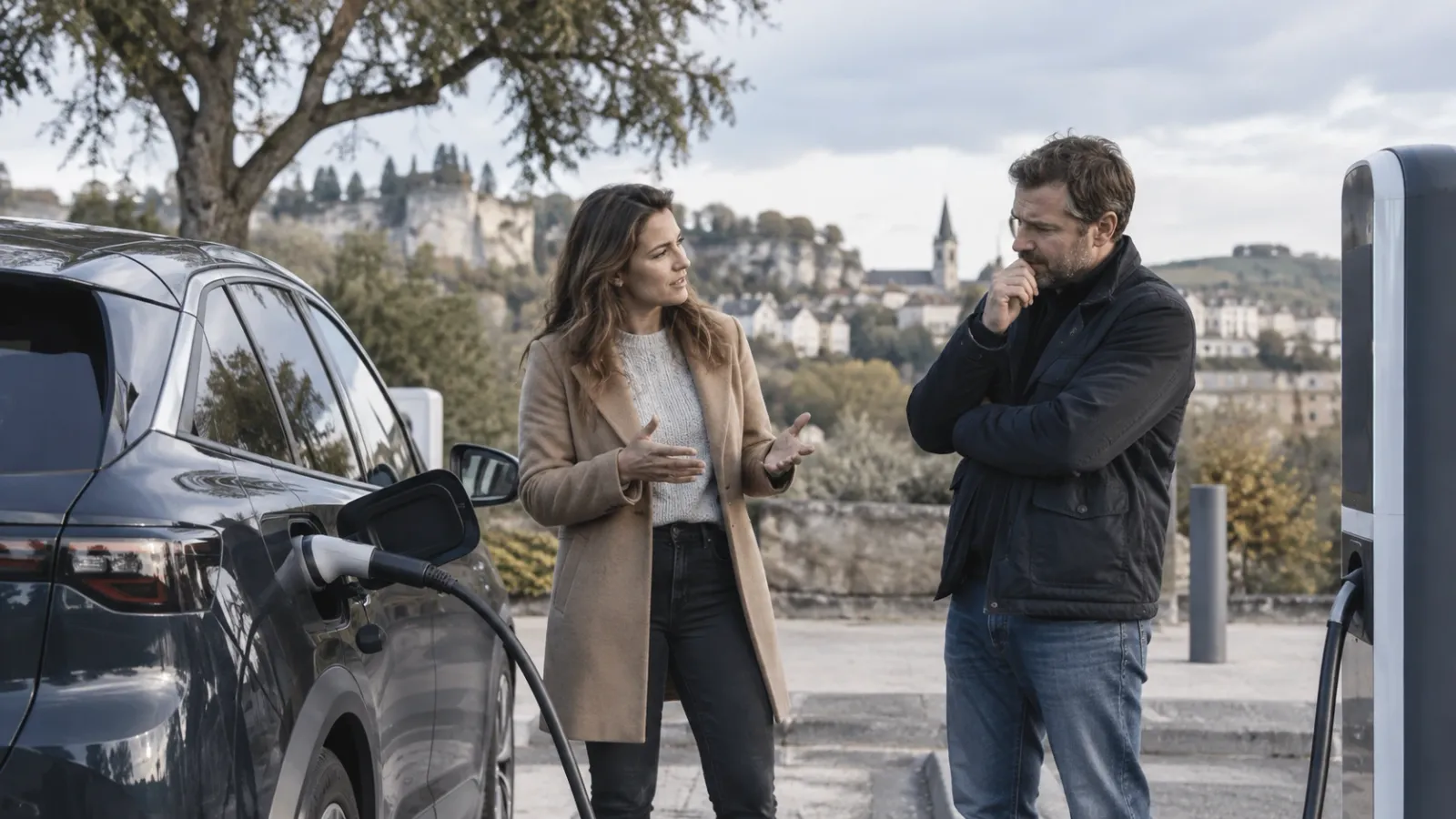
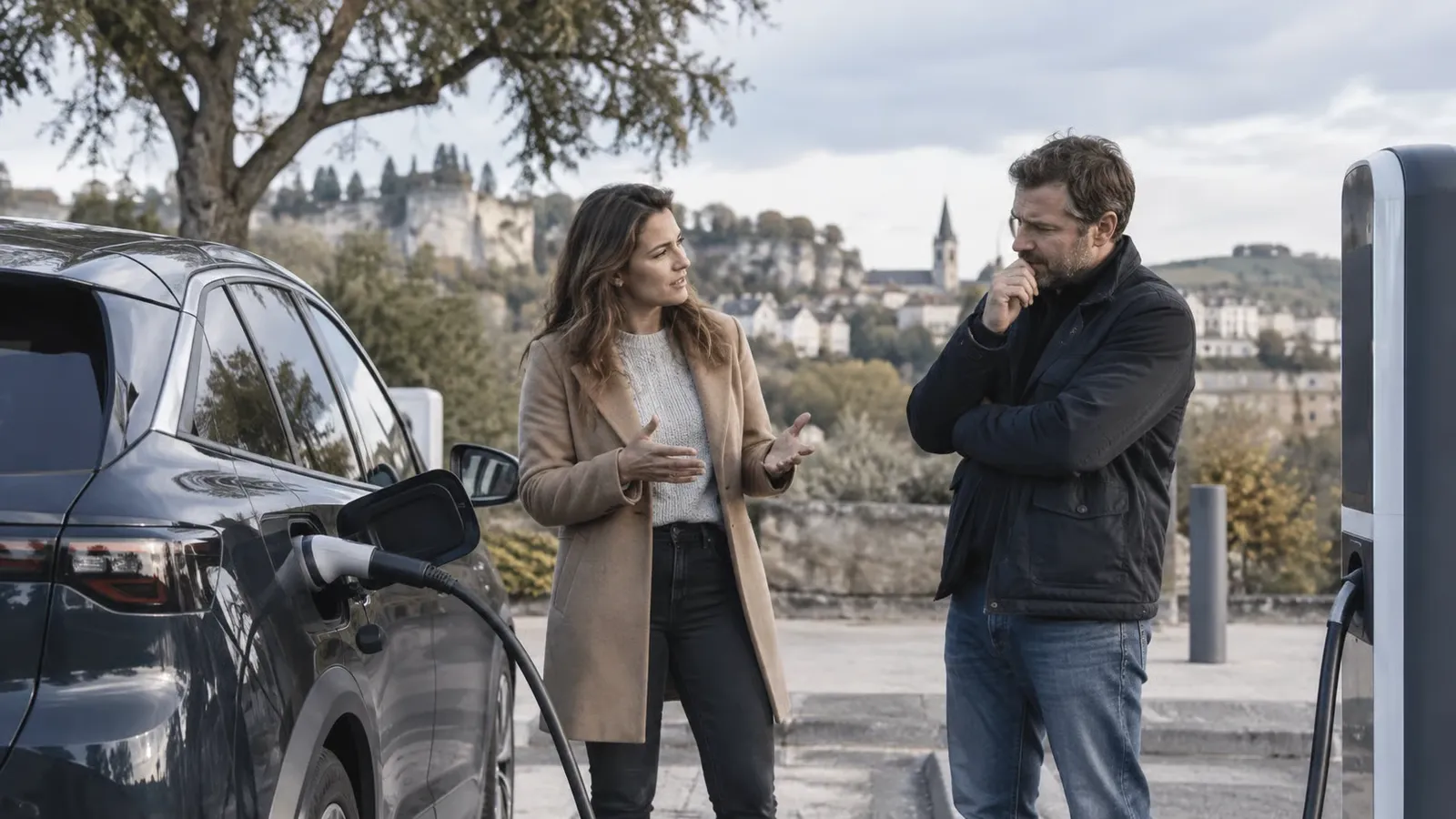
The hostility toward electric cars stems from a mix of valid and reasonable arguments as well as irrational rejection. Let’s try to see things more clearly.
It’s the start of a new school year, and this period is often conducive to change and “new resolutions.” When it comes to change, the sales figures for the electric car market over the past few months provide clear evidence. There has been a dizzying acceleration this summer, with almost 4 out of every 10 new cars sold in France being electric in August (I mean truly electric cars, not those with hybrid systems, which are not included in these figures).
A acceleration that leads many observers to say the massive shift toward electric vehicles is finally underway and should not experience significant slowdowns. This is further reinforced by studies showing that electric vehicles are much cheaper to operate than gasoline-powered ones, and that batteries last longer than expected. Although I am fairly optimistic, I will remain cautious and not overly enthusiastic, as we have already seen strange market reversals. This is especially true since some people point out that the favorable figures for electric vehicles are still due to temporary factors, such as the war in the Strait of Hormuz and government subsidies.
Are they wrong? Not really, but the near future will quickly show whether they were right.
That said, even though its ranks seem increasingly sparse, there is still a segment of the population that remains hostile to electric vehicles. Without listing yet another inventory of objections and fake news circulating against electric cars, and without judging or blaming anyone, let’s focus this time on the reasons—whether objective or completely absurd—that explain why anti-EV backlash still thrives in our societies (this isn’t unique to France).
In fact, this reflection stemmed from a comment by our boss Yoann on X: “I find it increasingly hard to understand how people can still buy anything other than an electric car, except in rare cases.”
The question is simple, but what seems obvious to many of our fellow citizens remains a complex and divisive issue for many others.
You’re probably familiar with this scenario. Someone explains that they drive an electric car, charge it at home, that everything is working well, and they don’t really see any reason to switch back to a gasoline car. Then the usual objections come up. But there’s one that’s fairly new, or at least has spread like wildfire in recent weeks — the idea that once everyone drives electric cars, the government will tax them.
The argument isn’t without merit, and, to be honest, we all know this threat looms over us (even though nothing has been decided yet), given the states’ eagerness to impose taxes and their inability to instead find ways to cut costs to avoid them. But this indirectly shows how much the debate around electric cars has changed. For a long time, some people told us they would never work, often citing the same arguments about range, charging times, battery lifespan and cost, or the electrical grid’s capacity to handle charging millions of cars.
Now, we start to hear that the problem will be precisely that there will be too many of them. This is already, in a way, a form of progress, but it doesn’t address why some people remain deeply hostile to electric cars. Not just skeptical or cautious (which is perfectly legitimate), nor simply convinced that diesel or gasoline suits their needs better, but truly hostile. Just hostile.
Resistance to change
This is probably the easiest reason to understand. Internal combustion engines have existed for over a century; we’ve all grown up with them, we know how they work, where to refuel, how long it takes, and roughly how far we can go.
Electric vehicles require changing certain habits: we no longer “refuel” in the same way, and charging often happens while the car is parked, during off-peak times. On long trips, it may be necessary to plan a break. One sometimes has to understand two or three new concepts, such as charging power or the charging curve.
For someone who has been using an electric vehicle for several years, all of this quickly becomes routine, but from an outside perspective, it might seem like something simple is being replaced with something complicated. It should be noted that some charging service providers have gone to great lengths to make something that should inherently be as simple, intuitive, and immediate as plugging in a phone or filling up with gasoline extremely confusing and opaque.
A resistance to change that is not unique to automobiles. We have seen it with mobile phones, the Internet, GPS, contactless payment, and numerous other innovations.
The difference may lie in the fact that cars relate to something very personal—our mobility, our independence, and for some, a certain idea of freedom. As such, reactions are inevitably more radical.
The problem is sometimes not even the electric car
The other dimension is more political, even cultural. For years, electric cars have been presented as the “environmental” car. As a result, they have become associated with environmental policies, low-emission zones, traffic restrictions, European standards, and the scheduled end to sales of new internal combustion engine vehicles.
From there, some members of the public viewed this push for transition as an imposition, feeling — quite reasonably, once again — that a certain technology was being forced upon them. They associated electric cars with environmental activism, as if buying an electric Renault 5, Tesla, or BYD automatically meant supporting a political agenda.
In fact, the politicization of this issue created two camps: on one side, the so-called “environmentalists,” and on the other, those who claim to defend traditional automobiles. These latter often assert that electric cars are not environmentally friendly due to battery concerns and other arguments that have been debunked time and again.
Sometimes, to stir things up further, certain political figures, media outlets, or influencers—who fully understand that an old-fashioned controversy based on inaccuracies or misrepresentation always elicits more reaction than a nuanced analysis—get involved.
Some criticisms remain entirely legitimate, however
It would obviously be too simple to categorize all reservations under resistance to progress, especially regarding the budget issue. Prices are falling, supply is increasing, and the used car market is starting to offer interesting models. But for many households, electric cars are still seen as too expensive or beyond their budget. Of course, there are now electric vehicles under 25,000 euros, but this comes at the cost of significant compromises, particularly in terms of actual range, making them remain “second cars” for most.
Home charging also remains a real problem, affecting almost one in two French people living in apartment buildings, sometimes without a garage or parking space. This is an issue that many enthusiastic supporters of electric vehicles tend to overlook too often, as if brushing it under the rug.
Yes, when you have a garage or a fully equipped parking space, the experience with electric vehicles is often very simple: you plug it in at night and drive away in the morning. But when living in an apartment building without charging options or relying entirely on public chargers, it becomes a bit more complicated.
The battery remains the biggest concern
If there’s one issue that has persisted since the early days of electric vehicles, it’s this one. Once again, the question is valid and thus needs to be explained and addressed with solid arguments.
The problem is that people still often think of a battery as a giant disposable cell that works perfectly for eight years before suddenly failing the day after the warranty expires.
The reality is, again, a bit more nuanced. Indeed, a battery ages and generally loses some of its capacity over the years and miles driven. Just like an internal combustion engine, transmission, clutch, or turbocharger, they also age over time. That said, data accumulated over several years now allows for much more insight than at the beginning of the electric vehicle era, and findings from recent large-scale studies show that concerns about batteries failing are greatly exaggerated, as in reality, an electric vehicle battery lasts a long time while maintaining optimal capacity, often exceeding 90% after 150,000 kilometers.
Nevertheless, fear remains strong, fueled by the theoretical price of a new battery, which is often cited as if every owner would inevitably have to buy a whole one someday.
Add to this a more recent concern: the significant discount on certain electric vehicle models. This discount is tied both to the somewhat irrational fear regarding battery health and to a certain obsolescence common in highly technological markets—rapid advancements in batteries, range, and charging methods raise concerns that an electric car bought today might become technologically outdated tomorrow.
It’s not completely absurd, but the corollary of this argumentation—namely, one based on autonomy and range—is starting to become seriously outdated. Today, with an electric car, one can travel without problem across much of Europe, thanks to a range that is now quite common, exceeding 400 kilometers, and sometimes even 600 or 700 kilometers. There are also models that charge faster and faster, batteries that generally last longer than expected just a few years ago, and high-speed charging networks that are rapidly expanding along all major routes.
Fear of China
We know that China has taken a significant lead in electric vehicles, particularly in batteries and certain industrial processes, an advantage further enhanced by the rapid arrival of new Chinese brands in Europe. The concern relates to our industry, our jobs, our sovereignty, and the ability of European automakers to remain competitive, and it is entirely legitimate in this regard. It may be less valid, however, when we consider that many “European” cars are already designed or manufactured in China or elsewhere (like the Twingo and Dacia Spring). It is also less justified when Chinese automakers establish factories in Europe, hiring European workers and sometimes even restarting European manufacturing plants that were operating at only a fraction of their capacity.
In short, one might not like electric cars, and no one forces anyone to do so, but what becomes harder to understand by 2026 is this principled rejection based on arguments that have all been thoroughly and repeatedly refuted by facts.