
How is it proven that an autonomous car is safe? NVIDIA’s answer
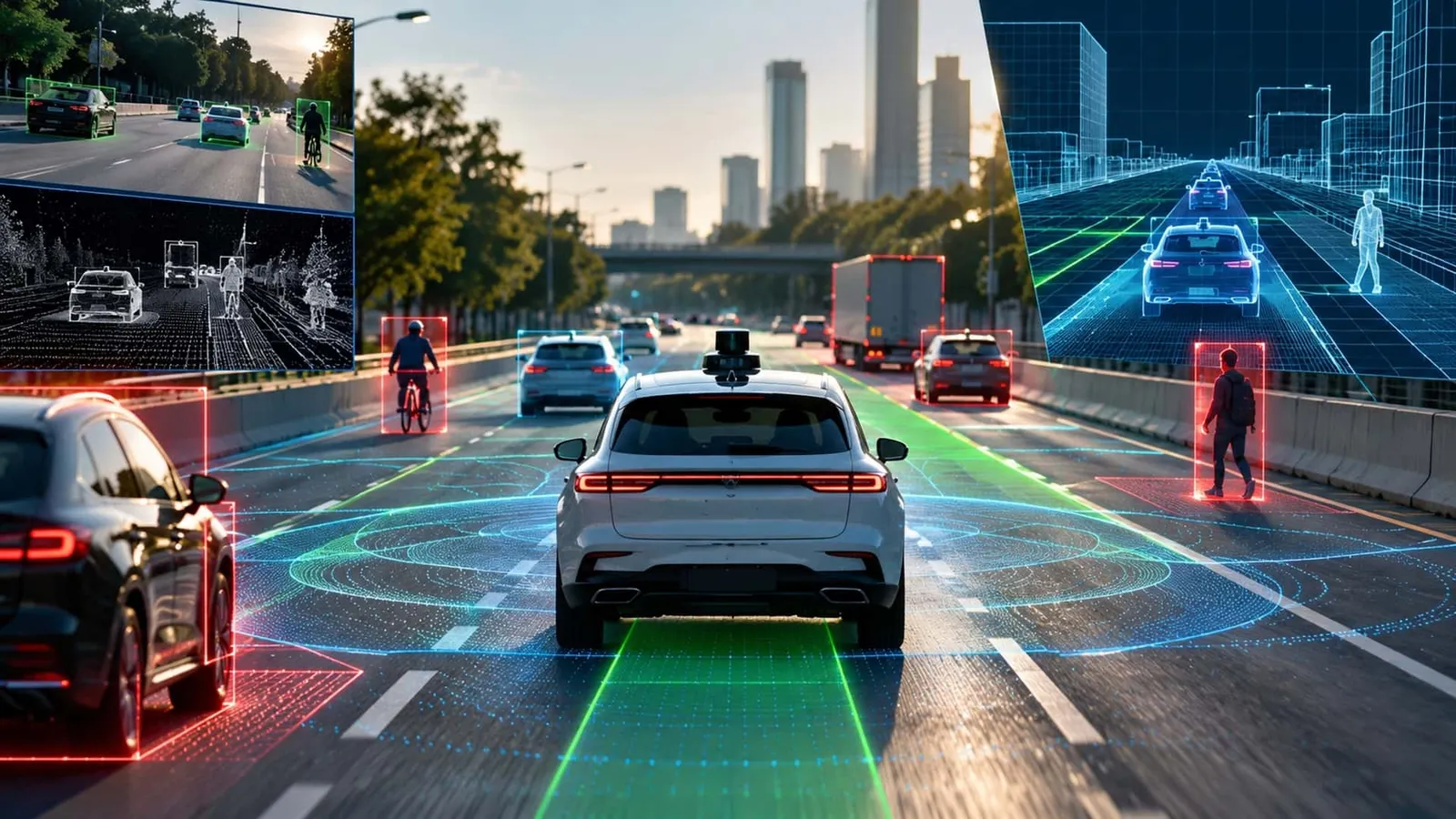
Theoretically, an autonomous vehicle can travel millions of kilometers without accidents, but does that suffice to prove it is safe? Not entirely. The situations that can arise in traffic are practically infinite, and some, fortunately, are so rare that they are difficult to encounter during testing.
To address this issue and get as close as possible to 100% safety, NVIDIA introduced Halos SAFE at the GTC in Berlin—short for Safety Assurance Framework for Evaluation. It is a set of tools and procedures designed to gather measurable and verifiable evidence on the safety of autonomous driving systems, from Level 2 assistance to Level 4 robotaxis.
Why many kilometers aren’t enough
According to NVIDIA, achieving a reliability level on the order of one critical event per tens of millions of driving hours would require an impractically large number of real-world tests for any experimental fleet. The issue concerns not only the distance traveled but also the variety of scenarios encountered.
A vehicle might perform well for thousands of kilometers but face difficulties when encountering an unusual construction site, a pedestrian suddenly crossing the road, or a particularly unfavorable combination of traffic and weather conditions. Therefore, safety assessment must rely on multiple sources of evidence rather than depending solely on results obtained on roads.
Simulations, Real-World Testing, and Ongoing Monitoring
HALO SAFE covers various stages of verification: digital simulations, software and hardware testing, road trials, and monitoring of vehicles already in service. Scenarios are defined using measurable performance conditions and criteria, allowing for repeated testing, result comparison, and reconstruction of collected evidence. Simulation also enables the reproduction of dangerous or extremely rare situations without having to create them in real traffic.
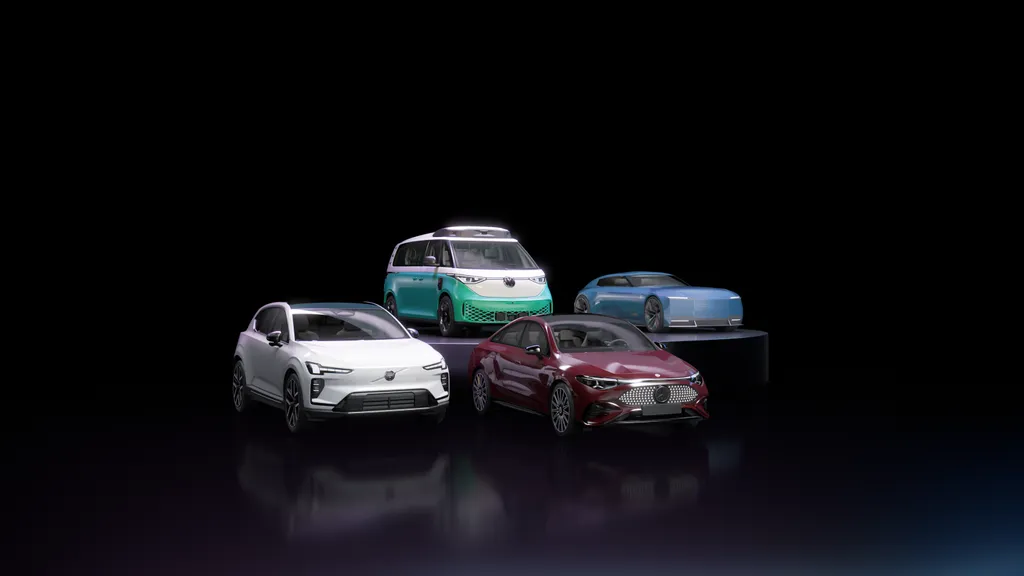
Among the companies collaborating with NVIDIA on autonomous driving are Mercedes, Volvo, Volkswagen V.I., and Jaguar-Land Rover.
Photo by: NVIDIA
The goal is to create technical documentation that can be used to demonstrate compliance with safety requirements and to support approval and certification processes. However, Halos SAFE does not constitute a certification in itself nor does it automatically guarantee a vehicle’s safety.
A network of partners
The project involves companies specialized in verification and validation, including dSPACE, IVEX, and TÜV Rheinland. The Halos SAFE ecosystem also includes manufacturers such as Mercedes, Volvo, and JLR, along with numerous suppliers of simulation technologies and tools.
The partnership with Mercedes is particularly significant: the German automaker is expanding its collaboration with NVIDIA to develop advanced driver assistance and autonomous driving systems, integrating Hyperion, Alpamayo, and Halos technologies into its MB.OS architecture.
The same technologies are also applied in programs for robotaxis and autonomous transportation, with partners such as Bolt, Lucid, and Volkswagen Commercial Vehicles. In other words, the challenge is not only to teach cars to drive on their own but also to demonstrate with verifiable standards how reliable they are when doing so.
Autonomous Driving and Safety