
Chinese cars for Europe: Volkswagen confirms it will use the CEA platform, developed with XPeng, for VW, CUPRA, and Skoda
27/10/2026 13:30
Updated to
27/10/2026 13:30
For decades, Volkswagen’s technology has moved from Germany to China, but now the direction might be reversed. The German automaker is considering bringing the CEA (China Electronic Architecture) platform to Europe—a electrical and electronic architecture it developed with Chinese electric vehicle manufacturer Xpeng for the models sold there. XPeng and Volkswagen signed a major partnership in July 2023 worth $700 million.
The proposal would affect the group’s three mass-market brands, Volkswagen, Skoda, and CUPRA, covering around 75% of their next-generation models. Thomas Schäfer, head of Volkswagen and the mass-market brand group, plans to present it to management as soon as possible. If approved, it would force a reevaluation of the group’s entire software strategy and significantly impact its partnership with the American manufacturer Rivian.
Fewer central units and a single computer
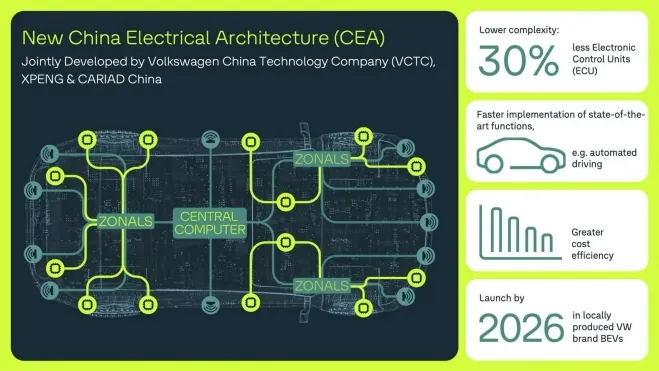
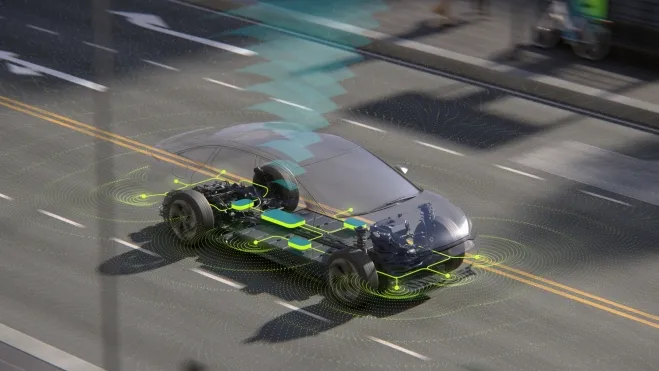
A conventional car distributes its functions among dozens of electronic control units (ECUs), small controllers that each handle a specific task. CEA is a zonal architecture that groups these functions by vehicle areas and coordinates them from a high-performance central computer, similar to replacing a drawer full of remote controls with one universal controller.
According to Volkswagen, this approach reduces the number of controllers by about 30% compared to previous generations. It also allows for remote updates to the entire car and is suitable for any type of vehicle, from pure electric models to hybrids and internal combustion engines. It was developed by Volkswagen’s engineering subsidiary in China, CARIAD China, and Xpeng.
It’s already in use in China
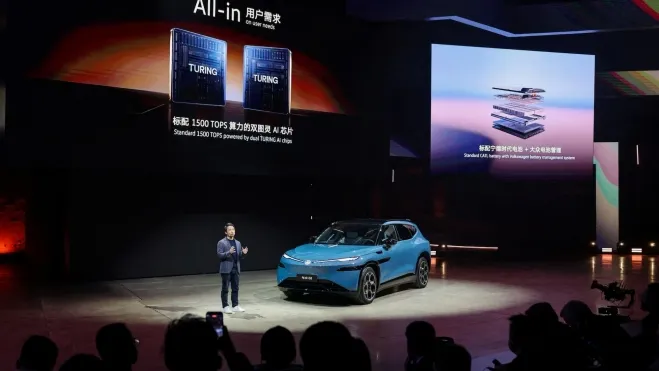
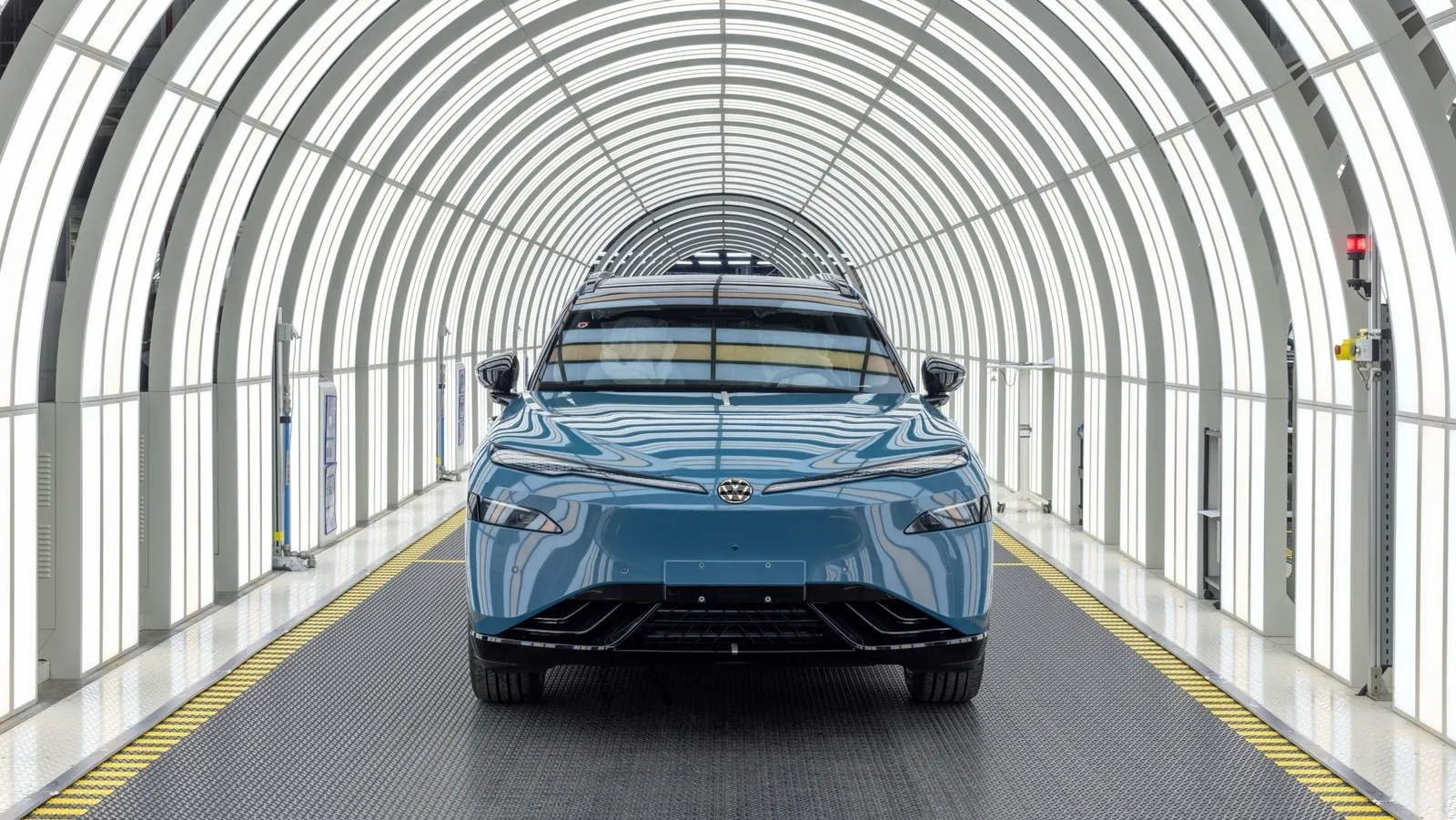
The big advantage of the CEA platform is that it is already being produced in series. The first model to use it, the Volkswagen ID. UNYX 07, began production in January 2026 at the Volkswagen Anhui plant. According to the brand, it took only 18 months for the architecture to move from concept to production, the fastest time in its history for a new electric vehicle platform.
The UNYX 07 is a D-segment electric sedan that, according to its launch details in China, features a 60 kWh lithium iron phosphate (LFP) battery produced by Gotion and a single 231 horsepower motor, offering a range of up to 558 kilometers on the Chinese CLTC cycle. Its official price starts at 129,900 yuan, approximately 16,900 euros. The plan is to extend the CEA architecture by 2026 to Volkswagen’s electric vehicles manufactured in China, and from 2027, to all types of vehicles.
Billions in savings
Money is the main driver behind this potential change. Volkswagen claims that its new approach to working in China reduces car development time by up to 30%, and in some key projects, it has cut development costs for new models by as much as 50%. German experts estimate that expanding the CEA platform to more models could allow the company to save between 4.000 and 5.000 million euros in development costs.
What about Rivian?
To date, Volkswagen has pursued two separate paths: vehicles and models exclusive to China, and for Europe and other Western markets, the software platform it develops through a joint venture with Rivian. In 2024, the Germans announced an investment of up to $5.8 billion, or about 5.2 billion euros, in this partnership, which is a key part of Oliver Blume, the group’s CEO,’s plan to transform its software business.
The first model to feature that technology will be the Volkswagen ID. Every1, an urban electric vehicle scheduled for release in 2027. With Schäfer’s proposal, Rivian’s technology would be phased out in the group’s larger-volume models in Europe—those we see most frequently on our roads. For us Spaniards, it holds additional interest since CUPRA is one of the three brands involved. Moreover, its connection to that Chinese factory wouldn’t be new: the CUPRA Tavascan sold in Spain is manufactured at the same Volkswagen Anhui plant that already produces the ID. UNYX 07.