
Citroën 2CV for less than 68,000 zł. Is this the beginning of an era of truly cheap electric cars?
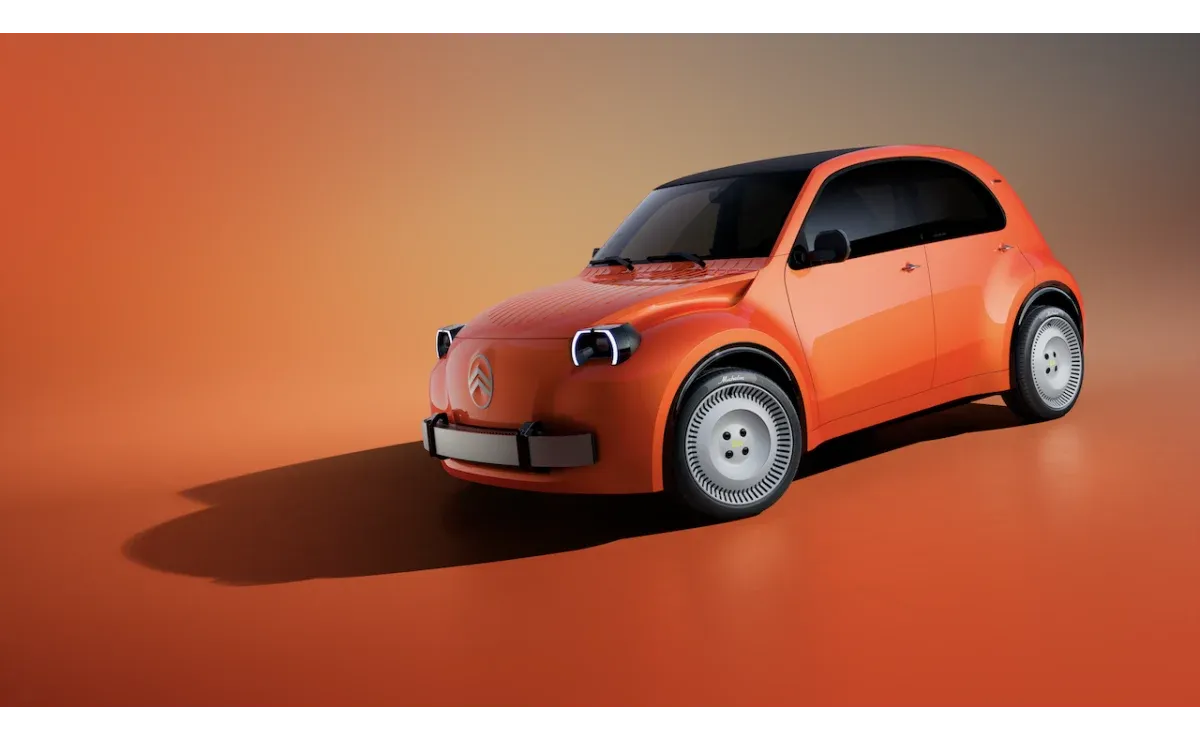
The new 2CV Concept is much more than a sentimental tribute to one of the greatest icons in automotive history. The French are announcing a battery-powered car manufactured in Europe, priced at around 15,000 euros, which is less than 68,000 złoty. If these promises are kept, it could mark the beginning of a new era in the market where electric cars stop being a premium product and once again become a transportation option accessible to a wide range of customers.
When Citroën introduced the 2CV model to the world in 1948, no one imagined that this unassuming car would become a symbol of post-war France’s automotive industry. Known as the “duck” along the Seine, it was designed to be inexpensive, simple, and practical. Legend has it that one of the design principles was to tune the suspension so that it wouldn’t break an egg basket while driving on a country road.
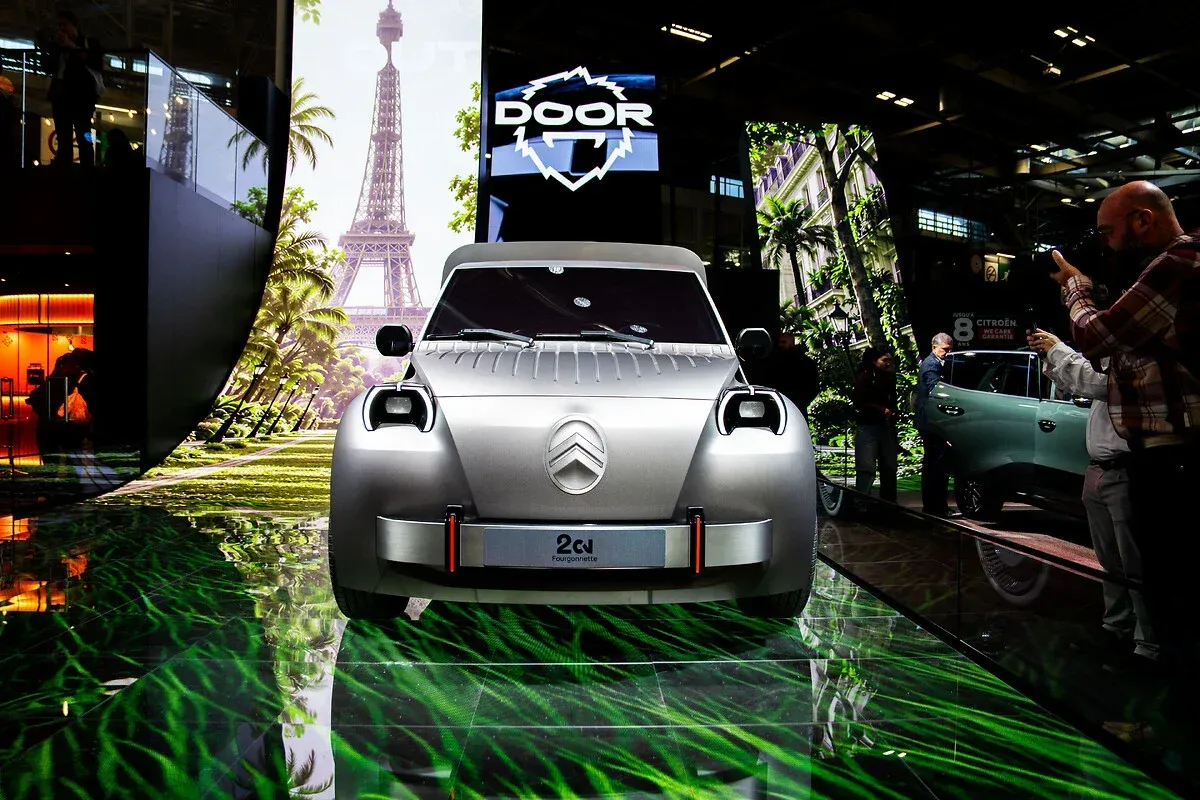
Today, almost eight decades later, Citroën is trying to address a similar challenge. But instead of a cheap gasoline car for farmers, it is designing an affordable electric vehicle for residents of modern Europe. At the 2026 Paris Motor Show, the brand unveiled the 2CV Concept, which is set to serve as the basis for a production model planned for 2028. The car is 3.76 meters long, weighs around a ton, and will be manufactured in Europe. However, price is the most important factor. Citroën has announced a price of around 15,000 euros, which currently equates to about 68,000 Polish zlotys. This is therefore a figure that until recently seemed unrealistic for a new electric car.
No nostalgia, but a new philosophy of automotive design
The French emphasize that the goal is not to recreate the iconic model. In a official statement from Stellantis, Citroën’s head Xavier Chardon said, “Recreating the 2CV isn’t about bringing back a car from the past, but rather rediscovering what made it special: simplicity, affordability, and a sense of freedom.”
This sentence accurately captures the philosophy behind the project. The new 2CV is not meant to impress with power or record-breaking range. It aims to be lightweight, inexpensive to maintain, and easy to operate. The manufacturer openly admits that the inspiration came from the idea of a “car for the people” that brought success to the first generation.
In press materials, Citroën even states that the goal was to create a “small, practical, and desirable electric car of the future” that would restore joy to daily commuting. This sounds like a direct response to the direction in which European automotive industry has evolved over the years. Cars have grown larger, becoming heavier, more complex, and more expensive — editor’s note. The result? More and more customers simply can no longer afford them.
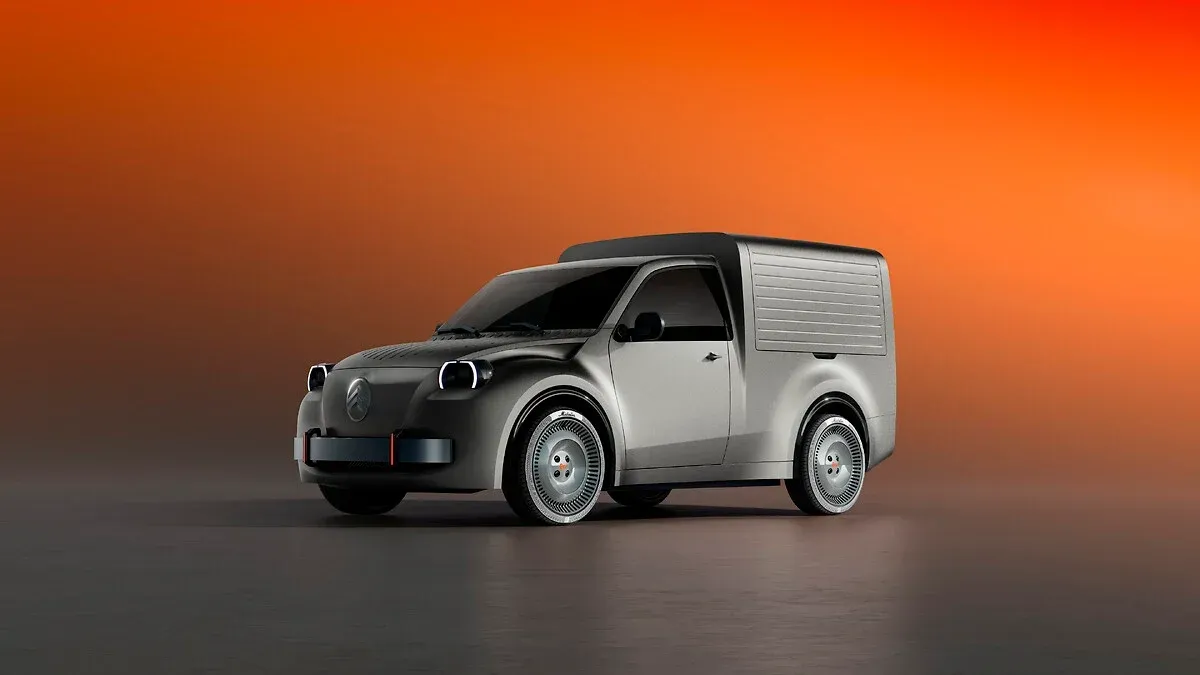
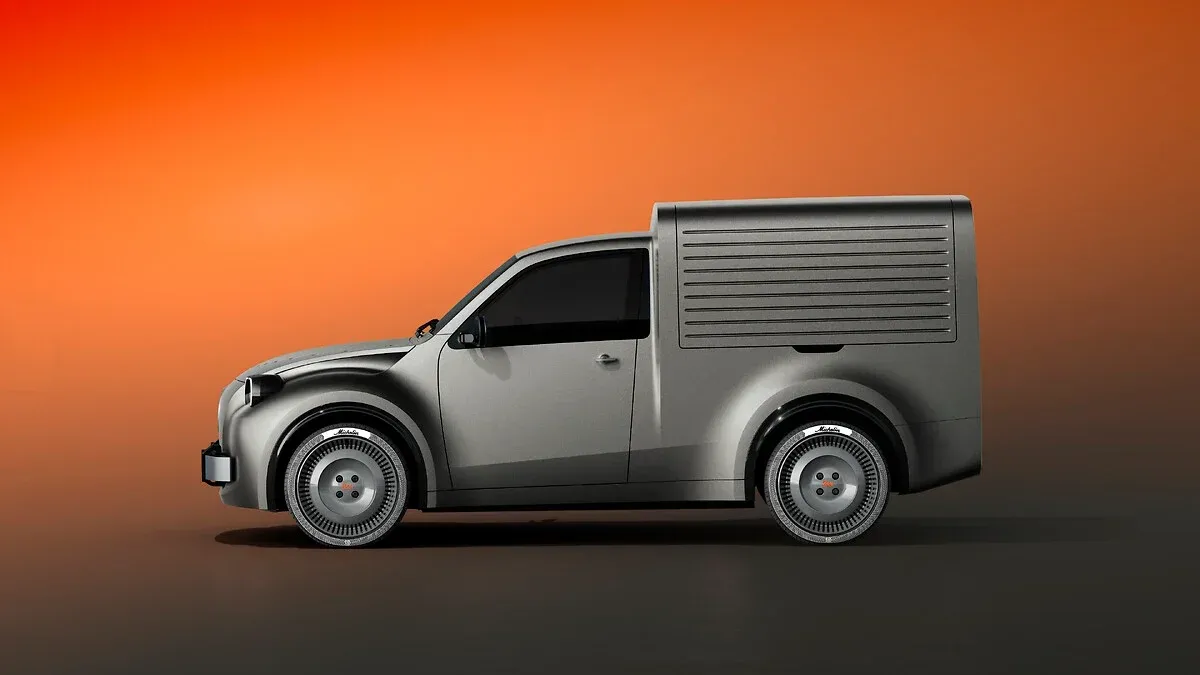
Europe Responds to China’s Offensive
The launch of the new 2CV is no coincidence. European manufacturers have been observing increasing pressure from Chinese brands for several years. Companies such as BYD, MG, and Leapmotor are capturing new markets thanks to attractive prices and better product quality.
Meanwhile, European brands have long focused primarily on more expensive electric vehicles intended to generate higher profits. This has created a gap between costly EVs and the needs of average consumers. It is no accident that during the Paris presentation, references were made to words spoken by European Commission President Ursula von der Leyen, who emphasized that Europe needs its own affordable electric vehicles produced on the continent using local supply chains.
The new 2CV fits perfectly into this strategy. The car is meant to be produced in Europe and meet future regulations for so-called E-Cars, namely affordable electric vehicles.
Inexpensive electricity instead of range competition
The most surprising aspect is the deliberate choice to avoid competing on performance metrics. According to the manufacturer, the car will weigh around a ton. This means it will use a relatively small battery. The industry refers to a battery similar to one used in the current Citroën e-C3, which offers around 200 km of range.
A few years ago, such a result would have been considered disappointing. Today, more and more manufacturers are concluding that for drivers who mainly travel in cities, the purchase price is far more important than the ability to cover 500 or 600 km on a single charge.
That’s why Citroën openly discusses strategies to reduce weight, production costs, and the number of complex components. This approach echoes the philosophy of the original 2CV, which also wasn’t impressive in terms of performance but offered what its users needed.
An interior that showcases a new way of thinking
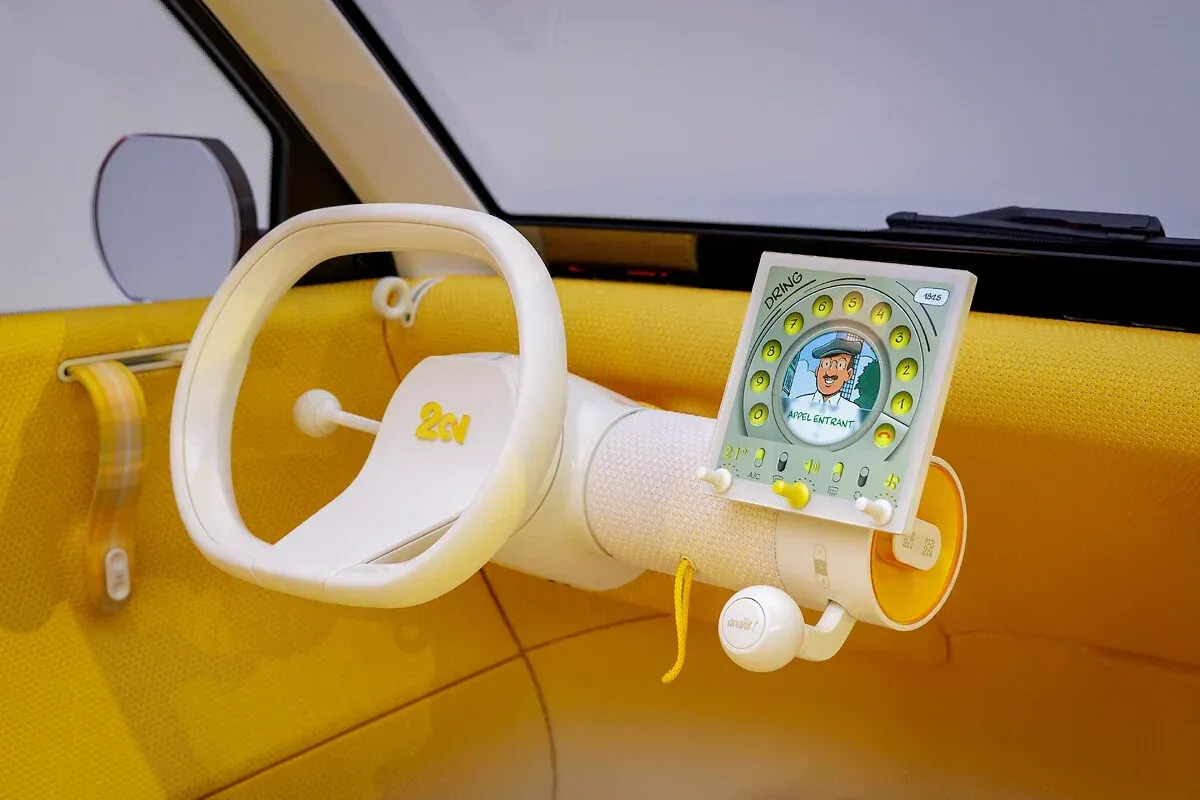
The cabin of the new 2CV is also a manifesto of new automotive simplicity. The designers abandoned the traditional dashboard. In its place is a cylindrical module featuring a distinctive single-arm steering wheel, a small display, and basic switches. There is only one central screen with an 8-inch diagonal. Unconventional solutions were also introduced, such as a removable basket instead of a traditional center console and a portable Radioën speaker.
All of this serves one purpose: to reduce costs, simplify the design, and make the most of interior space — says the manufacturer.
Importantly, Citroën does not hide that many of the solutions used are also designed to simplify repairs. Separate bumpers, simpler body surfaces, and a modular design are all intended to reduce maintenance costs. In an era when fixing even minor dents can be very expensive, this could turn out to be one of the key selling points for customers.
British “Autocar”: now is the right time
The foreign media’s commentary casts interesting light on the project. Quoted by the British “Autocar,” Citroën designer Antoine Gaillot-Drevon said now is the right time for the 2CV to return. “When you see what’s happening in the world, everyone needs a reason to smile,” said the designer.
This seemingly casual remark captures the broader context well. The automotive market has reached a turning point. Rising living costs, high prices for new cars, and economic uncertainty are driving customers to seek practicality over prestige. The new Citroën aims to address this need.
Will 68,000 zł change the market?
The most important question is: is a price around 68,000 zł really feasible? If Citroën keeps its promise, the new 2CV will become one of the cheapest fully electric cars available in Europe. Moreover, it will be produced locally rather than imported from Asia.
This could put pressure not only on Chinese manufacturers but also on European competitors. Renault is already preparing a new Twingo in a similar price range. It’s likely that other manufacturers will also start working on simpler and cheaper models.
In practice, this could mean the emergence of a new market segment: electric cars that cost as much as urban gasoline vehicles did just a short time ago.
The Start of a New Era
The return of the 2CV is more than just another launch of a nostalgic model inspired by the past. It’s a sign that manufacturers are beginning to recognize the problem drivers have been discussing for years: cars are simply too expensive. That’s why, if successful, Citroën’s project could be remembered not only as the return of the “duck” but also as the moment when electrification stopped being an expensive technological novelty and became a truly accessible mode of transportation for millions of Europeans, including Poles.
Let’s remember that the first 2CVs powered post-war France. The second one might help power an electric Europe. That’s exactly why a price of around 68,000 zł is more important today than design, screen, or even range. Because perhaps for the first time in many years, someone is truly trying to build an electric car for ordinary people.
Oskar Włostowski