
The Citroën 2CV will be manufactured in Europe, but there is still no factory.
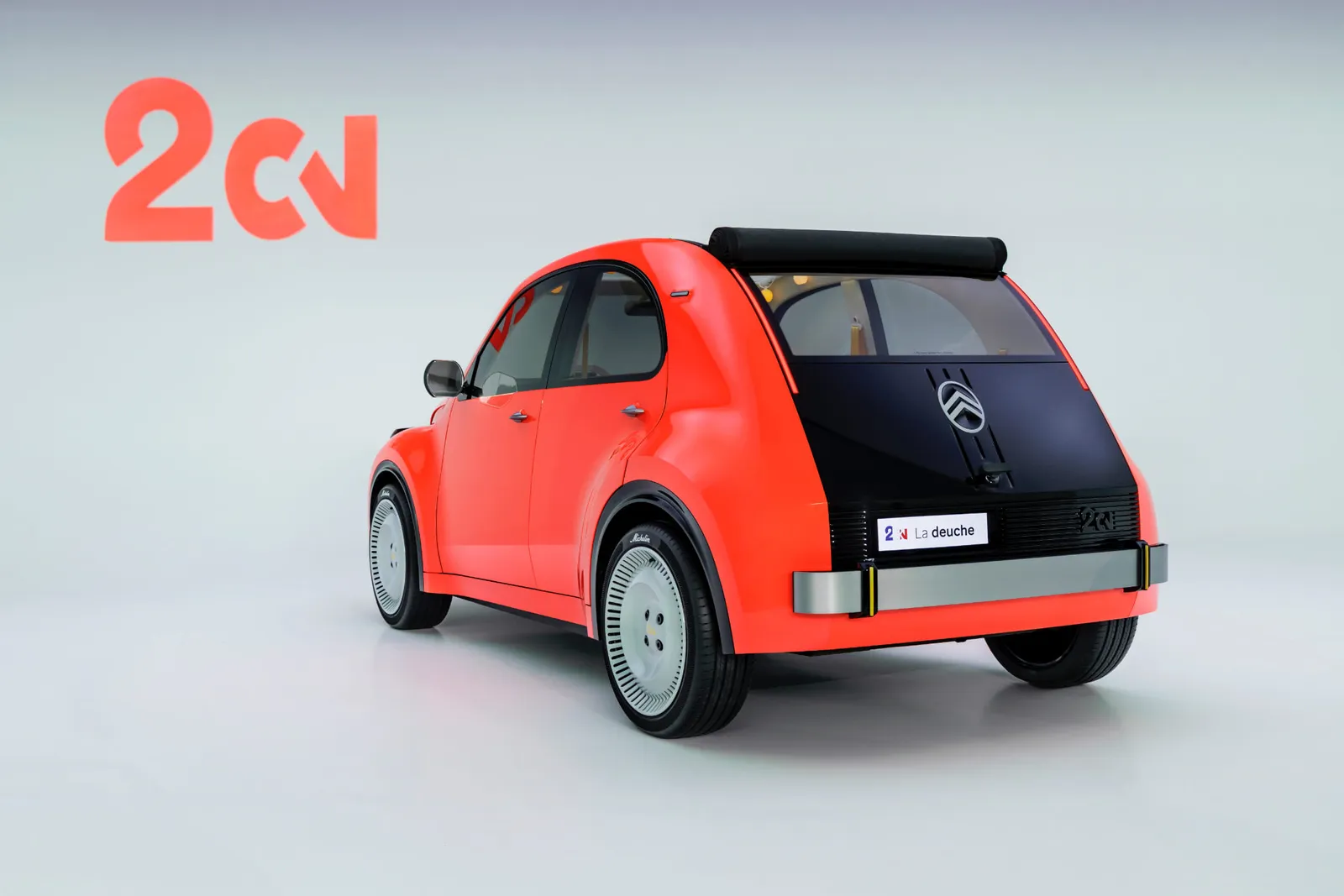
Xavier Chardon confirmed to us the European production of the new 2CV. The choice of factory remains undecided, and Portugal has joined the discussions.
The new Citroën 2CV will be produced in Europe. This assurance was given to Razão Automóvel by Xavier Chardon, the executive director of the French brand, during a conversation on the sidelines of the Paris Motor Show. However, the factory that will undertake the production has not yet been selected.
Faced with reports suggesting Italy as the location for producing this electric vehicle, which will cost 15,000 euros, the brand’s representative clarified that the manufacturing site has not been chosen yet. There is only one certainty: “Just to clarify, and you can quote me: it will be produced in Europe,” said Chardon after we pressed him about the industrial location of the future electric vehicle.
No matter where the production of the new Citroën 2CV takes place, the plant chosen by Stellantis will have to meet a very ambitious set of requirements: “We need to produce it in Europe, aiming for a starting price of 15,000 euros, while also making a profit,” summarized Chardon.

To that end, we reminded Citroën’s CEO of the connection between the 2CV and the Portuguese Mangualde factory, where the last unit of the original model was produced in 1990. We also asked whether the factory’s industrial capabilities could qualify it to produce the electric successor. “It’s one of the most efficient factories,” admitted Chardon.
The announcement did not include any indication regarding the future location of production. When we pressed for a Portuguese option, the representative of the French brand was firm: “Manufactured in Europe.” The choice of factory remains undecided.
Discover your next car:
Simple and cheap
Price is indeed one of the key aspects of the new 2CV, whose technical development is still underway. One of the priorities is controlling weight. “We want this car to weigh as close as possible to 1000 kg,” he explained. This helps reduce the demands on the battery and, consequently, the overall cost.
Cost control also involves restoring the simplicity that made the original 2CV so affordable. Chardon argued that the new model should offer only what is necessary, resisting the temptation to add features without clear utility.
"We won't put screens everywhere," he said. The dashboard of the concept car will be similar to that used in the production model, including solutions uncommon in current vehicles: the traditional glove compartment will be replaced by a central basket.
The canvas roof is another feature the brand wants to retain. These choices aim to maintain the model’s identity while adapting it to electric mobility. The revival of the name itself took time to gain acceptance within the organization. According to Chardon, bringing back the 2CV was for many years "a kind of taboo" within the brand and its group, due to the weight of its heritage and the responsibility of living up to the original model.