
Citroën 2 CV Concept: the unique sketches behind the new Eend
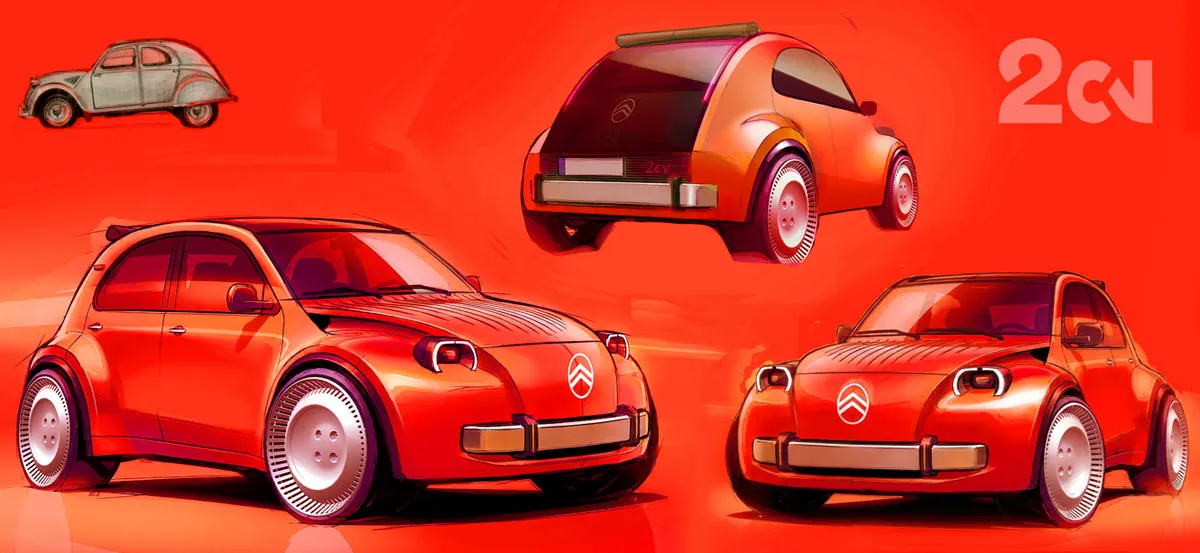
The Citroën 2 CV Concept attracted a great deal of attention at the 2026 Paris Auto Show. Now, the French brand is revealing the unique design sketches behind the new Eend. They show how designers spent nearly a year searching for the perfect blend of nostalgia and modern design.
Designing a new Eend isn’t that simple
Designing a new Citroën 2 CV. Likely a fantastic task for any automotive designer, but at the same time one that requires great care. After all, how do you give one of history’s most famous cars a modern look without turning it into a caricature of the original?
That was precisely the challenge facing Citroën’s designers. At the 2026 Paris Motor Show, the French brand unveiled the Citroën 2 CV Concept, a modern interpretation of the legendary Duck. With its round headlights, distinctive roofline, and friendly appearance, it was immediately clear which car served as the inspiration.
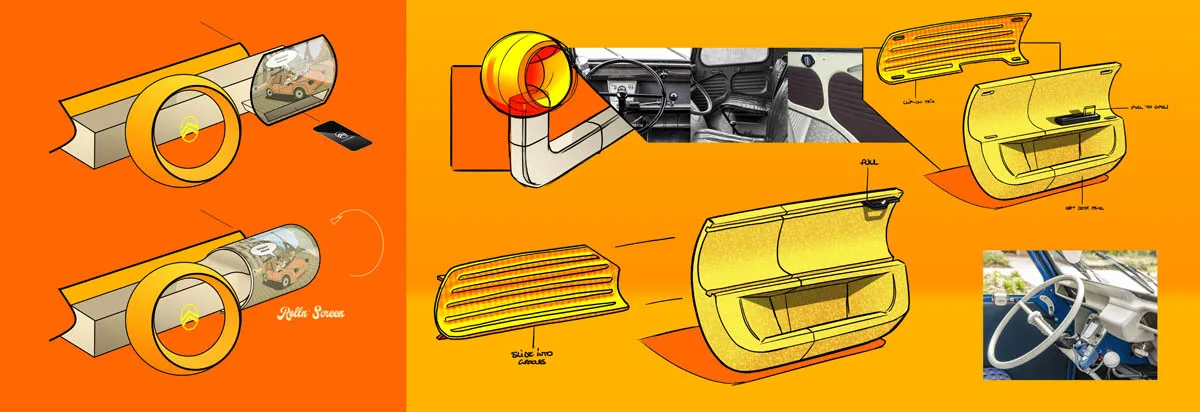
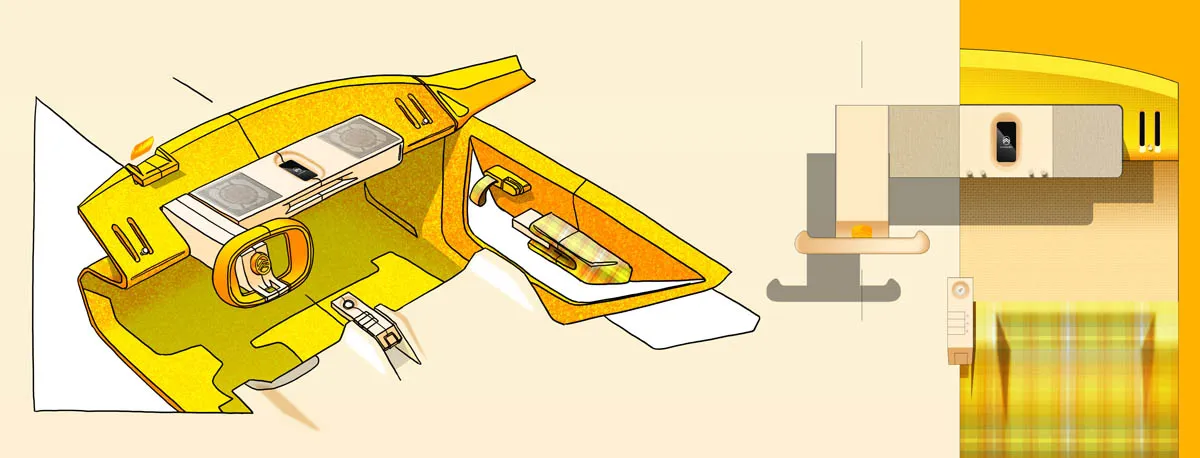
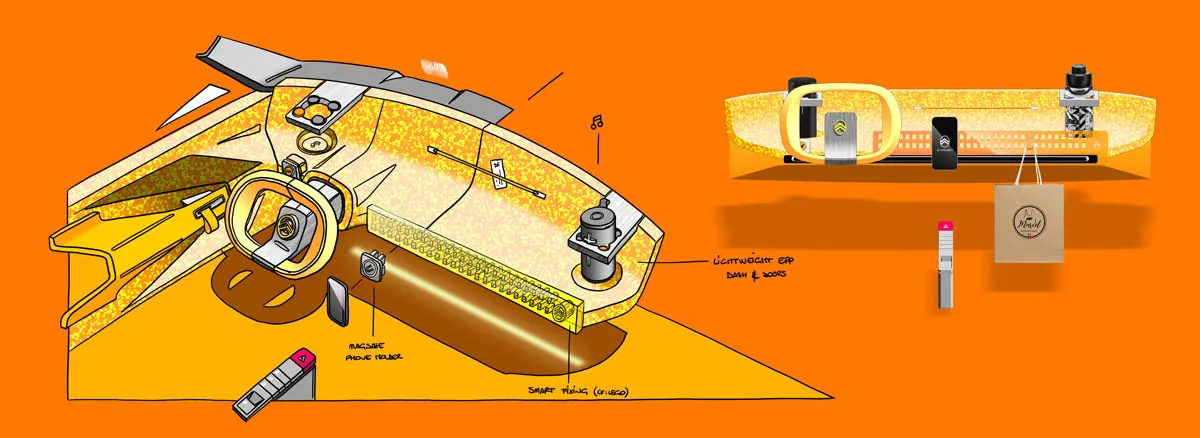
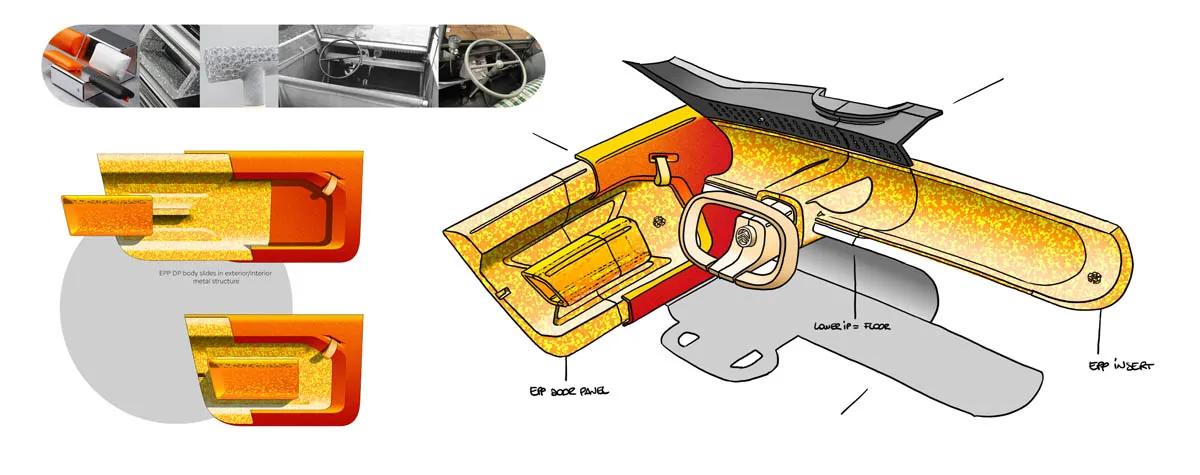
Citroën has now released a series of design sketches showing how the concept came to life. For almost a year, designers drew, modified, and started over again, focusing primarily on what made the original 2 CV so special.
No retro copy of the original 2 CV
The original Citroën 2CV appeared in 1948 and became one of the most recognizable French cars of all time. Not because it was particularly fast or luxurious, but precisely because it was so simple and practical. The 2CV offered affordable mobility, had exceptionally comfortable suspension, and featured a design that paid little attention to contemporary automotive trends.
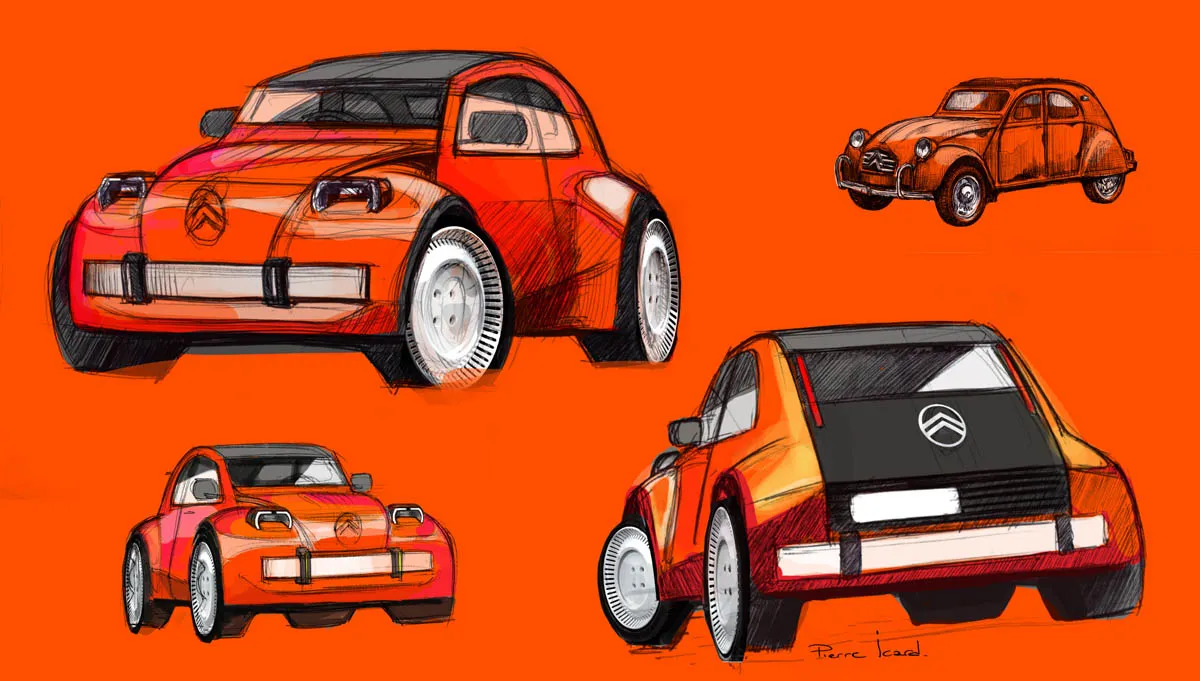
The designers wanted to bring back that same uniqueness. Not by simply redrawing the old body, but by translating its distinctive shapes into a modern car. As a result, extensive experimentation was done with the front end, the proportions of the body, and the shape of the fenders.
Those last ones were particularly important. The separate fenders from the original model had to remain recognizable while still complying with current regulations. It was also decided not to partially cover the rear wheels, as done on the classic Eend. According to Citroën, this would go too far in terms of retrodesign and would be less practical as well.
From round headlights to the vintage sloping roof
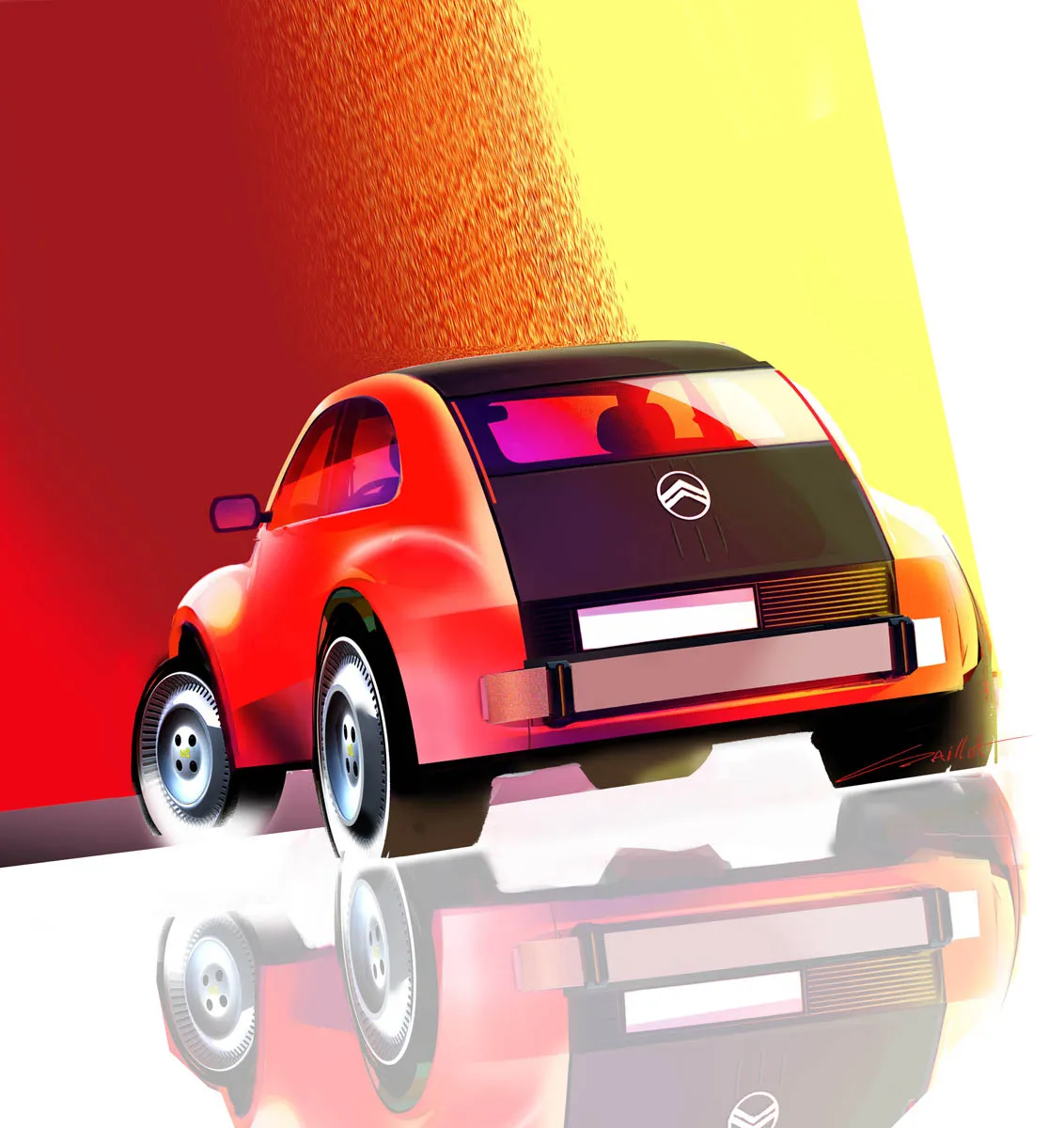
Those who examine the sketches can see how much attention was paid to small details. The round headlights sit slightly outside the body, while the ribbed hood references the first generations of the 2 CV. The curved roof line extends all the way to the rear bumper, just as we see it on the classic Eend.
At the same time, the concept featured larger wheel arches, more sharply defined sides, and a modern take on traditional steel rims. As a result, the car appears more robust than its predecessor without losing its friendly character.
One of the most appealing features is the canvas roof. It opens by hand, just like in the old days. There’s no complicated electrical mechanism—only a simple solution that fits well with the car’s character. In an era where almost everything is operated electrically, such a vintage-style folding roof is actually quite refreshing.
An interior free from unnecessary clutter
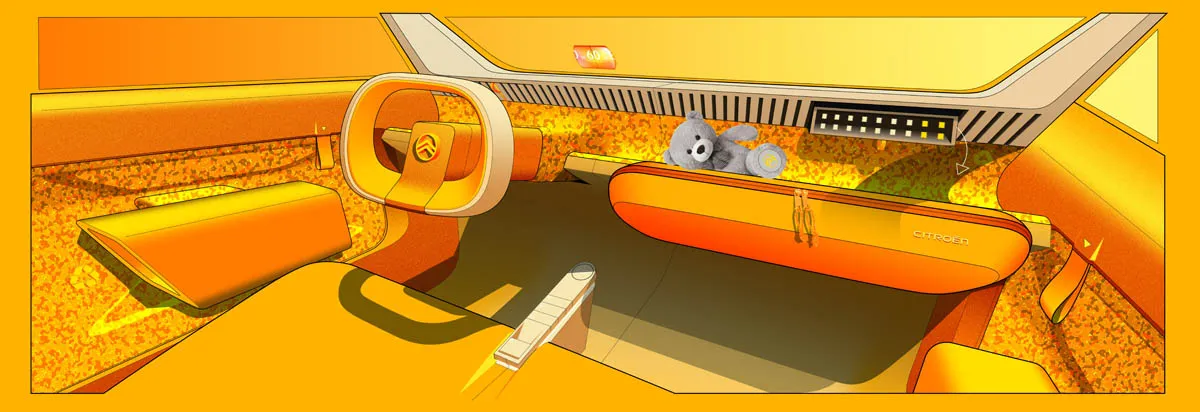
Even in the interior of the Citroën 2 CV Concept, the designers wanted to move away from conventional car interiors. While many modern cars are dominated by large screens and dark plastic panels, Citroën opted for a strikingly light and cheerful layout.
The seats directly echo the original model, as does the single-spoke steering wheel. Additionally, we see a simple control panel, a removable radio, and even a separate storage basket. Each of these elements references the practical solutions for which Citroën was once renowned.
The use of color is also noteworthy. Yellow and white play the main roles, while the checkered upholstery and warm fabrics give the interior a homely feel. The designers even added beige details that recall the old bakelite buttons from the original 2 CV. Additionally, traditional French rattan craftsmanship is reflected in the woven materials.
The result is an interior that differs significantly from what we are accustomed to today. Citroën demonstrates through this design that simplicity and a unique aesthetic can go hand in hand.
Will the new Citroën 2 CV be electric?
The big question is of course whether Citroën actually plans to bring the Eend back into production. The 2 CV Concept is currently just a design study. Citroën hasn’t revealed any production plans, prices, or technical specifications when releasing the design sketches.
An electric powertrain would fit perfectly with the original idea behind the Eend: affordable, simple, and lightweight transportation. Additionally, Citroën has already shown with the electric ë-C3 that it takes affordable electric cars seriously. But whether the 2 CV will actually return as an electric production model remains uncertain for now.
Hopefully, Citroën will stay true to its unique style
For us, the Citroën 2 CV Concept mainly shows that Citroën has not forgotten its unique design heritage. The brand boasts a rich history filled with remarkable cars and innovative solutions. At a time when many new models are becoming increasingly similar to one another, this can be a significant advantage.
Naturally, not everyone will find the new Eend beautiful. But that was actually true for the original 2 CV as well. That car never relied on conventional beauty to stand out.
The design sketches clearly show that Citroën didn’t simply revive an old design. Serious consideration was given to the features that made the Eend unique. In our opinion, it would be a shame if this remained just a design study. A compact, affordable electric Eend with such a distinct character would be a truly valuable addition to the current automotive landscape.
Text: Marc Verweij