
The quiet secret of the BMW iX1 and iX2 = architecture
From time to time, we describe the architectures of electric vehicles, the voltages involved in their electrical systems, and explain why such data is important. Most readers of Elektrowoz already understand that having an “800 V architecture” with a higher voltage is better, as it usually results in faster charging. But there are two sides to this coin—there are electric vehicles in which the manufacturer used an exceptionally low voltage in the electrical system. This is the case with the BMW iX1, iX2, and Mini Countryman equipped with the same powertrain.
The voltage in the BMW iX1, iX2, Mini Countryman systems = slow charging on older chargers
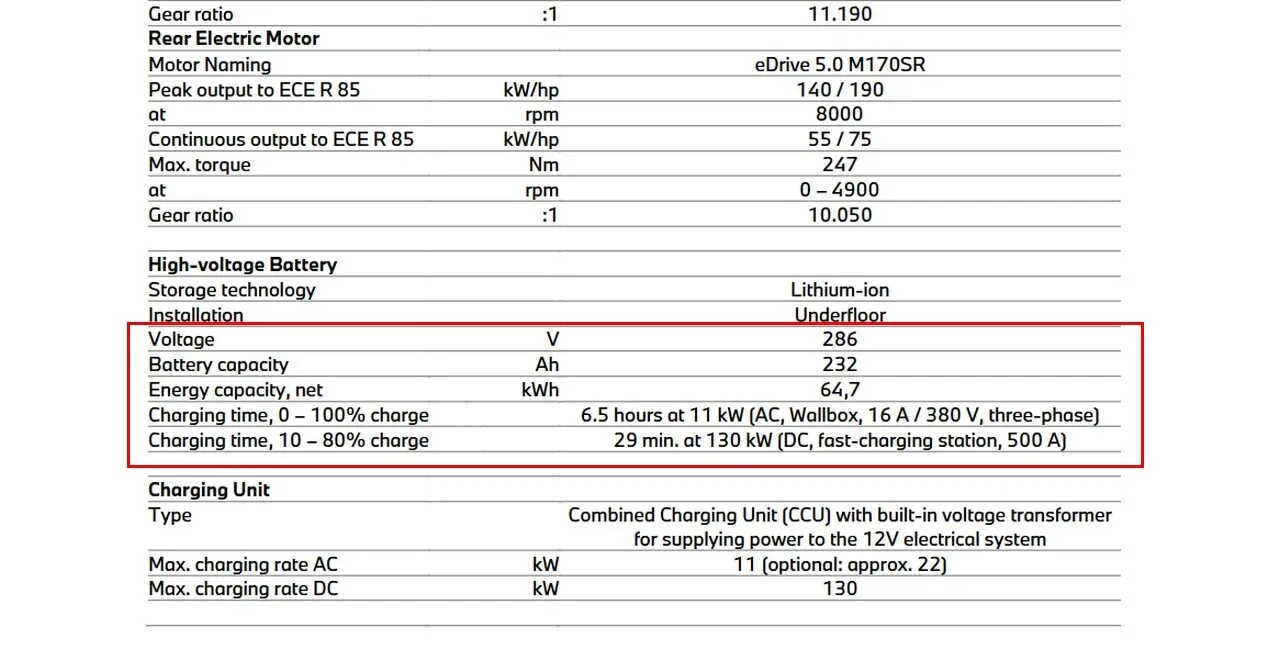
Let’s start with the hard data: the voltage in the BMW iX1, iX2, and Mini Countryman systems at ~66.5 (64.7) kWh is 286 V (as illustrated below). That’s roughly the voltage across the battery terminals. If we were to define the “architecture” by the number of hundreds of volts (an approach sometimes used), it would be a 200 V architecture. If rounded to the nearest hundred (a more fair approach), it would be classified as a 300 V architecture. Yet, such vehicles are conventionally placed in the “400 V architecture” category. This is incorrect.
The voltage mentioned above is the nominal value; it may be slightly higher during charging in a setup, and lower during rapid discharging. Modern ultra-fast chargers can provide up to 1,000 V at 500 A for vehicles, but there are already devices that we in the editorial team call megafast chargers, which use even higher voltages and currents. In any case, according to the formula P = U x I, with an ultra-fast charger having the parameters mentioned above, we can achieve a maximum of 1,000 V x 500 A = 500,000 W = 500 kW. This is usually for short periods and during peak times, as CCS2 connectors were not designed until recently to handle prolonged operation at 500 kW.
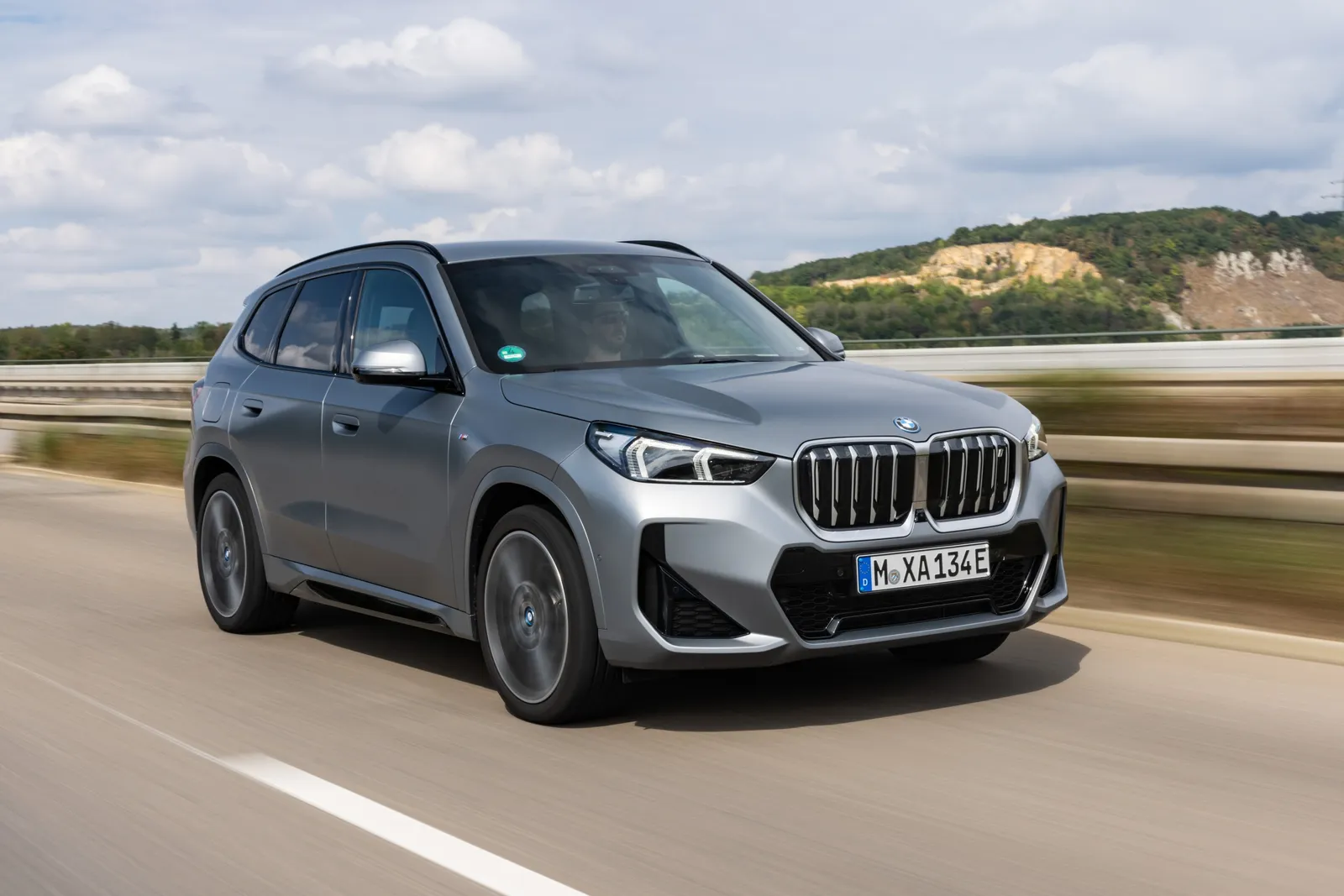
BMW iX1 (c) BMW
In older chargers, the maximum voltage was 400 or 500 V. However, worst of all, the current levels were relatively low—such as 125, 150, or 200 A. A charger labeled as having “50 kW” of power could actually have a maximum of 400 V and 125 A. Now let’s apply the second value, the maximum current, to the formula P = U x I for the BMW iX1, where the voltage is known to be 286 V. We will quickly find that instead of the 50 kW claimed by the manufacturer, we end up with a maximum of 35.75 kW.
There’s nothing more that can be done; the charger will deliver the maximum available current to the car, but the voltage in the electrical system will be low, so the charging power won’t be impressive either. As a result, charging from 10 to 80 percent will take around 45 minutes (including losses and negotiation time), rather than the manufacturer’s claimed 29 minutes. It’s worth noting that BMW only promises 29 minutes when using a top-tier charger capable of delivering 500 amps—this is clearly stated in the specifications.
Even if the charger were relatively new and offered a current of “up to” 250 amps (with a rated power of 125 kW), our brand-new BMW iX1 would only achieve a maximum power of 71.5 kW with it. The Nissan Ariya, located two charging stations further away, will reach higher charging speeds, and its owner will be overjoyed to have finally found a car that charges even worse than theirs.
Why is this the case? It seems that BMW knows its customers well and determined that these specific models would be used rarely on long trips. And even if they are, their drivers will follow the manufacturer’s guidelines (the BMW Charging app) and use Ionity chargers. However, in countries where there are few Ionity charging stations, owners of BMW iX1, iX2, or Mini Countryman might encounter older devices with weak power connections. That’s when they’ll feel disappointed—because their car will take about 50 percent longer to charge than specified.
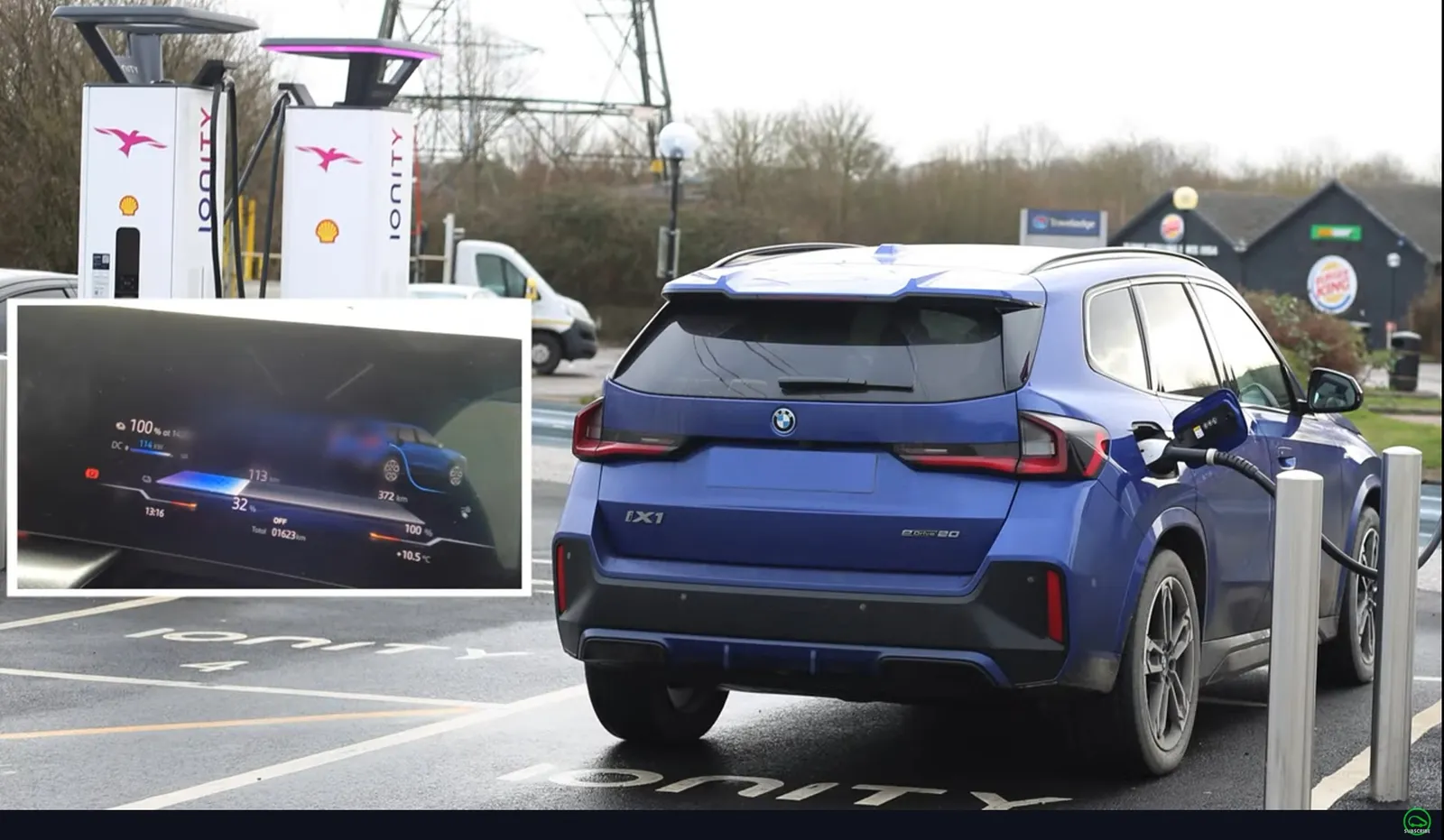
Charging the BMW iX1 in Lower Temperatures (°C) EV Dabbler / YouTube
Note from Elektrowozu’s editorial team: A reader who purchased a BMW iX1 prompted us to cover this case.
Article Rating
Reader Ratings
[Total: 7 votes Average: 5]
Don’t miss new content — CLICK and FOLLOW Elektrowoz.pl on Google News. You might also be interested in the following ads: