
China is showing LFP levels above 200 Wh/kg. Cell production is accelerating to 7.5 cells per minute.
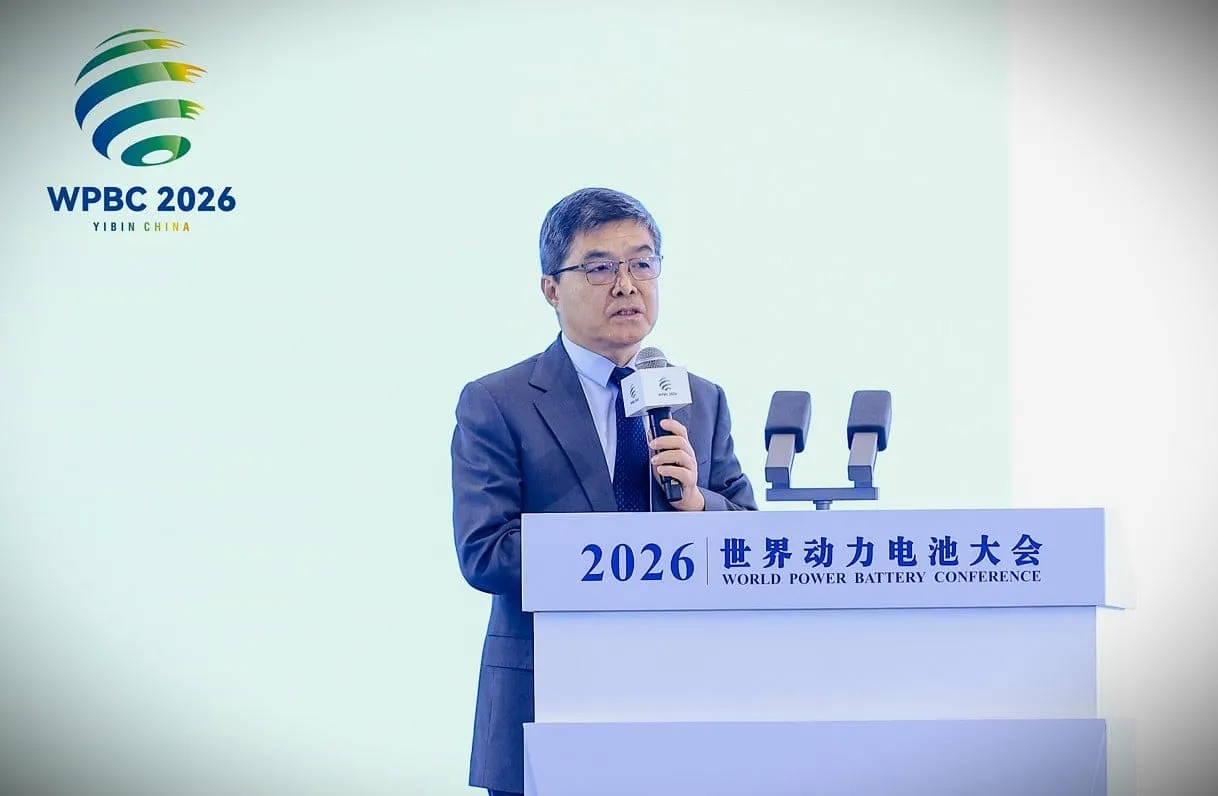
At the 2026 World Power Battery Conference in Yibin, China, two specific figures were mentioned: over 200 Wh/kg for fourth-generation LFP and 7.5 prismatic cells per minute during winding. These are two separate aspects, but together they show the direction of China’s battery industry for 2026.
For EV drivers, what’s most interesting is that China continues to try to extract more performance from LFP without turning to more expensive nickel-based chemistries. On paper, this sounds good, but as usual, the challenge lies in production scale.
LFP has hit the limits of pack design, so the cell itself becomes crucial again
LFP has dominated the Chinese market. In the first half of 2026, 335.6 GWh of power batteries were installed in China, of which 272.0 GWh, or 81.0 percent, was LFP.
In recent years, progress has mainly been made with the pack itself, not just the cell. Cell-to-pack architectures such as CATL CTP or BYD Blade second generation helped. Less “dead” space between cells and housing components allowed for better utilization of volume.
However, this trick has its limits. Once the pack is highly optimized, further increases in range or reductions in battery weight must be achieved within the cell itself.
A new benchmark emerges here. Ouyang Minggao from Tsinghua University, one of the key figures in China’s EV research programs, spoke at a conference about fourth-generation LFP with a density exceeding 200 Wh/kg. For comparison, in the BYD Blade 2.0 lineup, the Short Blade version has 160 Wh/kg, while the Long Blade reaches 210 Wh/kg at the cell level. However, this 210 Wh/kg mainly applies to top-tier, long-range applications. In the broader LFP market, around 200 Wh/kg is still not the standard.
The Chinese also mention an LFP compacted powder density of about 2.65–2.80 g/cm3 and a cell volumetric density above 430 Wh/l. These are still figures for the material and cell, not the finished package in a vehicle. After accounting for cooling systems, electrical connections, and structural components, the actual figure in a car will be lower.
There’s another catch. A higher electrode density makes it harder to transport electrolyte and ions because the volume of pores decreases. This means more energy per liter, but it makes things harder for the chemical processes and production. Bad news for marketing, good news for engineers.
Faster production doesn’t yet mean more finished batteries
The second concrete figure from the conference is 7.5 prismatic cells per minute with automated winding, up from the previous benchmark of 4.4 cells per minute. That’s an increase of about 70.5 percent.
It sounds impressive, but it needs to be viewed fairly. This isn’t the efficiency of the entire factory, just one stage in the process. There are still steps like shaping, aging, quality control, and assembly left. It’s often at these stages that bottlenecks arise.
Everything is happening under new regulations. On July 1, 2026, China implemented the safety standard GB 38031-2025, which replaced GB 38031-2020 for EV traction batteries. It does not automatically give LFP an advantage over other chemistries, but it emphasizes more strongly that the Wh/kg figure alone is not sufficient.
LFP still has a lower ceiling compared to high-nickel cells. For example, CATL Qilin in its nickel version is reported to have around 285 Wh/kg per cell. So the gap hasn’t disappeared; it has just become a bit smaller.
The most interesting aspect here is not just “over 200 Wh/kg,” but the fact that China is once again trying to improve LFP from within, rather than relying solely on packaging tricks. Do you think this chemistry will reach a practical level where NCM becomes unnecessary outside of top-tier vehicles?
LovEV Newsletter
Want more content like this?
Sign up — we’ll send you a weekly summary once the newsletter starts.