
China is restricting coal use despite rising electricity demand. EVs and batteries are playing a real role here.
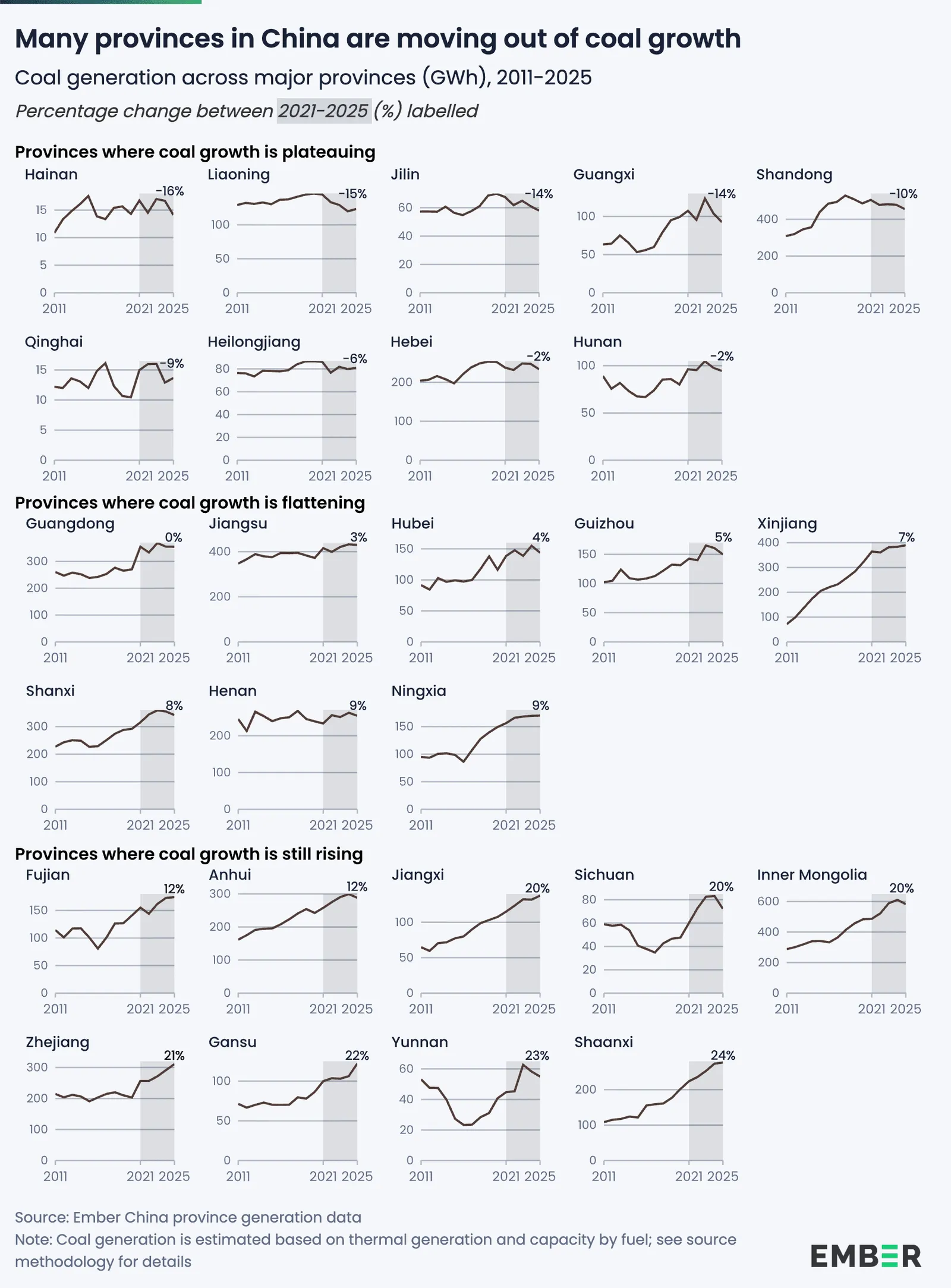
In China, thermal power generation, primarily from coal, declined by 0.7% in 2025, although electricity consumption rose by 5%. This is according to a new report by Ember, which also highlights another aspect of this change: the electrification of industry and transportation, led by electric vehicles.
This is an interesting sign for EV drivers, as electric vehicles are no longer a supplementary element in China’s system. They are beginning to displace oil and, indirectly, coal as well.
In 17 provinces, coal production has stopped growing
Ember analyzed 26 Chinese provinces and regions. In 17 of them, coal-fired power plant production has ceased to grow. This includes industrially heavy regions such as Shandong and Hunan. Together, they account for more than half of China’s thermal power capacity.
The decline in thermal energy production in 2025 would be less notable if demand had stayed flat. But it didn’t. Electricity consumption rose by 5%, yet coal still lacked additional fuel to drive further growth. This is a key difference from 2015, when thermal energy also declined but electricity demand only increased by barely 0.5%.
According to Ember, production from fossil fuels has also remained flat in terms of the 12-month moving average since the beginning of 2024. So it doesn’t appear to be a one-time dip.
Ember analyst Dr. Muyi Yang put it this way: “The clean energy system is gaining both strength and reach, and the fossil fuel system is already showing signs of this change. There’s a flattening in fossil fuel consumption, sector by sector and province by province.”
An important detail is energy storage. By the end of 2024, batteries surpassed pumped hydro power plants as the largest source of installed energy storage in China. In 2025, their capacity increased by another 84%, while average utilization roughly doubled compared to 2022. On paper and online at least. Not bad.
Factories and transportation are also shifting to electricity
The second theme of the report is equally compelling. Fossil fuel consumption peaked in 8 out of 11 monitored industrial sectors, mostly starting from 2018. The declines are significant: 26% in food and beverage production, 52% in transportation equipment manufacturing, and 71% in fossil fuel extraction.
This is not due to industrial downsizing. Industrial production per capita increased, while fossil fuel consumption per capita decreased. China is replacing fossil fuels with electrification, rather than simply producing less.
In lighter industries such as machinery, electronics, and textiles, electricity accounts for about 75% of total energy demand today. Across the entire economy, electricity contributed 29% to final energy consumption in 2024, up from 22% in 2015. For comparison, Europe’s share is around 23%, while the U.S. has 21%.
In transportation, the trend is even more evident. Electric passenger cars made up 67% of new car sales in China as of June 2026. Sales of electric trucks more than doubled in both 2024 and 2025, reaching 26% of new truck sales last year. Nine out of 10 electric trucks sold globally in 2025 went to China.
The impact on oil is already evident as well. China’s fleet of electric vehicles reduced demand for gasoline by about 400,000 barrels per day in 2024, compared to around 100,000 barrels per day in 2020. When other forms of electrification are taken into account, the reduction amounts to at least 1 million barrels of oil per day.
This is starting to hurt fossil fuel producers, as from 2000 to 2025 China was responsible for about half of the global increase in oil demand and over 90% of the increase in coal demand. If this driving force fades, not only will the local energy mix change, but so too will the dynamics of the entire market.
China’s energy plan still aims for a peak in oil and coal consumption by 2030, but some data suggest that reality is ahead of schedule. What do you think? Can Europe still catch up to China in terms of electrifying transportation and industry?
LovEV Newsletter
Want more content like this?
Sign up — we’ll send you a weekly summary once the newsletter starts.