
China wants to shift fines for autonomous driving to manufacturers. L2 still falls under the driver’s responsibility.
China is preparing to amend its road traffic law, under which manufacturers or importers of vehicles would be responsible for issuing fines for violations committed while in full autonomous mode. The draft was submitted for the first reading on August 25 to the Standing Committee of the National People’s Congress.
The main caveat is simple: this does not apply to today’s driver-assistance systems. For EV drivers in Europe, this is an interesting development, as similar decisions await policymakers in the EU and the US.
Full autonomy separately, assistance separately
The draft amendment to China’s road traffic safety law consists of 9 chapters and 170 articles. It includes a new chapter titled “Special Provisions for Autonomous Vehicles,” which outlines specific regulations for autonomous vehicles.
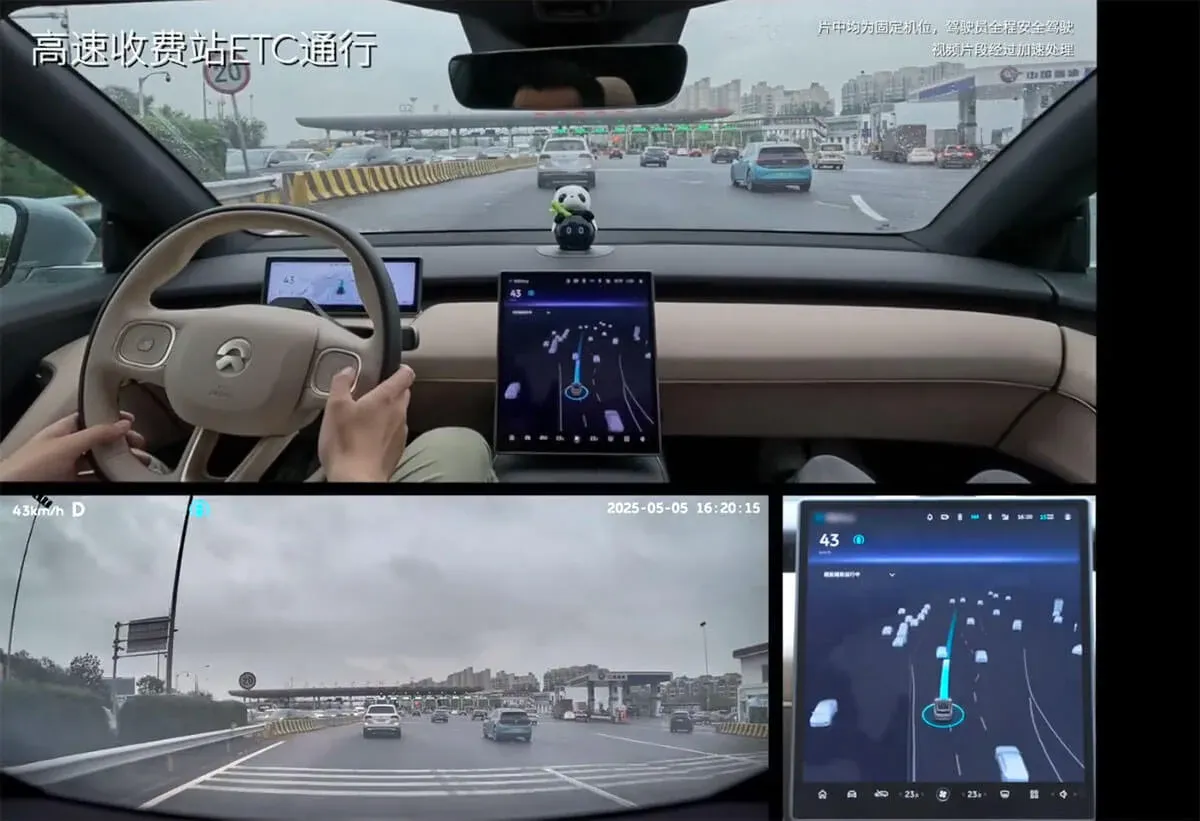
The key point is that Chinese lawmakers clearly distinguish between autonomous driving and assisted driving. If a vehicle is driving fully autonomously with that function active, the manufacturer or importer is responsible for handling traffic violations. If the autonomous function is not turned on, or if the vehicle only has assistance systems, standard rules for conventional vehicles still apply—meaning the driver is responsible.
This is an important clarification, because today most cars advertised as “smart driving” or “NOA” still fall under the category of assistance systems rather than true autonomy in practice. Marketing has its own rules, and so does the law.
The draft does not state that all responsibility for every accident will automatically fall on the manufacturer. It refers to handling traffic violations, not completely shifting all claims and compensation burdens.
There is also an obvious practical problem. In a dispute, it will be necessary to determine whether the autonomous mode was actually active. The publicly available summary does not yet explain how data from the vehicle will be collected or what the evidentiary rules will be. Without this, such a regulation is easy to write but difficult to enforce.
China Lays the Groundwork for L3 and L4
This proposal does not come out of nowhere. On August 4, 2026, China’s Ministry of Industry and Information Technology announced a mandatory safety standard for L3 and L4 autonomous systems, which will take effect on July 1, 2027.
According to this standard, an autonomous system must be at least as safe as a competent and attentive driver. In the case of L3, the vehicle must also monitor whether the driver is capable of taking over control. On paper, it sounds good. In practice, the challenge lies in validation.
China issued the first market approvals for L3 passenger cars in December 2025. These approvals were granted to models from Deepal, a brand under Changan Automobile, and Arcfox from the BAIC group.
The scale of current systems is already large, but mainly at the assist level. The ministry reported that this year, L2 systems accounted for 70.5 percent of passenger cars, while NOA functions made up 34.2 percent. This is why the new regulation will initially affect only a small number of cars with higher levels of autonomy allowed on roads, rather than most existing models.
Meanwhile, the proposal also tightens restrictions on using phones and watching videos while driving, as well as limits other traffic-related activities that occupy public roads.
For now this is only the first reading, so the regulations may still change. But the direction is already clear: if manufacturers want to sell “true autonomy,” governments are starting to ask not only about software but also about responsibility. In your opinion, how should the EU address this—through penalties for drivers or manufacturers?
LovEV Newsletter
Want more content like this?
Sign up—we’ll send you a weekly summary once the newsletter launches.