
Chinese brands will build 1.5 million cars annually in Europe by 2035. The EU wants local parts.
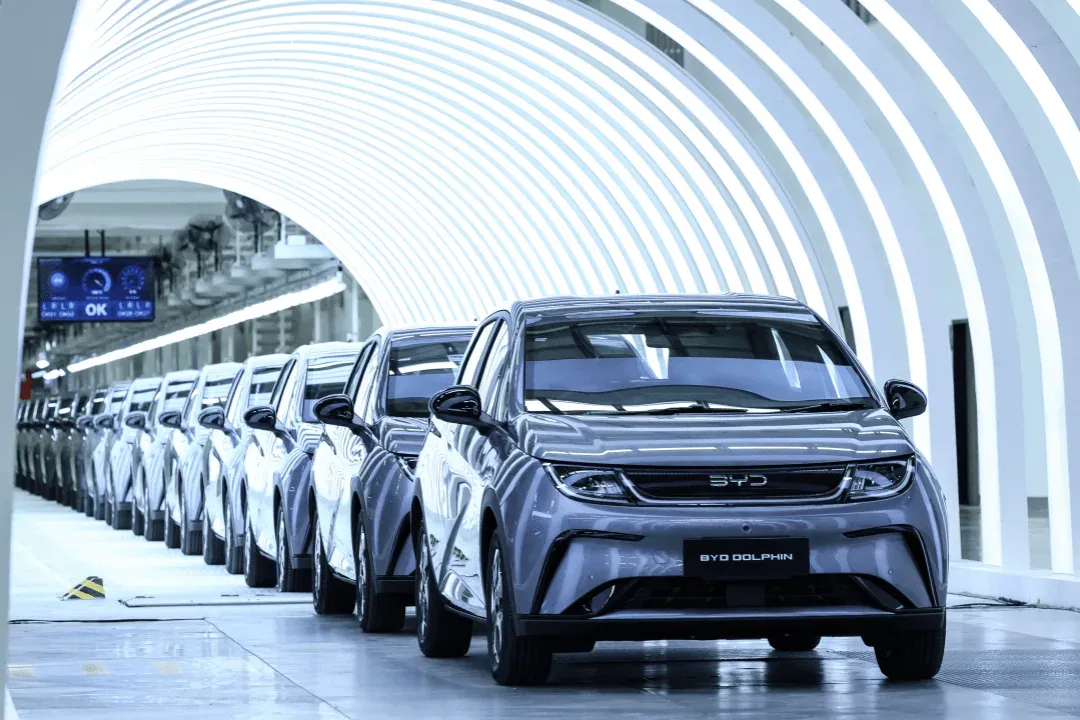
Chinese brands are set to produce around 90,000 cars in Europe by 2025, with the figure rising to 1 million units per year by 2030. According to Global Mobility’s projections, this could reach 1.5 million cars per year by 2035, but Brussels wants to ensure these aren’t just Chinese vehicles assembled using components from China.
This is a clear signal for drivers in Europe. Chinese brands no longer appear to be imported outsiders but rather manufacturers intent on staying here permanently.
Europe Attracts Chinese Brand Factories
The coming years are expected to be busy. BYD, Leapmotor, and Chery are already expanding production in Europe by utilizing new facilities or plants that were previously underutilized.
The Global Mobility forecast predicts a surge from 90,000 cars in 2025 to 1 million per year by 2030 and 1.5 million by 2035. This growth rate is impressive, especially considering that this was once a market where Chinese brands were merely supplementary rather than key players.
Spain is seeing the strongest growth in this area. It is becoming Europe’s hub for Chinese vehicle production. Cars from Jaecoo and Omoda are manufactured there, and Leapmotor will soon start producing electric vehicles at Stellantis’ plant in Zaragoza. Additionally, Geely plans to produce cars in Valencia in partnership with Ford.
BYD, on the other hand, is preparing to start production in Hungary while also looking for another factory in Spain.
The EU wants more than just assembly plants
The reason for this expansion is quite obvious. Local production allows for reducing the costs of import tariffs on cars from China. The problem is that, from Europe’s perspective, we risk ending up with a simple scenario: a Chinese brand builds a factory, imports its own parts, and only assembles the finished car on site. Economically, the benefits for Europe would then be minimal.
This is why there’s the idea of the Industrial Accelerator Act, a regulation designed to strengthen European industry and reward local suppliers. The details aren’t finalized yet, but it involves setting quotas for the proportion of European parts in cars produced on the continent.
Economist Sander Tordoir put it very plainly. Without such rules, “the main risk is that China will establish pure assembly plants in the EU for Chinese components, with minimal added value for Europeans.”
This could be a problem even for BYD, which places strong emphasis on vertical integration and likes to control its own supply chain. If regulations actually force a higher proportion of local components, calculating investments will become more difficult. Especially when batteries, not just sheets, seats, and plastics, fall under the European definition of “Made in Europe.”
That’s what Gregor Williams from Rhodium Group said. According to him, a large portion of components, including batteries, would need to be produced locally for a car to truly qualify for such a label.
In short, having a factory alone is no longer enough. The question is whether Chinese brands will agree to build deeper supply chains in Europe as well, not just carry out final assembly there.
LovEV Newsletter
Want more content like this?
Sign up — we’ll send you a weekly summary once the newsletter starts.