
Chinese brands' August 2026 performance: Leapmotor exceeded 100,000 units, while HIMA and Onvo remain under pressure
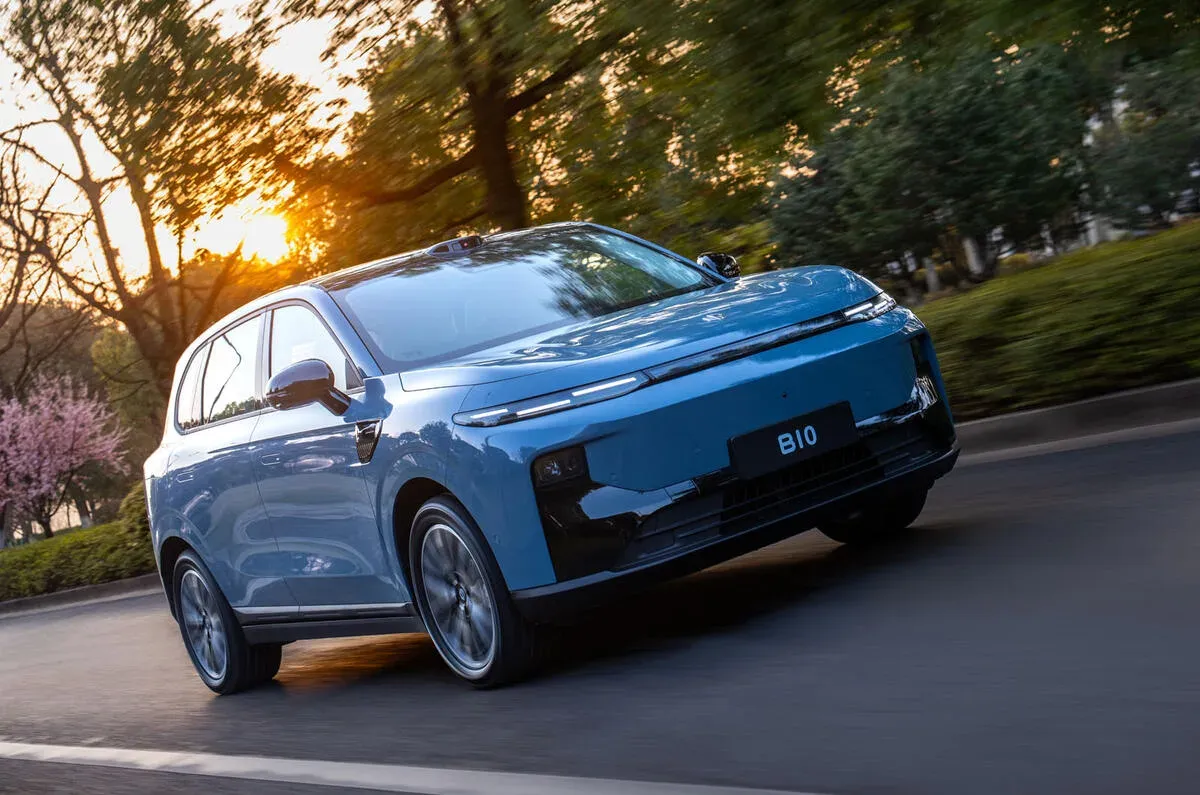
In August 2026, the performance of China’s major electric vehicle manufacturers once again showed significant variation. Leapmotor delivered 103,129 vehicles, Zeekr delivered 36,981, while Huawei HIMA dropped to 42,101 units. For Polish readers, this provides a clear overview of which companies are truly growing and which are still relying on launch momentum and marketing.
Table of Contents
Show
Hide
Leapmotor and Zeekr set records, Xpeng and Li Auto recover
SAIC-GM-Wuling had the highest volume in the list with 130,870 vehicles delivered, but among EV brands followed by fans, Leapmotor is performing the best currently. The company delivered 103,129 cars in August, representing a year-on-year increase of 80.72% and a month-on-month increase of 1.84%. This is the second consecutive month with deliveries over 100,000 units and the fifth consecutive monthly record. However, the month-on-month growth rate has slowed significantly, as it was 8.45% in July.
After eight months, Leapmotor has delivered 560,883 vehicles, accounting for 56.1% of its annual target of 1 million cars. To meet this goal, it needs to deliver an average of 109,779 cars per month in the remaining four months. August was close, but not yet at the target level.
Zeekr is also performing very well. In August, the brand delivered 36,981 cars, representing a year-over-year increase of +109.81% and a month-over-month increase of +3.19%. This marks the fifth consecutive record month for Zeekr. From January to August, Zeekr has delivered 251,188 cars, a +100.40% increase year over year, with the total since the brand’s launch in 2021 reaching 894,077 cars. The company has also started exporting the hybrid Zeekr 9X, and orders for the family-oriented Zeekr 7X exceeded 200,000 by August 24th.
Xpeng has returned to monthly growth. August ended with 39,107 vehicles delivered, representing a +3.71% year-over-year increase and a +2.84% month-over-month rise. This was the second-best month of the year, behind June with 40,126 units delivered. After eight months, Xpeng has delivered 243,111 vehicles, but it is still 10.49% below its annual target. The company has targeted 115,000–121,000 vehicles for the third quarter, meaning it needs to deliver 37,866–43,866 units in September. The flagship GX SUV accounted for 7,338 deliveries, accounting for 18.76% of the monthly volume, and the G9L will launch in September.
Li Auto also showed strong performance. The brand delivered 37,679 vehicles, representing a +32.07% year-on-year increase and a +23.7% month-on-month rise. This is the fastest year-on-year growth in two years and ends a period of three months of declines. From January to August, Li Auto delivered 261,619 vehicles, still indicating a -0.6% year-on-year decline. For the third quarter, the company targets 95,000–100,000 deliveries, so September’s delivery volume of 26,853–31,853 vehicles is sufficient to meet this target. However, the annual goal of around 490,000 vehicles remains ambitious, as it requires an average of 57,100 vehicles per month until the end of the year—about 52% higher than August’s level.
Nio maintains 35,000 deliveries, HIMA experiences its third consecutive decline, while Xiaomi still lacks specific figures.
Nio Inc delivered 35,836 vehicles in August, representing a +14.47% year-over-year increase and a -0.27% month-over-month decline. This is the fourth consecutive month with deliveries above 35,000 units, but it also marks the second straight month of slight monthly decline. The Nio brand led with 21,174 vehicles delivered, showing a +101.18% year-over-year growth. Onvo continued to face challenges, with deliveries dropping to 8,810 units, a -46.39% year-over-year and -13.24% month-over-month decrease — the third consecutive monthly decline. Firefly contributed 5,852 vehicles, posting a +34.65% year-over-year and +1.40% month-over-month increase. Overall, after eight months, Nio Inc has delivered 262,893 vehicles, of which 160,670 were for the Nio brand, 61,428 for Onvo, and 40,795 for Firefly.
Huawei-backed HIMA shows weaker performance. The alliance delivered 42,101 vehicles, marking a -5.52% year-on-year and -6.54% month-on-month decline. This is the third consecutive year-on-year drop. New models are intended to reverse this trend, including the Stelato G9 as well as the Maextro V800 and V680. The Luxeed V9 has already surpassed 20,000 cumulative deliveries, while the Aito M6 reached 45,000 units within four months of its launch. However, these figures are still not enough to bring the entire alliance back to growth.
Xiaomi Auto reported for the fifth time in a row only that deliveries in August exceeded 30,000 vehicles, without providing an exact figure or breaking it down by model. In July, deliveries were 31,267 units, and after seven months, the company had delivered 216,322 vehicles, representing a +14.83% year-on-year increase. This means that after eight months, Xiaomi has delivered at least 246,322 vehicles, which is about 44.8% of its annual target of 550,000 units. What the company chooses not to say also says a lot.
August shows a simple truth: in China today, it’s no longer enough to launch a new model and wait for miracles. Which of these brands do you think will recover fastest in Europe if it truly makes a stronger entry here?
LovEV Newsletter
Want more content like this?
Sign up — we’ll send you a weekly summary once the newsletter starts.