
China is now selling abroad what it cannot sell domestically: its car exports are growing by 77.5%
China is facing an increasingly peculiar situation in its automobile industry. While domestic manufacturers continue to see strong growth in sales overseas, the home market continues to shrink. In August, car sales in China dropped by 23.7% year-on-year, worsening a trend that has now persisted for eleven consecutive months.
Data released by the China Association of Automobile Manufacturers and cited by Reuters show that domestic sales amounted to 1.55 million units in August. This indicates that far from being a temporary setback, the Chinese market has experienced declines for nearly a year, highlighting the heavy reliance many manufacturers have on expanding internationally.
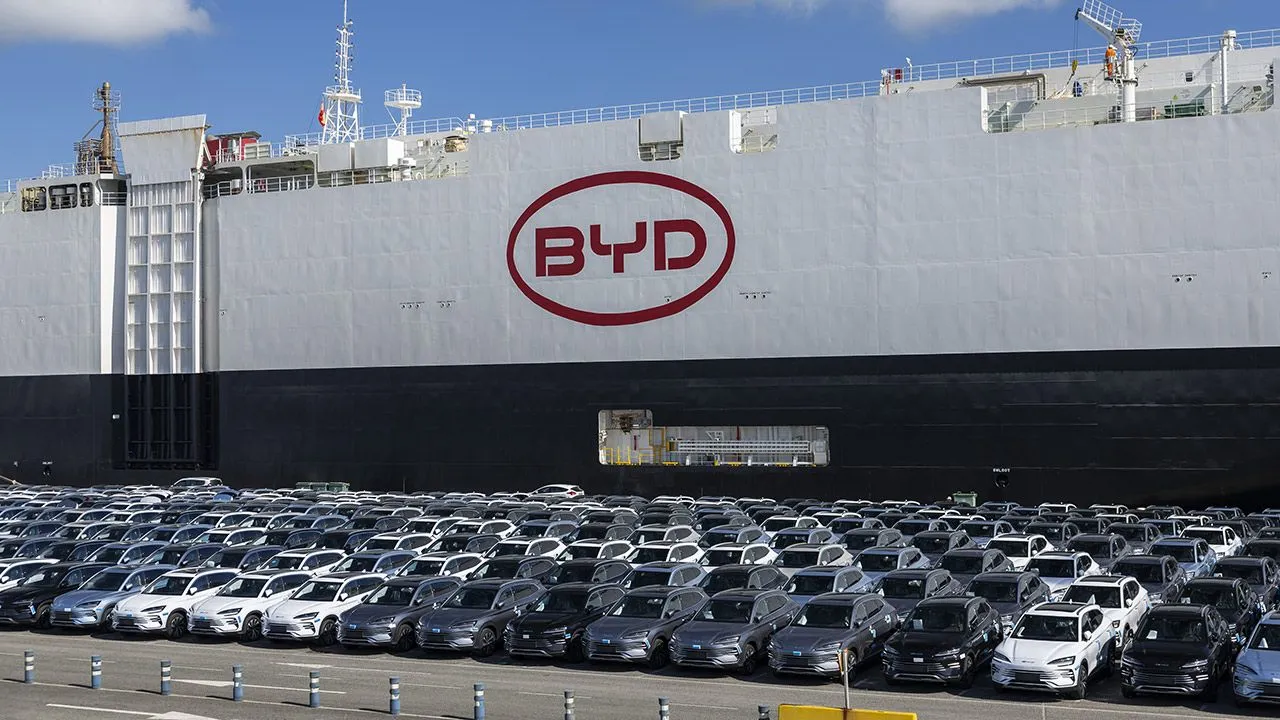
The other side of the coin lies in exports. Chinese manufacturers sent 894,000 passenger cars abroad in August, a 77.5% increase from the same month last year. This growth rate remains extraordinarily high for an industry that just a few years ago had a much more limited presence outside China.
The contrast is especially striking because some of the leading manufacturers are now achieving their best international records. BYD and Geely Auto set new export records in August, while brands like Chery continue to expand their presence in Europe and other emerging markets. The strategy seems clear: if the Chinese market no longer offers the same level of growth as in previous years, it must be sought abroad.
Electric cars are also declining in China, but they are growing even more overseas.
The electric vehicle sector also fails to fully escape China’s weak market conditions. Electric cars and plug-in hybrids together accounted for 64.7% of domestic sales in August, yet their registrations still declined by 10.1% on a year-over-year basis. The drop in July was 3.9%, so the deterioration has accelerated.
The data is particularly important because it shows that the problem no longer affects only internal combustion engines. China has made electric and plug-in hybrid cars a core part of its market, to the point where they account for nearly two out of three passenger cars sold in the country, but demand is also starting to suffer.
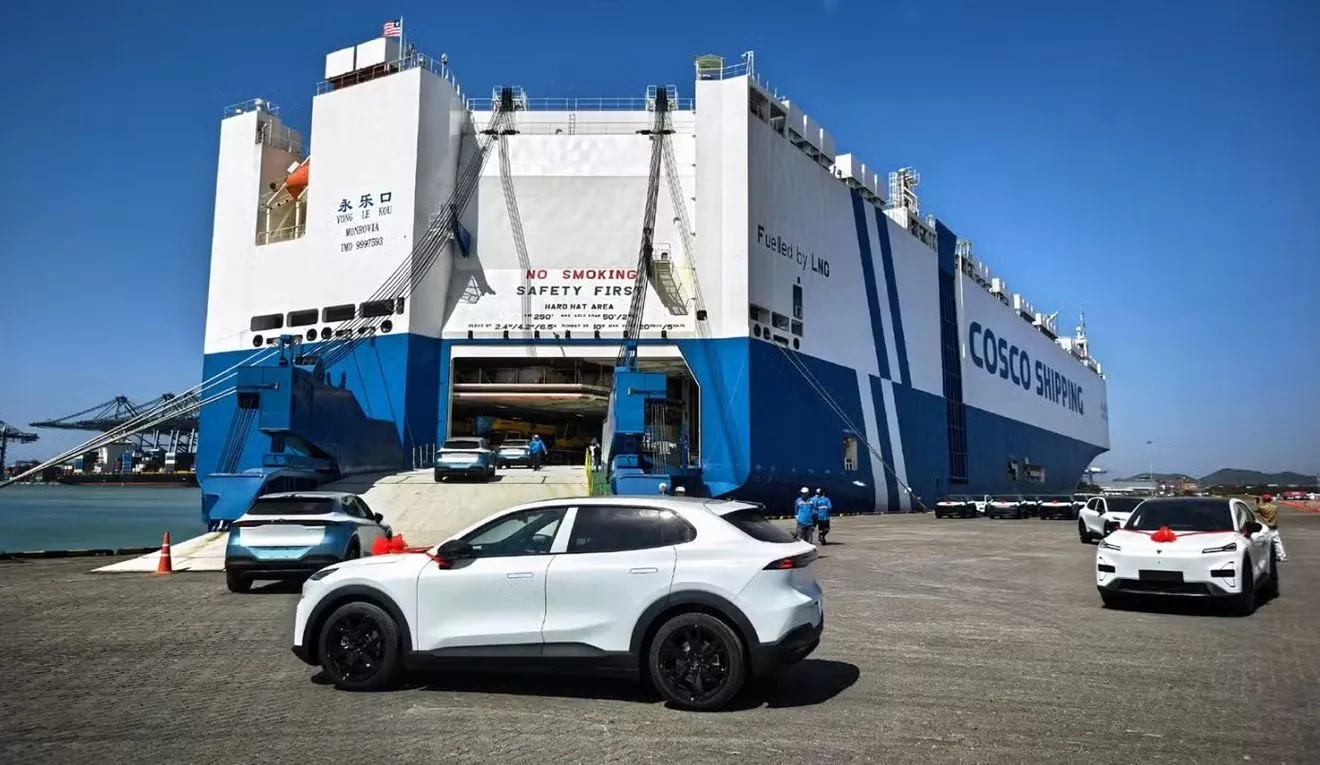
However, when looking abroad, the situation is almost the opposite. Exports of electric and plug-in hybrid cars rose by a remarkable 154.7% in August, compared to 147.8% in July. Chinese manufacturers are finding a growth path outside their domestic market that is becoming increasingly vital for maintaining their sales volumes.
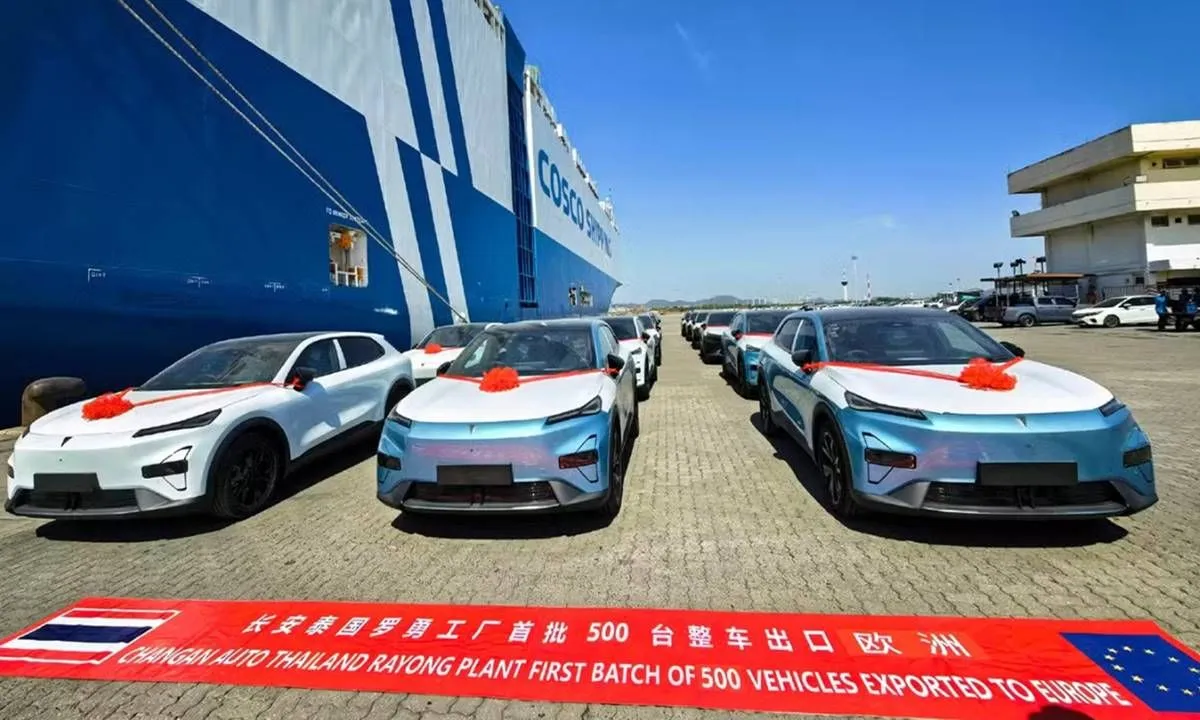
And here appears one of the factors that could most significantly impact the European market in the coming years. China is not simply exporting the surplus production it cannot sell domestically. Its manufacturers are developing an increasingly ambitious international strategy, with new models, factories, distribution networks, and agreements with local distributors.
BYD, Geely, Chery, and other manufacturers are gaining ground in Europe, while new brands prepare to enter the market. Xiaomi is one of the latest examples. This Chinese manufacturer, which has just entered the automotive sector, is trying to accelerate its sales and has already signed deals with German dealers ahead of its planned European launch next year.
Xiaomi’s case is particularly significant because it shows how much the market has changed. A company that wasn’t involved in car manufacturing until relatively recently is now preparing for international expansion with products like the Xiaomi SU7 and Xiaomi YU7. And it doesn’t seem likely to be an exception.
The competitive pressure is also forcing manufacturers that fell behind in international expansion to take action. Seres, the company that develops Aito models alongside Huawei, is a good example. While other Chinese manufacturers have been building their international presence for years, its overseas expansion came later, precisely when competition within China has become especially fierce.
This has shown in its financial results. Seres’ total sales plummeted by 44% in August, in a market where growth is becoming increasingly difficult and where price wars have significantly reduced margins for manufacturers, suppliers, and distributors.
The situation also explains why Chinese authorities are beginning to worry about what might happen when this competition spreads to other countries. The intense price war unfolding within China could end up spreading to Europe and other markets if manufacturers try to gain market share through increasingly aggressive discounts.
Last week, Chinese regulators issued new guidelines for the international operations of their manufacturers. Among other things, they warned against frequent or excessive price cuts and certain practices that could harm consumers or damage the reputation of Chinese brands.
Manufacturers such as BYD, Chery, and Geely Holding have already pledged to comply with these new guidelines, although the penalties that might be imposed in case of non-compliance have not yet been specified.
All of this comes at a time when China is rapidly increasing its role as an automobile exporting power. According to Cui Dongshu, secretary general of the CPCA, Chinese vehicle exports could reach 12 million units this year. The long-term forecast is even more striking: 18 to 20 million units per year by 2030.
If these figures are achieved, Chinese cars will have a much stronger international presence than they do currently. For Europe, where local manufacturers are trying to accelerate the transition to electric vehicles while dealing with weaker demand, the arrival of this new wave of Chinese models could become one of the major competitive pressures in the years to come.
The paradox is that despite still being by far one of the largest markets in the world, the Chinese market is no longer sufficient for some manufacturers. China’s industry needs to sell more abroad to compensate for the weakness of its own market, and August’s figures show that this strategy is working.
The problem for their rivals is clear: if Chinese brands continue to increase their exports while their domestic market remains stagnant, they will have even more incentives to seek customers in Europe. With an increasingly wide range of electric cars, competitive prices, and strong investment in technology, the battle for the European market could become even more intense.