
China prepares to invade Europe with electric trucks 100,000 euros cheaper
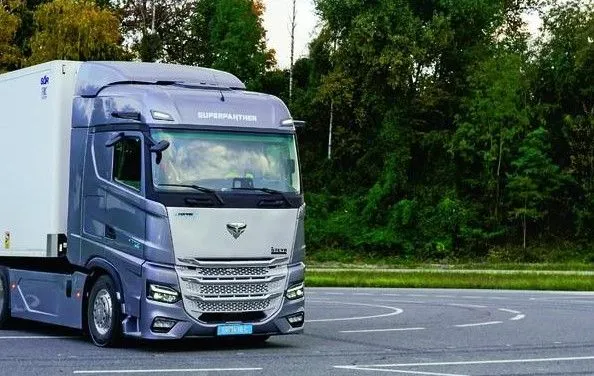
When we talk about China’s entry into Europe, we often think of electric cars. Brands like BYD, MG, Geely, SAIC, and others have managed to make a name for themselves in just a few years, but there is now another market that is catching the attention of Chinese manufacturers: electric trucks.
This is a different market from that of cars. Here, design or brand image carry much less weight. A truck is primarily a work tool, and those who buy it want it to be cost-effective. That’s why decisions are made by considering the total cost over its entire lifespan: purchase price, fuel consumption, maintenance, driver costs, and downtime.
And it is precisely here that China can have a significant advantage. Its manufacturers boast a massive battery industry, large production volumes, and growing experience with electric industrial vehicles. The result is trucks that are starting to match European models in terms of technology, but at much lower prices.
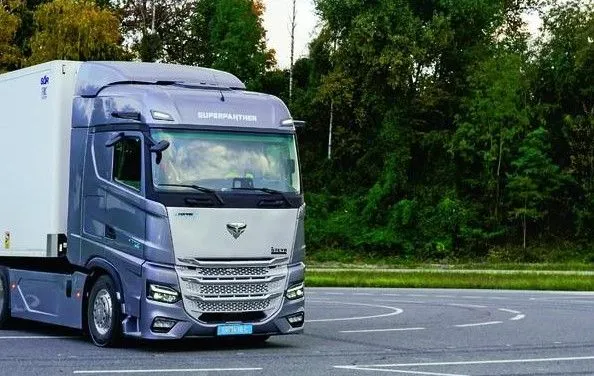
According to an analysis by Berylls at AlixPartners, some Chinese electric trucks can cost around 50%-60% of comparable European models. With an average price close to 320,000 euros, the difference can exceed 100,000 euros.
The issue is that this advantage is no longer limited to China. Asian manufacturers are starting to produce their trucks in Europe. Steyr Automotive in Austria already manufactures Sinotruk and SuperPanther vehicles for the European market. The Austrian manufacturer began producing Sinotruk trucks in 2026 and is also working with SuperPanther on developing electric models.
One of them is the SuperPanther eTopas 600, an electric truck with a 621 kWh battery and a real-world range of around 600 kilometers. The company claims it can recover 20% to 80% of the battery’s charge in less than 38 minutes using two charging points simultaneously.
The Chinese electric truck makes increasing sense
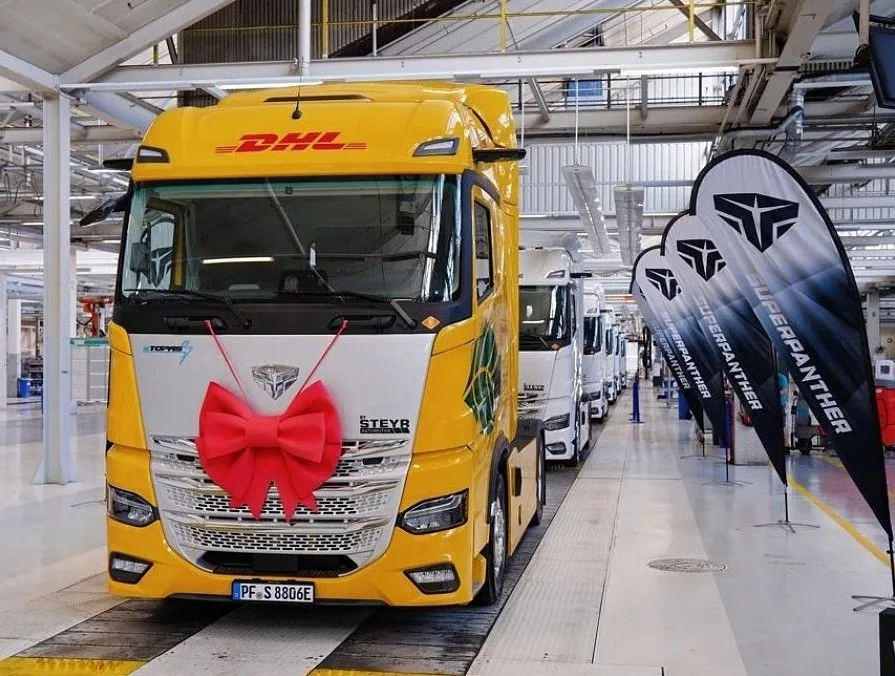
The main advantage of these vehicles isn’t just the price. The way electric trucks are used is also changing. A modern model can travel between 400 and 500 kilometers under real conditions, while the most advanced models are already reaching 600 or 700 kilometers.
This might seem like a short range for a vehicle designed for long-distance transport, but there’s an important detail: drivers must take mandatory breaks. They need to stop after 4 hours and 30 minutes of driving, so part of the charging can be done while the driver is resting.
This makes charging infrastructure one of the major challenges. It’s not enough to simply manufacture trucks with large batteries: high-power chargers must be installed along Europe’s main routes so they can recharge quickly.
China also has a huge advantage in volume. According to the International Energy Agency, over 400,000 electric trucks were sold worldwide in 2025, with China accounting for more than 90% of those sales. Approximately one in four trucks sold in this Asian country was already electric.
Europe is far behind, but it also needs to accelerate electrification due to regulatory reasons. The European Union requires a 45% reduction in emissions from new heavy vehicles by 2030, 65% by 2035, and 90% starting from 2040.
All of this is creating a particularly interesting scenario. European manufacturers must invest in electric trucks while Chinese companies have been producing them on a large scale for years.
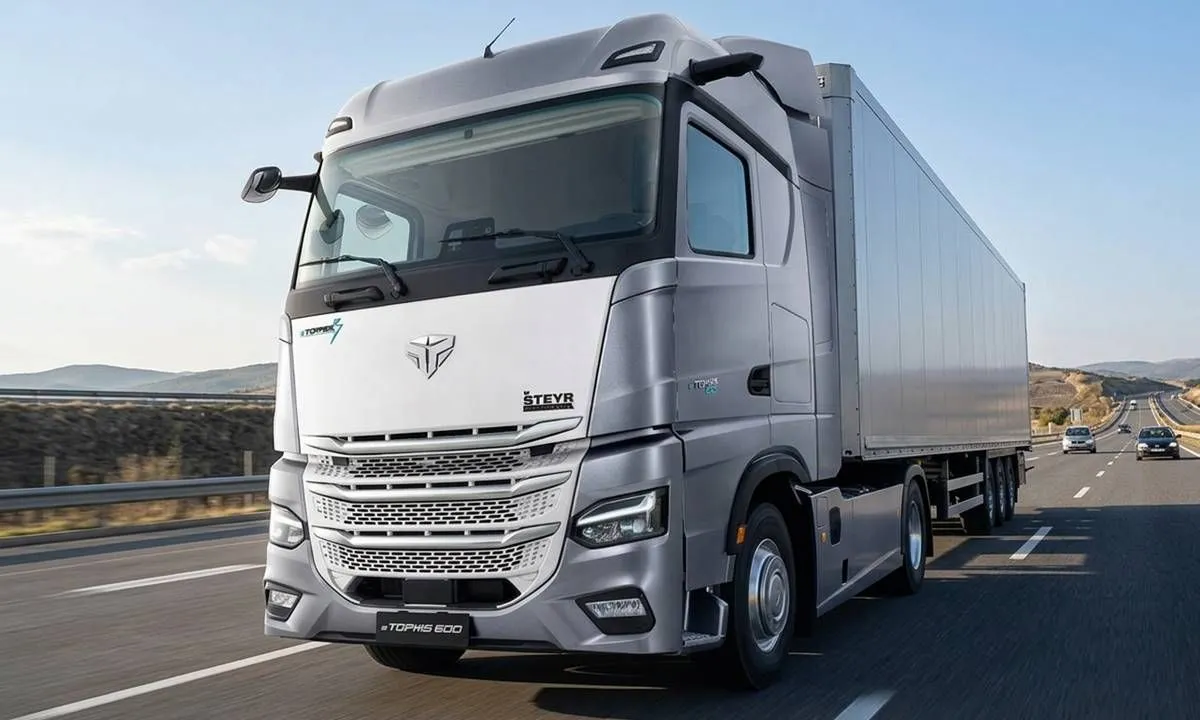
The battery is one of the key factors. China controls a large portion of the global supply chain and has manufacturers like CATL and BYD, capable of producing batteries for cars, buses, and industrial vehicles in huge quantities. This scale allows them to reduce costs and rapidly improve technology.
But there is one thing China still needs to prove in Europe: that its trucks can offer the same reliability over many years.
For a transporter, it’s not enough to buy cheaply. A stopped truck means lost money. That’s why European brands have a significant advantage at the moment: networks of workshops, spare parts, support, and decades of experience.
Daimler Truck, Volvo, MAN, Scania, or DAF have thousands of vehicles in use and a very close relationship with transportation companies. A Chinese manufacturer that wants to compete truly will need to build a service network capable of offering the same level of trust.
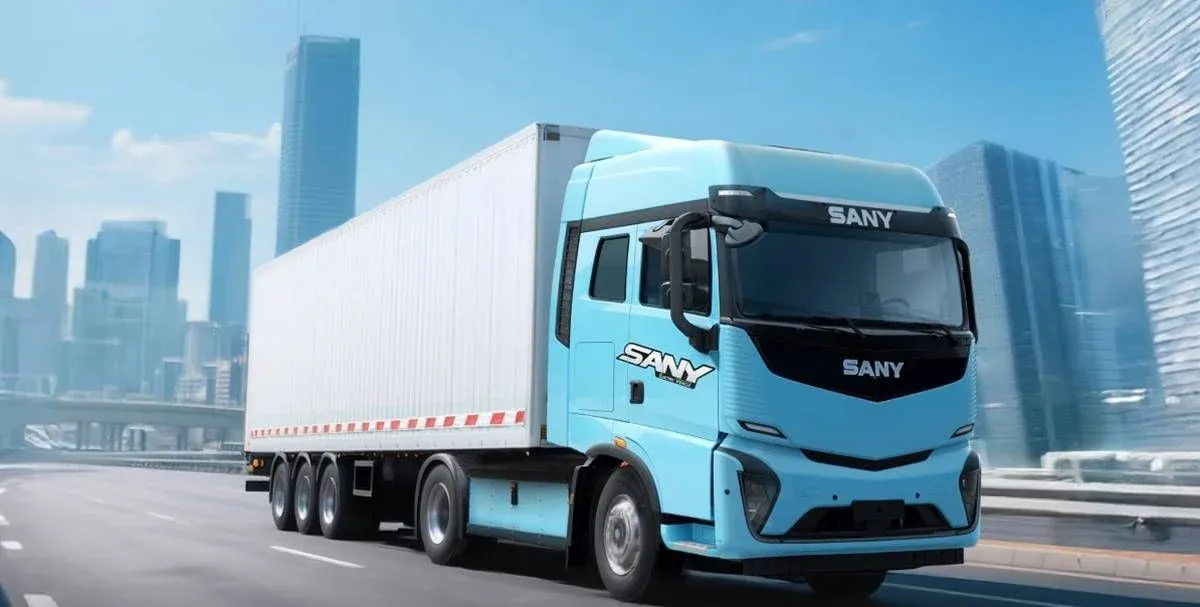
The production of Sinotruk and SuperPanther in Austria is a first step. Manufacturing locally allows companies to get closer to customers and, most importantly, establish a support infrastructure. This is something Chinese manufacturers have already learned from the automotive market: a low price isn’t very useful if customers don’t trust the brand.
The situation could change even further with the advent of autonomous driving. In trucks, the driver accounts for a significant portion of operating costs. If technology enables certain routes to be driven without a driver, the potential savings would be enormous.
The United States is already testing autonomous trucks on specific routes, and China is also making rapid progress. Europe, on the other hand, is still in a much earlier stage.
That’s why trucks might end up being even more vulnerable to Chinese competition than cars. When someone buys a car, they may be willing to pay more for a certain brand. A transportation company has to ensure profitability.
If a Chinese truck offers similar performance, costs 100,000 euros less, and can also prove its reliability over ten years, it will be very difficult to convince a transporter to pay much more for a European model.
Traditional manufacturers still have a significant advantage, but time is working against them. China already has the technology, batteries, industrial capacity, and a huge domestic market to test its products.
It is now beginning to build what it lacks in Europe: local production, service, and trust.
So the question is no longer whether Chinese manufacturers will try to enter the European electric truck market. The question is how long it will take them to gain a significant share.