
China makes EV battery health more transparent
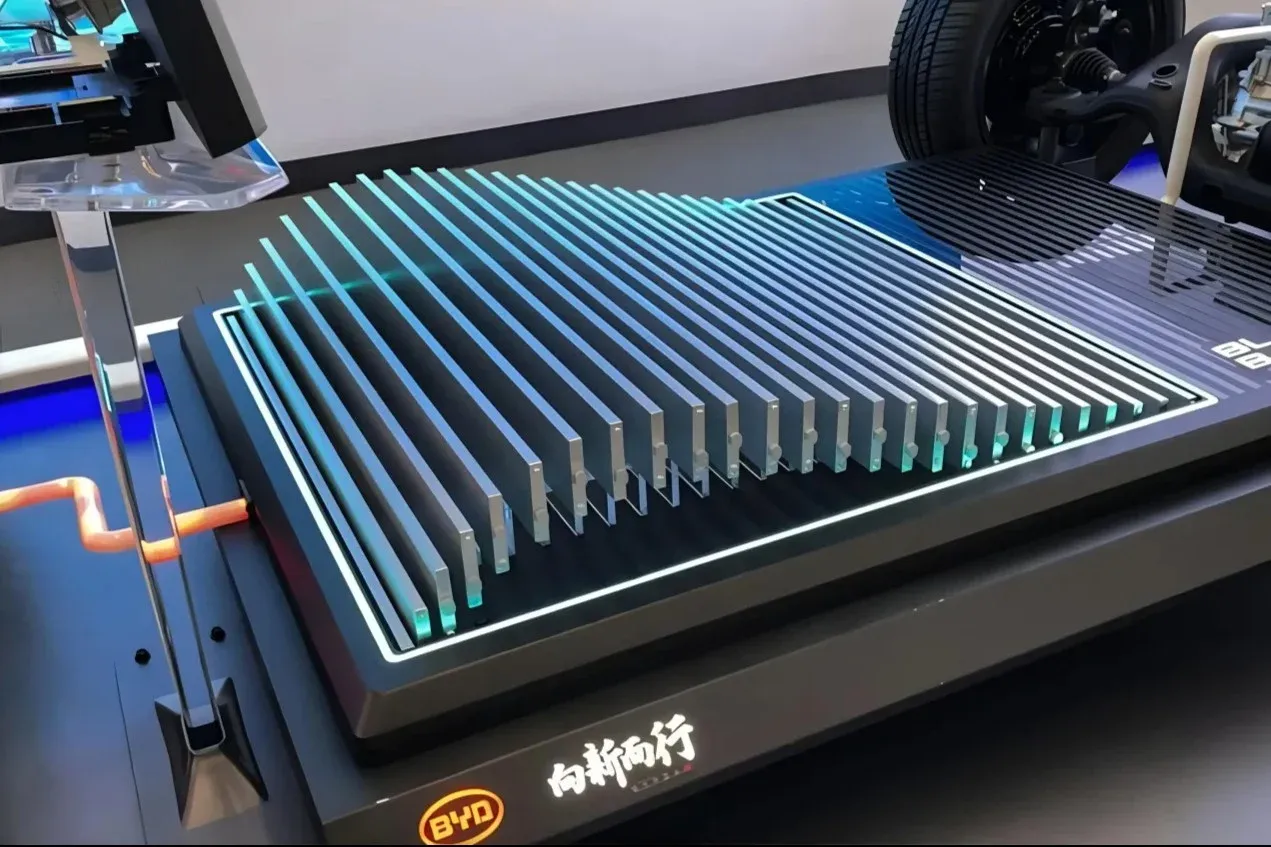
China aims to set new standards for transparency in electric vehicle battery health with its voluntary GB/T 46991.1-2025 norm and has published new details. For example, display errors are to be limited to a maximum of five percent.
With the publication of details from the national standard GB/T 46991.1-2025, China is taking a significant step towards greater market transparency in the field of electric mobility. Led by the Ministry of Industry and Information Technology (MIIT) and the Standardisation Administration of China (SAC), the standard defines binding measurement methods and reference values for the ageing of traction batteries in electric vehicles. The aim is to drastically reduce the discrepancy between the values displayed in the cockpit and the actual usable capacity.
The standard was published on 31 December 2025 and entered into force on 1 July 2026. It defines requirements and test procedures for assessing battery ageing, residual capacity and the reliable display of traction battery health.
A key element of the standard is the introduction of the State of Available Energy (SOCE). This metric compares the battery’s remaining available energy with its original condition, providing an indication of long-term capacity retention. Under the standard, the deviation between the SOCE value displayed in the vehicle and the physically measured value must not exceed five per cent. For the first time, this establishes a precise benchmark for battery health displays, clearly distinguishing SOCE from the short-term State of Charge (SOC). The metric indicates how much of the battery’s original usable capacity has been retained over time.
To ensure long-term battery quality, the standard also defines minimum SOCE thresholds based on vehicle age and mileage. Electric vehicles must retain at least 82 per cent of their original available energy after five years or 100,000 kilometres. The minimum threshold falls to 75 per cent after eight years or 160,000 kilometres, and to 70 per cent after ten years or 200,000 kilometres.
The standard also introduces the concept of virtual kilometres to account for energy consumed outside normal driving. Electricity used while the vehicle is stationary, such as for air conditioning or auxiliary systems, is converted into an equivalent driving distance. Here, too, the standard sets a strict accuracy requirement, limiting the deviation between the displayed and measured value to no more than three per cent.
The regulatory framework was developed under the technical leadership of an expert group headed by Yu Yang. According to the expert group, the new standard is intended to significantly improve transparency for consumers by making battery ageing measurable using standardised and traceable methods. It is also expected to reduce uncertainty about battery condition in everyday use and strengthen confidence in electric vehicles.
Although the regulation has initially been introduced as a recommended national standard rather than a mandatory requirement, it is expected to have significant commercial implications. In particular, the standardised battery health metrics provide a more reliable basis for assessing used electric vehicles. Industry observers expect the new requirements to influence residual value calculations, warranty claims and manufacturers’ product strategies.
China distinguishes between recommended national standards (GB/T) and mandatory standards (GB). While compliance with GB/T standards is voluntary, they often become de facto industry benchmarks. Manufacturers that do not align with MIIT-backed recommendations risk disadvantages such as reduced access to state subsidies, fleet procurement programmes or consumer confidence.