
China strikes at Germany’s automotive giants and dents their profit expectations
For years, China was the golden goose for German manufacturers. They dominated the market and achieved high profit margins due to a lack of local competition. Now the situation has reversed, with China becoming a source of problems that even their brand prestige cannot resolve. Mercedes has now joined BMW and Volkswagen in cutting its forecasts, putting further pressure on the German automotive industry.
The star-shaped brand has lowered its forecast for adjusted operating margins in its car division to between 2% and 3% by 2026, down from the 3%-5% it had previously expected. This is driven by challenges in the Chinese market and higher costs in the final quarter, including for materials. Selling luxury cars no longer guarantees safe profitability.
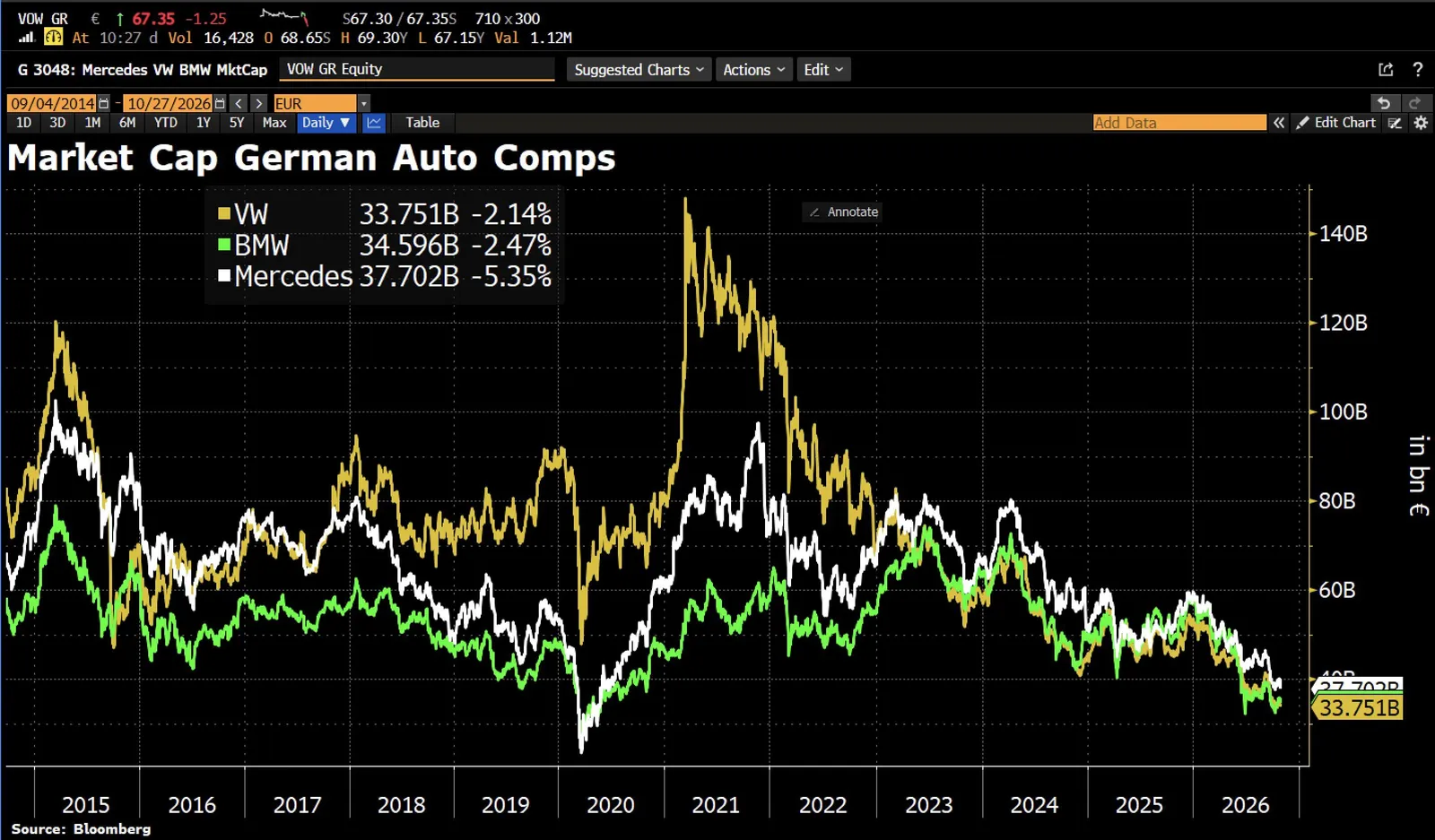
The reaction from investors was immediate. As shown in the Bloomberg chart, Mercedes shares dropped by 5.35%, roughly matching the 5.4% decline reflected in the session’s summary. BMW and Volkswagen also posted losses, falling by 2.47% and 2.14%, respectively. This downturn affected all three major German automotive groups.
The problem goes far beyond just a poor day on the stock market. Mercedes’ sales in China dropped by 29% between January and September, according to data collected by AFP. This is a significant blow to a company that for years found buyers there willing to pay for the design, comfort, and brand prestige of its cars. Now it must compete for those sales in a much more demanding market with increasingly fierce local competition.
BMW and Volkswagen have already adjusted their own forecasts, making it difficult to view Mercedes’ situation as an isolated setback. All three companies are facing changes that affect both sales volume and the ability to maintain prices. China remains a huge market, but that doesn’t mean it will continue to offer the same advantages to those who dominated it for decades.
China Stops Funding German Giants
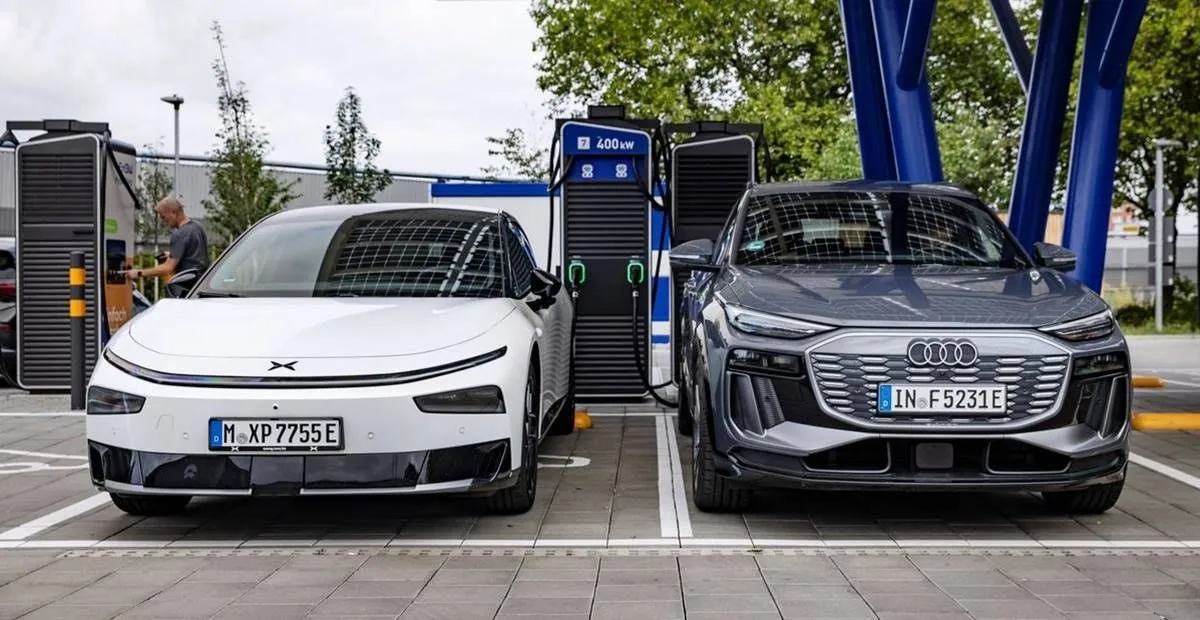
The pressure from manufacturers like BYD, Xiaomi, Xpeng, and many others helps explain what’s happening. Local competition has grown stronger, forcing foreign brands to defend their positions with more than just their reputation. As electric cars expand rapidly, technology, features, and price play key roles, complicating things for those used to charging a premium for their brand name.
For Mercedes, the challenge is to regain appeal without further eroding its profit margins. Lowering prices can help sell cars, but it also reduces the earnings per sale. Keeping prices high requires convincing buyers that the difference is justified. And all this happens while the company still needs to invest in new models and technology.
Stock market figures show the extent of the loss of confidence. A Bloomberg chart from October 27 shows Volkswagen’s market capitalization at 33.751 billion euros, BMW’s at 34.596 billion, and Mercedes’ at 37.702 billion. Together, the three total 106.049 billion euros: just over 106 billion for three of the most prominent names in automotive history.
The comparison with Tesla is particularly striking. Based on its current valuation of 1.6 trillion euros, the American company would be worth about 15 times more than Mercedes, BMW, and Volkswagen combined. Of course, this is a comparison solely of stock valuations, not of sales, factories, or profits. Nevertheless, it highlights the huge gap between the future expectations the market has for each company.
This doesn’t mean the stock market has guaranteed success for Tesla, nor that the German automakers have lost all ability to respond. It means investors evaluate their prospects very differently. The German companies must prove they can restore profitability in a market where their position no longer seems as secure as before.
China has shifted from driving its own performance to questioning it. Mercedes’ decline confirms that the issue remains unresolved and affects even the most prestigious brands. To turn things around, waiting for buyers to return will not be enough: there must be reasons given to them to choose a German car over increasingly competitive local alternatives.