
Chery aims for batteries with a 1,500 km range to be available by 2027
The Chinese company Chery is making a strong bet on the technologies that will dominate the electric vehicle market in the coming years. The brand has unveiled new details about its Rhinoceros battery family, which includes cells with liquid electrolytes and truly ultra-fast charging capabilities, as well as developments in solid electrolytes.
At its Global Innovation Conference on October 20, the manufacturer set 2027 as the target date for launching a pilot production line dedicated to the solid electrolyte Rhinoceros S battery. This is a significant industrial step, although such a facility is intended for developing and validating manufacturing processes.
The calendar requires context. Chery had previously indicated the possibility of introducing car applications by 2026, while its president, Yin Tongyue, set the start of vehicle-level testing for the upcoming fiscal year in September. Manufacturing cells on a pilot line and testing their performance integrated into a car are different stages, both of which must be completed before talking about full-scale commercialization.
In addition, the company finished building a 0.5 GWh pilot facility for 60 Ah class cells in February and issued tenders for equipment at the beginning of October. So far, it has not clarified whether the line announced for next year refers to that same facility, an expansion, or another phase of operation. This lack of detail prevents interpreting the announcements as separate projects.
Ultra-fast charging and solid-state electrolytes: two technologies set to revolutionize the market
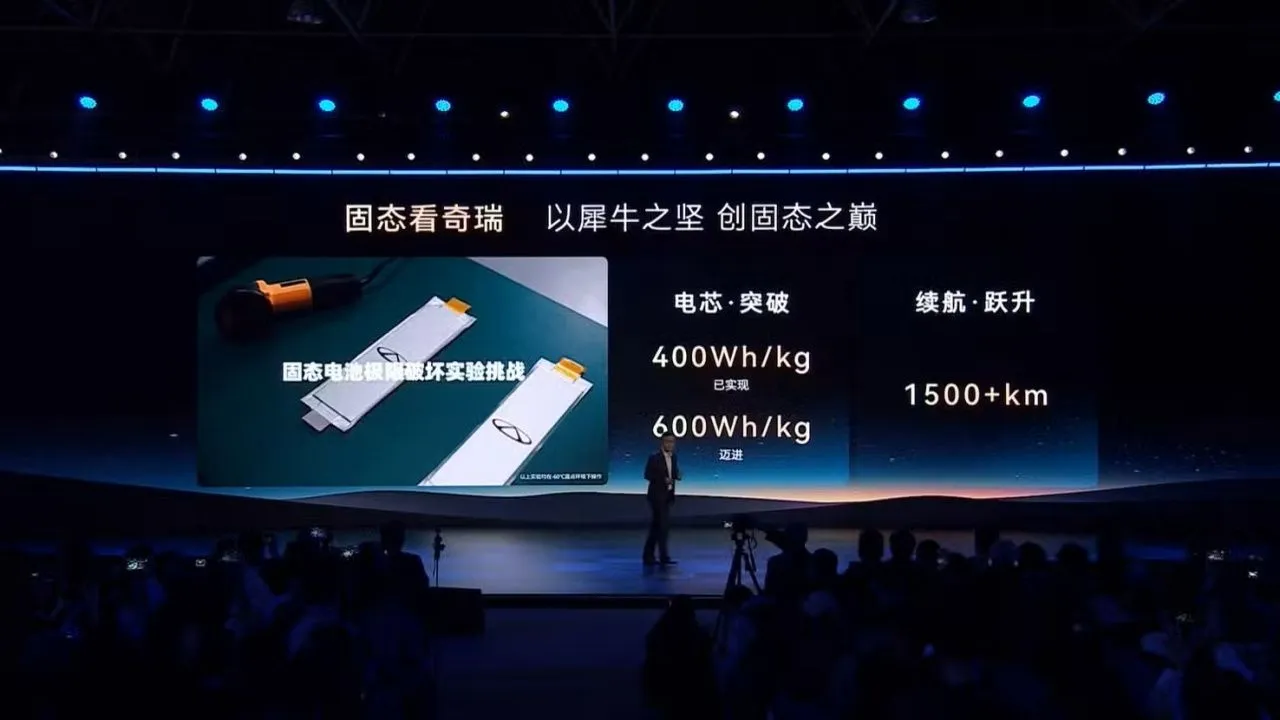
For the Rhinoceros S, Chery claims an energy density of 400 Wh/kg and a operating range from −40 to 100 °C. The manufacturer also mentions an internal thermal chamber test at 200 °C. However, it does not specify how long the test lasted, the charge level of the sample, or its configuration, so this result cannot be directly compared to standardized safety tests.
The energy density also cannot be simply transferred to the entire pack. The cells need to be integrated with structures, connections, cooling systems, and control systems that add weight. To determine the actual improvement in a vehicle, it is necessary to have details of the entire system, along with information on its lifespan, costs, and performance during repeated charging and discharging cycles.
Chery had previously proposed another development path aiming for 600 Wh/kg, but it is not merely an advanced version of the same cell. The lower-density approach uses a sulfur-based electrolyte and a nickel-rich ternary cathode. The more ambitious alternative relies on an in-situ polymerized electrolyte and a lithium-rich manganese-based cathode.
Among the pending tasks, the company highlights the interaction between materials, integration into the package, and its own management system. Maintaining a stable bond between the solid electrolyte and the electrodes during repeated use is one of the challenges of this technology. Laboratory results need to be accompanied by reproducible manufacturing processes and consistent performance to become a commercial advantage.
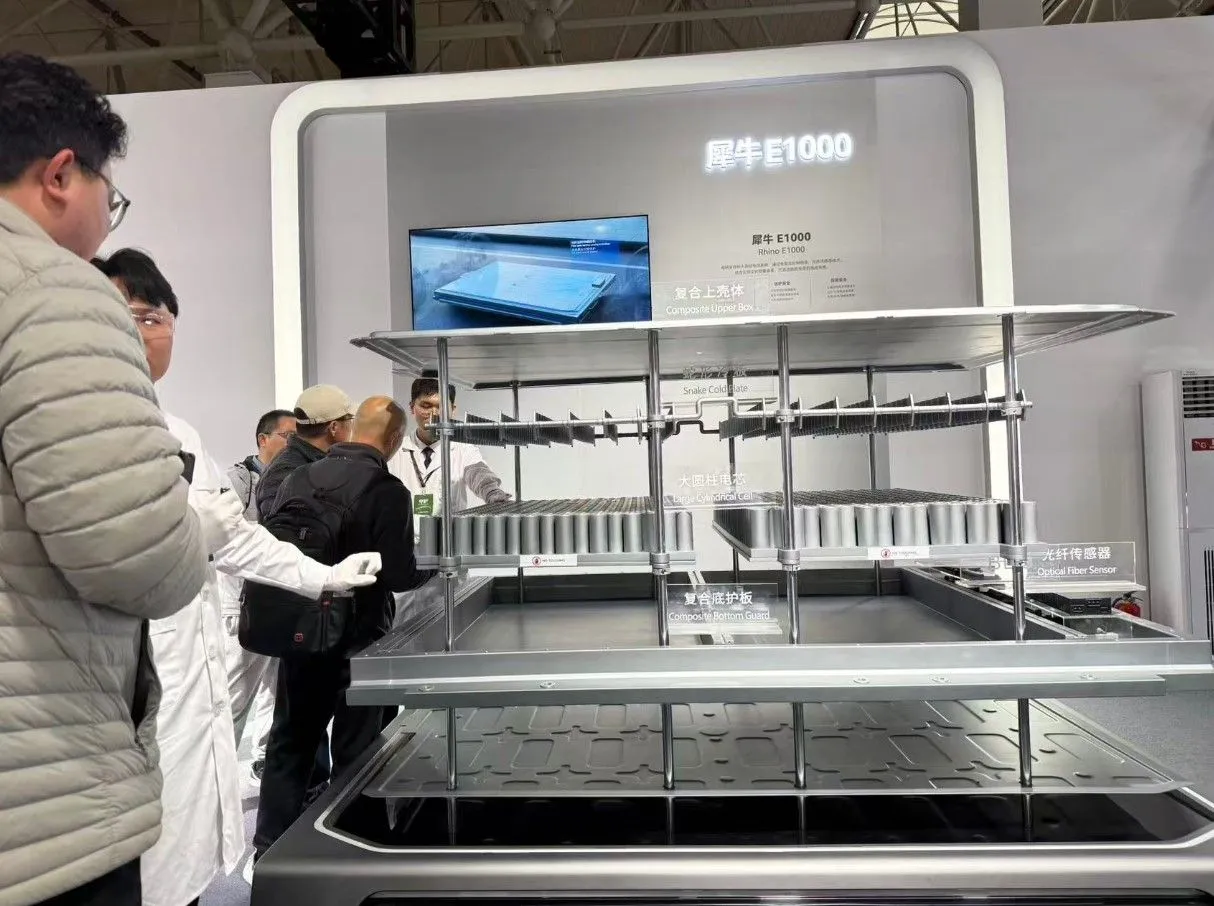
On the other hand, there are cells with liquid electrolyte, for which Chery claims a maximum charging rate of 12C and a sustained average rate above 8C. In other words, a vehicle with an average battery capacity of around 75 kWh could achieve peak power of 900 kW and sustained power of 600 kW. One with a battery pack of about 90 kWh might reach peak powers exceeding 1 MW.
For its future vehicles with solid-state batteries, Chery aims for a long-term range of up to 1,500 kilometers. This is a development target, not the certified range of a production model. No measurement cycle is provided to interpret this figure, so it should not be presented as WLTP range or as a guaranteed road distance.
The Rhinoceros family also includes sodium batteries designed for energy storage, with an announced lifespan of up to 15,000 cycles. Their intended applications cover commercial, industrial, and residential installations. Once again, this represents a different use case and technology: such a lifespan cannot be attributed to the batteries that will power the brand’s vehicles.
The presentation concluded with a stationary solid oxide fuel cell system powered by ammonia. Chery claims an electrical efficiency of 60%, which could reach 90% by also utilizing heat, and proposes applications such as distributed power generation or charging in remote locations. Its viability will depend on fuel supply, costs, and installation conditions; producing ammonia with renewable energy also does not, by itself, guarantee that its entire life cycle is emission-free.
Chery is expanding its options for both electric vehicles and the energy infrastructure that supports them. The next step will be to determine what capabilities can be maintained as it moves from prototypes and internal testing to steady production. Until then, it’s important to separate development goals, stated results, from the actual product features that can be purchased.