
CharIN Testival 2026: Interoperability becomes a key task
At the CharIN Testival & Conference Europe, we explored the issues that currently concern the charging industry. The focus was not only on higher charging speeds but primarily on how reliably vehicles, charging stations, and eventually the power grid can work together.
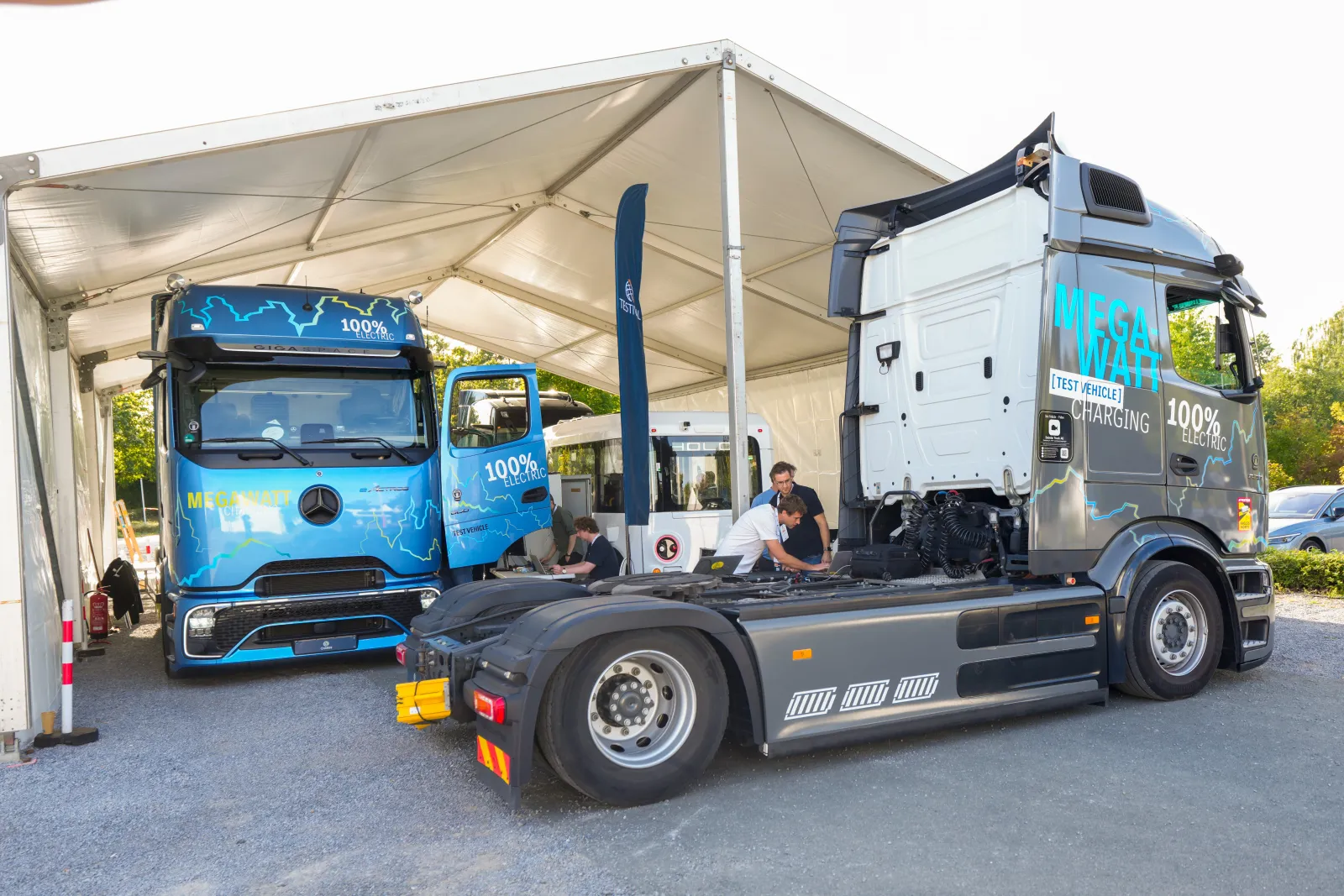
CharIN also tests MCS systems for electric trucks during the Testival.
Image: Phoenix Contact
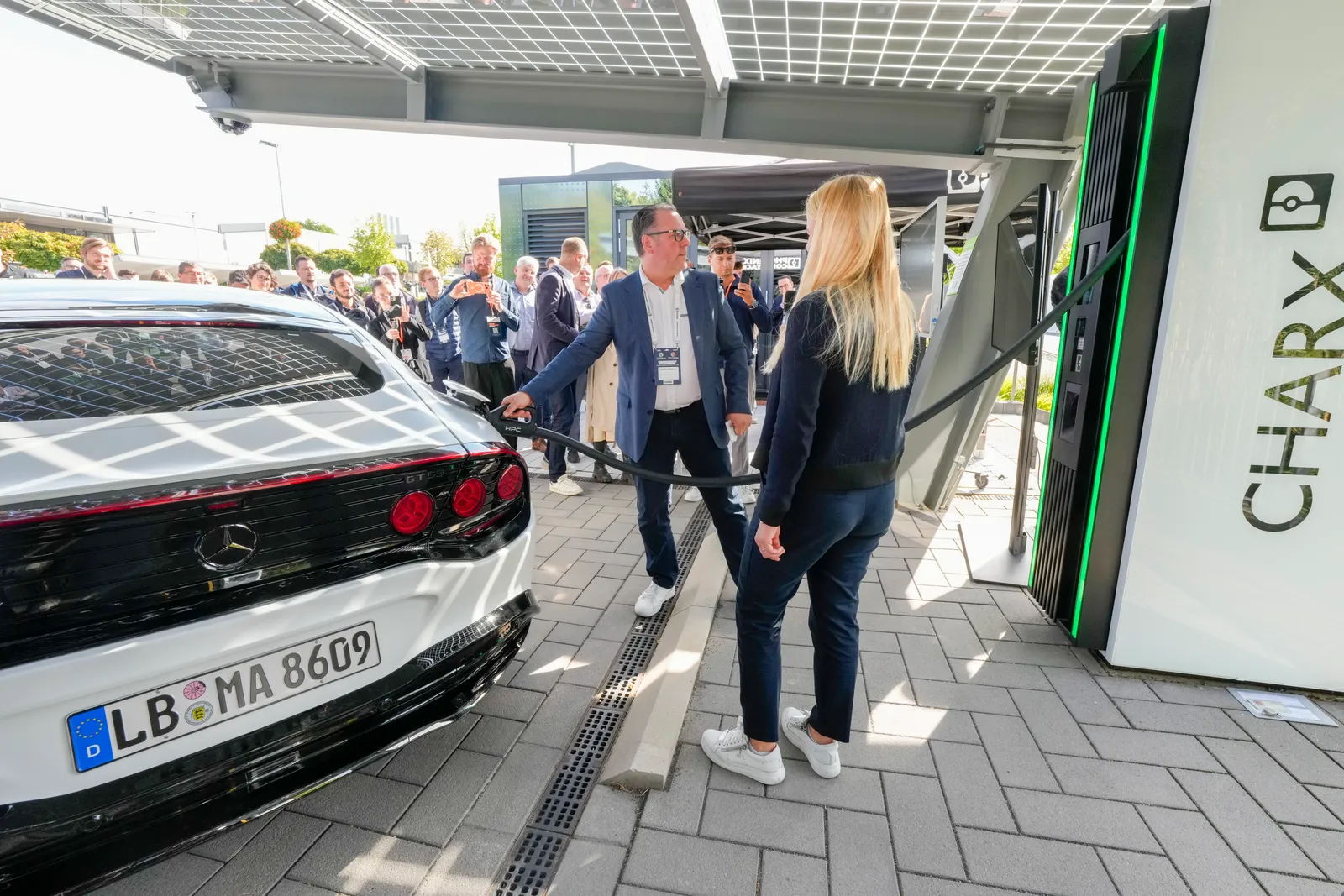
The demonstration is supposed to focus on high power charging. A Mercedes-AMG is positioned at the charging station, and the connector is connected, but the charging process doesn’t start right away. It takes several attempts before the vehicle and the charger can communicate with each other. This high-power charging demonstration vividly illustrates what the CharIN Testival is always about: interoperability remains a key challenge for the charging industry even in 2026.
At Testival, vehicles and charging systems from different manufacturers are brought together under controlled conditions. This includes vehicles and technologies that have not yet been officially introduced. CharIN places interoperability testing at the heart of the event; as host, Phoenix Contact provides a CCS charging station with up to 720 kW for performance testing among other things.
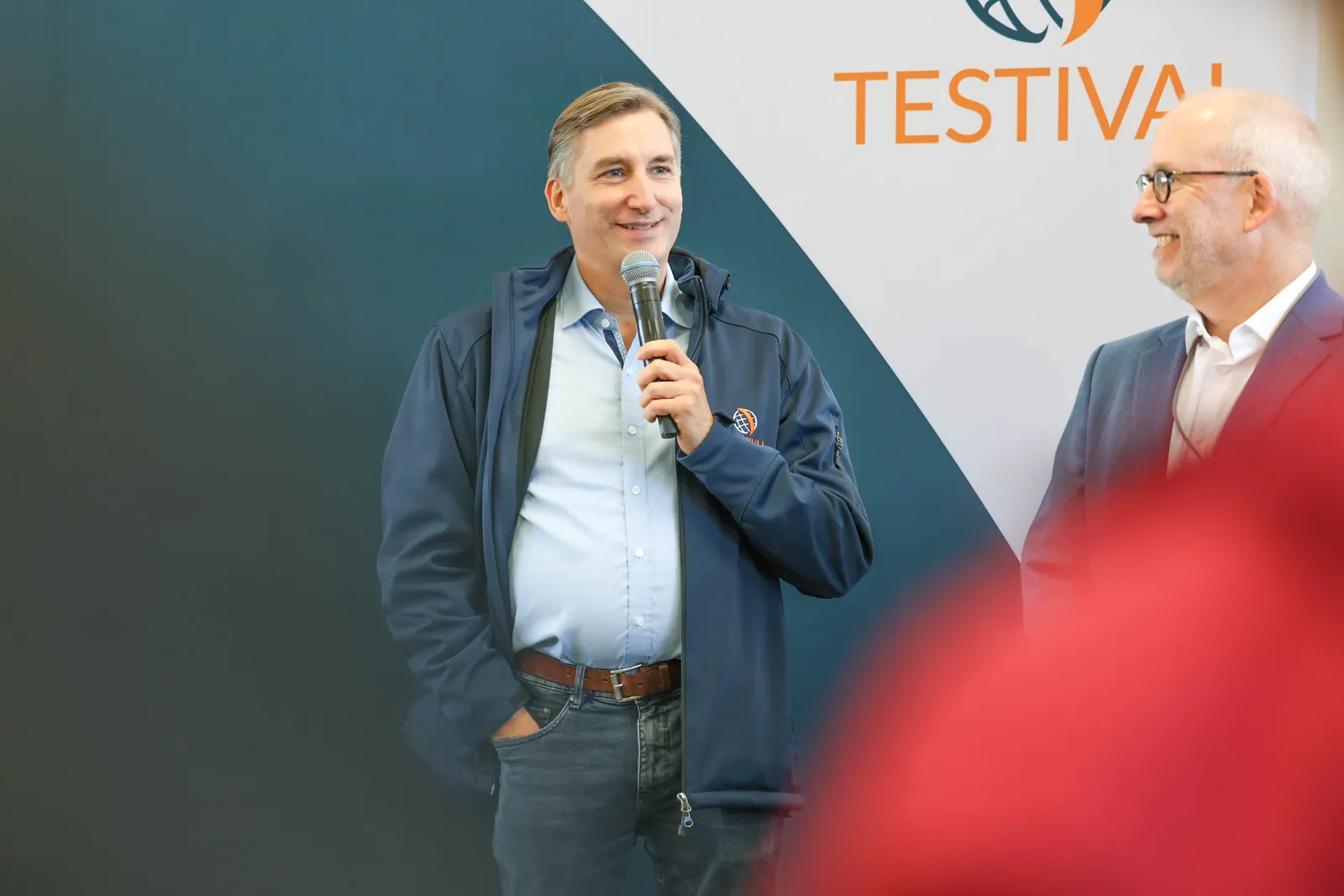
CharIN’s CTO, Michael Keller, describes the concept in a conversation with electrive as a sort of “speed dating” between vehicles and charging hardware. For end-users, it is crucial that these combinations work regardless of the manufacturer. “Without 100% interoperability, customers have no guarantee of a successful charging process when they go to an unfamiliar charging station.”
What is already evident today with a simple start of a charging process becomes more complex with each additional feature. Plug & Charge, Smart Charging, higher charging speeds, and bidirectional energy flow require not only suitable hardware but also a as unified implementation as possible of the communication standards.
CharIN expands interoperability with ISO 15118-20
Keller sees the greatest progress compared to last year in ISO 15118-20. “It’s surprising how many have now reached the point of actually using this standard for testing in vehicles, and some are even already using it in actual vehicles.”
The standard describes the second generation of communication between electric vehicles and charging infrastructure. In July 2026, an amendment titled ISO 15118-20:2022/Amd 1:2026 was released, which includes MCS services, AC DER applications for grid integration, and an updated security concept.
An important distinction must also be made: ISO 15118-20 does not describe the MCS plug itself. The physical MCS interface is specified by IEC TS 63379. At the CharIN Testival in Arnhem in May, ISO 15118-20 Amendment 1 and TLS 1.3, along with the mechanical compatibility of MCS plugs and connectors, were among the areas tested. CharIN identified ongoing needs for improvement in terms of compatibility and locking mechanisms.
This shows why merely publishing a standard is not enough. Vehicle, charger, and component manufacturers must implement it in such a way that different products can actually work together. For MCS, Keller believes the foundations have now been largely established. Since 2018, CharIN has been working on this system with over 120 members. “There are enough charging stations available to buy. There are already trucks equipped with them, but not yet on a large scale,” he says.
The Testival also demonstrates how concrete the application has become. Presentations cite MCS charging capacities of up to 1,000 kW for the Mercedes-Benz eActros, 750 kW for the MAN eTGX, and 700 kW for the Volvo FH Aero Electric. At the same time, charging is increasingly taken into account during the development phase of heavy commercial vehicles.
This has consequences that extend far beyond the actual charging process. The location of the charging port influences factors such as cable routing, parking layout, and traffic management in a charging station. With megawatt-level power outputs, grid connections, load management, and stationary battery storage become key considerations in planning.
Nevertheless, electric trucks have favorable conditions for relatively rapid deployment. MCS could make a decisive contribution to the operational readiness of electric trucks, especially in long-haul transportation. The remaining chicken-and-egg problem lies less in the fundamental technical feasibility and more in the simultaneous development of vehicles and infrastructure.
Interoperability with Vehicle-to-Grid becomes even more complex. In such cases, communication between the vehicle and charging station is no longer sufficient. Energy management, backends, and signals from the power grid also come into play. “We need to be able to use vehicle batteries flexibly for the energy grid and to stabilize power supply, which is a major challenge,” says CharIN’s CTO Michael Keller. To achieve this, “many different parties need to work together.” The expanded requirements were demonstrated at the CharIN Testival in Arnhem in May. There, 13 out of 23 DC testing systems supported bidirectional energy flow, while seven out of eleven did so for AC. Grid emulators were also used to conduct more realistic tests. However, CharIN still considers V2G implementations and compliance testing with European grid requirements to be a relatively early stage of development.
Cybersecurity also gains importance as a result. ISO 15118-20 and the amendment to be released in 2026 expand capabilities for MCS and network integration, further developing the security concept. The more automated charging processes become and are integrated with the energy system, the more communication channels need to be secured.
Technology is not the only bottleneck
The fact that the challenge now extends beyond vehicles and charging stations was also evident at the Public Day. There, representatives from municipalities, the electric industry, and standards organizations discussed practical obstacles in expansion under the theme “Mobility and Energy Transition: Implementation Starts Locally.” CharIN itself emphasized the connection between charging infrastructure and the energy system during the event.
Meinolf Haase, the district governor of Lippe, cited experiences from local governance. According to him, roughly half of the district’s public vehicle fleet is now electric; at the same time, municipal properties are supposed to be equipped with more photovoltaic systems. Not every policy directive facilitates implementation at the local level. Referring to contradictory requirements from Berlin, Haase summarized the problem succinctly as “Wash me, but don’t get me wet.”
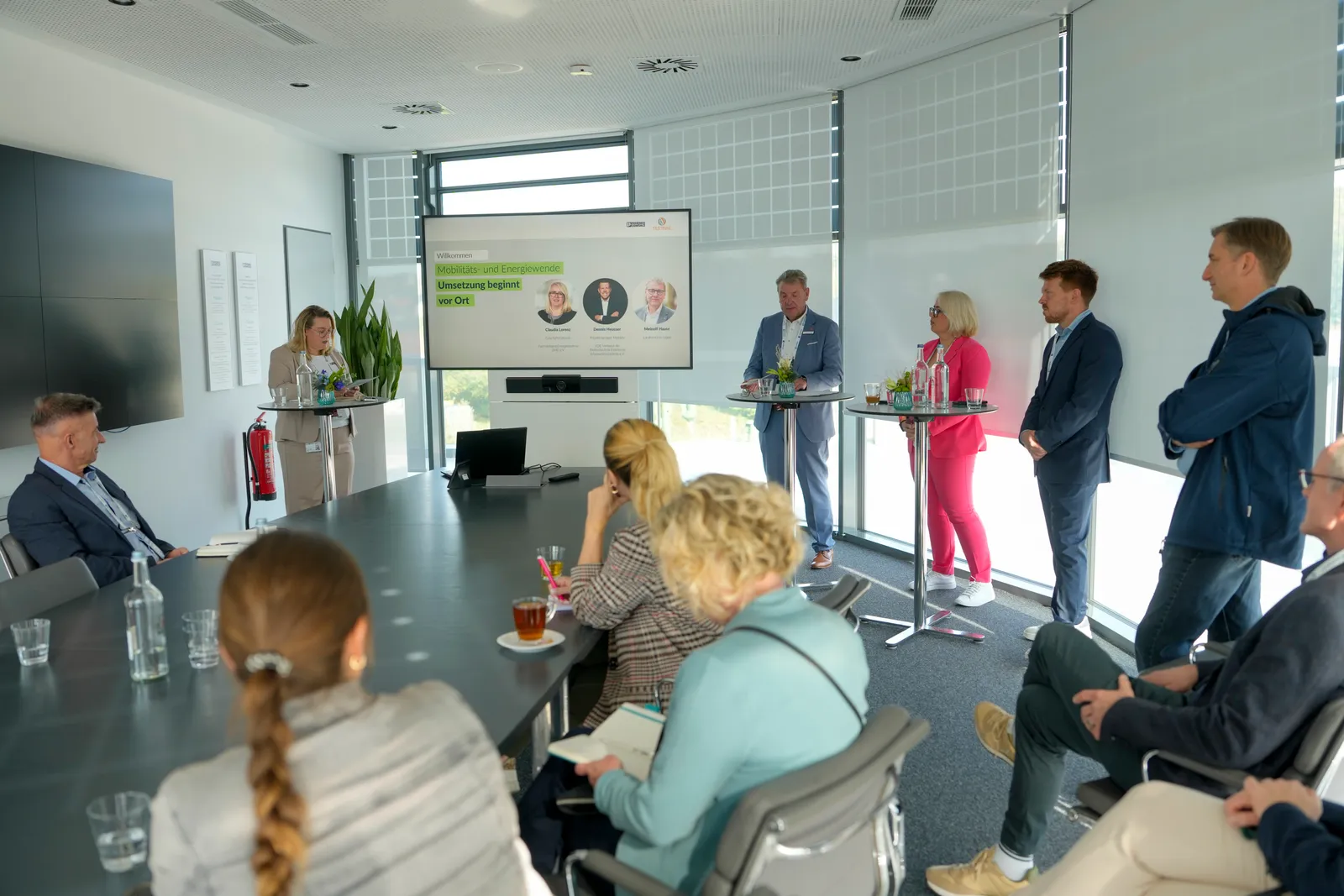
For Claudia Lorenz, CEO of the Energy Technology Association within ZVEI, one of the key tasks in expanding power grids is of utmost importance. The association believes there is a significant need for investment, especially since additional charging infrastructure, heat pumps, and decentralized power generation all place new demands on distribution networks. “The technology is available; in some cases, it’s the lack of political will that holds things back,” Lorenz said in Blomberg. How quickly charging parks or private charging stations can be established increasingly depends on the local network capacity and how swiftly connections are processed.
The diversity of these requirements is also evident in Germany’s network structure. The Federal Network Agency now publishes statistics on how long individual distribution network operators take to provide connections and the degree to which their processes are digitized, especially since performance and implementation speed vary by region.
Dennis Heusser from the Energy Technology Society at VDE focused instead on the common technical foundation: “Standards and norms build trust.” This applies equally to traditional charging as well as to MCS or V2G. The more stakeholders are involved, the more crucial it becomes to have standardized interfaces, so that vehicles, charging hardware, grid technology, and backends can function together across different ecosystems. His statement thus captures the essence of the testival: A standard on paper is only valuable when various implementations work together in practice.
For charging park and fleet operators, this shifts the critical question. It’s not just the maximum kilowatt rating of a charging station that matters, but whether the vehicle, charging hardware, backend system, power connection, and regulatory processes work together effectively. With MCS, the physical design of the charging park comes into play, while in V2G, the system boundaries extend to the power grid.
That is precisely why testing and certification processes are likely to gain importance. The more functions rely on ISO 15118-20, the greater the number of potential interfaces becomes, and the sooner manufacturers need to test their systems against each other. CharIN describes its test environments as real-world testing setups for the interoperability of vehicles, charging infrastructure, and other components in the electric mobility ecosystem.