
Chargekeeper connects station monitoring to solar power and storage.
The surplus from photovoltaic systems, which can now be purchased at a fraction of its original price since the S21 reform, volatile electricity prices, and fleets transitioning to electric power mean that charging can no longer be considered in isolation. For businesses, bus depots, or logistics platforms, electricity generated on site and energy costs are now integral to charging strategies. Chargekeeper, a provider of a charging station monitoring platform (CPMS) and a member of AVEM, holds a firm belief: operating charging stations in 2026 also requires precise control over the energy that powers them, down to the kilowatt level.
How the photovoltaic reform changes charging
The signal came from the regulator. The decree dated June 1, 2026, published in the Official Journal on June 4, reforms the S21 scheme, the tariff regulation in effect since 2021: this marks the end of full sales and investment incentives for installations ranging from 0 to 100 kWc, as well as the reduction of the surplus tariff to 11 €/MWh. In its opinion dated April 29, 2026, the Energy Regulatory Commission (CRE) justified this decision by noting that solar power is generated during hours when prices are lowest, to the point where the economic value of the injected surplus was already only around 20 €/MWh in 2025, and that the new tariff no longer allows “installations with a very low self-consumption rate to achieve profitability.” The regulator sees this as an opportunity to “promote the development of integrated offers for electricity production and consumption, possibly combined with a system of”
“Tockage”.The next step is to determine, at each site, the consumption capacity that can absorb this solar power at the right time. ADEME proposes a solution: rather than using stationary batteries, whose environmental relevance is questioned, intelligent control of electric vehicle charging “without the need for additional batteries” could optimize this consumption. Companies have understood this. According to RTE’s 2026 Flexibility Barometer, 36% of them were controlling the charging of their fleets in 2025, up from 21% a year earlier. For a bus depot or logistics platform, charging is both the largest consumption item and the biggest controllable load at the site. It can no longer be managed in isolation from energy use—it is the key factor that drives it.
CPMS: Where the two strategies converge
Who holds this lever? The software that controls the charging stations. A CPMS must first perform its duties flawlessly: monitoring the stations, ensuring their availability and maintenance, monetizing charges, and opening the network to roaming. It is also the only software that decides, station by station and minute by minute, the power delivered to each vehicle. Thus, it is responsible for orchestrating energy flows down to the kilowatt level, not by replacing the site’s energy manager but by connecting to it.
Not all sites are at the same stage, and Chargekeeper has developed its “Energy Resources” module to track this progress. The best-equipped sites have an EMS, meters, and sometimes a battery. Chargekeeper queries these via API, and since 2026, any equipment or partner can also integrate their measurements directly into the platform. Charging is then adjusted in real time to the actual available power, with adjustable safeguards.
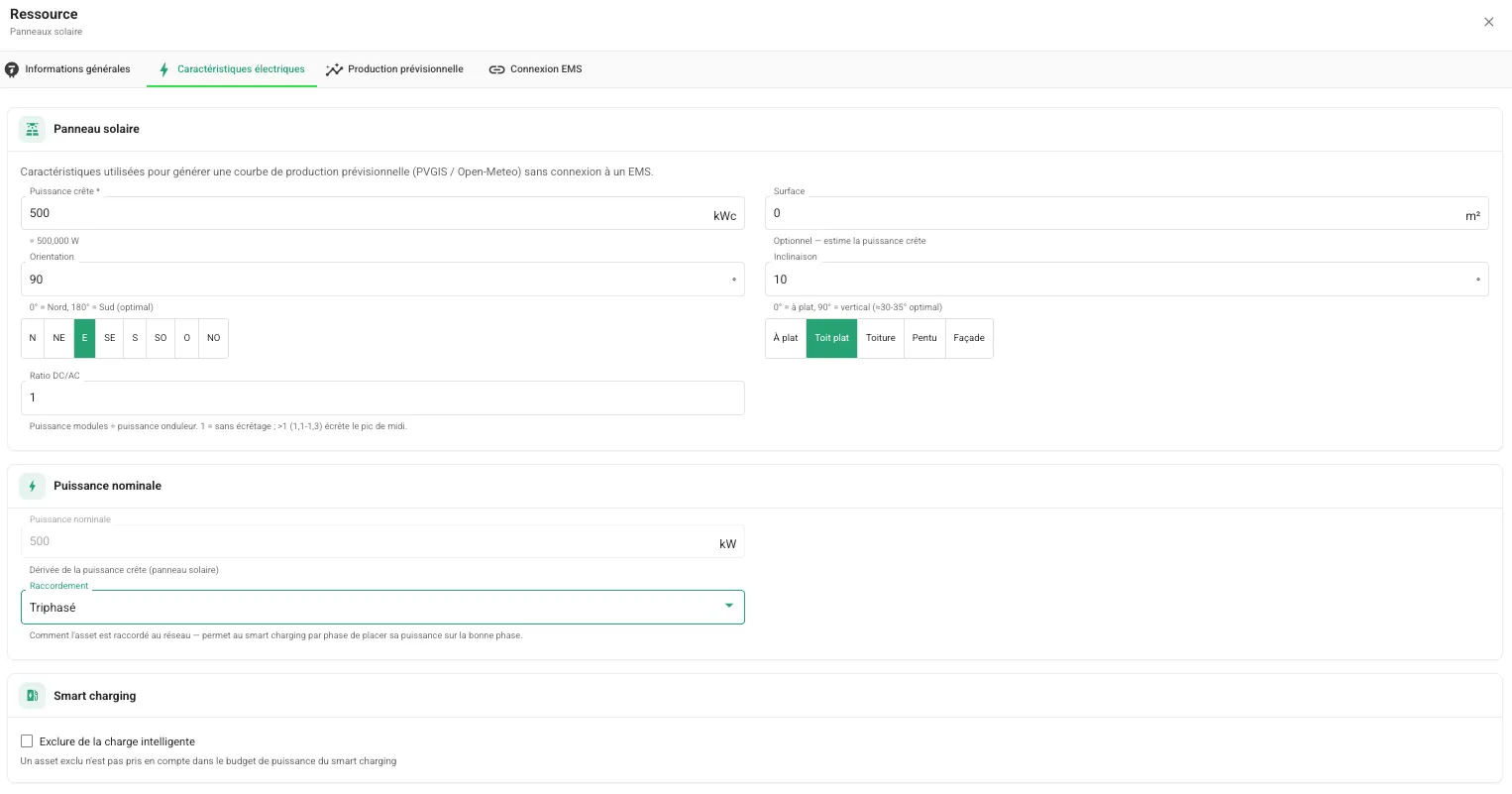
Many sites lack all of this. For them, Chargekeeper estimates solar production based on the installation’s characteristics (peak power, orientation, tilt, DC/AC ratio) and weather conditions, using reference models with an adjustable correction factor. No sensors needed, no additional investment, but charging that already follows the sun.
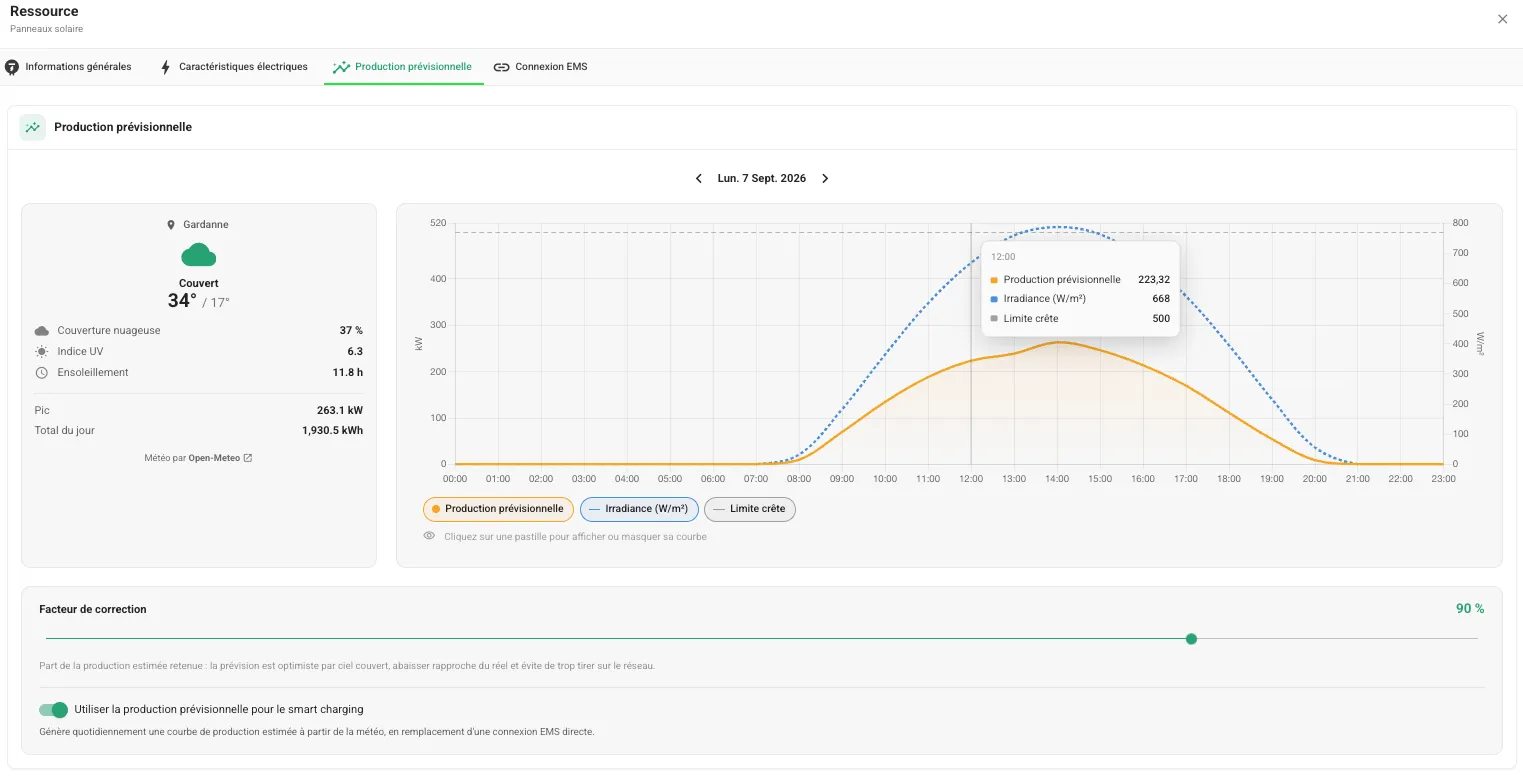
By utilizing the characteristics of the photovoltaic installation and weather data, Chargekeeper generates a predictive production curve, enabling charge management even in the absence of connection to an EMS.
The market has already recognized this
This convergence between energy and charging is something Chargekeeper observes in its own incoming requests. By 2026, several national photovoltaic companies approached the firm to add charging services to their offerings. Some now combine solar power with charging station operations, leveraging the platform’s integrations to deliver a cohesive solution from the panels to the vehicles.
See the orchestration in action
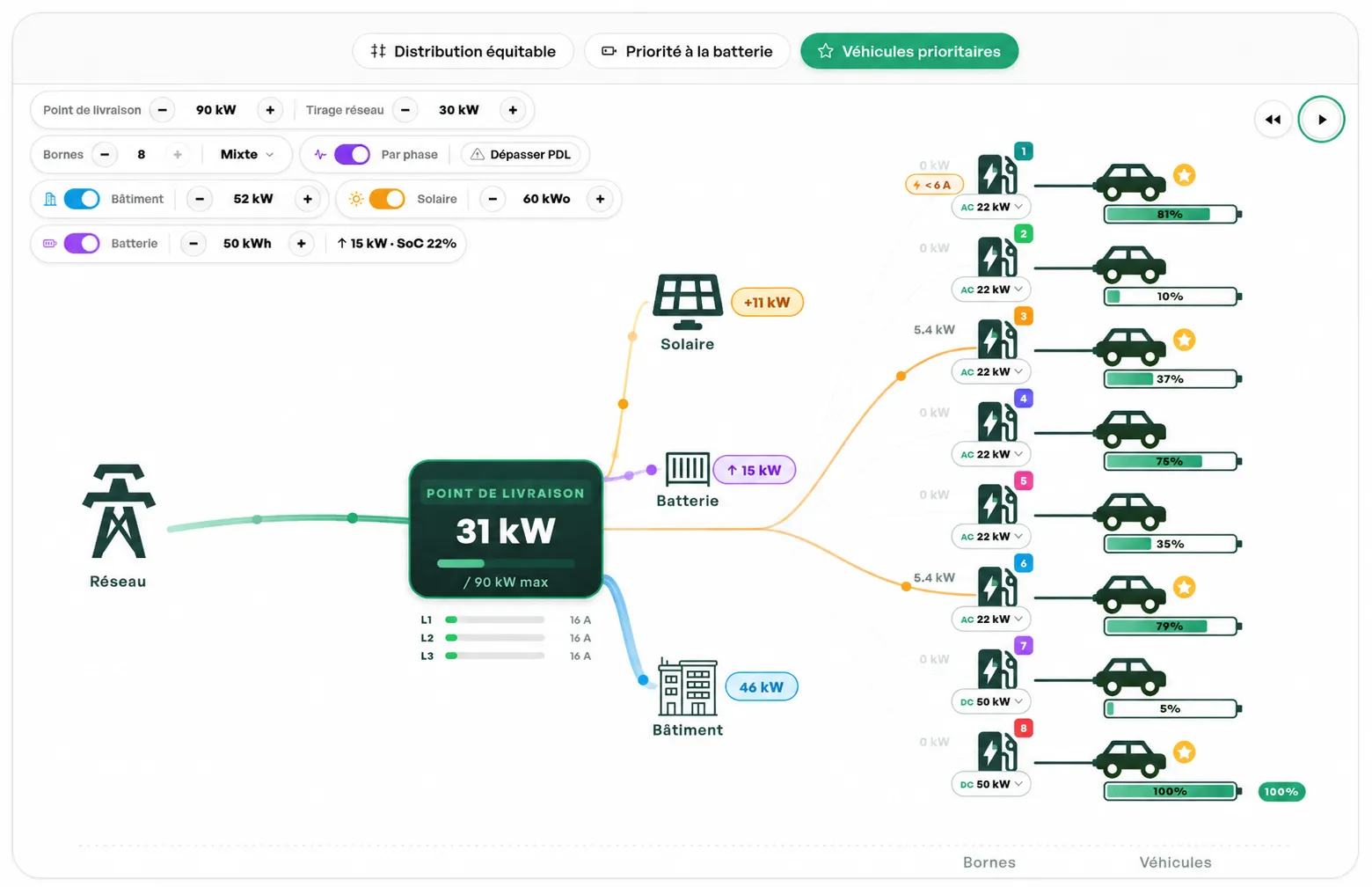
To illustrate what “orchestrating to the kW” means, Chargekeeper offers a smart-charging simulator based on the platform’s actual algorithms. Users can input details such as solar power generation, building consumption, battery capacity, contracted power, number of vehicles, and departure times. Then they can observe how charging is organized, what power each station receives at any given moment, and how it gets redistributed when parameters change. Access the simulator.
Whether for businesses, bus depots, logistics platforms, or charging operators, the challenge remains the same: charge at the right time, with the right power, using the right energy source. The solution lies in the software that controls the charging stations. To discuss this or request a demonstration: sales@chargekeeper.com · charge-keeper.com.