
“It’s not the time to slow down electric vehicles”: Avere France calls for stability from candidates in the 2027 presidential election
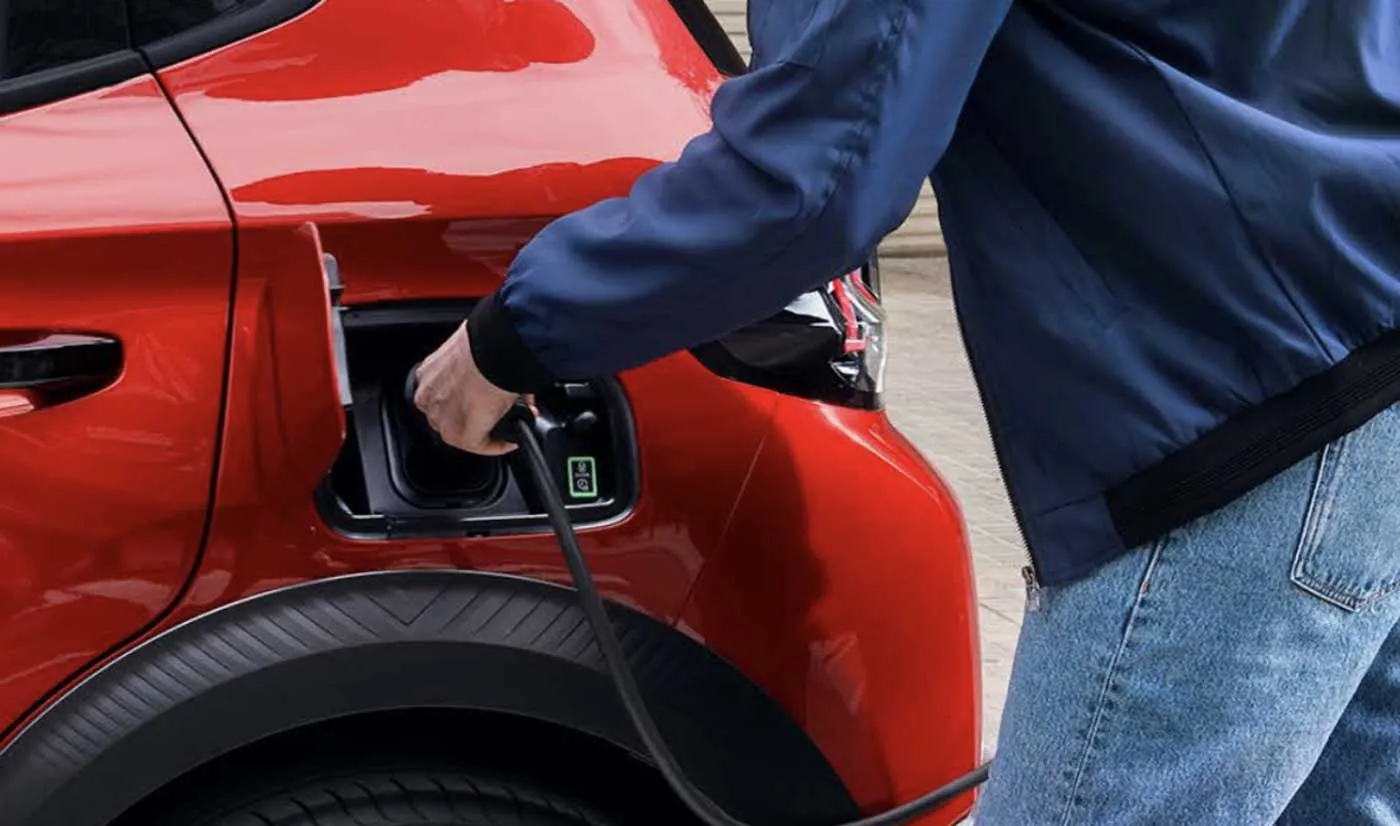
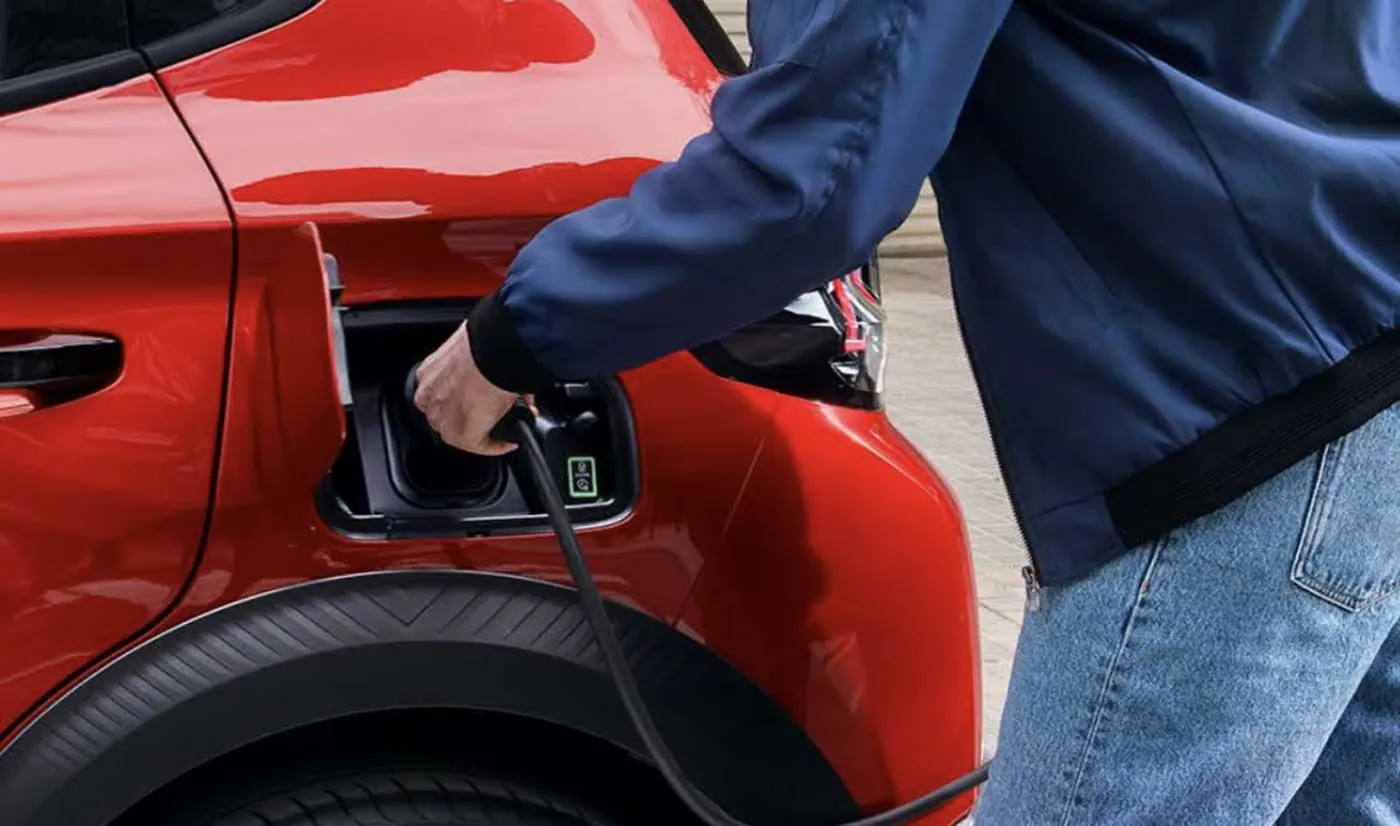
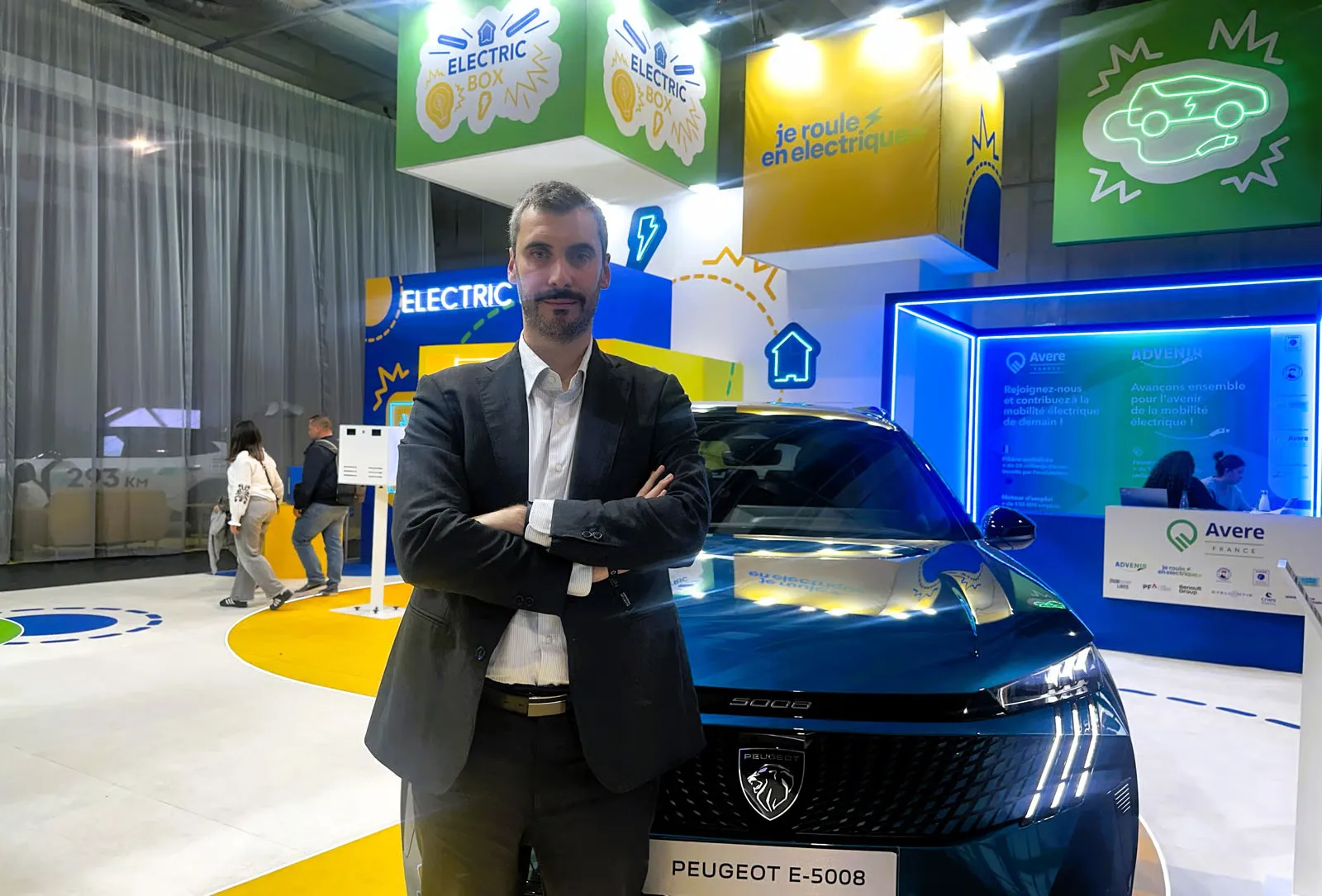
Record sales in September, soaring fuel prices, debates over CO2 emissions, and the presidential election on the horizon: electric vehicles are going through a pivotal period. Met at the Electric Box, Avere France’s educational booth at the World Motor Show, its general delegate Clément Molizon advocates for a stable trajectory both in France and across Europe.
Founded in 1978, Avere France is the national association for the development of electric mobility. It brings together the entire ecosystem: car manufacturers, charging operators, energy providers, and local authorities. It also publishes monthly market benchmarks and oversees the Advenir program, which funds the installation of charging stations.
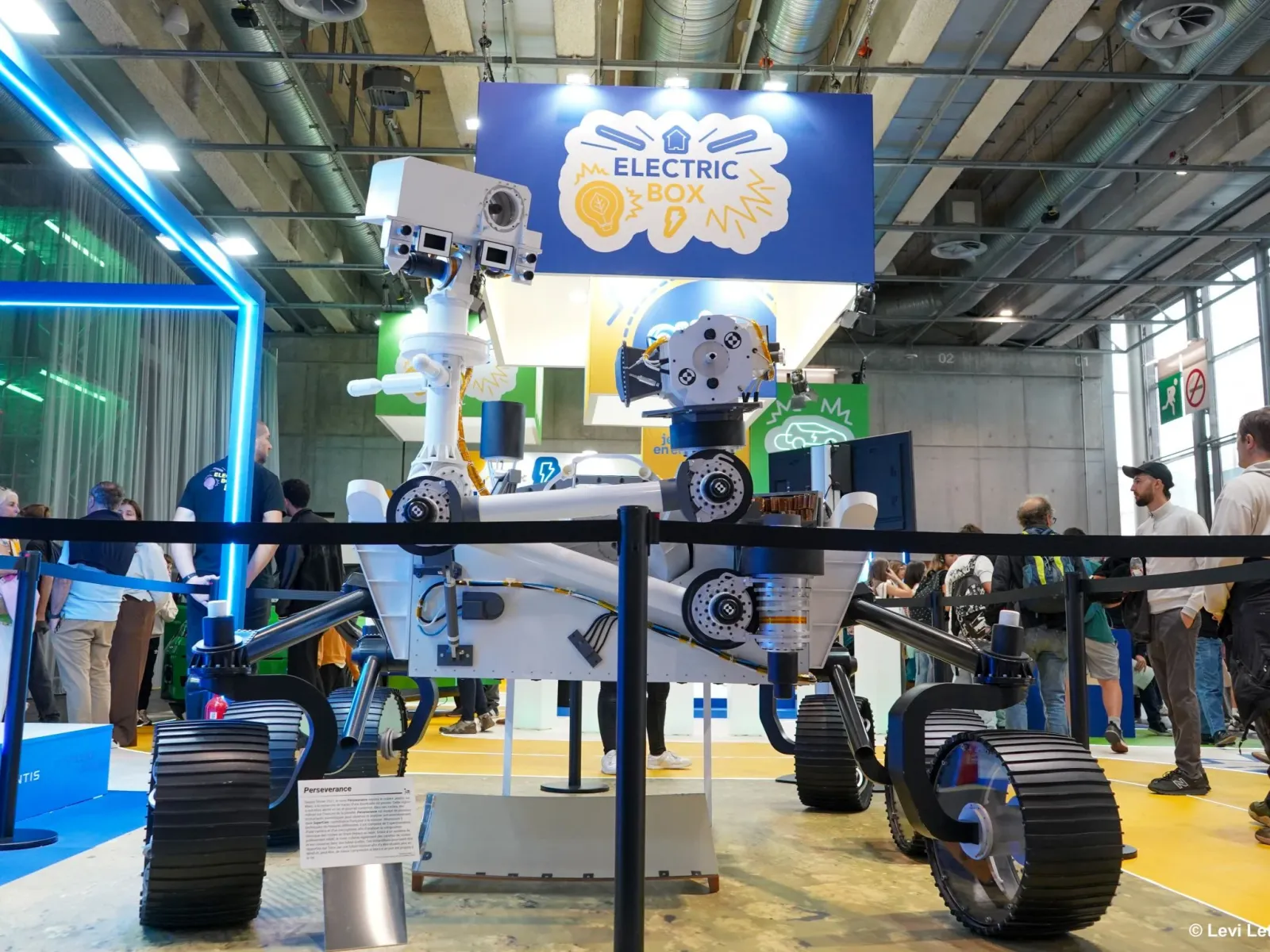
At the World Motor Show, the association uses education through the Electric Box. Created for the 2022 edition, this exhibit has since traveled across France, from regional fairs to the 24 Hours of Le Mans. Visitors can see a disassembled Renault 5 battery, Stellantis engines, and a quiz to challenge common misconceptions. A model of the Perseverance rover, loaned by CNES, also draws attention.
"Manufacturers will talk a lot about products, performance, and design. We want to discuss the context: why electric vehicles, what’s the connection to climate and energy sovereignty, and how charging works," summarizes Clément Molizon.
Almost 42% market share: in September, electric cars broke all records. Do you sense a change in attitude among visitors to the Auto Show?
Clément Molizon: Yes, the mindset is changing. September was a record-breaking month in terms of market share as well as registrations. As we gradually approach 50%, everyone starts asking themselves: why not me? Am I missing out on something? The used electric vehicle market has also been doing very well since the onset of the crisis. It makes sense: those most affected by rising oil prices are the ones who buy used vehicles. In the second and third quarters, used electric cars sold faster than their gasoline equivalents. There’s an electrifying atmosphere at play. And it’s precisely in such times that education is most important, to reach those who are still distant from the idea or even resistant to it.
Some candidates propose eliminating energy efficiency certificates (CEE) to lower fuel prices. Yet it is these same certificates that currently fund incentives for purchasing electric cars. What is your stance?
CM: I would encourage these people to discuss this with the industry stakeholders. At the end of September, we co-signed a statement with PFA, Mobilians, Sesamlld, and CSIAM—representing the entire ecosystem, including industry and service providers—to emphasize that support for electrification must not be abruptly halted. We know what happens when a country cuts off its subsidies: we saw it in Germany, and even earlier in Denmark. It is a setback for electric mobility.
The goal is obviously not to receive subsidies for life. The idea is to structure these aid measures in a predictable manner for households and businesses, rather than making sudden decisions without consultation. Eliminating the CEEs also means losing out on 8 to 10 billion euros injected into the real economy, from which the state collects VAT. What impact will this have at the pump? It’s estimated to be around ten cents per liter, and even then only if the reduction is passed on. With prices continuing to rise, drivers might not even notice it. The system can evolve; we’re ready to discuss it, but not in this way.
Also read
Rising fuel prices in 2026: Is it the fault of electric cars?
What messages do you have for the presidential candidates?
CM: They need to meet the challenge of electrification. We have very good results, but there’s still a long way to go: the fleet remains overwhelmingly fossil fuel-powered, and the country is highly dependent on fossil fuels. It’s urgent to change this. In the automotive sector, electrification will play the biggest role in making progress.
What we expect from the government is stability. That the strategies aren’t constantly revised. Specifically, this means having a charging plan modeled after Germany’s “master plan,” which clearly outlines our vision for five or ten years. It also means having a clear timeline for subsidies over the five-year period: for households, this is a significant investment, and they need to know whether to buy now or next year. We don’t have this level of clarity at the moment.
Europe has reopened discussions about ending internal combustion engines by 2035. What does this mean?
CM: 2035 should not be a death sentence for European automakers, but rather a goal that gets the entire ecosystem ready for action. After all, electric mobility isn’t just about car manufacturers. Charging operators, battery producers, and recyclers—all build their business models around this trajectory. If we aim for 90% reduction instead of 100%, we won’t go completely back to square one, but it will complicate things.
Most importantly, there’s a particular sense of timing involved. The European Commission announced its proposal to revise CO2 standards on December 16, 2025, just as we had experienced four months of record sales following a year and a half of stagnation. Electric car sales have never been higher, yet this is precisely the moment when we are weakening our commitments. The effects were immediate: on Electric Box, when the review clause was announced, customers told us “2035 is over,” even though no proposal had yet been submitted.
The network of fast charging stations has indeed expanded. But what about French people who don’t have a private parking space?
CM: On-site charging and overnight charging are the most challenging aspects to address today. The vast majority of users still live in single-family homes. However, there are people living in urban apartments without garages or in high-rise buildings, especially in the Parisian area, who will primarily rely on public charging. Some companies are entering this market, sometimes offering overnight rates, but it remains difficult to address due to the small number of people affected.
This is the real risk of a two-tier electric mobility system, with those who charge at home for just a few cents and those who rely on much more expensive public charging stations. Hence the idea of very slow overnight charging at extremely low rates, along with better communication between residents and local authorities to identify needs. Innovation is also necessary: in France, experiments with charging via street lamps have not been very successful, but we see examples of outlets built into the road surface. There is no miracle solution, but testing is required.
And how can local authorities, whose budgets are increasingly constrained, fund this deployment?
CM: These issues need to be discussed more at the local level, so that the community doesn’t have to bear alone what the private sector refuses to do. For example, Germany has launched local tenders that include both profitable and unprofitable areas, requiring the selected operator to cover the entire area. In this way, profitable areas essentially finance those that are less so. To start building a toolkit for local authorities, we published a study on charging contract models together with FNCCR.
Avere France also oversees the Advenir subsidies. What are the latest developments in this program?
CM: Initially, the program was supposed to end next year. The very good news regarding the first phase of the electrification plan is that Advenir will be extended until 2030, covering both infrastructure funding and training. We are still discussing with the administration what exactly this entails, but progress is being made. At our scale, this is also a way to provide the stability we demand.
For training, we are starting a new cycle in 2026-2027 for elected officials and local stakeholders. We missed the municipal elections, so our trainers are now meeting with the newly elected officials. We have also developed a second module for those who have already received training. The goal is twofold: to provide them with the necessary information to make decisions and to enable them to serve as local intermediaries.