
CATL has halted some work in Debrecen. Hungary is blocking the start of cell production.
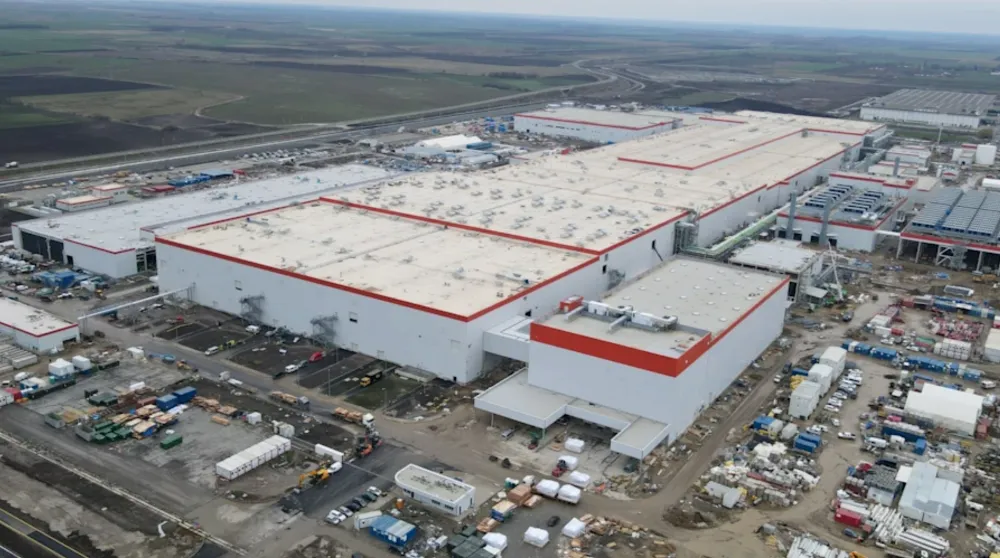
CATL has been ordered by Hungarian authorities to temporarily suspend cell production at its factory in Debrecen, according to Caixin. The decision dated August 31 addresses occupational safety risks related to workers’ exposure to nickel, and only equipment startup is permitted for now.
For CATL’s European customers, this is another setback. The factory, worth 7.34 billion euros with an intended annual capacity of 100 GWh, was supposed to be a key player in EU-based battery production.
What Exactly Was Suspended
The Hajdú-Bihar County Government Office determined that CATL must first address all safety issues related to nickel exposure. Only after that can it resume actual cell production.
The inspections took place between August 11 and 25. Earlier, in early August, the company itself reported elevated nickel exposure levels among 9 employees. Routine biological monitoring of workers at the plant in Debrecen began in early June.
Regulators also pointed out insufficient protective equipment in some areas. As a result, on August 25, operations in the sections involving laser cutting of positive and negative electrode foils, rolling the electrode foils, and drying cells were halted. This no longer seems like a minor fix to check off in Excel.
The first phase of the cell plant received production approval on August 25, but the permit alone does not yet mean the lines are operational. Mass production has still not started, although the original plan was for Q2 2026.
The second issue for CATL in Hungary is regulations
Debreczin is CATL’s second European factory after the one in Germany. Modules are already being produced, first from autumn 2024 in a rented facility, and starting in May 2026 at the planned factory with an annual capacity of 5 GWh. The problem specifically relates to cells, which are the most valuable component.
An additional issue arises as well. On August 19, the application for a production permit for the second phase of the investment was rejected because some of the completed buildings were incorrectly labeled in the land use plan. A mere formality? Yes, but one that can halt the schedule.
The impact could extend beyond CATL itself. The plant in Debrecen is intended to serve local manufacturers, including Mercedes and BMW. In practice, CATL now has to transfer batteries from other factories to ensure supplies for Mercedes, which increases costs. BMW will not face issues for now since its production has not yet started.
Pressure on Chinese battery investments in Hungary is also rising. On August 16, the government announced stricter oversight of strategic investment projects and an end to some previous environmental and planning exemptions. CATL, Samsung SDI, and SK On were immediately included on the list. CATL itself had previously been fined 10 million HUF for problems related to environmental permits.
In June, Semcorp’s plant in Hungary was also shut down after high levels of metals were detected in groundwater, while BYD faced a 10 million HUF fine for environmental issues during factory construction. In short, Hungary has stopped turning a blind eye to such projects.
On paper, Debrecen was supposed to accelerate Europe’s independence from importing cells from Asia, but so far it shows how easily a grand plan can go awry due to safety and paperwork issues. What do you think? Will the EU build its own production capacity faster or learn to effectively oversee foreign investors sooner?
LovEV Newsletter
Want more content like this?
Sign up — we’ll send you a weekly summary once the newsletter starts.