
CATL introduces new battery solution for heavy electric trucks
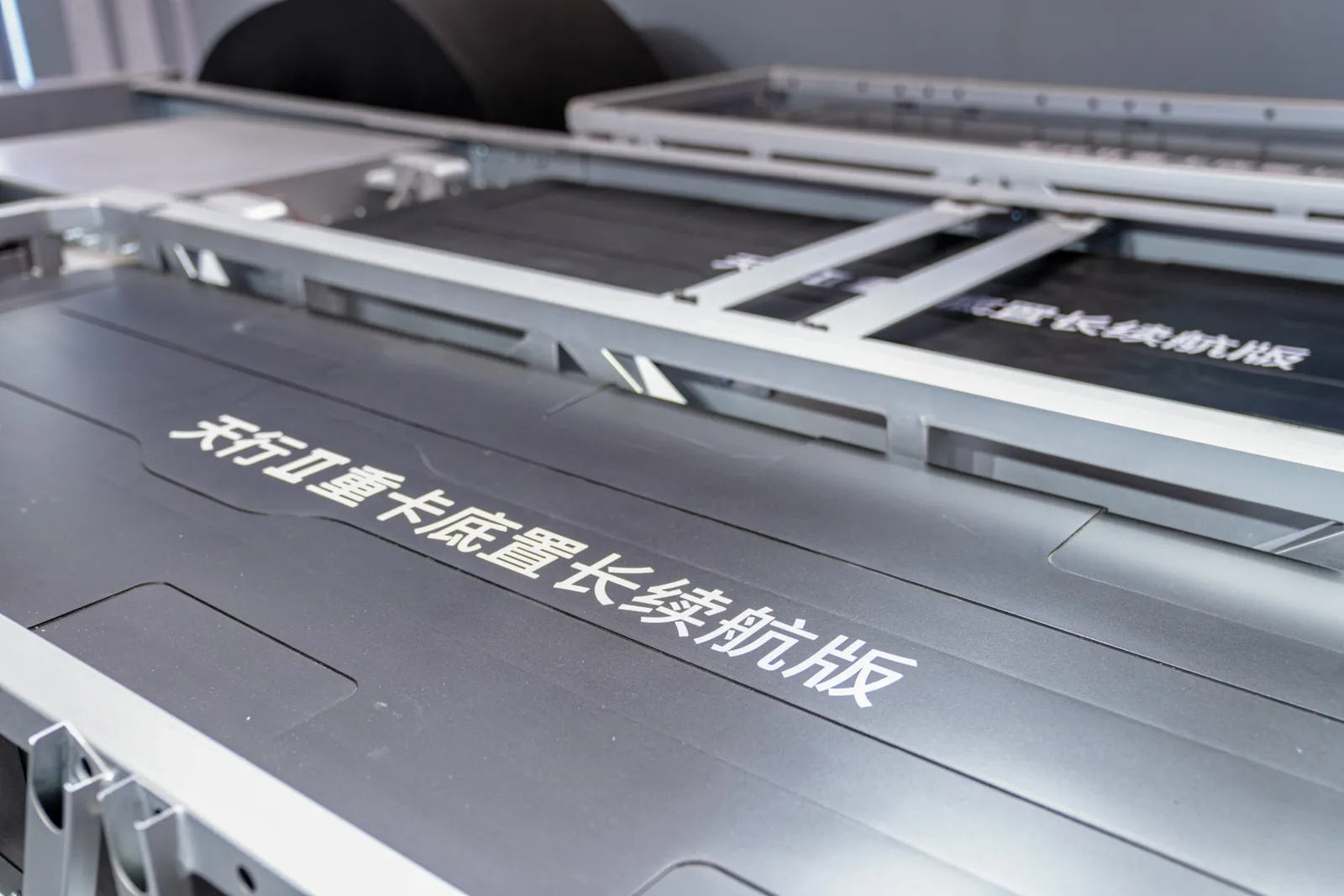
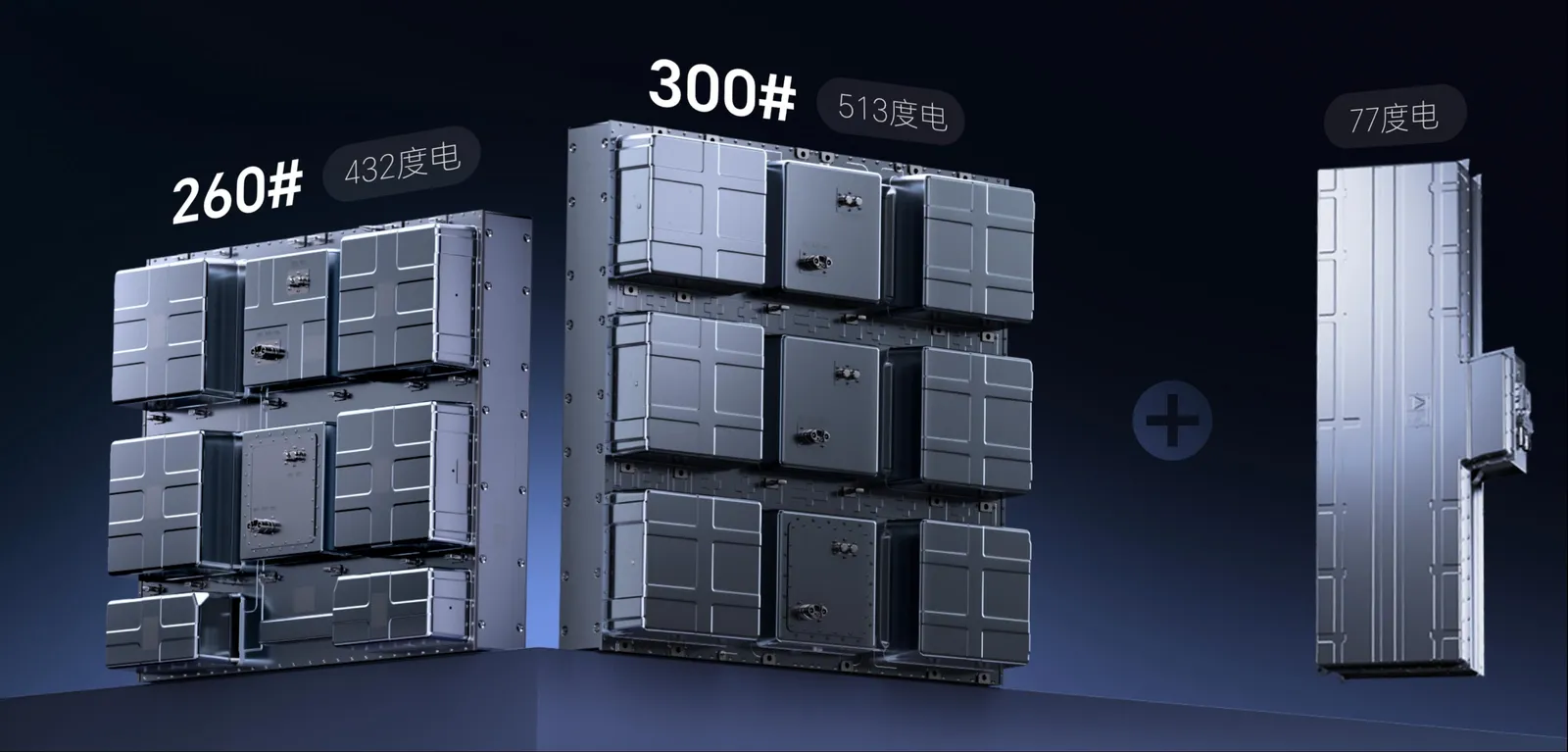
CATL introduces a new swap battery system that comes with a permanently installed additional battery. The main battery offers 432 or 513 kWh and can be replaced at swap stations. In addition, there is a permanently installed 77 kWh “range extender” battery that serves as a backup.
CATL’s new swap batteries for trucks
Image: CATL
The Chinese battery giant unveiled the new system in Beijing on Tuesday. CATL positions this product innovation as a battery option for heavy electric trucks and plans to market it under the name “Dual-Electric Range Extender” technology. The main battery installed in the chassis, with a capacity of 432 or 513 kWh, is set to be available through a flexible leasing model “to reduce purchase costs,” according to CATL in a statement provided to us.
To support this new technology, CATL aims to further expand its “QiJi” battery swapping station network. The company has standardized the battery modules used in this new system into two sizes: the 260# module (with 432 kWh) for vehicles with a wheelbase of 3.8 meters, and the 300# module (with 513 kWh) for trucks with a wheelbase of 4.2 meters. This ensures that batteries in the “QiJi” swapping system are standard interchangeable. Together with the fixed 77-kWh additional battery located behind the driver’s cabin, the total system capacity amounts to 509 kWh or 590 kWh respectively.
CATL aims to “optimize battery usage and reduce operating costs for vehicle fleets” through this new approach. When introducing the solution, CATL also publicly signed contracts with 14 partners to implement the system, including SF Express, ZTO Express, and YTO Express — three major logistics and delivery service providers in China. CATL estimates the initial order volume at 13,000 units.
In principle, the “Dual-Electric Range Extender” technology is initially designed for CATL’s home market, as it is there that the company’s battery swap station network—essential for this approach—is beginning to expand significantly. By the end of the year, CATL aims to have 900 battery swap stations for heavy trucks in operation, with the number set to rise to 2,000 by the end of next year. In the long term, 10,000 stations are planned to be established in China alone through partnerships with various stakeholders.
For those wondering why CATL includes a backup battery alongside the large swap battery, the manufacturer provides the following explanation for the current situation: Drivers of trucks with conventional swap batteries typically return to the charging station when the battery level is around 30%, according to the company’s officials. This results in part of the rented battery capacity remaining unused. This is where the additional backup battery comes into play: Thanks to its buffer capability, CATL claims that the Depth of Discharge (DOD) of the main battery can be increased from about 70% to over 95%. This allows truck drivers to head to the charging station only when the main battery’s charge level is around 5%—without risking a power outage on board.
The main battery is never completely drained
At this 5 percent SoC threshold, “CATL’s seamless switching technology transfers power to the range extender battery within milliseconds, ensuring a continuous and stable power supply,” explains the manufacturer. This means the main battery is never completely drained.
The system is based on CATL’s so-called “1+X” architecture, where the main battery is standardized to ensure compatibility with the grid, while the range extender battery remains individually configurable.
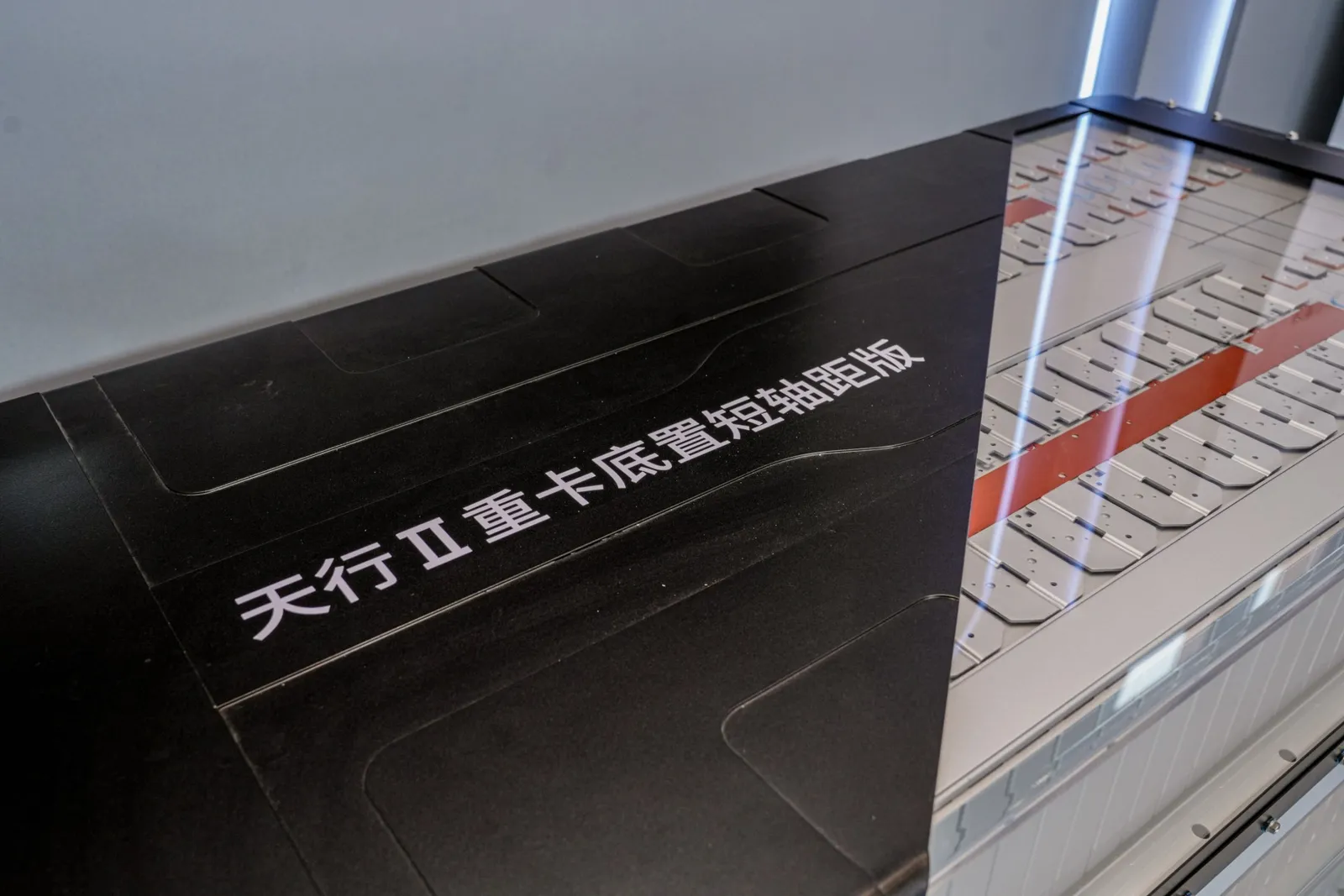
Image: CATL
- 1/7
- 2/7
- 3/7
- 4/7
- 5/7
- 6/7
- 7/7
CATL’s Qiji swap station for trucks, powered by the new technology, will going forward support not only the 75# battery pack introduced in 2025 with 171 kW but also the 260# and 300# types with 432 and 513 kWh respectively. According to CATL, a new generation of Qiji swap stations will enable battery replacement in just five minutes. Additionally, the station “requires no excavation site and can be built within only 5 days,” the company states.
According to CN EV News, the company is also adjusting its pricing model for its Battery-as-a-Service offering: “Customers now pay for the actual net energy charged, rather than the energy drawn,” the portal reports. CATL claims this change can reduce battery rental costs per kWh for users of basic plans by up to 20 percent.
CATL is currently the largest player in the battery swapping market
Generally, CATL sees great potential for battery swapping in road freight transportation. Just this summer, the company invested nearly 25 percent in Qiyuan Green Power, China’s largest operator of battery swapping stations for heavy trucks. Through this investment, CATL can combine two battery swapping technologies under one roof: its own system called Qiji and Qiyuan Green Power’s swapping system.
Qiyuan Green Power adopts a battery swap solution that is mounted on the rear of the vehicle. “This system is known for its high compatibility and fits over 80% of heavy trucks with battery swap technology in China,” Car News China wrote in an article about it in August. This approach is primarily used in enclosed or semi-public environments such as mines, ports, steel mills, and urban construction sites.
CATL’s own battery-swapping system, branded Qiji, is mounted on the truck chassis. The Chinese battery giant now applies this approach to cars, vans, and trucks alike, offering standardized batteries of various sizes at its stations, which are called “Choco-SEB.” SEB stands for “Swapping Electric Blocks,” while the name “Choco” is intended to evoke the appearance of a chocolate bar with its individual “blocks.” According to Car News China, the Qiji brand is primarily targeted at the country’s highway logistics network.
Regarding the scope of these networks, the following is known: By the end of 2025, Qiyuan Green Power’s network is expected to have established over 1,600 charging and battery swapping stations in 208 cities at the prefecture level. CATL’s Qiji brand is set to have around 300 stations by the end of 2025, with the goal of increasing this number to 900 stations in the current year.
In general, battery swapping for trucks in China is a rapidly growing market. A German manager who knows this market very well is Klaus Sekot, CEO of Bosch MC Battery Service Innovations — a joint venture founded in 2025 by Bosch and the Mitsubishi Corporation, headquartered in Ludwigsburg. This new company specializes in Battery-as-a-Service solutions (BAAS) and recently launched its first customer project at a truck battery swapping station in Chizhou.
In an interview with electrive, Sekot explained last summer that China currently has three standards for truck battery swapping operating in parallel. He also stated that China has deliberately developed the battery-swapping market since the early 2020s out of industrial policy considerations. According to Sekot’s information, nearly 30,000 swapable heavy trucks were newly registered in China already in 2024. Read the full interview here.