
CATL is acquiring a battery factory linked to Geely. It involves 30 GWh of capacity and a ready-made project for 8.5 billion yuan.
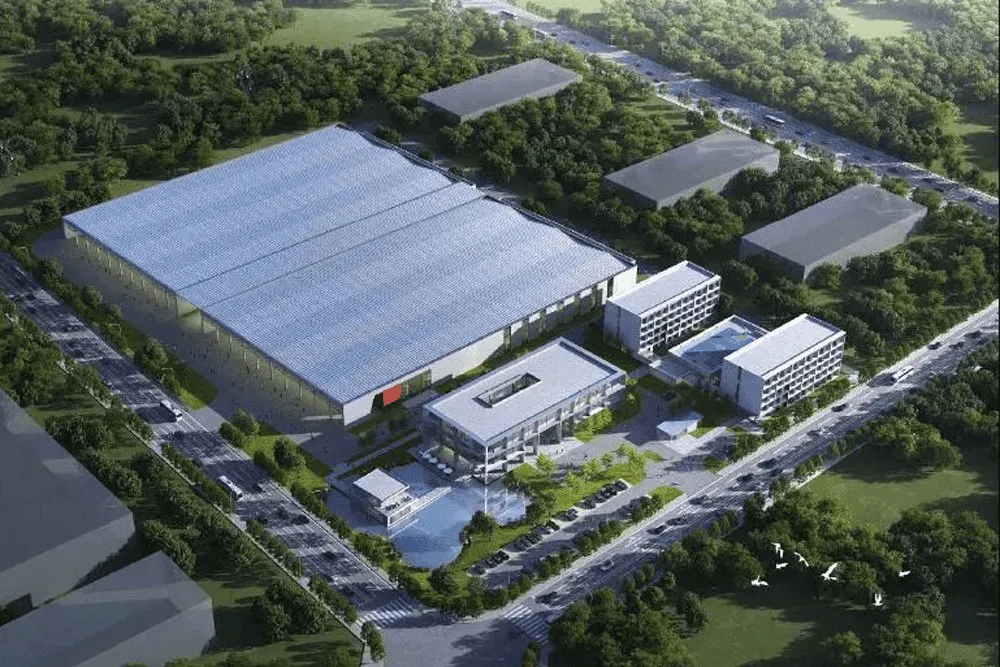
CATL has received approval from China’s regulatory body SAMR to acquire shares in Chongqing Yaoning New Energy Technology. This facility is planned to have an annual capacity of 30 GWh, with an investment value of around 8.5 billion yuan, or approximately 1.27 billion dollars.
For CATL, this is not another flashy announcement of a new gigafactory. Rather, it’s an effort to advance an existing project as China’s battery market becomes much less favorable than it was 2-3 years ago.
30 GWh under CATL’s control, production starting in 2026
The deal involves CATL and Zeekr Automobile Shanghai, and it was approved without conditions after an antitrust review. This means the acquisition can proceed according to the agreed terms.
Chongqing Yaoning itself has been in operation since 2021. It initially operated as Chihang New Energy, a joint venture between Geely Technology Group and Farasis Energy. After Farasis withdrew, the facility came under Geely’s control and was renamed Chongqing Yaoning.
The facility is intended to produce traction battery cells, modules, and packs, as well as conduct research and development. According to the original schedule, trial production was set to begin in December 2026, with full-scale production starting in Q1 2027. Once at the planned capacity, the factory is expected to generate an annual production value of around 10 billion yuan, or approximately 1.49 billion dollars.
On paper, this appears to be a major asset that is almost entirely under control. And that’s probably exactly what’s intended.
CATL is acquiring capacity as car manufacturers pursue diversification
The second aspect is more interesting than the regulator’s approval alone. In China, automakers and battery manufacturers have been aggressively expanding production capacity over the past few years, but with changing demand, investing additional billions in new facilities becomes risky.
For CATL, which is already a market leader, acquiring an existing or under-construction factory gives it greater control over the pace of investment than building everything from scratch. From January to August 2026, CATL held a 44.7 percent share of China’s electric vehicle battery installation market—2 percentage points higher than the previous year.
The problem is that car manufacturers no longer want to rely on a single supplier. On September 4, Xiaomi Auto signed a strategic agreement with CALB and Sunwoda Power for the development of its own Xiaomi Longjia battery. On September 7, Li Auto unveiled a new battery strategy and announced the gradual introduction of its own batteries to its lineup starting from the second half of this year.
In such a setup, CATL isn’t just competing for orders. By acquiring battery assets within the automaker’s ecosystem, it strengthens its capital ties and gains local capabilities closer to its customers.
Geely, on the other hand, isn’t completely stepping away from batteries. At the beginning of 2025, it consolidated its battery assets under the Jiyao Tongxing unit and began developing its own unified Aegis Short Blade system. Thus, selling some of these assets appears more like a reallocation of resources rather than a surrender.
The most interesting aspect of this story is that even market leaders are no longer focusing solely on increasing capacity and are starting to position themselves closer to car manufacturers. What do you think? Will Chinese companies produce batteries on their own more often in 2-3 years, or will specialized suppliers still have the upper hand?
LovEV Newsletter
Want more content like this?
Sign up — we’ll send you a weekly summary once the newsletter starts.