
CATL opens battery service center in Europe, targeting solid-state batteries by 2027. Two wars at once
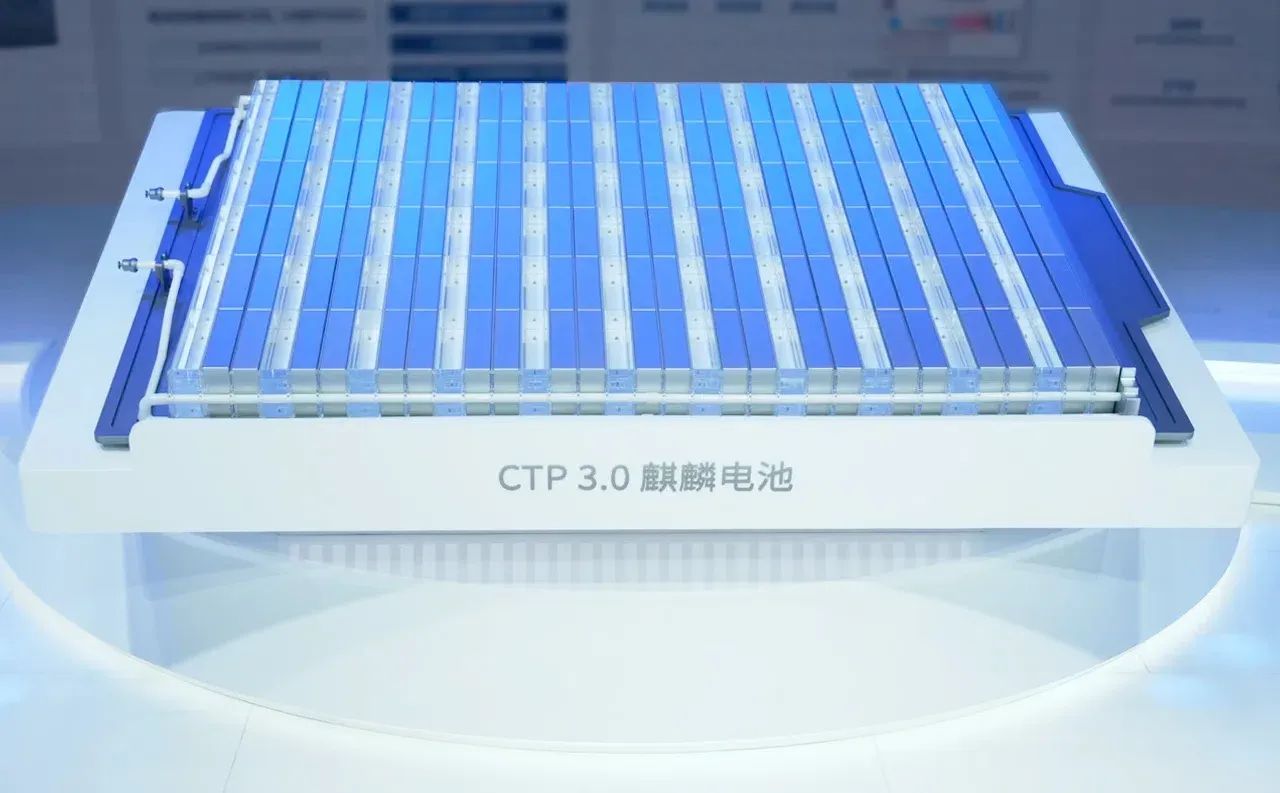
CATL has announced two moves that clearly illustrate where the battle for the battery market is heading today. On one hand, the Chinese giant is expanding its global NING Service network, including its own outlets in Europe. On the other hand, it confirms that it plans to start pilot production of solid-state cells by 2027, essentially competing head-on with BYD.
Table of Contents
Show
Hide
This is important because most manufacturers prefer to talk about batteries of the future, while rarely discussing repairs, degradation, and costs after warranty expires. CATL is trying to address both aspects at once: selling dreams of tomorrow’s technology while building infrastructure for cars that are already on the road.
CATL Is No Longer Just a Cell Manufacturer
CATL has long refused to be seen merely as a supplier of batteries for electric vehicles. Its latest decisions only confirm this. The company is developing the NING Service brand, launched in 2024, as an aftermarket support service for electric vehicles.
The range of services is extensive: battery diagnostics, repairs, inspections, parts delivery, extended warranties, and recycling. This is no longer just an add-on to cell sales. It represents an attempt to enter the most challenging area of electromobility—what happens to vehicles after several years of use.
This one actually makes sense. As the fleet of electric vehicles grows, so does the number of cases of degradation, damage, and disputes over whether to replace the entire package or if only a part can be repaired. Until now, the industry often opted for the most expensive option because it was procedurally simplest: replacing the whole package. For customers, this meant a bill that could be more painful than the malfunction itself.
NING Service Expands Beyond China to Europe
During the NING DAY 2026 event in Haikou, the company announced the opening of 10 directly managed experience centers. These locations are set up in Chinese cities as well as outside China, including in Norway and Turkey.
This is an important signal for Europe. Norway is a natural testing ground for everything related to EVs, while Turkey is becoming an increasingly interesting production and logistics hub for the automotive industry. CATL clearly believes that simply supplying batteries to car manufacturers is not enough; it’s also necessary to be present where customers come with their problems.
The company is also announcing a partnership program covering 100 cities around the world. Additional centers directly managed by NING Service are set to be established gradually in the second half of 2026.
The scale is already considerable today. According to CATL’s data, the core service network spans 84 countries, includes 1,376 professional service stations, and provides operational support for 1,505 battery swap stations. This shows that the company is building not only a structure for traditional servicing but also infrastructure for battery swapping where such a model makes business sense.
What’s truly interesting is something else: repairing modules instead of replacing the entire pack
The most practical aspect of this announcement doesn’t relate to new locations on the map but rather to the repair methodology itself. NING Service highlights its Eagle Eye system for tracking service processes and CTP deep battery repair technology.
The idea is simple: rather than replacing the entire traction battery, the company aims to perform repairs at the module level. If it works as CATL claims, this could genuinely reduce costs for repairs after damage or failure of a single part of the pack.
The manufacturer states that the solution is already compatible with 76.8 percent of popular new energy vehicle models. That sounds promising, though of course we need to wait and see in practice. In battery servicing, marketing usually ends once the customer receives a quote.
CATL also showcased an integrated mobile diagnostic and service vehicle for electric passenger and commercial vehicles. This on-wheels workshop has a claimed range of 800 km and, according to the company, can handle around 90 percent of repair scenarios. If it truly reduces the time a vehicle is out of service, it could be an interesting option for fleets and light transportation.
Service is now as important a race as battery chemistry
This part of the story is less exciting than solid-state technology, but it can be just as crucial from a market perspective. Electric vehicles are no longer a novelty for early adopters. They increasingly reach ordinary consumers, fleets, and operators who don’t want to hear about “ecosystems” but rather want to know the cost of repairs and how long a vehicle will be out of service.
This is precisely why CATL’s entry into the full battery life cycle must be taken seriously. The company aims to position itself not only as a manufacturer of batteries but also as one that diagnoses them, repairs them, provides warranties, recovers materials from them, and ultimately recycles them. This model is more akin to an infrastructure company than a traditional automotive supplier.
Meanwhile, NING Service has also launched a subsidy program worth 1 billion yuan for customers, covering battery inspections, maintenance, repairs, and warranties. This is more of a commercial move than a technological one, but it shows that CATL wants to quickly attract users to its own network.
Meanwhile, CATL is competing with BYD for solid-state technology
On another front, CATL confirmed that it aims to achieve small-scale, pilot production of solid-state batteries by 2027. This information appeared in a communication to investors and aligns roughly with BYD’s plans, which also mention trial production in the same year.
This doesn’t mean we’ll see an influx of cars with solid-electrolyte batteries by 2027. Not really. It means both giants want to move from the laboratory to pilot lines and begin actual validation of the production process.
A near-religious cult has developed around solid-state batteries over the years. The technology is supposed to offer higher energy density, lower weight, and improved safety. The problem is that between promises and mass production, there are usually still challenges related to chemistry, stability, yield, and cost. And these factors aren’t discussed in keynote speeches.
The company itself is tempering expectations
CATL, at least, shows more sense than some of its competitors. The company’s CEO, Robin Zeng, has previously stated openly that widespread adoption of solid-state batteries is still a long way off. At the end of June, he assessed CATL’s progress in this technology at level 4 on a 9-step TRL scale. This is still a laboratory stage, not a ready product for the market.
The goal for 2027 is to reach TRL 7 or 8, which would enable pilot production and testing under real conditions. In other words, it’s not about mass production yet, but rather testing whether the technology can be produced consistently and operated effectively.
This is a more honest message than claims about the “end of the lithium-ion era.” After all, CATL itself has indicated earlier that true large-scale production will only make sense at volumes of around 1 million vehicles. The company believes such a level is unlikely before 2030.
First luxury cars, then the rest
CATL also assumes that the first commercial applications will be in higher-end platforms. Engineering and cost constraints mean the technology will initially make sense only in cars priced at 250,000 yuan or more, which falls into a clearly higher price segment.
This sounds plausible again. Any new battery chemistry is expensive at first, difficult to produce, and has limited supply. It first reaches markets where customers can pay more, allowing manufacturers to absorb costs and avoid having to explain issues to mass consumers.
BYD is equally close today, at least on paper. The company recently unveiled several patents related to solid-state technology, covering material chemistry, production guidelines, and quality control. The race remains open, though for now it is more about demonstrating capabilities than a ready-made product for dealerships.
CATL Expands Beyond Just Cars
There is another development going on in the background. CATL is also expanding its activities into energy storage, floating units, and aviation. One day before announcing the NING Service, the company reported that its battery system for passenger eVTOLs passed a test for preventing thermal runaway when two adjacent cells were involved.
CATL claims this is the world’s first aviation battery system using prismatic cells with a density of up to 350 Wh/kg to pass such validation. This doesn’t mean eVTOLs will immediately fill the skies, but it shows the company’s ambitious scale. It aims not to be a “car battery” manufacturer but rather a player in energy for every mobile application.
And that’s exactly why combining battery servicing with solid-state technology makes sense. One builds a foothold in the present, while the other is intended to give an advantage in a few years.
For now, however, the first approach seems more tangible. While a solid-state pilot program in 2027 sounds promising, the network for repair, diagnostics, and recycling already begins to determine EV operating costs today. In your opinion, will battery servicing—not new cell chemistry—be the more important area of competition between CATL and BYD over the next 3-4 years?