
CATL announced carbon neutrality for 20 factories. The most difficult emissions still remain outside the factory gates.
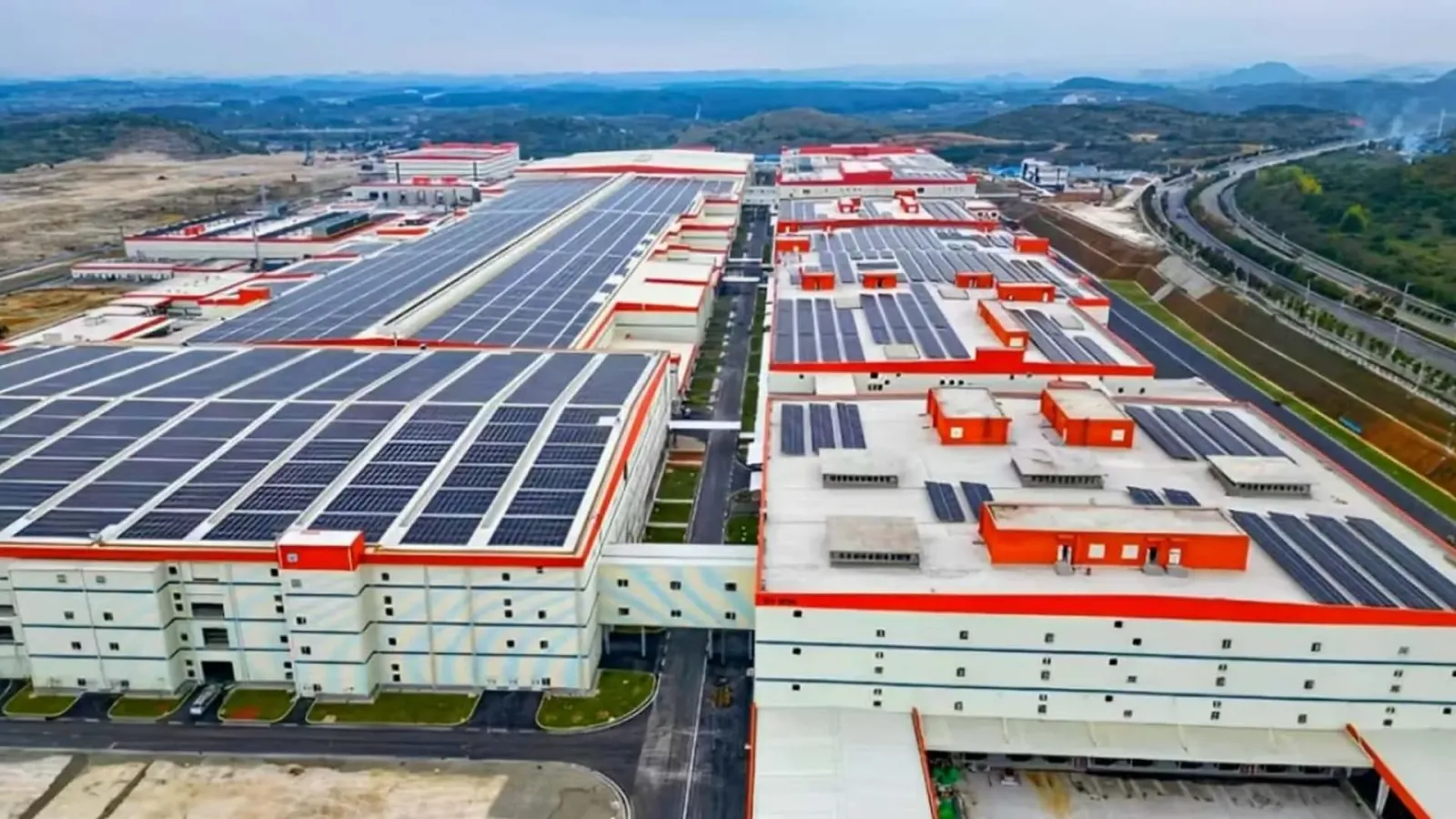
CATL announced that all of its 20 operating battery factories have obtained ISO 14068-1 certification, and the company achieved carbon neutrality for its core operations by 2025. This is a significant claim, as it involves a manufacturer that held 39.2% of the global EV battery market in 2025. However, what matters most to EV drivers is something else: the largest carbon footprint of batteries still arises not at CATL’s factories, but earlier, in the sourcing of raw materials and chemicals.
CATL states that by 2025, 100 percent of the electricity used in its core operations will come from zero-emission sources. Since 2023, the facilities have been required to use over 18 billion kWh of such energy. Compared to 2022, energy consumption per unit of production dropped by 28 percent, while emissions per unit of production fell by about 77 percent. Between 2023 and 2025, this is expected to result in a reduction of more than 10 million tons of CO2 equivalent.
On paper, this looks very impressive. However, there’s a catch.
CATL has not disclosed the amount of its remaining gross operational emissions or what proportion of those emissions have been offset through carbon credits. Moreover, an ISO 14068-1 certification does not mean that the factories do not emit greenhouse gases. It means that emissions must be calculated and reduced, with only the remaining amount able to be offset. The company also has not specified what portion of this zero-emission energy came directly from renewable sources, and what portion came from green energy certificates or other purchasing mechanisms.
CATL uses its own CCMS system, namely the Carbon Chain Management System, which was launched in 2022. The platform collects emission data from factories, production lines, products, raw materials, and key suppliers. To date, it has developed over 1,000 emission models for products and materials. Jiang Li from CATL put it this way: “Carbon neutrality cannot be built on mere estimates. Reliable data, clear boundaries, and consistent implementation are required.”
Over 80 percent of battery emissions come from the supply chain
And this is where it gets more challenging. CATL admits that over 80 percent of emissions throughout a battery’s life cycle originate from the supply chain. The total emissions across the entire value chain are expected to be more than five times higher than those from the company’s core operations.
It involves mining, refining, chemical processing, material production, and transportation. In other words, these are the stages over which battery manufacturers do not have full control. CATL has already gathered basic emission data for over 100 key Tier 1 suppliers. Starting in 2027, new suppliers will be required to submit data on the carbon footprint of their products, while the use of renewable energy and energy efficiency will be included in the annual supplier evaluations.
Suppliers with better emission performance may receive priority in orders and longer contracts. Initially, the company aims to work more closely with 30 key suppliers under its new supply chain decarbonization program.
The 2035 plan also covers recycling and logistics
The goal for 2035 includes materials with a lower carbon footprint, less emissions-intensive production processes, renewable energy from suppliers, zero-emission transportation, and battery recycling through Brunp Recycling. CATL claims it is already helping suppliers set up distributed PV installations. Over 60 projects have been completed, with their annual production expected to exceed 450 million kWh. Joint purchasing of green energy and certificates is also planned.
Bryan Huang from CATL’s procurement department puts it bluntly: “CATL will drive the decarbonization of the value chain in areas such as material innovation, material production, green logistics, and battery recycling.” And this sounds more like real action than a marketing slogan about a neutral factory.
For the EV market, what’s most interesting today isn’t that CATL has certified 20 facilities, but whether it will force mining, chemicals, and transportation sectors to match that pace by 2035. How do you view such declarations: a solid step or still too many uncertainties?
LovEV Newsletter
Want more content like this?
Sign up — we’ll send you a weekly summary once the newsletter starts.