
CATL and DHL want to electrify freight transport in Europe. For now, it’s a roadmap, not an expressway.
CATL and DHL signed a new cooperation memorandum in Hanover on September 14, 2026, aimed at accelerating the electrification of road freight in Europe. The plan includes electric trucks, stationary and mobile charging stations, as well as battery swap pilot projects.
Table of Contents
Show
Hide
This is a significant signal for the market, as it involves not just a single test with one fleet but an attempt to create a replicable model for specific transportation corridors. However, at this stage, three things are still missing: routes, budgets, and launch dates.
What Exactly Did CATL and DHL Sign?
The new agreement builds upon the global MoU signed by both companies in September 2024. This time, the scope is narrower and more practical, focusing on decarbonizing European road transport.
The statement outlines several very specific areas for cooperation. The companies want to work together to:
identify so-called green corridors, which are routes suitable for electrification,
talk with manufacturers of electric trucks,
set up charging infrastructure, both mobile and stationary,
launch pilot programs for battery swapping in heavy transport.
This makes sense because that is typically where the focus lies in electrifying freight transport. Not just on the vehicle itself, but on whether the truck has a place to charge, how long it stays there, and whether this can be coordinated with the carrier’s actual schedule.
CATL and DHL emphasize that they aim to develop a model replicable across various routes, rather than focusing on a single pilot project. This is precisely the most interesting part of the whole initiative. European heavy transport doesn’t need another slide presentation—it needs solutions that can be implemented across multiple logistics axes.
Mobility charging, energy storage, and battery swapping
Companies and technology partners associated with CATL are also set to participate in the project. This is where things get more concrete.
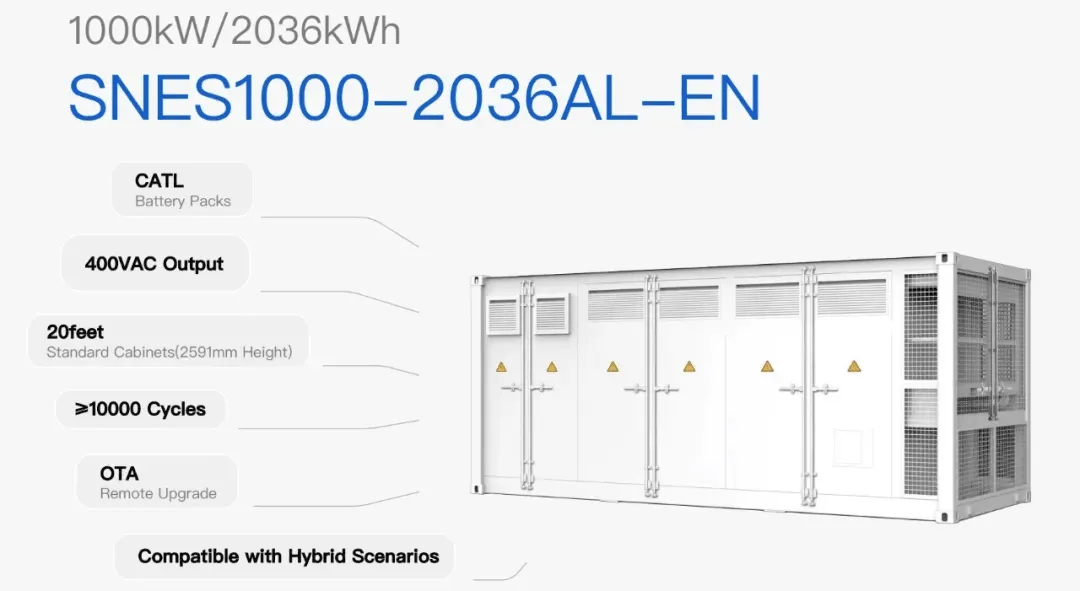
QUIBO Energy, formerly known as SUNNIC, is a company backed financially by CATL and Xiaomi. It specializes in mobile energy infrastructure, essentially containerized or transportable energy storage systems with fast charging capabilities. The materials mention a mobile ultra-fast charging system with a capacity of 2 MWh, for example.
The second partner is FleetBoost, a European provider of flexible high-power systems. The company is developing the FleetBooster series based on CATL’s battery technology. QUIBO and FleetBoost have previously worked together on the FleetBooster 20 and 40 solutions, which are designed to help in areas where the power grid is too weak or investors do not want to wait years for an electricity connection. This is a very European problem, not some Chinese abstraction.
The third element is Swaptopus, a joint venture between CATL and Octopus Energy. Its goal is to build a battery swapping network for electric trucks in Europe. According to earlier announcements, the first demonstration stations are set to open in the UK in 2027, with the network in that market expected to grow to over 30 stations by 2035.
This is of course still not a scale that will transform entire European transportation. But as a test for a repeatable model, it already makes sense, especially on predictable routes between logistics hubs.
Why DHL Might Be a Better Partner Here Than a Transport Startup
DHL is entering this project not as a company that is just looking for applications for electric trucks. It is an operator with real volume, a network of warehouses, and predictable routes. In other words, exactly what is needed to determine whether such infrastructure is economically viable.
In practice, the cooperation will also cover transportation within CATL’s own European supply chain. This is an important detail because it shows that the partnership doesn’t end with PR for external customers. CATL wants to test these solutions in its own logistics as well.
DHL also has its own climate goal. The company aims to achieve net-zero emissions related to logistics by 2050. This is a distant deadline, but heavy transport is one of those sectors where nothing will happen without cooperation among carriers, vehicle manufacturers, energy providers, and infrastructure operators.
CATL already has a truck battery that fits this picture
The announcement of the partnership coincided with the launch of CATL’s new solution for commercial vehicles. On September 14 in Hanover, the company unveiled Tectrans II, a battery for commercial transportation.
The most powerful configuration for heavy trucks is expected to offer a range of up to 1,000 kilometers and support both charging and battery swapping. The manufacturer also claims megawatt-level charging, allowing the battery to reach 80 percent capacity in 25 minutes.
The paper will accept anything, so a star mark is needed here. A range of 1,000 km in heavy transport depends on the load, route, temperature, and speed. Meanwhile, achieving 80 percent capacity in 25 minutes requires appropriate infrastructure at the charging stations, an area where Europe is still in its infancy. The battery alone doesn’t solve the problem if there’s no MCS and a sufficiently powerful connection nearby.
Nevertheless, Tectrans II clearly shows why CATL needs systems like the one from DHL at all. The battery manufacturer no longer wants to sell just cells; it wants to sell the entire system: the battery, charging, energy storage, swapping, and lifecycle management.
The most interesting part is what hasn’t been disclosed yet
The announcement doesn’t include a list of transport corridors. There are no investment figures. No specific project start dates are given either. It’s also unclear which truck manufacturers will actually join the program.
This doesn’t cancel the project, but it puts it in proper perspective. For now, it’s a framework for cooperation rather than an immediate rollout. Companies have created a formal structure under which they can launch further implementations. Only the first contracts, constructions, and operational routes will show whether anything tangible can emerge from this effort.
In Europe’s electric heavy transport market, the biggest challenge isn’t the idea itself. It lies in the operational details. Where to charge a vehicle that needs to generate revenue. How to avoid keeping it stationary for hours. How to bypass network bottlenecks. And whether swapping batteries for trucks will truly be cheaper or faster than charging at designated stations.
From a Polish perspective, this issue is significant because our market is one of the largest hubs for road logistics in Europe. If green corridors start to be established seriously, they will sooner or later extend to Central Europe as well.
For now, CATL and DHL are showing the right direction, but not yet a fully prepared path. Which approach makes more sense today for heavy transport in Europe: megawatt charging or battery swapping?