
CATL and BYD face slowdown in Hungary amid environmental inspections and new regulations
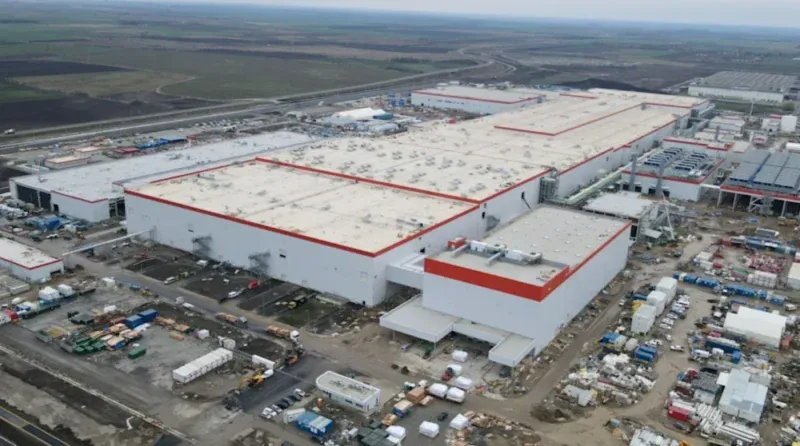
CATL and BYD are under scrutiny in Hungary following the change of regime in Budapest. Production of battery cells at CATL’s facility in Debrecen, Hungary, has slowed down again. Local authorities have ordered a temporary suspension of operations due to environmental safety concerns. This case is part of a broader tightening of controls on Chinese industrial investments in the country, which also affects other battery manufacturers and BYD.
CATL must now complete all necessary repairs to address the safety issues before it can officially resume production. In the meantime, only equipment calibration and testing activities are permitted.
Activities suspended due to high nickel exposure
CATL’s plant in Debrecen is the focus of a 7.34 billion euro investment aimed at creating a European battery hub with an overall capacity of 100 GWh for cells and modules. Production of the modules, with an annual capacity of 5 GWh, began last May. The situation is different for cells, whose actual mass production is now expected to be delayed.
The issue came to light during debugging and experimental production activities. According to Hungarian authorities, some workers were exposed to nickel dust levels above occupational limits.
CATL launched a biological monitoring program for exposure at the beginning of June. However, in August, nine employees showed nickel levels above the expected thresholds.
Inspections conducted by regulatory authorities also revealed an insufficient supply of protective equipment in certain areas of the facility. On August 25, orders were issued to immediately halt operations in the affected departments.
CATL: all 20 of its facilities are zero-impact. Now it’s the supply chain’s turn
Challenges hit the supply chain
Safety issues are not the only factor slowing down the project. The application for a production license for the second phase of the facility was rejected on August 19 due to errors in the site’s overall layout, which incorrectly listed some already completed buildings.
The consequences also affect the supply chain. The Debrecen site is supposed to supply mainly local Mercedes-Benz and BMW factories. To maintain deliveries to Mercedes, CATL is temporarily using batteries produced at other facilities, bearing the additional costs associated with logistics.
The BMW production involved in this project has not yet started, and according to available information, it is not currently affected by the delays.

Hungary under Orbán: Stricter environmental regulations
In addition to safety inspections, CATL has also faced pressure over environmental issues. A Hungarian lawmaker reported a fine of 10 million forints, approximately 27,000 euros, for various violations of integrated environmental permits.
The complaints include incorrect waste labeling, insufficient signage for hazardous waste, and inadequate access control systems.
The CATL case fits into a broader context. Hungary’s new government after Orbán has announced that so-called “strategic investments” will no longer be exempt from environmental, nature protection, and urban planning regulations. In case of violations, a project may also be barred from obtaining new construction permits for at least six months.
BYD vs. CATL: A battery war in China amid tests and accusations
From CATL to BYD: No exceptions for Chinese batteries
The tightened controls do not affect only CATL. In June, authorities suspended operations at a Semcorp facility, which produces lithium-ion battery separators, after detecting metallic elements in groundwater.
The giant BYD has also been fined for allegations related to the disposal of contaminated soil on agricultural land. The Chinese automaker is said to have delayed the start of production at its plant in Hungary, originally scheduled for the fourth quarter of 2025, to the fourth quarter of 2026.
Electric Week/Watch Marco Berti Quattrini’s VIDEO
Previous Article
Chargecloud and Hubject bring Plug&Charge to AC charging stations as well
Next Article
What should never be missing in an electric car? Here’s the checklist