
Card and top-up badge: functionality, price, and options
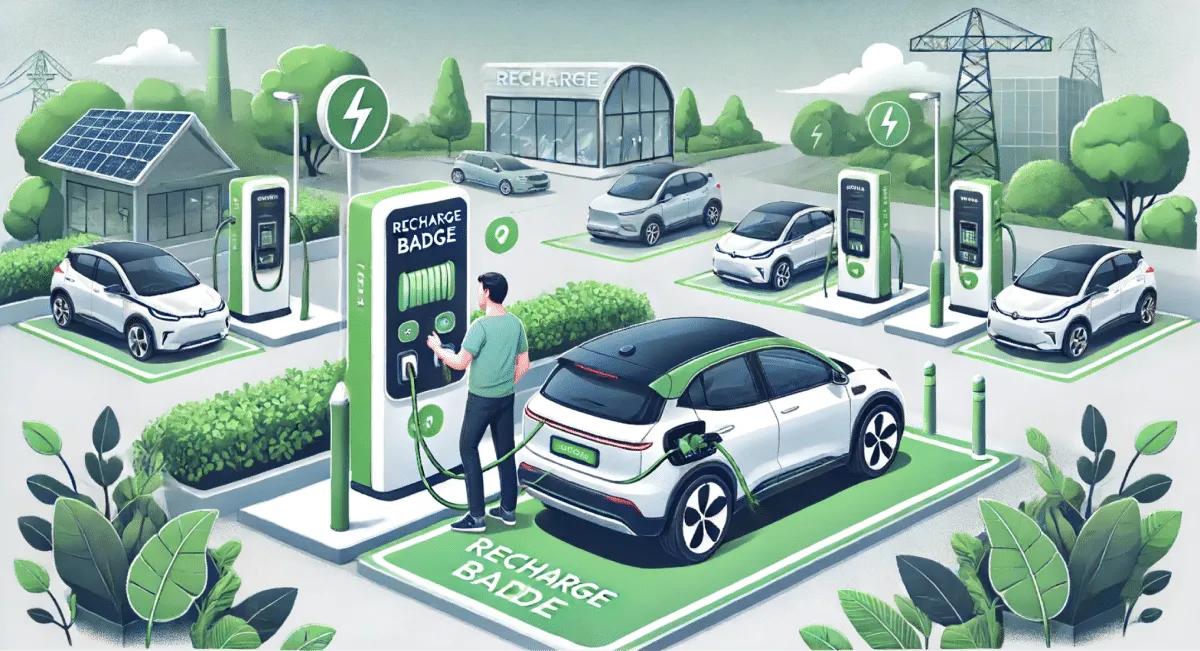
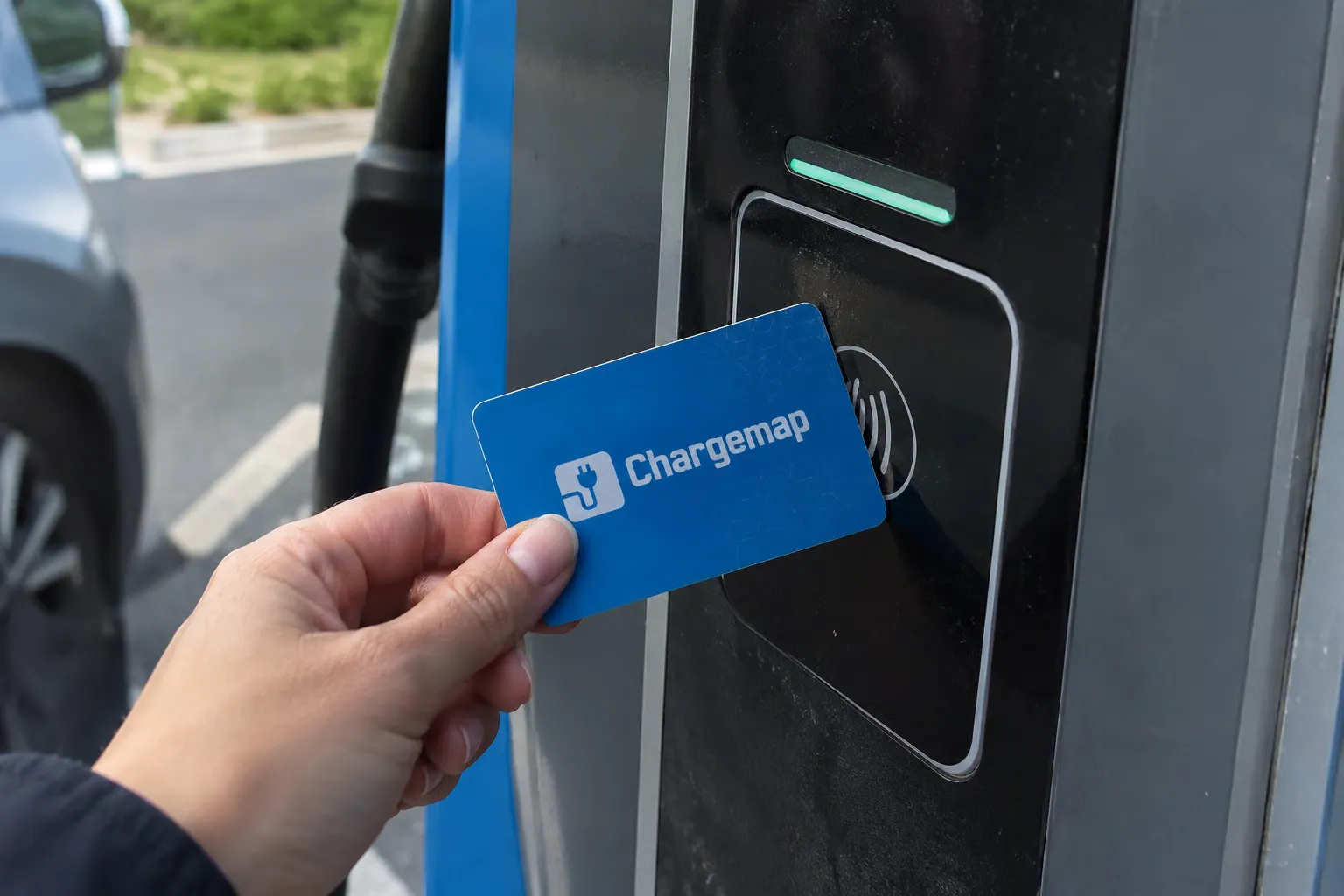
The recharge card simplifies access to electric vehicle charging stations. A single RFID badge unlocks thousands of charging points across Europe. Here’s how it works, what the costs are, and how to choose the right one in 2026.
Recharge card and badge: definition and function
Three terms refer to the same item. “Recharge card,” “badge,” and “pass” all mean the same thing—they are access keys to public charging stations. This tool enables session logging and handles billing.
Card, badge, or pass: the same RFID device
The badge relies on RFID technology (Radio Frequency Identification). A contactless chip stores a unique identifier. The station reads this identifier and recognizes your account. The operator then links the session to your payment method.
A single badge works across multiple networks, allowing you to avoid creating an account for each operator. This multi-network compatibility is the main advantage of this device.
Also read
Map of public charging stations: how to find them and what tools can help?
How is identification at the station done?
Upon arrival, you place the badge on the station’s reader. The reader reads the chip in one second. The station queries the operator’s server, which verifies your account and unlocks the charging port.
Some charging stations also accept a mobile app instead of a badge. The smartphone then replaces the RFID chip. In areas without network coverage, the physical badge still has an advantage as it works without an internet connection.
Is a card necessary for recharging?
No, a card is not mandatory. Since April 2024, the European AFIR regulation requires direct payment methods. All new charging stations must accept credit cards or secure online payments.
The badge still has two advantages. It centralizes your bills in a single app. It also provides discounted rates on certain networks.
Payment methods for a session
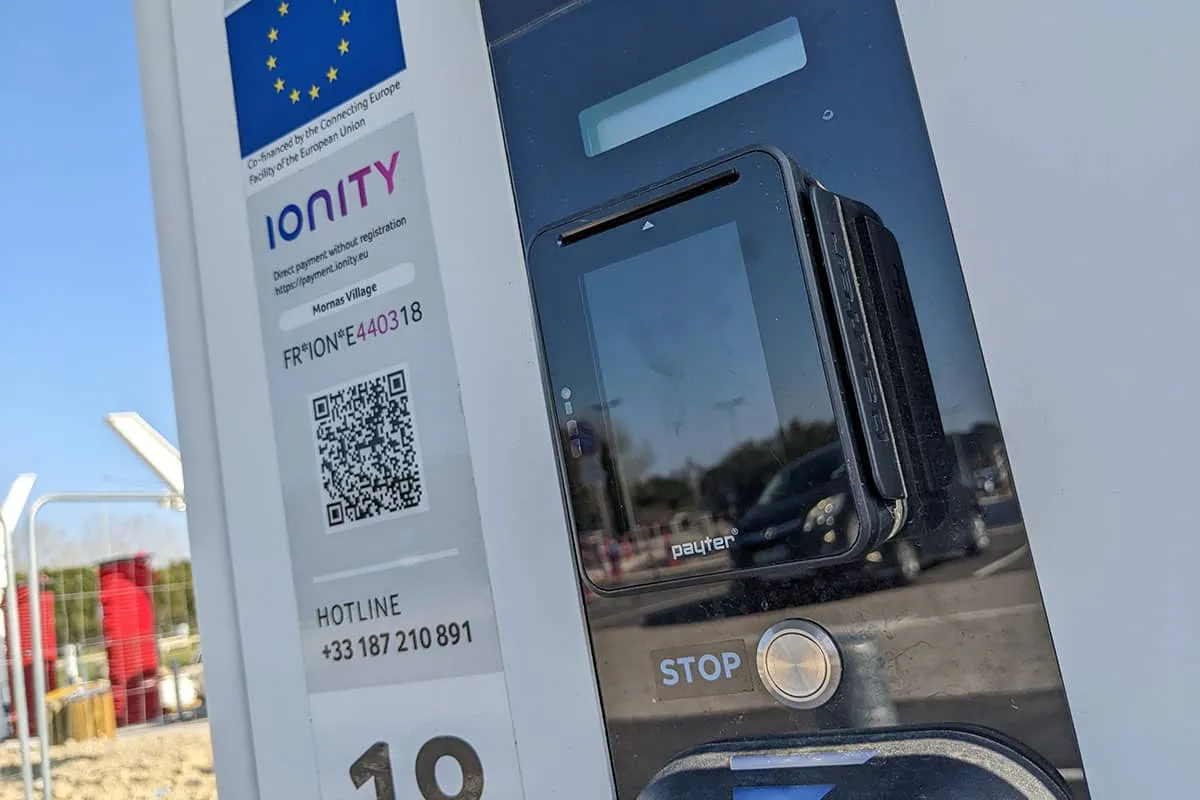
The price of a charge depends on the provider and the charging station. Three models currently exist on the market.
Session, duration, or kilowatt-hour: the three pricing methods
Pricing by session: a fixed price per charge, regardless of the energy consumed.
Pricing by duration: the price depends on how long the device is connected. This model encourages users to release the charging station.
Pricing by kilowatt-hour (kWh): the price corresponds to the actual energy delivered. This model remains transparent for consumers.
Paying without a recharge card: QR code and credit card
Few charging stations have a physical bank terminal. Many, however, offer remote payment options. You scan the QR code displayed on the station, which opens a payment page on your smartphone. The charge begins after the credit card is validated.
Price differences can sometimes be significant depending on the access method. On the Simone network in Bouches-du-Rhône, an annual subscription costs 12 €, resulting in a rate of 0.40 to 0.48 €/kWh. Without a subscription, the price rises to up to 0.52 €/kWh. Additional fees apply beyond the charging time. Therefore, compare the options before plugging in.
Operators, Networks, and Universal Cards
The world of charging distinguishes between two concepts: operators and networks. This difference helps guide your choice of card.
Operator or Network: What’s the Difference?
Operator: The company that issues the card and handles billing. It provides the app and session tracking.
Network: The physical infrastructure of the charging stations. Each network sets its own rates and terms.
The Major Operators in France
Several operators stand out due to the extent of their coverage:
Chargemap: a widely used French operator present in France and throughout Europe. Its app helps plan routes and locate charging stations.
Shell Recharge (formerly NewMotion): offers home and on-the-road charging solutions through a single card.
Izivia: an operator under the EDF group, available on highways and in cities.
Electra: a network of fast and ultra-fast charging stations in urban areas, with dedicated apps and cards.
Chargemap Pass, Izivia, and Fulli: multi-network passes
Certain cards provide access to thousands of charging stations at once. The Chargemap Pass is the leading example in France. This RFID card gives access to over 950,000 charging points across Europe. It works without requiring a subscription.
You pay for the badge once, then a fee per session based on the network’s rate. The app shows the exact price before each top-up. An optional subscription, Chargemap Boost, eliminates service fees. Izivia and Fulli follow a similar approach: one account covers multiple partner networks. The Izivia Pass costs at least 15 €, with service fees applied on third-party networks.
Prices as of September 2026: at least 14.90 € at purchase, then 0 € per month. The Boost subscription, charged separately, remains optional.
A top-up card for all of Europe
Long-distance trips often cross several countries. A multi-network card avoids the need to maintain multiple accounts. The badge recognizes partner charging stations across borders. You can top up using the same account in France, Belgium, or Spain.
Always check the network coverage before a long trip. The app shows compatible charging stations along your route.
Also read
Electric car: how to prepare for a long journey?
How much does a recharge card cost?
The usage price includes two components: the purchase of the card and the cost of energy. Some providers add a monthly subscription fee.
Recharging with or without a subscription
Without a subscription, you pay the public network rate. With a subscription, you get a lower price per kWh. This plan is aimed at drivers who recharge frequently in public areas.
Take Electra as an example. Without the app, the rate starts at 0.64 €/kWh. Through the app, it ranges from 0.39 to 0.61 €/kWh depending on demand. The Electra+ subscription reduces this price to as low as 0.20 €/kWh per charge. This offer comes without any commitment.
The subscription is often signed up through the app, with no binding agreement. You can therefore activate it for one summer and stop it right away afterward.
Also read
Fast charging: here are the subscriptions that will truly save you money in 2026!
Advantages and limitations of a recharge card
A recharge card offers tangible benefits. It also has some constraints that you should be aware of.
Daily advantages
Simplicity: one card replaces dozens of accounts. You just scan it, and the charging starts.
Coverage: a multi-network map reveals thousands of charging stations across Europe.
Tracking: the app displays consumption and cost in real time, allowing you to manage your budget effectively.
Flexible driving also reduces your charging needs.
Also read
Optimize your electric car’s efficiency and cut consumption with eco-driving
Limitations to be aware of
Accumulated costs: a poorly chosen subscription can increase your bill. Multiple cards raise fixed fees.
Scope: a single card may not cover an entire international trip.
Roaming fees: on third-party networks, providers sometimes add a surcharge, raising the cost per kWh compared to direct rates.
Availability: slow or occupied charging stations prolong waiting times. Plan your stops in advance.
Obtaining and Using Your Recharge Card
Getting a card takes just a few minutes online. The first recharge follows a simple process.
Getting a Card in 3 Steps
Registration: Create an account on the operator’s website. Enter your details and a payment method.
Ordering: Confirm the card order. You will receive it by mail in a few days.
Activation: Activate the card through the website or app. This step links the card to your account.
Recharging Step by Step
Find a compatible station in the app or on a map of public stations.
Place the card on the reader. The station will authorize the session.
Connect the cable to the car. Verify a proper connection.
Follow the station’s instructions to start the vehicle.
Monitor your session and cost from the app.
Unplug, store the cable, and free up space.
Which recharge card to choose?
The choice depends on your actual usage. Four factors guide the decision:
Geographic coverage: check the areas you visit frequently.
Pricing: compare the price per kWh and the subscription cost.
Europe: verify compatibility across borders.
Services: station reservation, support, app quality.
Card
Badge price
Subscription
Coverage
Chargemap Pass
starting at 14.90 €
Optional Boost
Europe, 950,000+ stations
Izivia (Pass)
starting at 15 €
no subscription required
France and partner networks
Electra
starting at 4.99 €
Optional Electra+
France, Belgium, Spain
Tesla: Charging without a badge
Tesla uses a different approach. Its supercharger network does not require any badge. The Model 3, Model Y, Model S, and Model X identify themselves upon connection. Billing is handled through the Tesla customer account.
Many Tesla owners still keep a third-party badge. It allows access to chargers outside of Tesla’s supercharger network, such as the Ionity network.
Tesla is gradually opening its superchargers to other brands. Payments are then made through the Tesla app, using an account and credit card. No physical card is needed to start a charging session.
Tesla also offers the MultiPass service in Europe. It provides access to a thousand third-party networks from the Tesla account. The vehicle key fob or app then initiates charging, allowing drivers to avoid needing an additional card.
Frequently asked questions about using a charging pass
Is a card needed to charge an electric car?
No. Since April 2024, all new charging stations accept credit cards or online payments. The pass remains useful for centralizing bills.
How to obtain a charging card?
Create an account with a provider, order the pass, and then activate it online. You will receive it by mail within a few days.
Can one charge without a subscription?
Yes. Several badges work without a subscription, such as the Chargemap Pass. You only pay for the badge itself and then per session.
Is the Chargemap Pass paid?
The badge costs 14.90 € at purchase, with no monthly fee after that. An optional Boost subscription eliminates service charges.
What card should I use to drive in Europe?
A multi-network card covers multiple countries with a single account. Check the compatibility of chargers along your route before you go.
A charging card remains a practical tool for electric vehicles. It simplifies access to chargers and centralizes tracking. The best choice depends mainly on your mileage and travel patterns. Compare coverage and prices before ordering.
Also read
Learn how to use your electric vehicle in daily life with our guides.