
Carrefour bans EVs on the roofs of 18 supermarkets in Belgium. The issue is the ban, not the weight itself
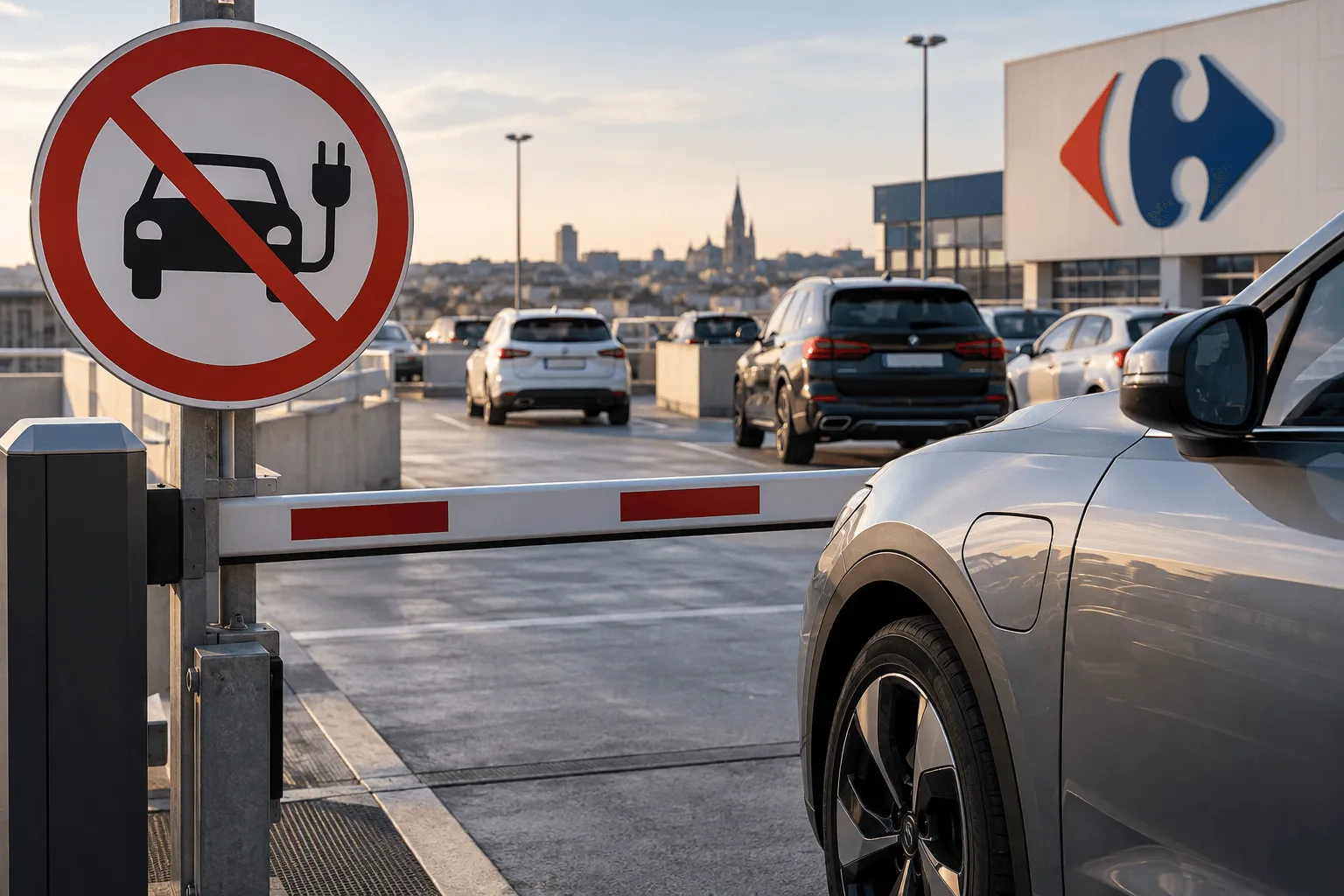
Carrefour Belgia has banned electric vehicles from the rooftop parking lots of 18 supermarkets. The chain cites the age of the structures and the greater difficulty in extinguishing fires in battery-powered vehicles as reasons for this decision, but critics rightly point out that the ban applies to the type of propulsion system rather than the vehicle’s actual weight.
This makes a difference, as lightweight urban EVs are barred from these parking spaces while heavy diesel SUVs are not.
Old roofs, new parking rules
The issue concerns parking lots located on store rooftops, mostly in older facilities from the 1980s. Carrefour claims these parking lots were designed for significantly lighter vehicles than those on the roads today. There is some truth to this, as modern cars have grown larger and heavier regardless of their propulsion type.
According to ADEME data, an average gasoline car weighs around 1150 kg, while the battery in an electric vehicle can weigh 250-600 kg. The authority therefore decided it would be safer not to allow BEVs on rooftops, although they can park normally in ground-level parking lots.
The problem arises shortly after. Carrefour did not set a weight limit but simply imposed a ban on one category of cars. This leads to absurdities.
Twingo no, X5 yes
The most commonly cited example is very simple. The electric Renault Twingo E-Tech weighs around 1168 kg and will not be allowed. The gasoline BMW X5 xDrive, which can weigh around 2430 kg, will be allowed.
There are more such examples. The Dacia Spring weighs around 970 kg, the Fiat 500e around 1250 kg, and the Tesla Model 3 in its base powertrain version around 1772 kg. Some of these vehicles fall within the weight range of ordinary compact cars and gasoline crossovers. A ban based solely on propulsion type thus seems more like an administrative decision than a genuine analysis of load requirements.
And it is here that Carrefour itself invites criticism. If the issue is the weight limit, the solution should be a clear DMC or curb weight limit. Not selection: electric cars are bad, gasoline cars are good.
The second argument put forward by the network concerns fires. A Carrefour Belgium spokesperson mentions that it is more difficult to intervene on a building’s roof and that lithium-ion battery fires are often more complicated to extinguish. This is true, but it doesn’t necessarily mean electric vehicles catch fire more often. They don’t burn more frequently, and according to some analyses, the fire risk is comparable to that of gasoline vehicles. Moreover, a gasoline car fire has its own very practical problem: burning fuel can spread across a parking lot and quickly transfer the fire further. Therefore, it’s unwise to create a simplistic fear based on the idea that “EVs = fires.”
Belgium has sparked a debate that will also resurface elsewhere
The issue isn’t limited to Carrefour. In the UK, several years ago, there were concerns that some old multi-level parking lots from the 1960s and 1970s weren’t designed to handle today’s heavy traffic volumes. In South Korea, after a major fire in an underground garage, local restrictions were imposed on heavily loaded EVs, while in Greece, ferries set limits on the charging level for electric vehicles.
The difference is that there, discussions usually focus on specific risks and procedures. The Belgian case shows something different: an old infrastructure problem wrapped up in a simple ban on a new type of propulsion system.
For Polish drivers, this is currently more of an interesting anecdote than a sign of similar bans on a large scale. But if anyone is managing an old parking lot, the issue of heavy vehicle traffic will come up again, with a tonnage limit being a more sensible solution than targeting the charging ports.
Carrefour wanted to tread carefully, but they did it in such a way that even the lightest EVs were affected. In your opinion, what should these rules look like: a weight limit for everyone or complete freedom until an expert assessment?
LovEV Newsletter
Want more content like this?
Sign up — we’ll send you a weekly summary once the newsletter starts.