
Charging an electric car on Tuesday can cost eleven times more depending on the time you choose to plug it in: when is the best time to charge it.
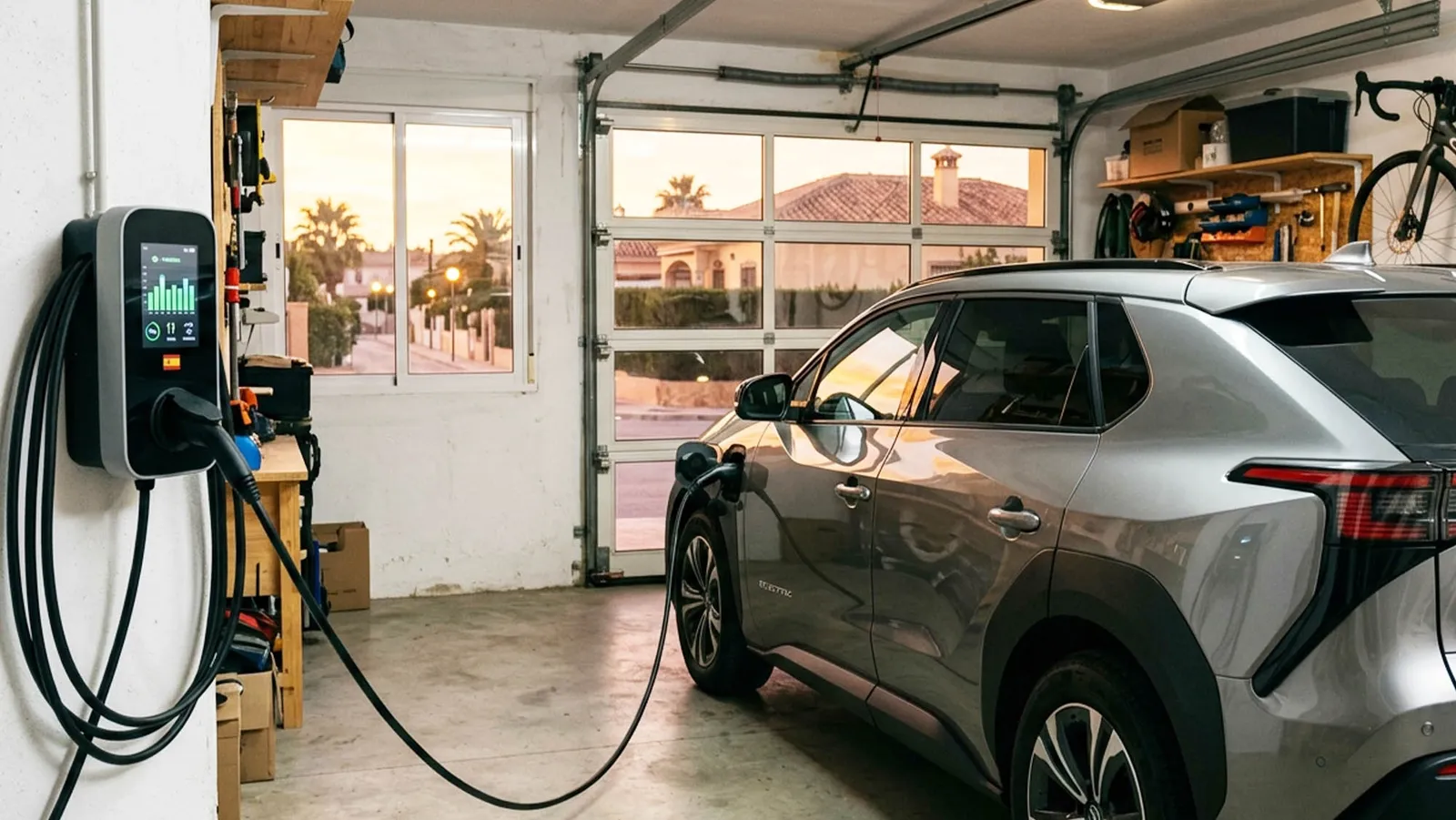
On Tuesday, October 13th, the electricity price shows a difference of more than eleven times between the cheapest and most expensive time of day. This variation is particularly significant for those who charge their electric cars at home and can schedule the process to take advantage of lower-cost periods.
According to the hourly prices from the Voluntary Price for Small Consumers (PVPC), energy costs reach a minimum of 0.0338 €/kWh between 3:00 PM and 4:00 PM, while the highest price is recorded between 8:00 PM and 9:00 PM at 0.3818 €/kWh. The daily average is 0.2082 €/kWh, excluding taxes and fixed costs.
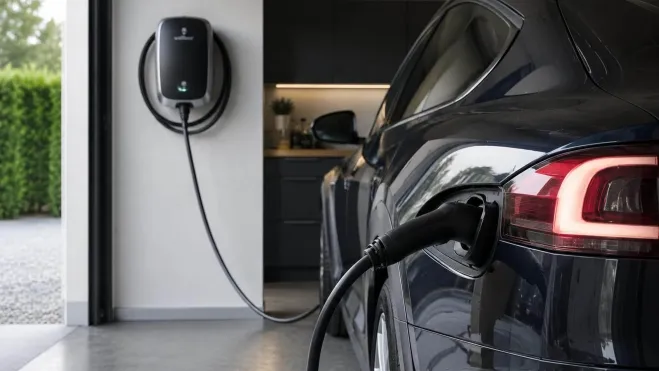
The best times to charge an electric car
The difference between the two time periods allows for a significant reduction in the energy cost of home charging. However, the savings depend on the tariff contracted and on whether the vehicle can be charged during the cheapest hours.
Time Periods
PVPC Price
14:00-15:00
0,0424 €/kWh
15:00-16:00
0,0338 €/kWh
16:00-17:00
0,0492 €/kWh
18:00-19:00
0,2912 €/kWh
19:00-20:00
0,3483 €/kWh
20:00-21:00
0,3818 €/kWh
21:00-22:00
0,3461 €/kWh
The period from 14:00 to 17:00 includes three consecutive hours with lower prices. For those who cannot complete the full charge within one hour, taking advantage of this interval can be more useful than focusing only on the daily minimum price.
Cost of Charging 20 kWh
The impact of this difference is evident when comparing the cost of energy consumed. At 0.0338 €/kWh, consuming 20 kWh results in a cost of 0.68 euros for energy. At 0.3818 €/kWh, those same 20 kWh cost 7.64 euros. The difference amounts to 6.96 euros.
This is a theoretical comparison, not the cost of a full charging session necessarily completed within one hour. The duration depends on the power of the charging station, the vehicle, and battery conditions.
For reference, a 3.7 kW home charger can supply up to 3.7 kWh in one hour, while a 7.4 kW charger can provide up to 7.4 kWh, provided the car supports that power level and the installation can handle it. With today’s extreme prices, the energy cost for one hour would be approximately 0.13 euros with 3.7 kW and 1.41 euros with 7.4 kW, respectively. These figures do not include charging losses, taxes, or other charges on the bill.
Wholesale market exceeds 166 euros/MWh
The evolution of the wholesale market also reflects high prices. According to OMIE, Spain’s daily market recorded an average price of 166.63 €/MWh on this Tuesday, equivalent to 0.16663 €/kWh, before other components are added to the household bill.
This figure should not be confused with the hourly price from PVPC. The regulated tariff includes other elements, and its final amount also depends on taxes and factors applicable to each consumer.
That is why the hourly figures from PVPC are not directly applied to all contracts in the free market. Those with indexed tariffs may experience fluctuations linked to the market, while users with a fixed price per kWh depend on the terms agreed upon with their electricity supplier.
To reduce the cost of using an electric car, it’s advisable to check the rate you have contracted and schedule charging during the cheapest periods whenever possible. This Tuesday, the 2:00 PM to 5:00 PM window offers a particularly favorable opportunity for doing so.
