
60% charge in 30 minutes: this is what Tesla’s charger network will look like in Europe to power its first electric truck
27/09/2026 11:30
Updated to
27/09/2026 11:30
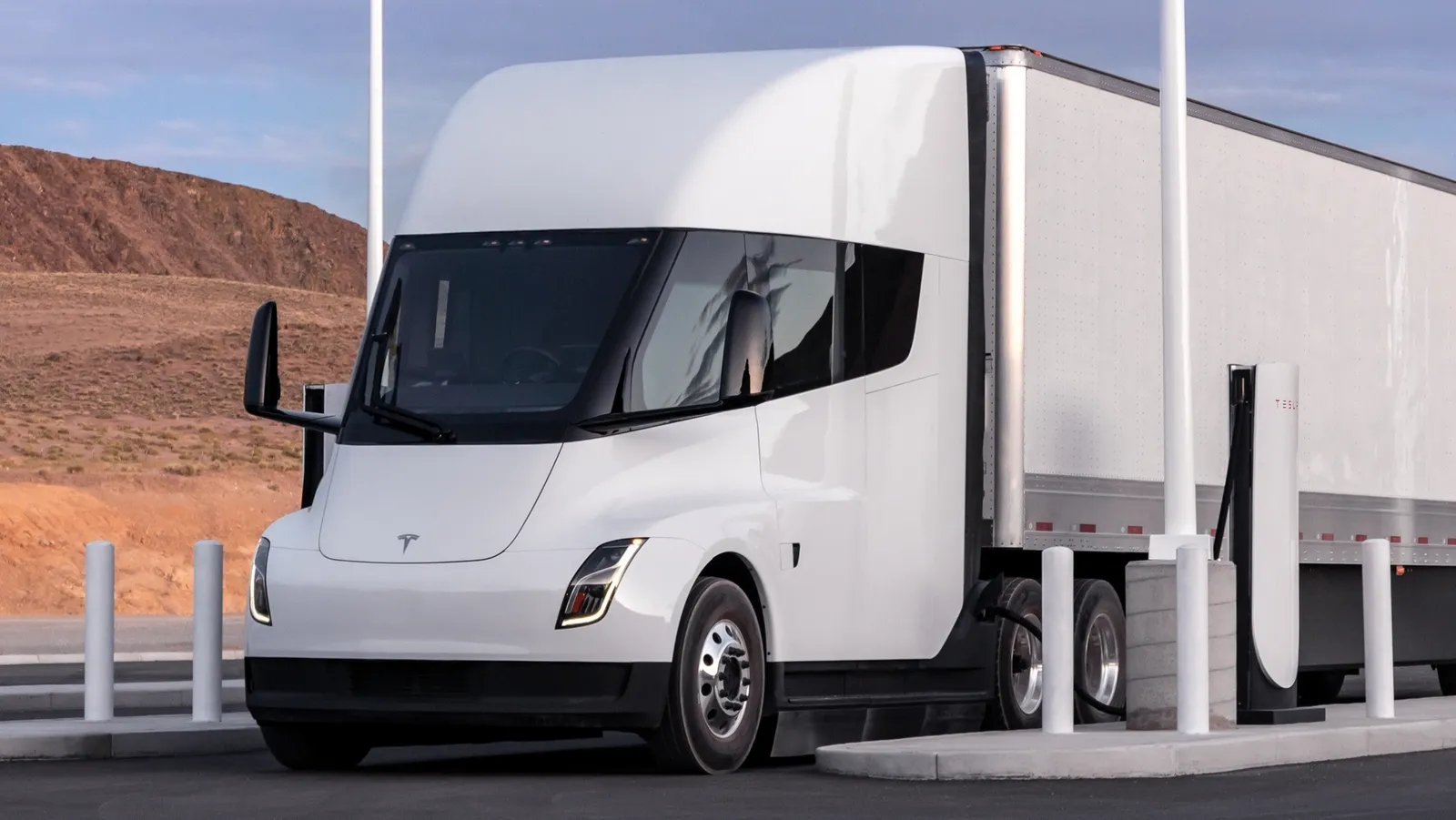
Even before delivering a single Semi truck in Europe, Tesla is already taking steps to build the charging infrastructure it will need. At the IAA Transportation exhibition in Hannover, the company’s Semi program leader unveiled plans to deploy a Megacharger network across the continent, with over 100 charging stations planned in the initial phase. Once again, Tesla is creating its own public charging network, this time for its first electric truck, the Tesla Semi.
The strategy makes sense. Without dedicated fast-charging stations for trucks, no fleet operator dares to switch to electric vehicles for long-distance trips. Tesla is aware of this, which is why it has decided to announce the infrastructure even before the vehicle goes on commercial sale in Europe, a timeline set for 2027. It’s the same approach it used with electric cars that brought it so much success.
Over 100 charging points, not necessarily 100 stations
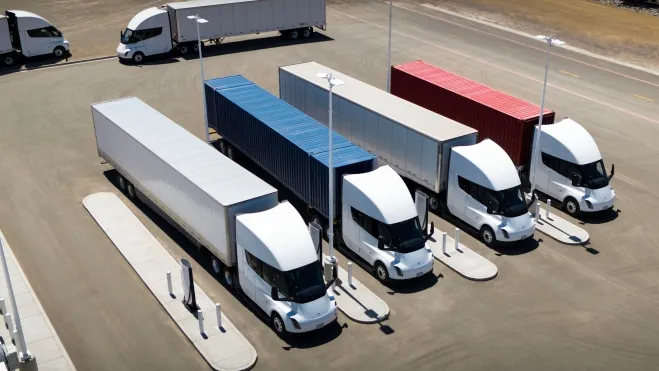
According to information gathered in Hannover, the initial deployment includes over 100 charging points, each capable of delivering up to 1.2 megawatts and adding 60% more range in 30 minutes. The map shown concentrates the markers in the UK, France, the Netherlands and Belgium, Germany, and one location in southern Sweden. It’s important to note that these are charging points rather than stations, as a single Megacharger location can serve multiple charging points. As of now, Tesla does not operate any public Megachargers in Europe, has not confirmed the first location, and has only given 2027 as the start date for Semi deliveries.
Dan Priestley, head of Tesla’s Semi program, also detailed the industrial aspects during the same event. “We have an aggressive production expansion plan,” he explained. “This factory will grow and meet our initial demand in North America and Europe. It has a designed production capacity of 1,000 trucks per week.” That figure amounts to about 52,000 trucks per year, although Priestley also mentioned in his remarks an annual target of 50,000 units, so both figures are quoted as stated without attempting to reconcile them. The plant, located next to Tesla’s Gigafactory in Nevada, began scaling up its mass production in April, and the first trucks destined for Europe will come from this factory.
A power level beyond what the first model requires

The 1.2 MW per charging point figure is the same one Tesla already uses in the United States, but the European pages for the Semi mention a charging power of 800 kW for the truck itself, so the infrastructure is being designed with capacity beyond that of the model arriving first on the continent. This margin allows it to serve multiple charging points sharing the same charger unit as well as future versions with greater range that Tesla might add later. The European truck will initially be available in a single version with standard traction and range, offering 550 kilometers of range at 40 tons of weight, an energy consumption of 1.0 kWh per kilometer, and a curb weight under 9,100 kilograms. Tesla has not disclosed either the battery size or the price for the European market.
A competitor already ahead in the field
Megawatt charging for trucks is not new in Europe. Milence, the joint venture formed by Daimler Truck, Traton, and Volvo, already operates the largest network on the continent, and Iberdrola is also installing high-power charging stations. The Semi uses the standard seven-pin connector of the megawatt charging system, allowing it to charge at other operators’ infrastructure as well. In other words, Tesla is building its own network for a truck that actually doesn’t need it exclusively to function.