Electric truck: Powermust aims to solve the loading challenge at warehouses
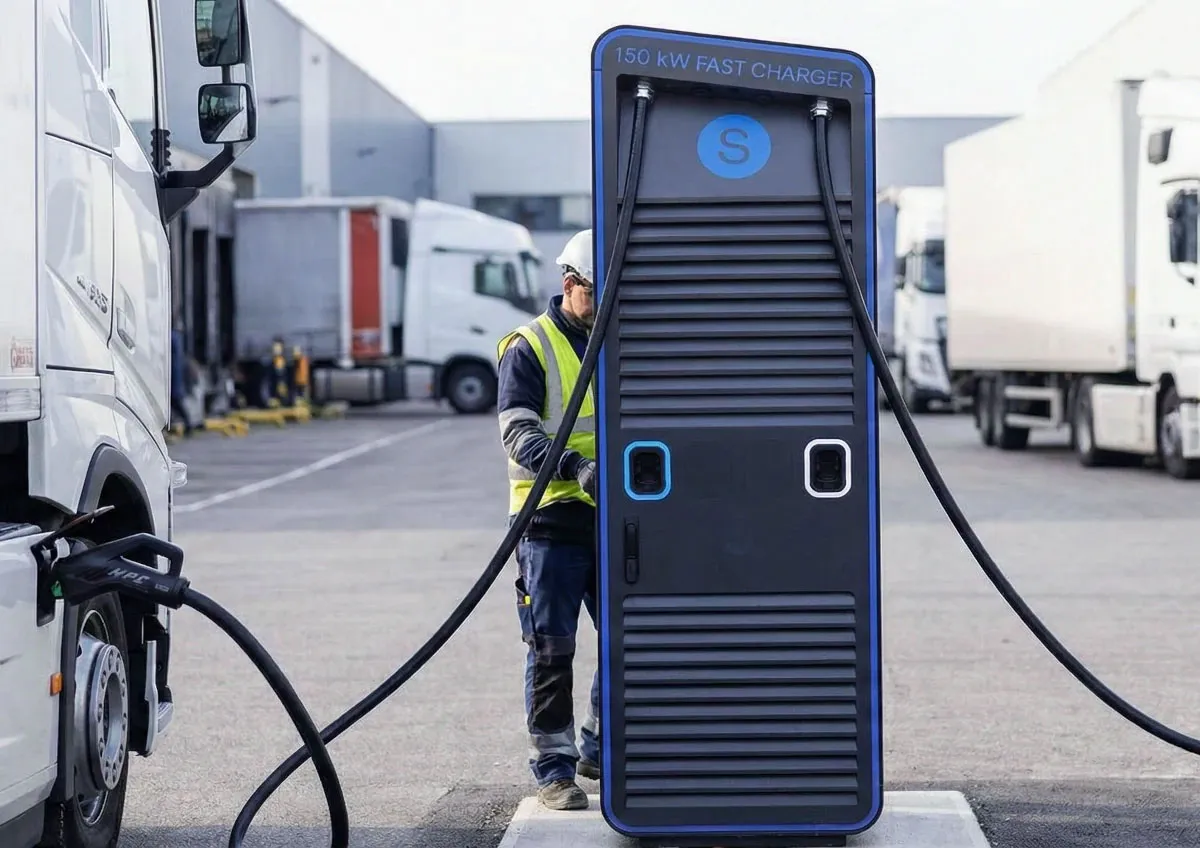
Electric trucks are entering fleets, but charging them at depots remains a challenging task for transport companies. Present at Technotrans, the young company Powermust positions itself as a turnkey partner, handling everything from system design to charger supervision, and unveiling several solutions tailored to the demands of this industry.
Purchasing an electric truck is one thing, but charging it is another. It is in this area that Powermust has positioned itself, aiming to offer transport companies a complete solution, from planning to operation. “In road transportation, you can’t afford to make mistakes. A truck that isn’t charged won’t set off,” explains Christophe Tharrault. Former president of Volvo Trucks France, he founded Powermust at the end of 2025.
Also read
Electric trucks: Accelerating the installation of charging stations in depots
Powerium: A free simulator to properly size your charging setup
Sizing remains undoubtedly the most critical step for transportation professionals. Accustomed since always to liquid fuels, they have much to learn about the heavy truck charging ecosystem. Station power, number of charging points, slow charging at night or fast charging during the day, addition of storage batteries—technical choices can significantly affect budgets, both in terms of investment and operating costs. This is why Powermust developed Powerium, a simulator available free online on its website, with no limit on simulations after registration.
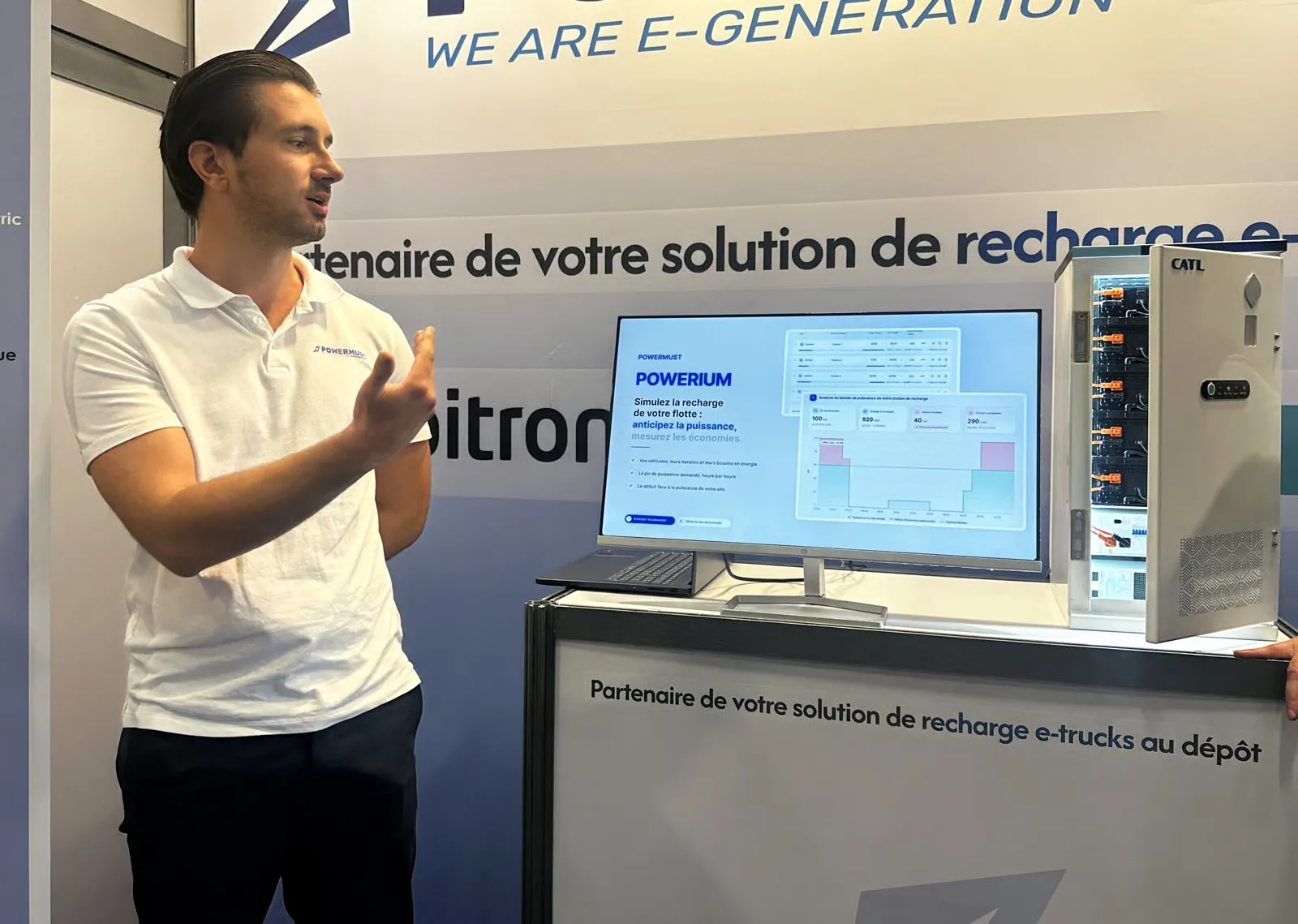
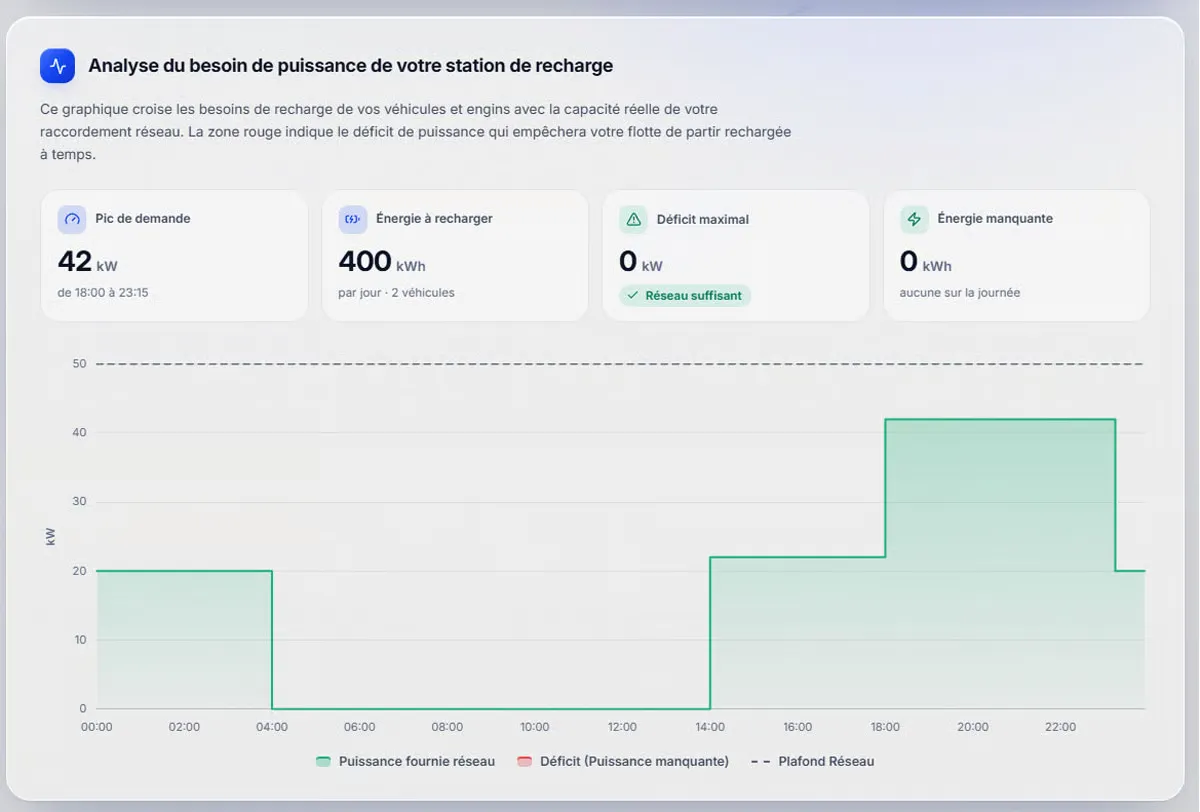
The tool consists of two components. The first focuses on operation. The carrier provides information about their current or future fleet of electric trucks, the capacity of their batteries, their scheduled times at the depot, and the energy required for charging each day. “The simulator gives us directly the charging curve, with a line showing the power available to the customer. We can see the peak demand and, if there is one, the power shortage at the depot,” summarizes Jean-Maxime Tharrault, marketing and business development manager at Powermust.
The second aspect is economic and environmental. Based on annual mileage, operating duration, diesel consumption, and energy costs, Powerium calculates the annual savings achieved by switching from diesel to electric over one or several years, as well as the CO2 avoided throughout the truck’s lifetime. It even calculates, depending on the location, the area of solar panels needed to meet charging demands through full or partial self-consumption. This helps bring some customers back to reality: “We’ve had clients say, ‘We have 20 square meters of panels; we’ll run the trucks.’ But the trucks aren’t there when the sun is shining!” smiles Christophe Tharrault.
A network of partners
To cover the entire supply chain, Powermust relies on carefully selected partners.
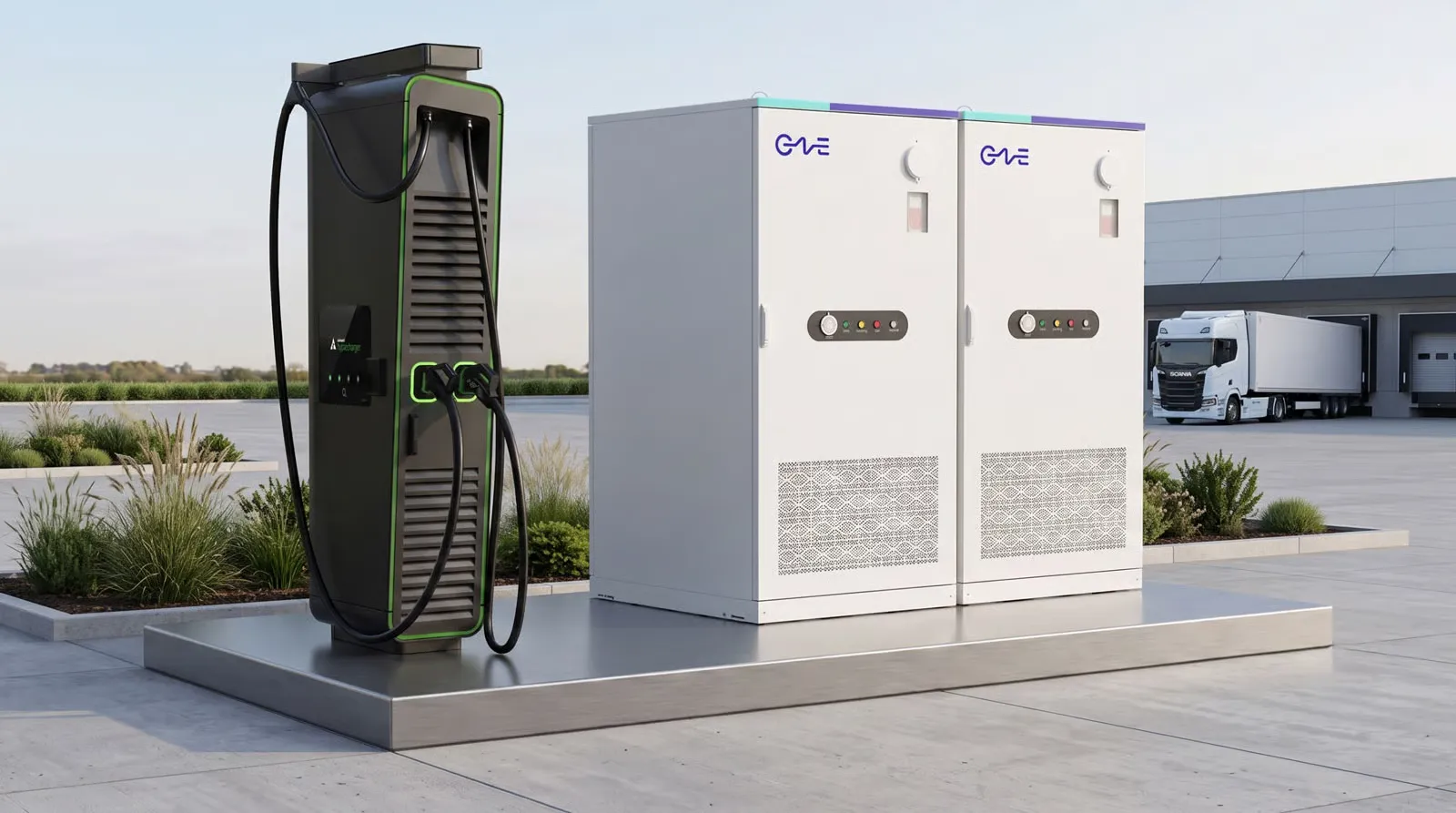
In terms of hardware, the company distributes charging stations from Alpitronic, the European leader in fast charging, and Siemens, as well as storage batteries from CATL. This allows them to offer everything from 40 kW mobile chargers to multi-megawatt charging stations.
For the installation, commissioning, maintenance, and monitoring of the charging stations, Powermust has partnered with Vinci Energies through its Omexom brand, whose network still includes a company located within 70 kilometers of each depot. This ensures the transporter has only one point of contact from the initial meeting to daily operation.
Charging stations tailored to transporters’ needs
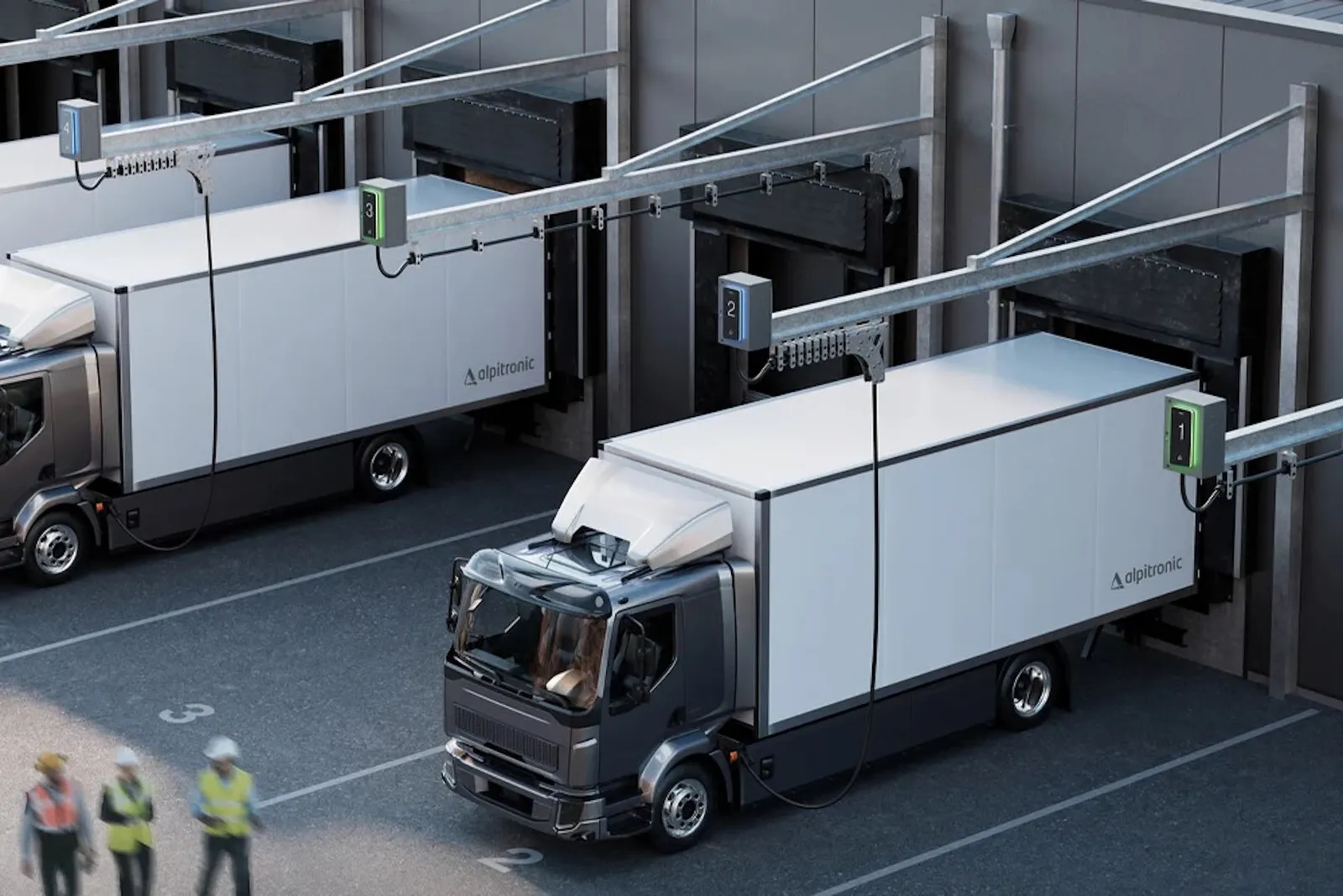
Beyond simulators, suppliers adapt their equipment to the realities of transportation. Well-known in the field of ultra-fast charging, Alpitronic unveiled its new Depot Satellite. This compact unit can be mounted on the wall, floor, or pole to charge trucks at docks or under gantries. “We can deliver up to 400 kW per connector. It’s simpler, lighter, and much easier to integrate into a depot,” explains Alain Costa, Alpitronic’s sales manager in France.
Another, more unexpected novelty: the PowerSkid 50, an Alpitronic unit of 50 kW mounted on a metal base in euro-pallet format. “The forklift places it on the ground, Vinci connects the electrical wiring, and we can start using it right away,” explains Christophe Tharrault. Without requiring civil engineering, it targets local transport operators at their sites, truck rental companies, or those who charge vehicles at their clients’ locations. The manufacturer also offers a mast system.
For beginners, Powermust also provides a Siemens mobile charger for rent, available for short-term use or over 60 months, connected to a standard industrial outlet. It’s ideal for a first truck or when the vehicle arrives before its charging station is set up.
Also read
Electric trucks: Decade Energy raises funds to develop charging infrastructure in logistics warehouses
Batteries to boost underpowered charging stations
Another solution highlighted by Powermust is storage. The company distributes CATL battery cabinets that can be paired with charging stations to overcome site power limitations. The principle is simple. “We store energy slowly, at the rate of the charger, and when a truck arrives, the batteries discharge rapidly into the charging station. This turns a low-capacity charging station into a high-capacity one,” explains Christophe Tharrault.
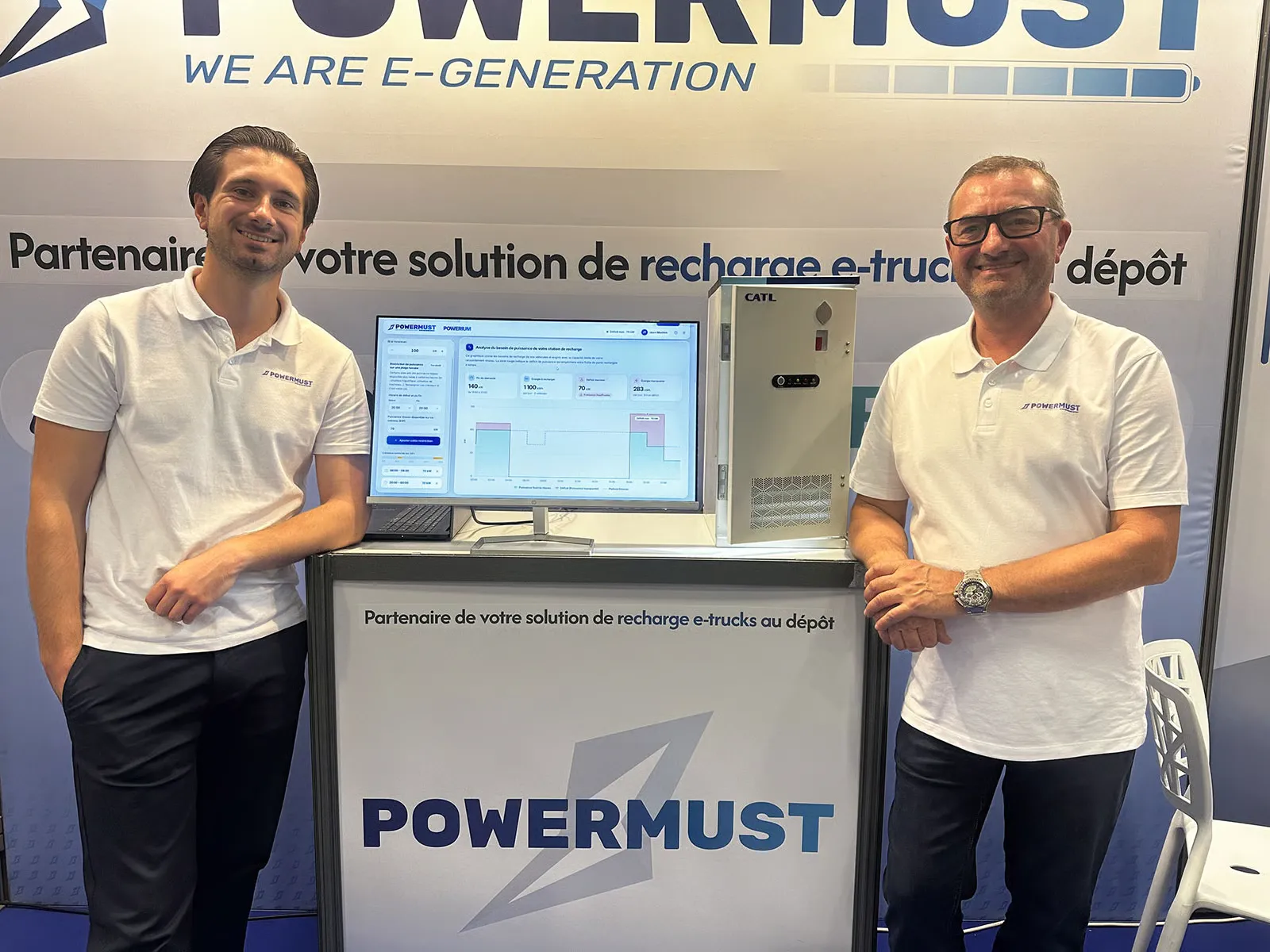
Comparable in capacity to a large truck battery, these cabinets are portable and can be installed inside a container. They also allow storage of the day’s solar energy while trucks are on the road, to recharge them at night. It is a more expensive solution, but sometimes the only option given the delays in connecting to Enedis’ grid. “It can take up to nine months from the time a customer picks up the phone until the work is done,” says Christophe Tharrault. Still, France is in a better position than some of its neighbors. In the Netherlands, the waiting time is measured in years.
The cost also rises if power has to be sourced from a distance, which is why it’s important to decide in advance whether to use grid connection or batteries. And unlike charging stations, which are eligible for the Advenir program, the cost of grid connection remains largely borne by the utility provider.
These delays prevent Powermust from setting clear targets. “The number of projects in our pipeline is enormous. But I can’t say how many will be completed within a year,” admits Christophe Tharrault.