
Electric truck: up to 85,000 € in savings over diesel... under certain conditions
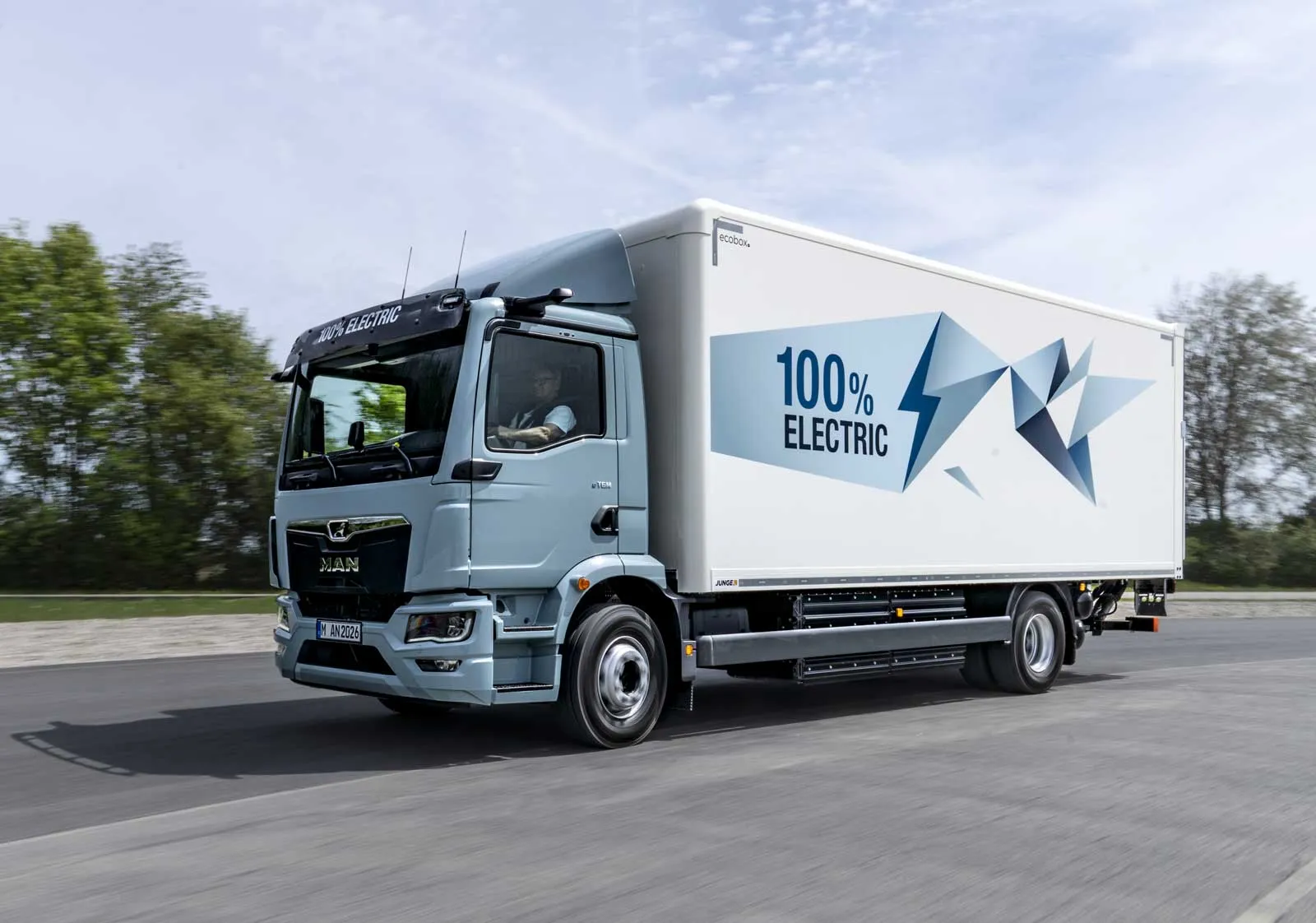
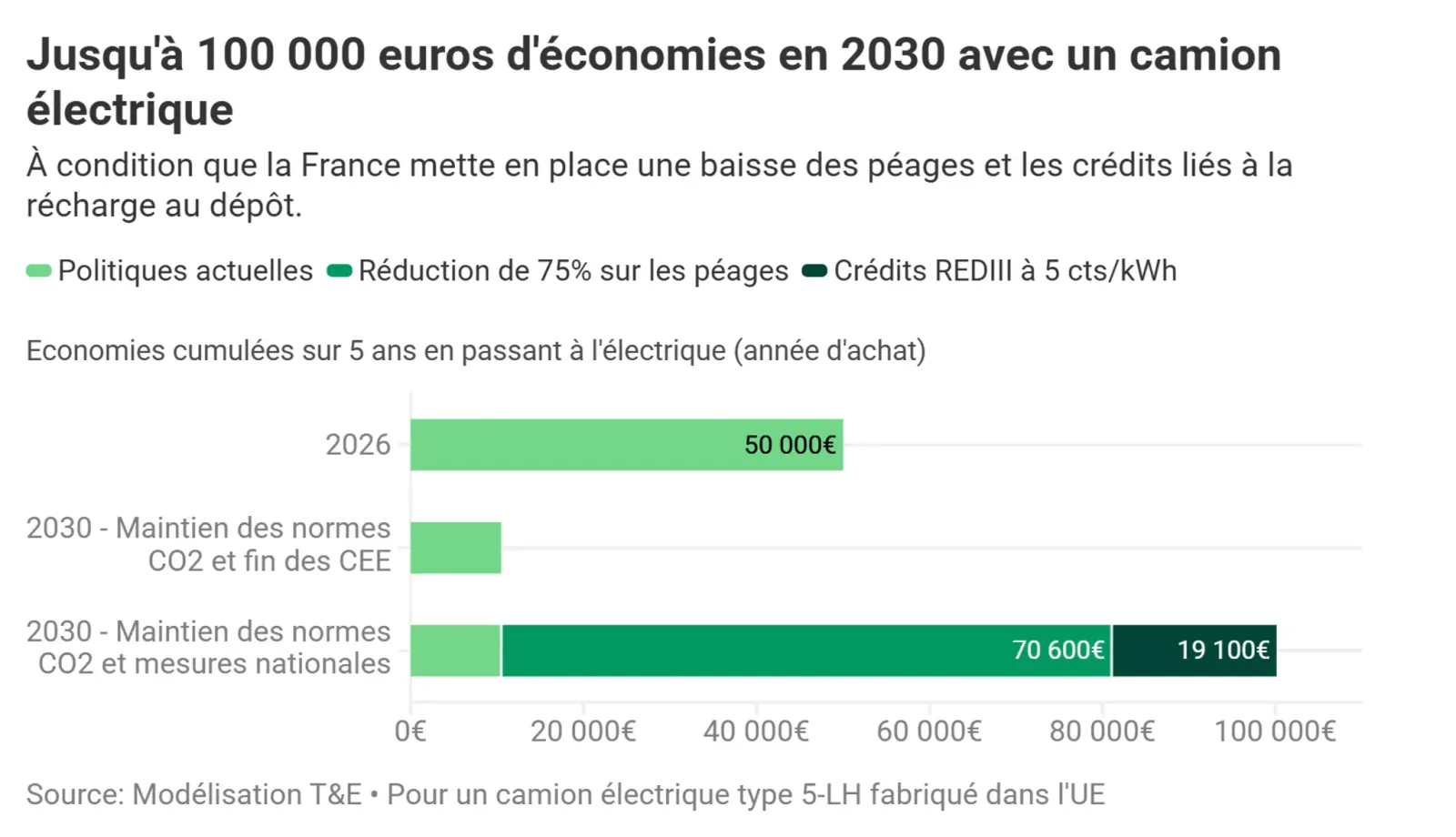
A savings of 50,000 euros over five years, with the potential to reach up to 85,000 euros. This is the figure cited by Transport & Environment (T&E) in a new report on the total cost of ownership for heavy trucks. According to this analysis, a French company that purchases an electric truck manufactured in Europe rather than a diesel one today could save around 50,000 euros over its ownership period. With the arrival of cheaper Chinese electric trucks, this savings could increase to 85,000 euros. At least in theory...
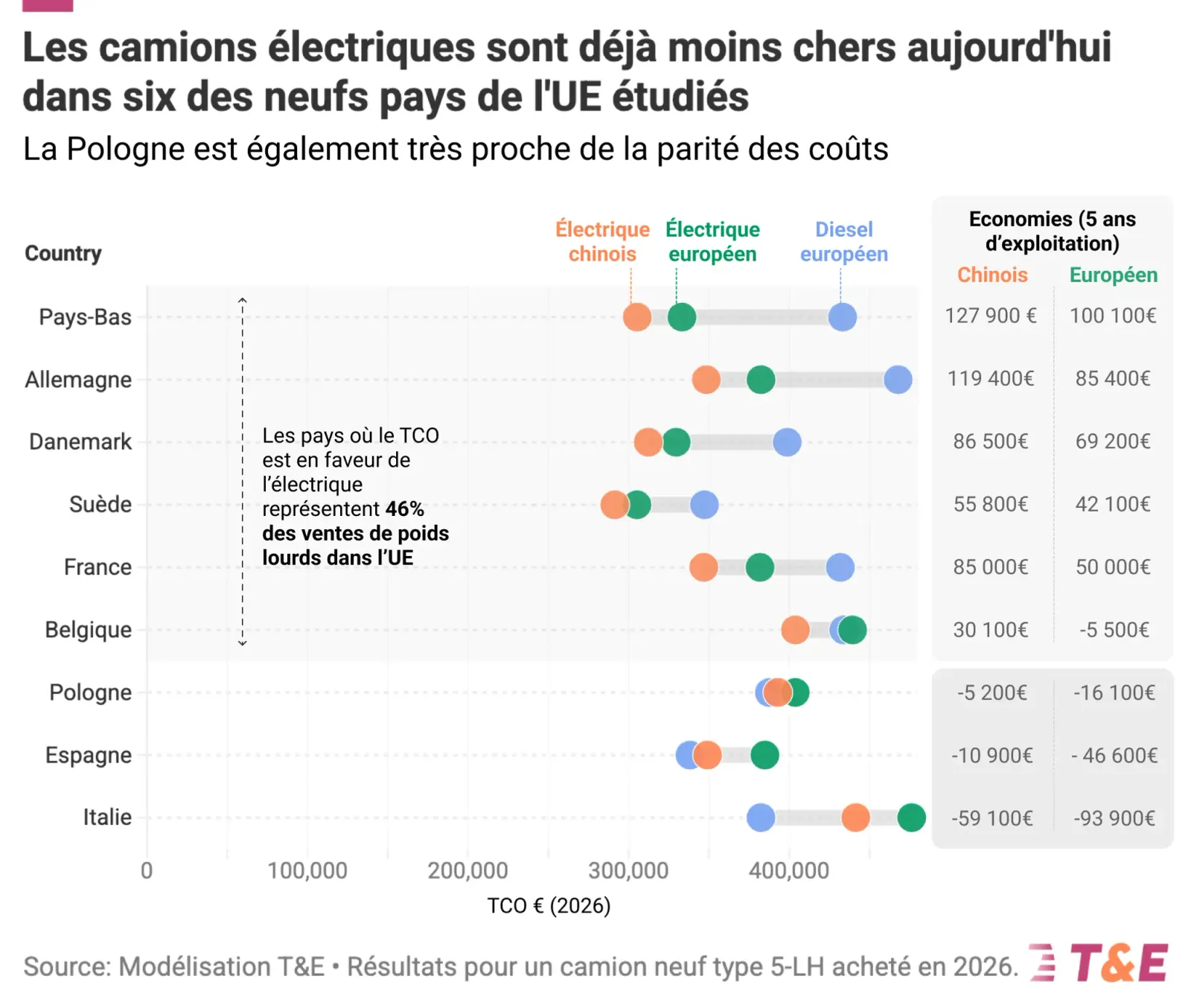
T&E is releasing multiple reports on heavy transport. Following an initial report highlighting the influx of Chinese electric trucks into the European market, this pro-electricity NGO is now addressing the total cost of ownership, a critical issue for all transport operators. The organization states that electric trucks are already cheaper to operate than diesel trucks in six of the nine major European heavy transport markets: Germany, France, Denmark, Sweden, the Netherlands, and Belgium. However, behind these reported savings of tens of thousands of euros, the outcome depends heavily on government policies that currently support the shift to electric vehicles.
Three factors could change the calculation
T&E’s document identifies three key factors: the purchase price of trucks, energy costs, and highway tolls. These are three parameters on which policymakers can intervene directly or indirectly.
In France, T&E has made three requests to the government ahead of the presidential elections in a few months:
The first concerns the incentive mechanism for reducing the carbon intensity of fuels (IRICC). Designed to replace the current Tiruert, it aims to implement the European RED III directive to give a new advantage to fuel stations selling renewable fuels. Although voted on by the Senate, this legislation has not been added to the agenda of the National Assembly. T&E calls for it to be reviewed or, failing that, incorporated into the finance bill scheduled to be presented on Wednesday, September 30.
The second relates to the transport framework law, which was also approved by the Senate and is still pending. It outlines a path toward greener freight transport for large companies. The third concerns highway tolls directly.
The third topic is the highway network. Germany, Austria, Denmark, and the Netherlands already apply preferential rates for trucks with zero or low emissions. In Germany, the toll exemption alone covers almost all of the additional cost over a five-year period.
In France, the situation is different. Although the Eurovignette directive has been implemented, its highway network operates under concession contracts. Therefore, fare adjustments based on emissions should only apply to new or renewed contracts, pushing its effects well beyond 2027.
Also read
Vinci has invested 90 million euros in these stations capable of charging an electric truck in 45 minutes
Savings that need context
The impressive figures should be viewed with caution, as Transport & Environment is an NGO federation whose goal includes promoting the electrification of transportation with a very limited openness to mixed energy sources.
This does not invalidate the calculations presented, but several variables can significantly affect a transporter’s economic equation.
The first is annual mileage. The more a truck travels, the more a lower operating cost can help offset a higher purchase price quickly.
The second factor relates to charging. An electric truck that is charged at night in a depot under a negotiated electricity contract does not have the same cost per kilometer as a vehicle that relies regularly on high-power public charging stations, whose rates can be significantly higher. This is a detail that T&E carefully omitted from its report.
Another variable that is difficult to predict is the residual value of electric trucks. In its report on electric truck sales in Europe by 2026, BloombergNEF recently noted that the resale value of an electric truck after three to five years remains poorly established. Some estimates suggest values ranging from 0 to 20%, compared to 25 to 50% for vehicles with better residual values. For transport companies, this is not a trivial matter.
Essential government support
Beyond the reported savings, this is likely the point on which everyone agrees: without purchase subsidies, no carbon credit mechanism for energy, and no reduction in tolls, the economic gap between electric and diesel trucks narrows.
This reasoning is also held by the hydrogen sector. The H2Accelerate consortium published a document this week explaining that fuel cell trucks could achieve parity with diesel in Germany thanks to these same factors. The same applies to bioGNL, whose introduction of Germany’s THG Quote has widened the gap with diesel, putting this solution at the center of automakers’ decarbonization strategies. Three technologies, a similar conclusion: at this stage, their competitiveness still depends heavily on the tax and regulatory rules established by governments...
Also read
First megawatt charging station for electric trucks in the Netherlands: “Sustainable logistics is becoming a reality!”
