
Replace the battery in your 10-year-old Nissan Leaf for 5,000 euros and enjoy over 400 kilometers of real-world range.
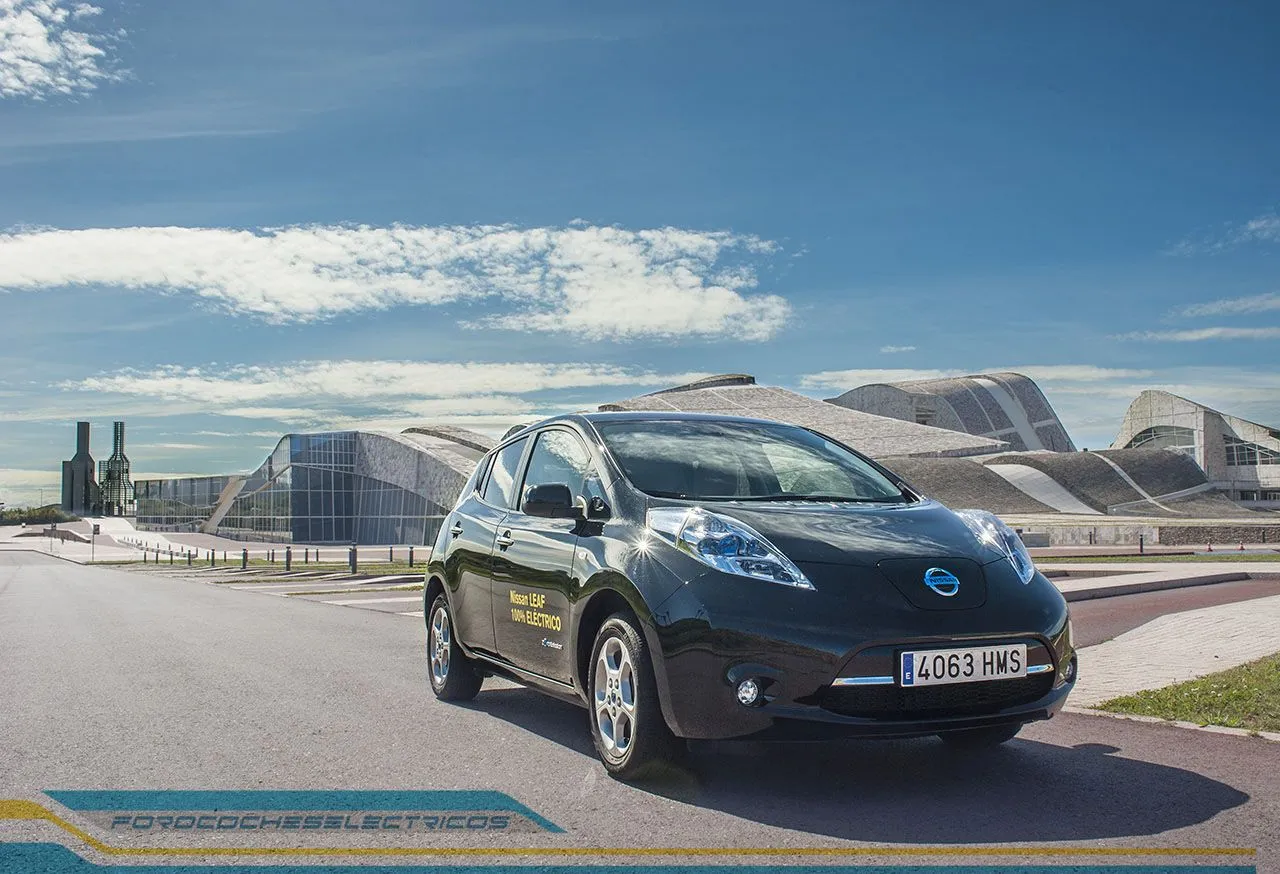
The used electric car market hides true mechanical gems that, over the years, see their main weakness in the degradation of their batteries.
This is compounded by market developments that leave them far behind technologically. Finding solutions to extend the lifespan of these pioneers has become a hobby and mission for many fans around the world. Proving that planned obsolescence or premature aging of battery cells doesn’t have to mean the end of the road for a best-selling veteran model opens up an exciting prospect for thousands of drivers.
A second youth for the Japanese compact electric car with next-generation batteries
The Nissan Leaf is one of the best examples. A great car with a terrible battery that degraded just from being looked at. Not literally, of course, but it has been the model most affected by this problem. Yet great problems require solutions.
One of the reasons why older Leaf models suffer from battery degradation is that they lack a battery cooling system. This means the battery cells deteriorate when exposed to high temperatures, especially during repeated fast charging, although they also degrade over time even without using fast charging. This indicates that the chemistry was really poor.
But despite the passage of time, nearly 13 years since its launch in Europe, the Nissan Leaf still looks quite good aesthetically thanks to its fairly futuristic design at the time. It’s a spacious compact car suitable for families, measuring 4.45 meters in length with a trunk capacity of 370 liters, allowing it to seat five passengers and carry some luggage, which is encouraging some owners to consider replacing the battery with a new one.
The subject of this story is a 2016 Leaf with 113,000 kilometers on the odometer that remains in good physical condition. The problem is that time and mileage have significantly degraded the 30 kWh battery, which once provided a real driving range of about 60 kilometers per charge.
The solution was to order a completely new battery pack from the Chinese manufacturer VIVNE. The new battery was twice as large, with a capacity of 62 kWh, and was made up of modern CATL battery cells.
In the video, Joel shows how to remove the old battery and replace it with the new one. The battery is about 2.5 centimeters taller than the original, but it comes with special spacers and longer screws to fit in the car without requiring major modifications.
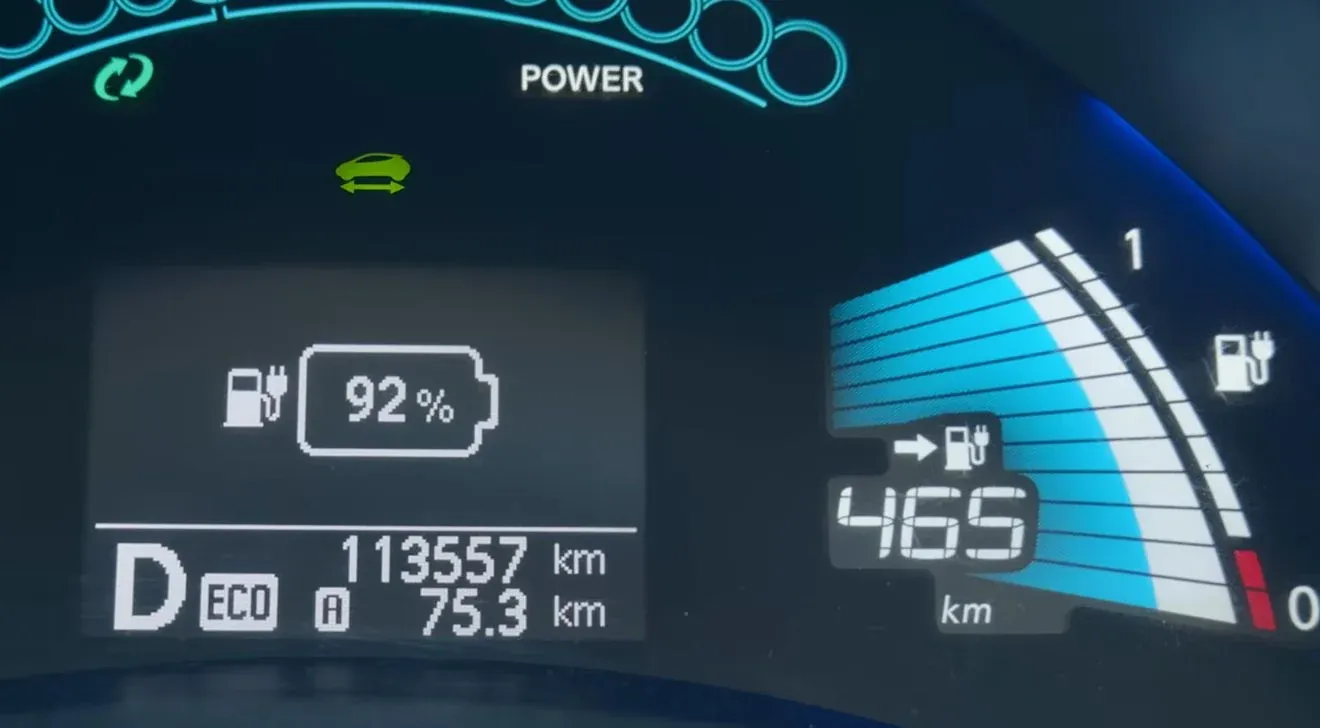
Once the installation is complete and the car is started for the first time, the dashboard shows a range of 260 kilometers, even though the battery is only 44% charged. With the battery fully charged, the range indicated on the dashboard is around 500 kilometers.
Of course, what the dashboard shows is one thing, while the actual range is another. After six months of driving—time sufficient to provide a more realistic estimate—Joel says he usually manages to travel over 400 kilometers on a single charge. And what about the cost? According to the owner, the new battery cost around 55,000 Swedish kronor, which is approximately 4,950 euros at the current exchange rate.
Additionally, the old battery won’t be discarded or recycled; instead, it will be reused in a home installation to serve as a backup for a photovoltaic system for a few more years.
The project demonstrates the possibilities of extending the lifespan of older electric cars with more modern battery technology. In the case of the Nissan Leaf, the electric vehicle will have a greater range than when it was new and more durable battery technology that will allow it to last longer, while also reusing the old battery so it won’t end up in a scrapyard as many pessimists had predicted.