
Cadillac executive Kelleter: “The Optiq is our vehicle for Europe.”
Cadillac is attempting a comeback in Europe, focusing heavily on electric mobility. After the American luxury brand first entered the European market again in Switzerland at the end of 2023, Germany followed in May 2024. Initially, there was only one model available, the Lyriq, which was primarily sold digitally through direct sales. Now, it has expanded to a broader range of all-electric models — and Cadillac is also pursuing a new approach to distribution, partly due to lackluster sales performance.
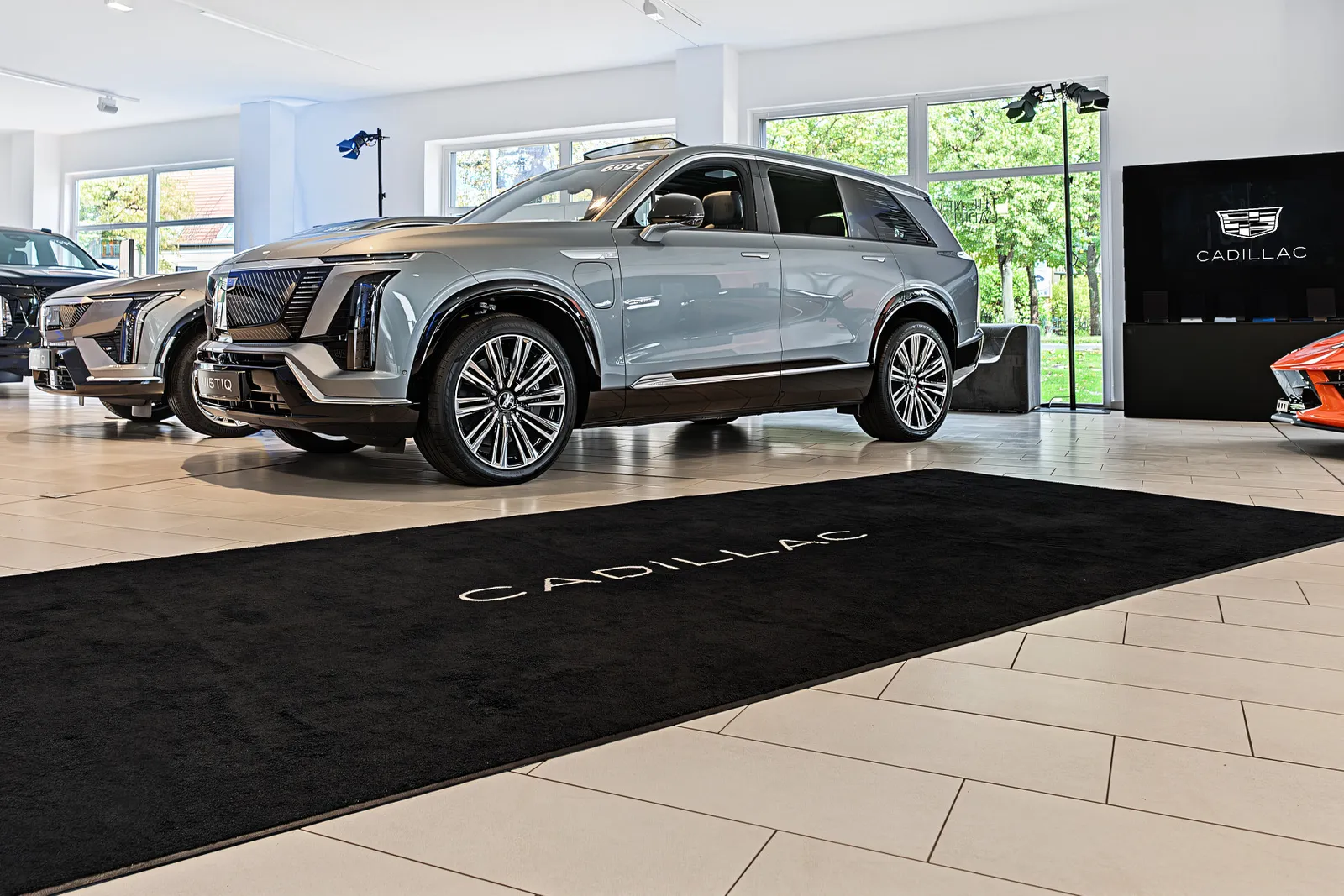
The next step in this development can already be seen in northern Berlin: the established auto dealership Kramm in Pankow is Cadillac’s first agency partner and has opened its own showroom for the brand. Covering around 250 square meters, it will showcase the manufacturer’s fully electric premium SUVs in the future, offering test drives on site as well as attractive leasing options. Kramm has specialized in American car brands for decades and aims to reach Cadillac customers not only in Berlin and Brandenburg but also from a much larger area.
The opening thus exemplifies a strategic shift: what was initially a highly digital approach to entering the market is gradually being replaced by a traditional distribution and service network with regional partners. Following the showroom in Berlin, four more new agency partners will open in Hamburg, Mönchengladbach, Münster, and Frankfurt over the next few weeks. It seems General Motors, like Chinese brands, has learned that success is impossible without a physical presence among German customers. At the same time, Cadillac is trying to establish itself in the highly competitive European premium segment with models such as the Optiq, Lyriq, and Vistiq. According to the manufacturer, the Vistiq marked the next stage in Cadillac’s European expansion in 2025.
But how large can Cadillac really become in Germany? What role does the Optiq model, tailored for Europe, play? How competitive are the electric vehicles in terms of charging speed and range – and when will Super Cruise arrive in Germany? We discussed these topics at the showroom opening in Berlin with Gerald Kelleter, Country Manager of General Motors Germany.
Mr. Kelleter, Cadillac launched in Germany in 2024 with a digital direct sales approach. Now you are opening traditional showrooms alongside partners like Kramm. What have you learned over the past two years – and why does Cadillac still need local dealers?
> As a well-known brand introducing new products to the European market, our initial goal was to listen to customers through our stores and understand their expectations. At the same time, we wanted to introduce them to the Cadillac brand and our vehicles. Based on these experiences and demand from retailers, we concluded that we needed to strengthen our regional presence.
>
>
> To achieve this, we partnered with entities that are not only passionate about US cars but also have expertise in electric mobility as well as vehicles in the premium and luxury segments. Given our experience with stores and online sales, it was a logical step for us to rely on regional partners under an agency model as well.
Was this then a highly targeted selection of partners?
> Yes. It was important for us that our partners bring three things: a basic understanding of American vehicles, experience in the premium and luxury segment, along with expertise in electric mobility. They must also be able to convey these aspects to customers.
In terms of sales figures, Cadillac remains a very small brand in Germany so far. What needs to happen for this comeback to truly turn into a significant business with appropriate volumes?
> Our focus was initially on reestablishing the brand. We are certainly still working to explain and demonstrate that Cadillac is back in Europe — and that too with electric vehicles.
>
>
> With a presence in various regions, we can now reach customers more directly while also reflecting local service capabilities. This is a crucial step in transforming our initial market entry into a sustainable presence with appropriate volume.
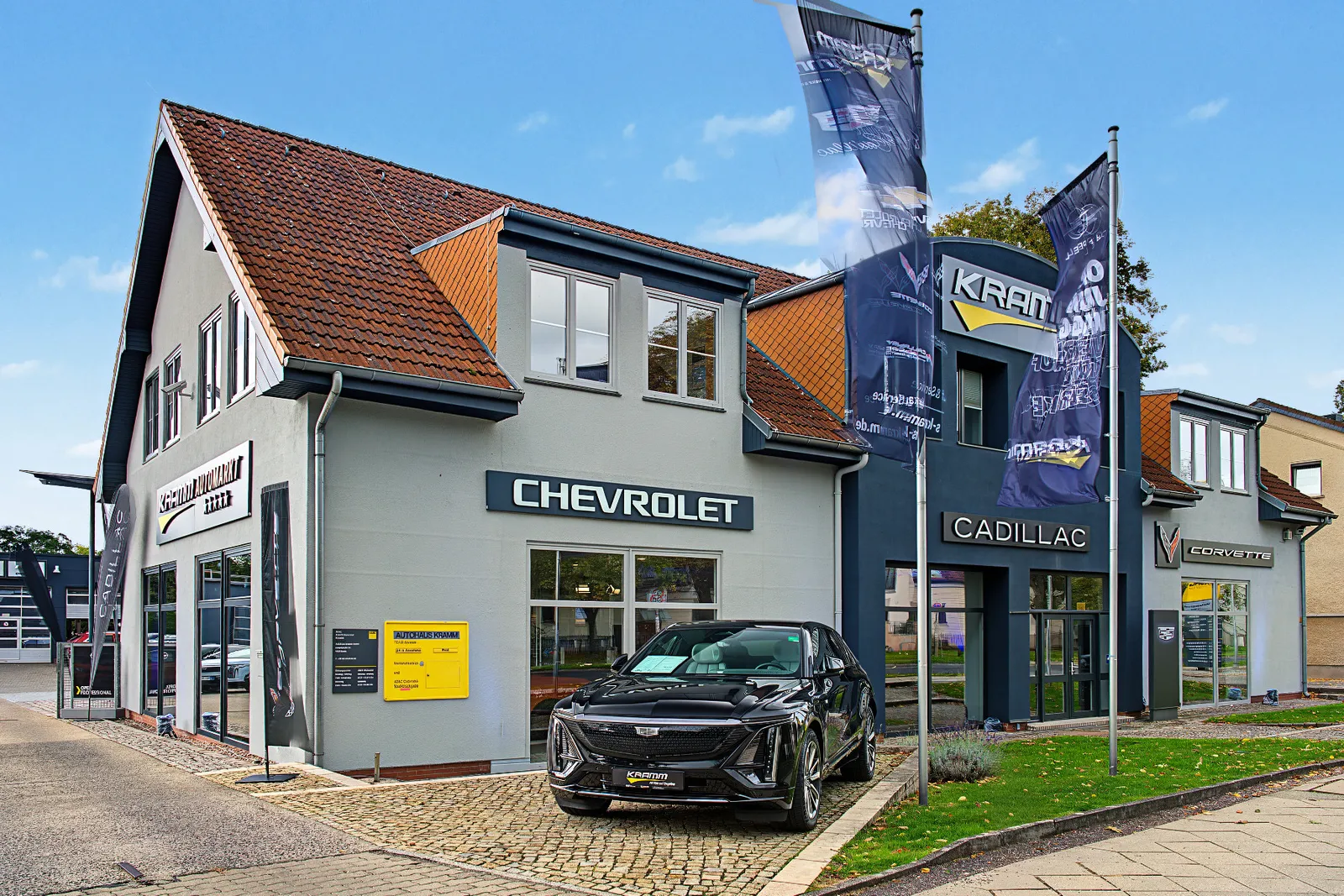
Image by: Robert Schlesinger
- 1/3
- 2/3
- 3/3
What scale are we talking about? What volumes are you planning?
> We don’t disclose specific volume targets. However, we aim to support our agency partners and market the vehicles through collaboration in such a way that both parties achieve good business results with consistent earnings.
>
>
We deliberately chose an agency model that gives local partners a certain degree of flexibility while still allowing us to maintain close ties with customers. The initial results since the launch of our agents are very promising. The partners bring existing customer bases with them and can drive sales through various channels, including online platforms.
With Optiq, Lyriq, Lyriq-V, and Vistiq, you now offer four electric SUVs. Which model is set to become the bestseller in Germany?
> Looking at the market volumes in Germany, the compact SUV segment is particularly strong. There we enter the market with the Cadillac Optiq. The Optiq is also our vehicle for Europe. It was developed with a strong European focus, designed by a French designer among others, and tuned for Europe.
>
>
> This vehicle features a different suspension and braking system here, and it has completed many test kilometers in Europe. That’s why we see great potential for the Optiq in the European market.
>
>
> With the Vistiq, we also have an electric seven-seater in a segment where there aren’t many competitors. The Lyriq, on the other hand, embodies a more traditional American driving experience and is geared toward comfortable cruising. The Lyriq-V adds performance to the mix. This allows us to cover a relatively wide range within the electric SUV market.
Still, you’re up against German premium brands head-on, as well as an increasing number of Chinese premium manufacturers. Why would a German customer choose an American electric car from Cadillac?
> Cadillac brings a lot of emotion—both from its history and through its current involvement in Formula 1, which is naturally a significant marketing tool for us in Europe.
>
>
> Additionally, there’s a distinctive design. We target customers who want to stand out intentionally and are seeking American-style design. While the design language draws on elements from the past, these are still very modern vehicles equipped with advanced technology.
>
>
> The vehicles we offer in Germany come fully equipped with advanced driving assistance and infotainment features. Things like Dolby Atmos, seat cooling, and seat heating are standard. There are many other features as well. This allows customers to focus more on driving the vehicle itself without having to navigate through numerous individual options.
How well does this American luxury perform in the German market? Did you need to make significant adjustments to the vehicles for European customers?
> The Vistiq and Lyriq are vehicles that are also offered in the USA. In contrast, the Optiq was developed with a special focus on Europe, both in terms of vehicle tuning and dimensions.
>
>
> It has covered many test kilometers in Europe. This is why, for example, a Brembo braking system is used. We also examined how European customers view charging infrastructure. That’s why we consider it sensible, for instance, to equip the vehicle standard with a 22-kW AC charger.
>
>
> Thus, we have a product that enters the highly competitive segment of compact electric SUVs while offering several clear distinguishing features.
Who is your ideal customer in this context? The classic U.S. car enthusiast who already frequents partners like Kramm – or do you want to reach entirely different customer groups?
> A key group is certainly customers who already have an interest in American vehicles. For them, there’s no need to explain the emotional appeal of American products; instead, it might be more important to introduce them to the concept of electric mobility.
>
>
> In addition, we have business customers in mind: sole proprietors, small business owners, and medium-sized companies that want to electrify their fleets while also using an exciting product for this purpose.
>
>
> And of course, we also want to attract customers who haven’t had any prior contact with Cadillac. These could be private buyers who deliberately seek out vehicles with unique designs and are looking for products that aren’t as established as some of our competitors in Germany. In other words, people who intentionally want to drive something different. We see potential here because our vehicles stand out on the roads.
With the Lyriq, we’re talking about a range of up to 530 kilometers and a DC charging capacity of up to 190 kW. Cadillac currently relies on a 400-volt architecture, while some competitors use 800 volts to achieve significantly higher charging speeds. How competitive are your vehicles in this regard?
> When we look at market data, we see sufficient potential in high-volume segments for our current portfolio. We also target customers who don’t prioritize only fast charging speed and range, but focus more on everyday usability and their individual driving style.
>
>
> Of course, our vehicles are also very comfortable for long distances. The standard massage seats are just one example of this. We believe the vehicles offer enough advantages beyond mere charging speed and range.
The Cadillac models already come equipped with the Super Cruise driving assistant in terms of technology. When will European customers be able to use this feature?
> We expect to be able to launch Super Cruise before the end of the year. The vehicles already have the technical requirements in place. It’s currently a matter of approval. We’re waiting for the green light and hope to offer this feature still this year.
Does this also apply to customers who have already purchased their vehicle? Can Super Cruise be enabled later?
> Yes, this is planned for vehicles from the 2025 and 2026 model years.
The German electric vehicle market is set to grow significantly again in 2026. Is this a particularly favorable time for Cadillac to enter the market more strongly with a fully electric model lineup?
> We can confirm this trend. Our business partners also report that it is now possible to approach customers who are encountering electric mobility for the first time.
>
>
> For us as a brand returning to the German market, this is a very exciting situation. We want to understand exactly where this development comes from and use it to establish ourselves in the market over the long term. With our electric product portfolio, we aim to be where customer demand is growing.
>
>
> For example, we see customers who can charge at work or on their own property and therefore are more inclined to make the switch to electric mobility at present.
Some German manufacturers have recently relaxed their original electric-only strategies. At the same time, customers are demanding electric cars due to high diesel and gasoline prices. Does this work in your favor?
> The timing is favorable for us. We also closely monitor the market and are aware that changes can occur from time to time.
>
>
> The advantage of our chosen setup is that we can respond flexibly to market conditions. Additionally, within General Motors, we have a broad portfolio that allows us to identify which other electric vehicles might be interesting for Europe in the future and where additional sales potential exists.
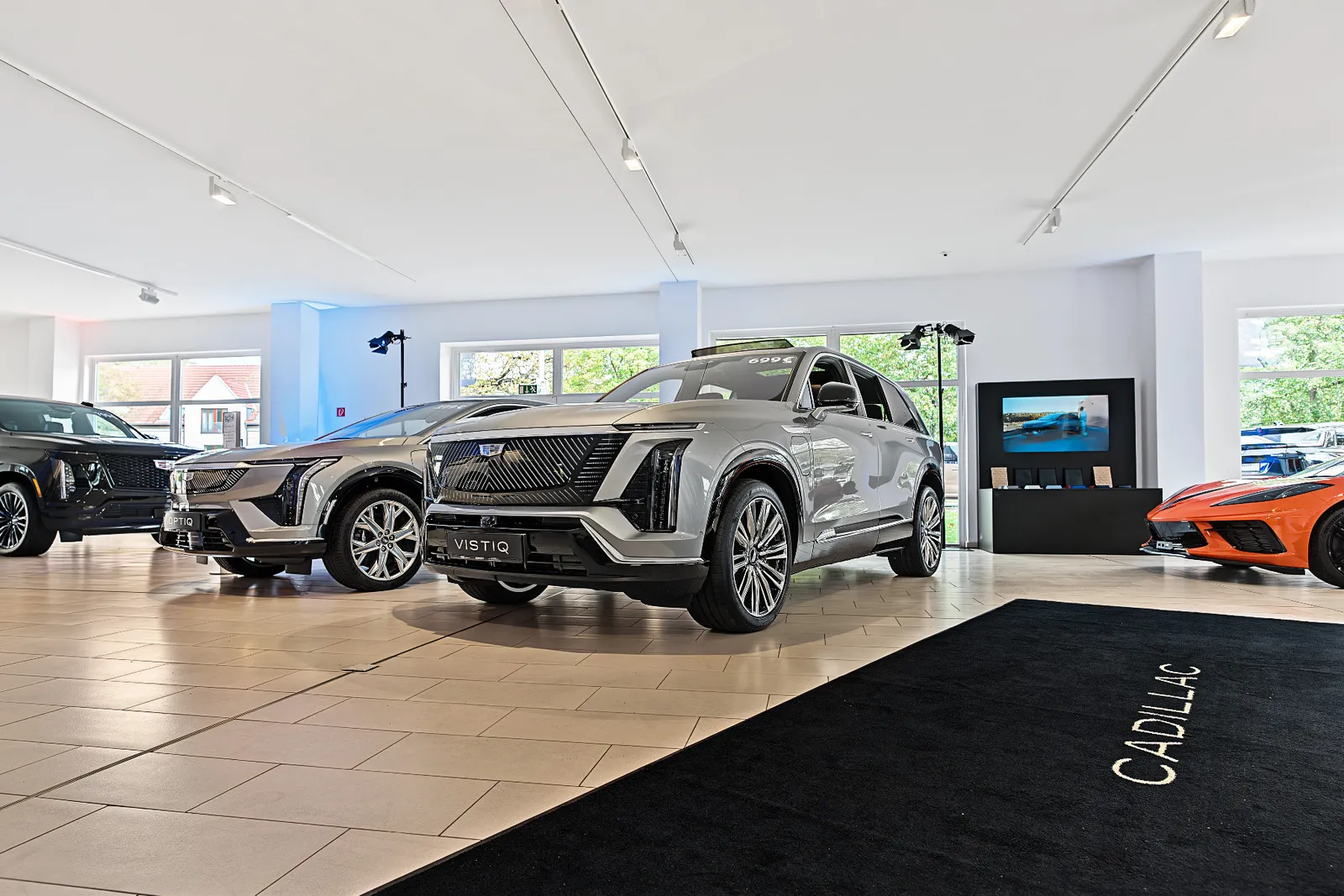
Image: Robert Schlesinger
- 1/3
- 2/3
- 3/3
Your distribution network continues to expand with Berlin. How dense needs the sales and service network to be ultimately for Cadillac to be truly well-represented in Germany?
> We don’t want to set a fixed number, either internally or for interested dealers. What’s important to us is building a network of partners who want to advance the brand together with us.
>
>
> Of course, we want to expand into more metropolitan areas in Germany to make it easier for interested parties to access Cadillac. The next steps are already being planned. We’re focusing on areas that haven’t been covered yet and where we see potential.
>
>
> It’s also interesting that the interest doesn’t come only from traditional U.S. car dealers. We’re receiving inquiries from businesses that haven’t had any connection to General Motors or Cadillac before.
When would you say Cadillac has truly returned to Germany? Do you judge that by the dealer network, sales figures, or the brand’s popularity?
> It will be a combination of various factors. Of course, the dealer network and sales figures play a role. But for us, it’s equally important to know how well-known the brand has become again and how strongly Cadillac is now associated with electric mobility.
>
>
> Of course, Formula 1 also helps us as a source of technology and image enhancement. At the same time, we need to consider how General Motors as a powerhouse in the U.S. is developing overall. Super Cruise isn’t the end, but rather the beginning. General Motors invests in a wide range of technology areas—from battery technology to autonomous driving. This creates an exciting foundation for what we might see in Europe in the future.
Thank you very much for the conversation, Mr. Kelleter!