
Is BYD delaying work on the next generation of hybrid engines, DM-i 6.0? Is progress only possible thanks to Li-ion batteries?
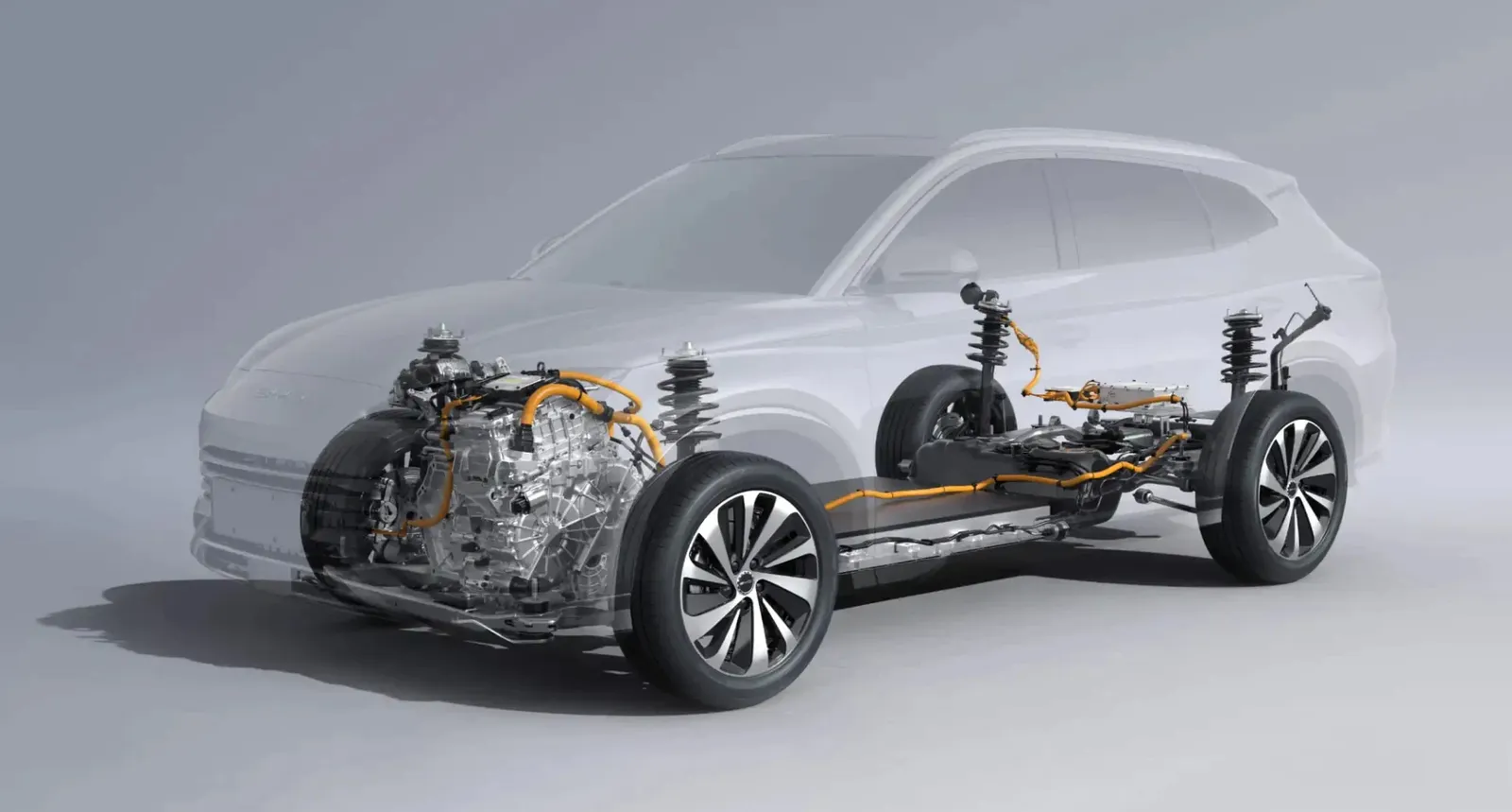
Just a few months ago, rumors surfaced that BYD was working on a new generation of plug-in hybrids, the BYD DM-i 6.0 / DM-i Gen6, which were said to have a combined range on fuel and battery power of “well over” 2,000 CLTC units—around 1,000 kilometers at a speed of 120 km/h or 1,500+ kilometers in urban or suburban driving conditions. Now new reports have emerged: the technology has been put on hold, and BYD is focusing solely on developing Li-ion cells.
Are even the Chinese giving up on the fuel efficiency race?
Table of contents
Are even the Chinese giving up on the fuel efficiency race?
Will there be no BYD DM-i 6.0 with a 49% thermal efficiency engine?
In China, there is currently a race that Europeans gave up on long ago. It involves seeing who can optimize internal combustion engines better and achieve the highest thermal efficiency. Using cheap tricks like electrification is allowed, but only after measuring performance. The current leader is Geely, which has reached 48.41 percent in its mass-produced models. In recent years, progress has been just a few percentage points per year, as if 50 percent were some magical limit for ordinary car engines.
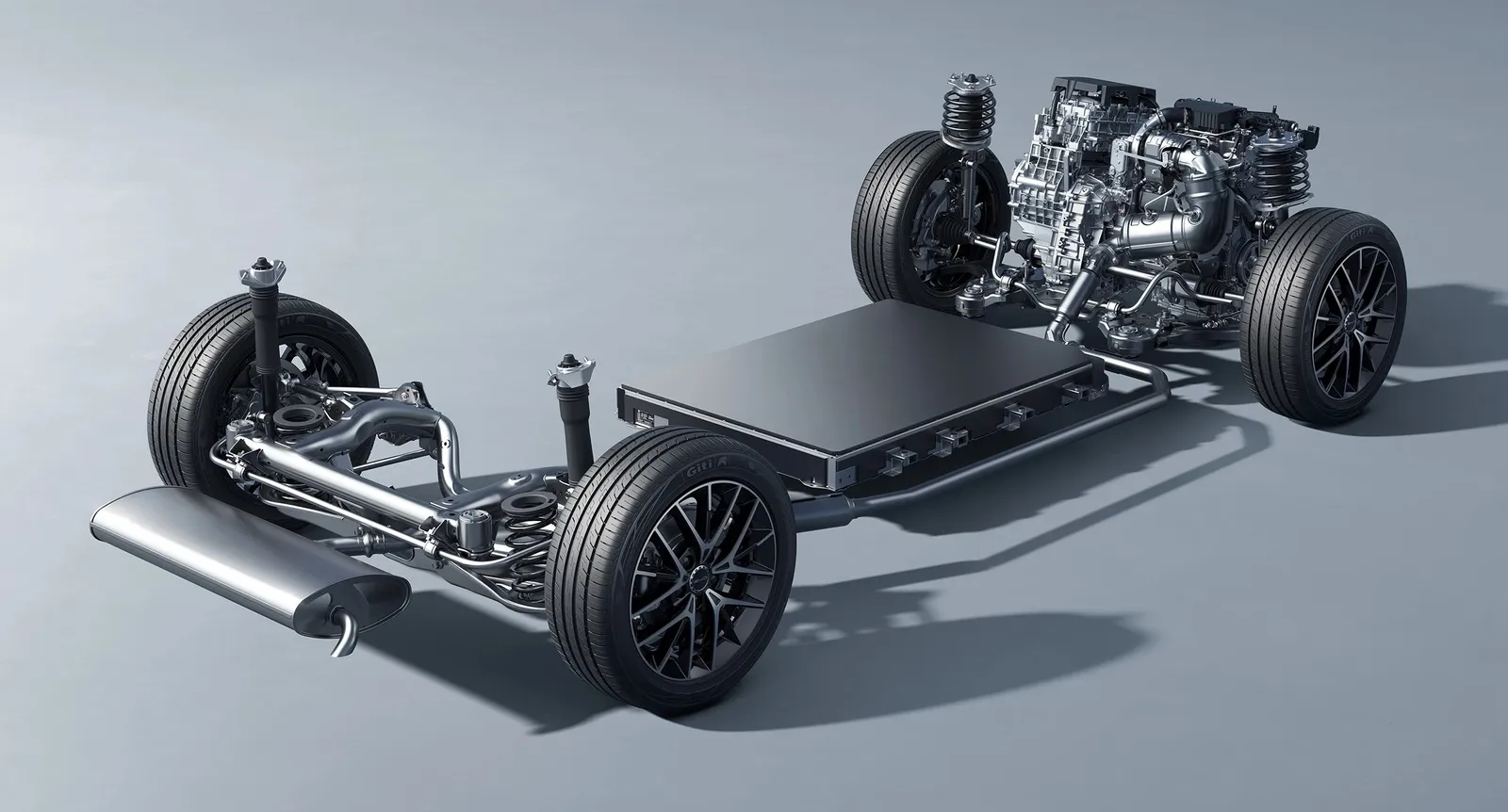
BYD DM-i Gen4, which is the BYD DM-i 4.0 hybrid powertrain unveiled in 2021. Take a look at the battery size. At that time, the manufacturer offered two DM- powertrain variants; the DM-i version was focused on efficiency, while the DM-p version was optimized for power and performance (c) BYD
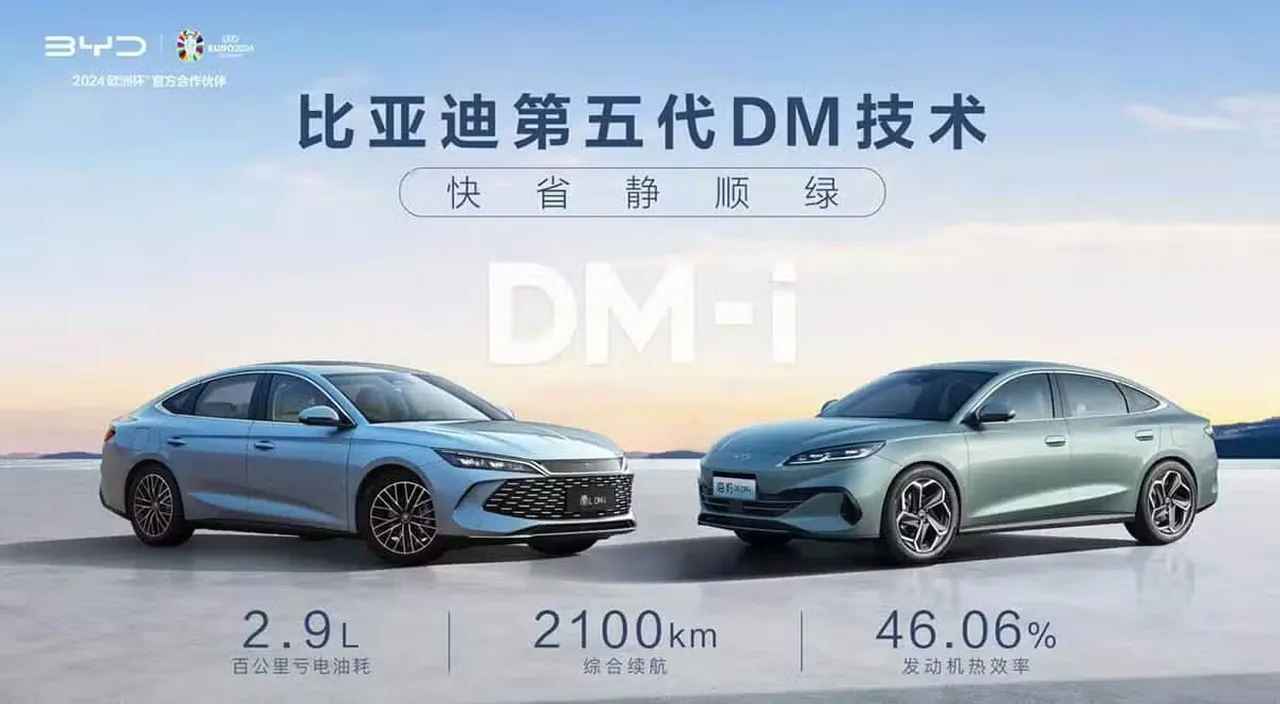
BYD participated in this race, increasing the batteries in its plug-in hybrids and also improving the efficiency of the internal combustion engine, so as to achieve CLTC ratings of 1,000 units first, then 1,300, followed by 1,500 and finally 2,100 units. In 2024, the company introduced a new generation of powertrain, DM-i 5.0 (internal combustion engine efficiency: 46.06%), as well as “entering the 2 l/100 km era,” meaning a fuel consumption of 2.9 l/100 km according to the NEDC procedure. In 2025, thanks to software optimizations (and larger batteries…), it was possible to achieve 2.6 l/100 km according to NEDC, of course in electric-internal combustion mode.
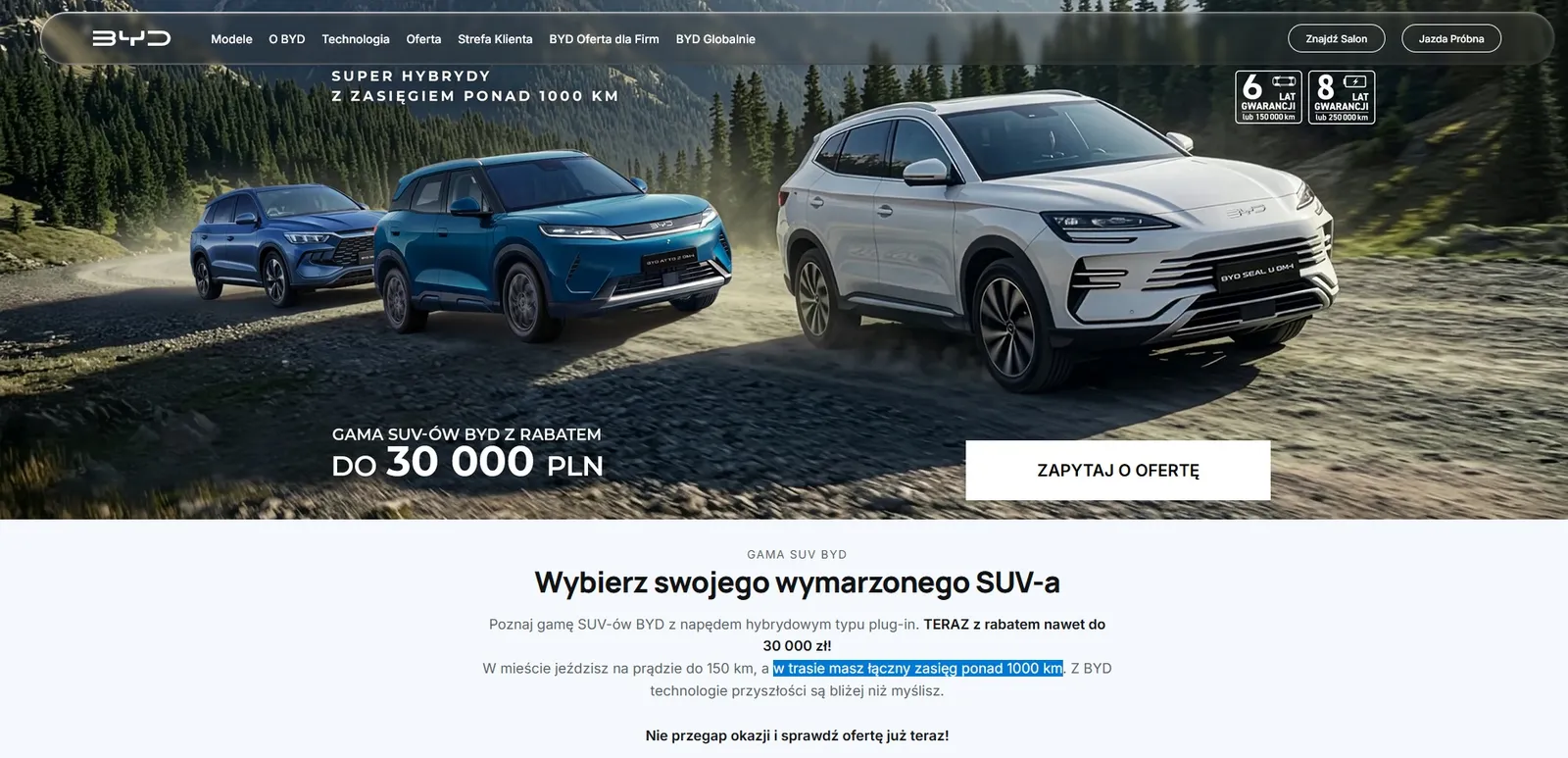
It should be noted that the range of 1,300–1,500 CLTC units (1,000–1,200 WLTP units; screenshot from the Polish site below) is roughly equivalent to what a gasoline car can cover on fuel for economical off-road driving.
Will there be no BYD DM-i 6.0 with a 49% thermal efficiency engine?
Now there are rumors that development on the BYD DM-i 6.0 drive system has been halted. The reasons are unclear: BYD might have decided that striving for marginal percentage improvements is pointless when the so-called “cheap trick” of using a battery with a minimal capacity (~1 kWh) immediately boosts the overall drive efficiency by several percentage points. Alternatively, it could have realized that with batteries of around 100 kWh, its vehicles have grown so large that increasing the fuel tank capacity by 10-15 liters poses no significant issue. The company may also be preparing to introduce new cells (solid or solid-liquid electrolytes) that will make it easier to extend the range of plug-in hybrids by adding more kilowatt-hours of capacity to the tank.
BYD Seal U DM-i (c) BYD
During its latest presentation in Shenzhen, China, BYD highlighted a new chip for autonomous driving, Blade 2.0 batteries, ultra-fast charging, and updated models, but made no mention of optimizations for internal combustion engines. There was no presentation or media leak regarding a new hybrid powertrain variant with improved efficiency (BYD DM-i 6.0). However, announcements for it should already be circulating, with an official showcase expected in 2027 or 2028.
Article Rating
Reader Ratings
[Total: 4 votes Average: 5]
Don’t miss new content—CLICK and FOLLOW Elektrowoz.pl on Google News. You might also be interested in the following ads: