
BYD exceeds 500 km/h with an electric car: the Yangwang U9 Xtreme breaks its own record with over 3,000 horsepower
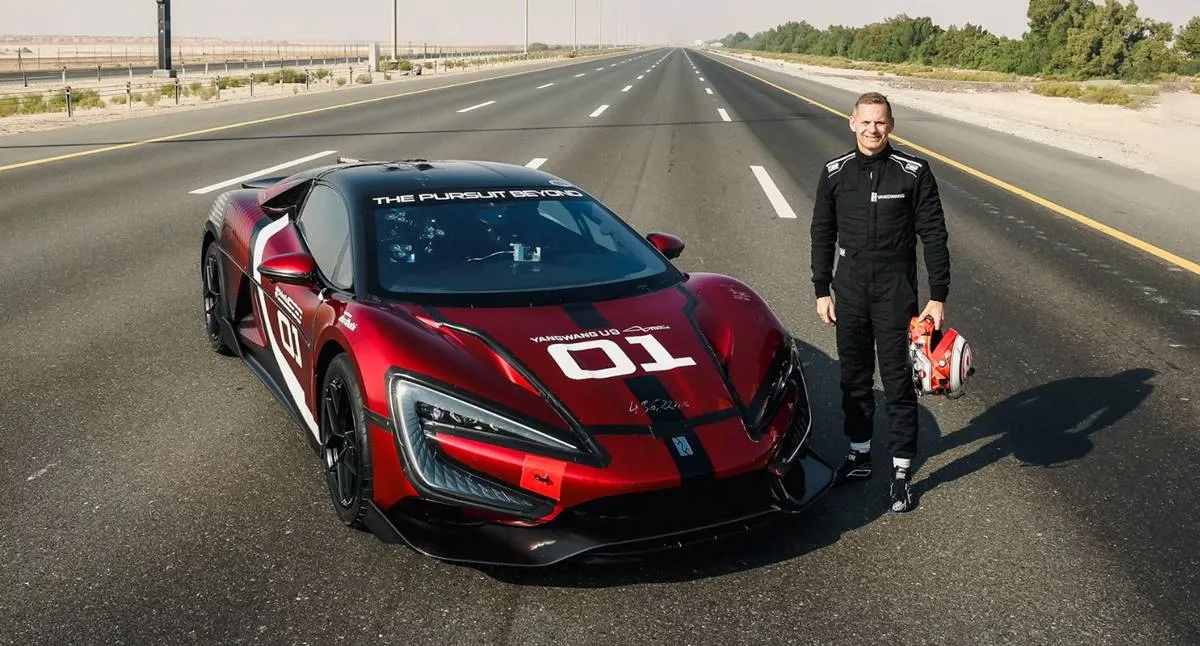
Yangwang hasn’t settled for just putting an electric car at the top of the speed race. The luxury brand from BYD has tried again with its most extreme sports car, this time on a traffic-free road in the United Arab Emirates. The result puts further pressure on traditional manufacturers who have dominated this field for decades and now see the Chinese taking over all segments of the market.
The Yangwang U9 Xtreme reached 503.16 km/h. At the wheel was German driver Marc Basseng, tasked with breaking the previous record set by this model and crossing a barrier that until recently seemed reserved for internal combustion engine sports cars.
The previous record was 496.22 km/h, set in September 2025 at the testing track in Papenburg, Germany. This time, the location chosen was Sheikh Khalifa Bin Zayed Road in Abu Dhabi. This represents a significant change, as driving on a road regularly used by traffic introduces different challenges compared to testing facilities.
According to information released by BYD, this new record enables them to claim Guinness World Records titles for the fastest production car and the fastest production electric car. One important detail to note is that this is a speed achieved in a single one-way trip, not the average of two trips in opposite directions, a method used to account for the influence of wind and terrain.
A closed road and adjustments to set the record
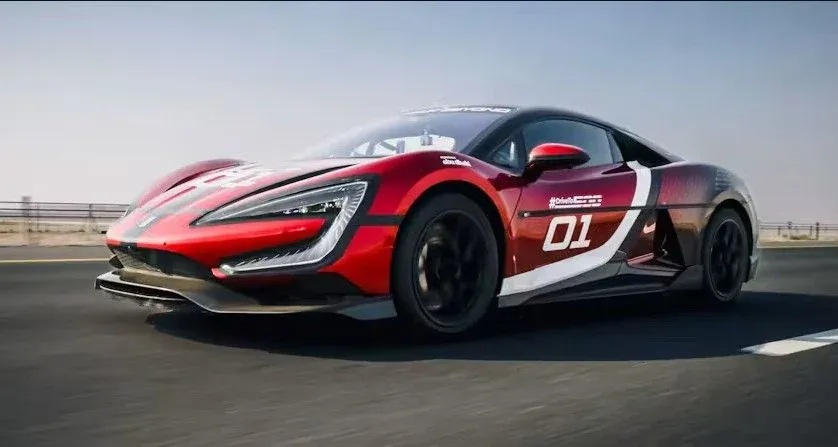
To conduct this attempt, a section of about 10 kilometers was closed off. Before starting the car, it was necessary to carefully clean the asphalt. Its location near the desert and the regular passage of other vehicles required special attention to sand, debris, and any fluids that could affect traction.
The target speed was not achieved on the first attempt. During the runs on October 31, the best record was 490 km/h. The team then took the opportunity to make adjustments to the tuning, and it was during one of the two runs on November 1 that Basseng managed to exceed the goal.
Among the changes was a review of the adaptive suspension control program, increasing the damping during extension to better handle the bumps in the track. The angle of the rear spoiler was also adjusted to generate more aerodynamic downforce. At such speeds, keeping the car stable is just as important as having sufficient power to keep accelerating.
And it’s not short on power either. The U9 Xtreme uses four electric motors that together deliver over 3,000 horsepower, backed by a 1,200-volt electrical architecture. Its LFP chemistry Blade battery supports a 30C discharge rate, a feature designed to supply the enormous amount of energy required by this propulsion system.
Production will be limited to 30 units, meaning it’s a very limited series. Nevertheless, the interest in this project goes beyond just how many buyers can obtain it: it allows BYD to demonstrate how far its technology can go in a field where Chinese brands had little presence just a few years ago.
This news comes after images of another U9 Xtreme crashing during high-speed tests in China went viral. The car lost control and hit the barriers, but according to BYD, the driver was unharmed. This was a separate incident from the attempt in Abu Dhabi.
Now it remains to be seen how their rivals will respond, including the Koenigsegg Jesko Absolut. Yangwang has raised the bar even higher, forcing anyone who wants to challenge this record to face a figure that already starts with a five. And they did it with an electric car.
Source | BYD