
BYD Seal 06 starts at 99,900 yuan. This affordable sedan is equipped with 800 V technology, LiDAR, and a 9-minute charging time.
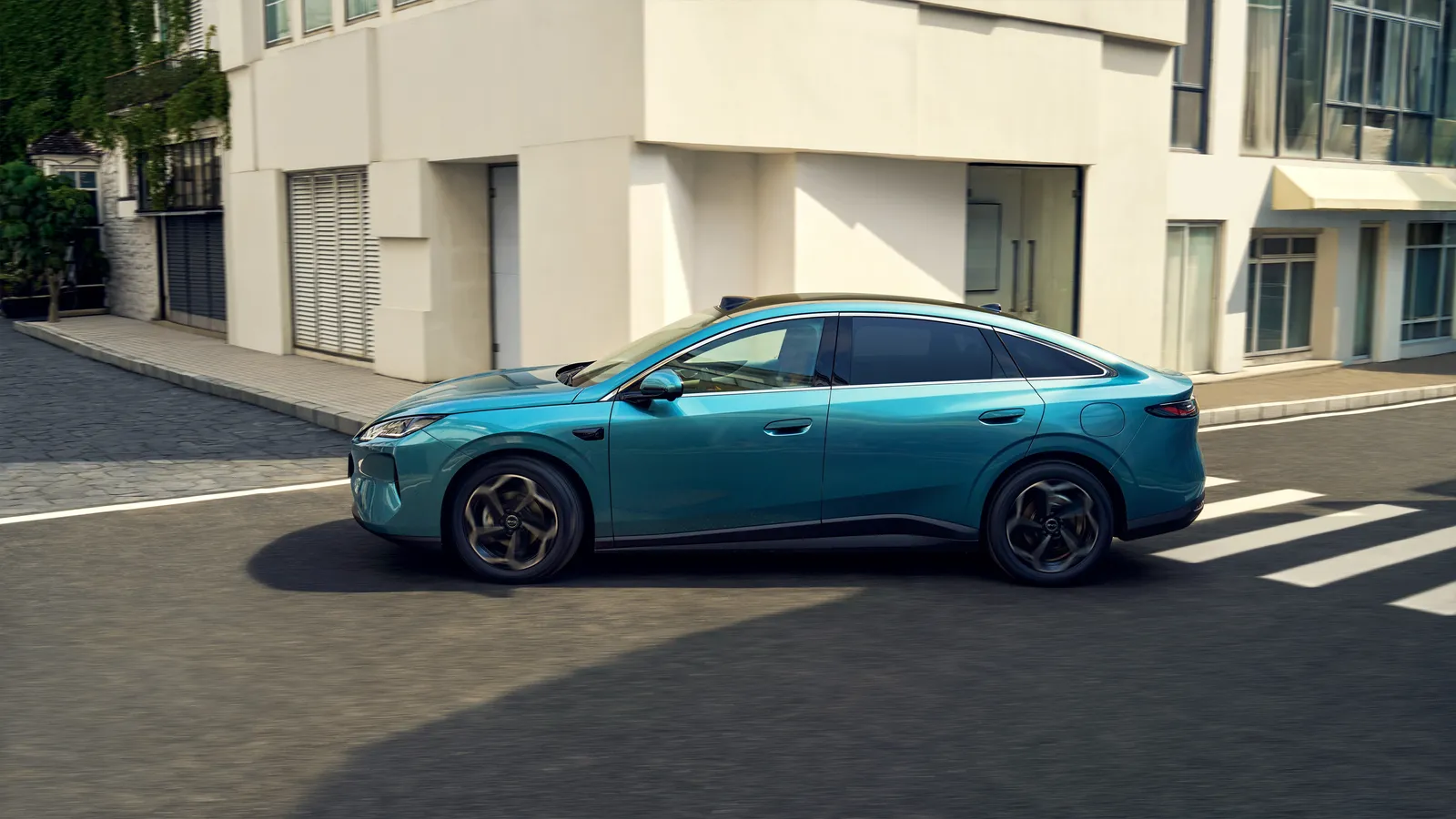
BYD has introduced the 2027 Seal 06 model in China in 12 versions, as an EV and a DM-i plug-in hybrid. According to the manufacturer, prices start at 99,900 yuan, with the electric version featuring an 800 V platform, second-generation Blade batteries, and flash charging support.
Table of Contents
Show
Hide
This is an interesting development for one reason: BYD is bringing solutions typically associated with more expensive cars to the family sedan segment priced at 100,000–150,000 yuan. And that’s exactly where competition is most fierce today.
Two powertrains, one body style
The new Seal 06 measures 4,870 mm in length, 1,890 mm in width, and 1,495 mm in height. The wheelbase has increased by 30 mm to 2,820 mm, meaning the car is slightly larger than its predecessor and targets the heart of China’s family sedan market even more directly.
BYD sells this model in two variants. The Seal 06 EV costs between 109,900 and 155,900 yuan, while the Seal 06 DM-i ranges from 99,900 to 141,900 yuan. In terms of conversion, this is roughly equivalent to $14,700–$22,900, but what’s more important for us is what BYD includes at these prices.
Specifications
BYD Seal 06 EV
BYD Seal 06 DM-i
Drive Type
FWD, 1 engine
PHEV, 1.5 + 1 engine, FWD
Power
120 kW or 240 kW
120 kW or 175 kW electric engine + 74 kW 1.5 gasoline engine
Battery
LFP 52,868 kWh or 64,315 kWh
25,287 kWh or 34,275 kWh
Range
530 km or 630 km CLTC
230 km or 320 km CLTC in EV mode
0-100 km/h
up to 5.9 s
N/A
Platform
800 V
DM-i architecture
Fuel Tank Capacity
–
65 l
Fuel Consumption After Depletion
–
2.59 l/100 km
Total range
–
up to 2,370 km CLTC
Suspension
MacPherson + multi-link
MacPherson + multi-link
Price
109,900–155,900 yuan
99,900–141,900 yuan
The plug-in version uses the fifth-generation DM-i system. The 1.5-liter turbocharged gasoline engine produces 74 kW, works with an EHS transmission, and is said to offer up to 2,370 km of total CLTC range with a full tank and fully charged battery. As usual with CLTC figures, one should approach them cautiously — this isn’t a figure a driver will easily achieve on European highways.
The most interesting part is the EV: 800 V, Blade 2.0, and flash charging
The real breakthrough lies in the electric version. BYD has equipped it with a second-generation Blade battery, an 800 V architecture, and flash charging as standard. The manufacturer claims the car can be “essentially” fully charged in 9 minutes.
It certainly sounds impressive, but the real challenges lie in China’s testing conditions and the charging station infrastructure. BYD claims to already have 7,018 fast charging stations in 325 cities across China and aims to reach 20,000 by the end of 2026. In other words, fast charging is part of a larger ecosystem, not just a marketing gimmick.
The Seal 06 EV offers two range options: 530 km and 630 km according to CLTC standards. The maximum charging power has increased to 240 kW, with the 0-100 km/h acceleration time in the most powerful version estimated at 5.9 seconds. This is already a level that, until recently, was reserved for significantly more expensive vehicles in this price range.
BYD also claims that the new model offers more than its predecessor at practically the same price. This seems plausible, as the previous Seal 06 EV started at 109,800 yuan in June 2025 and ranged up to 129,800 yuan. Now the price range is wider, but it includes technologies that were not available before.
LiDAR in a budget sedan is a bigger deal than a 15.6-inch screen
The second major advantage is the driver assistance system. Higher trims come equipped with a LiDAR system and the “God’s Eye B” package, which supports assisted urban navigation, highway driving with navigation, and automated parking.
This is a change from the previous model, which used the “God’s Eye C” vision system. BYD is thus adding LiDAR to a family sedan in this price range for the first time. Those who follow the Chinese market know that it’s this way that volume sales are won these days: not just with a screen, but with ADAS features that were still considered add-ons for more expensive models just one or two years ago.
The range of functions includes APA, AVP, and RPA, namely automatic parking, valet parking, and remote parking. BYD also includes a liability waiver for damages during smart parking and assisted urban navigation. This is an interesting detail, as manufacturers are eager to showcase the system’s capabilities but much less often include their own liability coverage.
Interior and suspension: less plastic, more soft materials
The cabin standardly features a 15.6-inch central screen and 8.8-inch displays. Top versions get an additional 29-inch W-HUD, so BYD is implementing a three-screen setup here, though the practical value of such a configuration depends more on software quality than just screen size.
The multimedia system is the new DiLink with DeepSeek integration, supporting continuous voice dialogue and command recognition across four zones. The traditional gear shifter has been removed, replaced by a knob near the steering column. There’s space in the center tunnel for a storage compartment, two cups, and a 50 W wireless charger.
BYD has also improved the materials in higher trims, replacing hard plastics with soft upholstery. The suspension remains classic: MacPherson struts at the front and a multi-link setup at the rear. Higher versions come equipped with DiSus-C, which is electronically controlled adaptive damping. The ground clearance is 135 mm, so there’s no pretense of being a crossover — it’s simply a sedan.
Seal 06 enters a segment BYD cannot afford to lose
The Seal series was very strong for BYD in 2025. It sold 518,412 units and accounted for 11.26% of the group’s total sales. The problem is that the pace slowed down in 2026: in July, the series sold 40,399 units, a 13.77% year-on-year decline, and from January to July it sold 210,541 units, 15.60% less than the previous year.
The new Seal 06 is meant to halt this trend. The competitors are clear: Geely Galaxy A7 EM and Xpeng Mona M03. This is a segment where customers focus mainly on three things: price, ADAS, and charging speed. BYD is therefore trying to address all three at once.
In short: The Seal 06 looks like another Chinese sedan with a large screen, but there’s more significant activity beneath the surface. BYD is making 800 V technology, LiDAR, and fast charging more accessible faster than European manufacturers can reflect them in their pricing. Could such a package at a price equivalent to 100,000–150,000 yuan also disrupt the market in Europe if BYD decided to sell it there?