
BYD has begun producing 4D radar chips. It aims to develop its own ADAS system, from sensors to the computer.
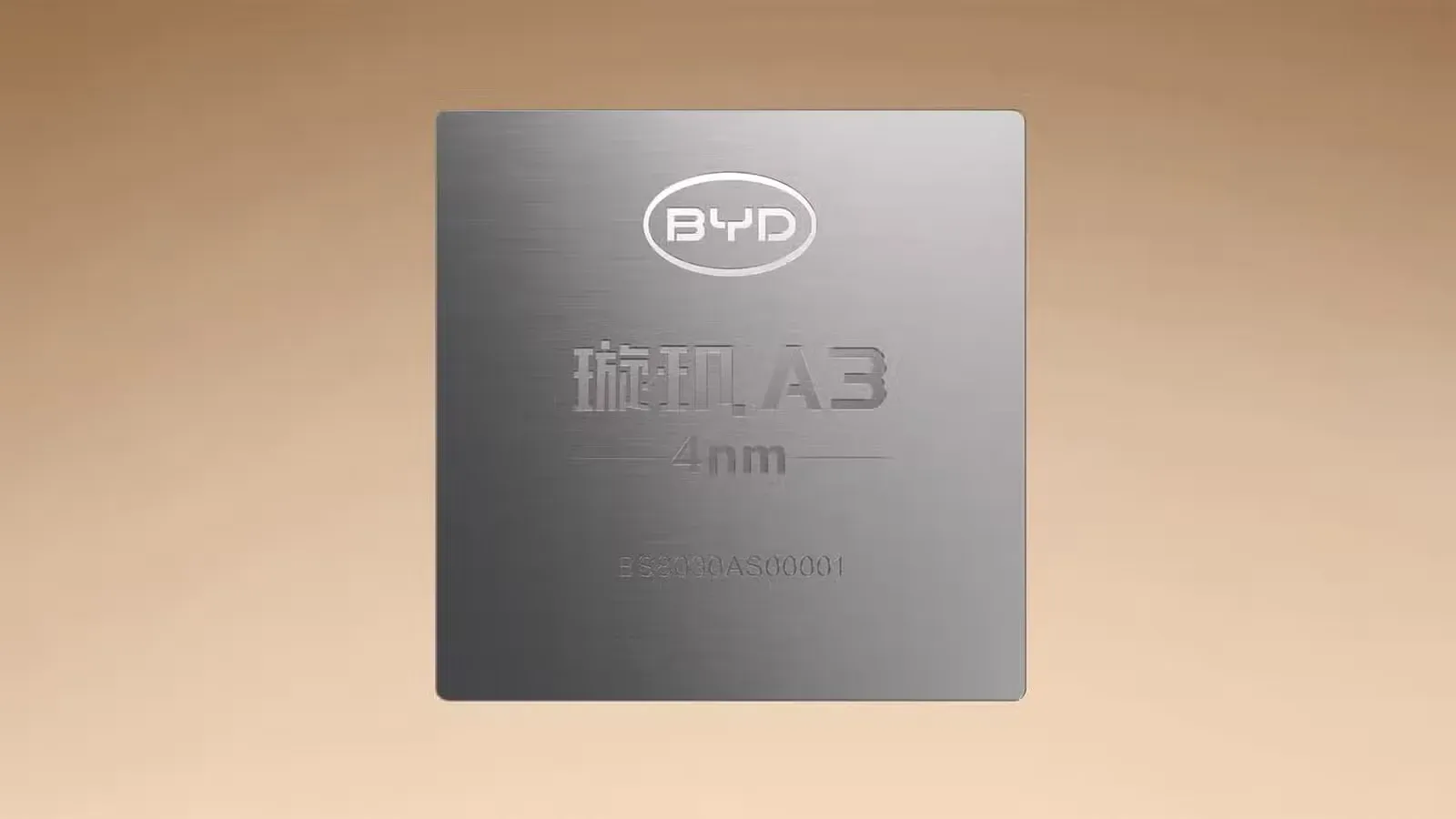
BYD has announced the start of mass production of a new millimeter-wave 4D radar chip. The device is designed to detect objects from distances of over 400 meters and works in conjunction with its own Xuanji A3 intelligent driving processor, which was unveiled in May 2026. While this isn’t a fully autonomous pilot system for drivers yet, it represents another step forward for BYD toward fully integrating electronics into its vehicles.
The new chip was manufactured using 28 nm lithography and is intended for high-resolution radars. BYD claims that traditional millimeter-wave radars cannot detect elevation angles, which limits their performance in heavy urban traffic. This led to the development of 4D radar, a solution designed to provide better vertical spatial awareness in addition to horizontal distance and range information.
The specifications on paper are strong. BYD claims a range of over 400 meters, an angular resolution of 0.8 degrees, and a distance resolution of 0.05 meters during parking maneuvers. A single chip integrates 8 transmit channels and 8 receive channels. It is also designed to meet the ISO 26262 ASIL B functional safety standard as well as the AEC-Q100 reliability requirements.
In addition, the connector offers a wide operating temperature range of minus 40 to 150 degrees Celsius. BYD calls this the widest in the industry. Such claims should always be taken with a grain of salt, but the numbers themselves seem impressive.
Xuanji A3 in the center, L2 to L4 in the description
The chip operates within a satellite architecture centered around the Xuanji A3 processor, which is BYD’s own system for driving assistance and automation. This processor was announced in May as China’s first smart driving chip manufactured using a 4 nm process. According to BYD, a single A3 offers over 700 TOPS, and three of them together provide more than 2,100 TOPS.
The company claims that solutions based on the new radar can support systems from L2 to L4, including highway driving assistant, urban driving, automatic parking, and blind spot monitoring. However, caution is needed here. The “L2-L4” range refers more to the platform’s potential than to what will be available to customers in showrooms tomorrow.
BYD Semiconductor adds that the chip has already been integrated and tuned with the Xuanji A3, meeting the performance requirements for detection set by Tier 1 module suppliers. In other words, it’s no longer just a concept presented at a conference.
Chinese manufacturers are creating their own chips, with BYD investing heavily
BYD stated that its cumulative investment in semiconductor research and development has exceeded 100 billion yuan, equivalent to around $14.73 billion. The chip team comprises over 7,000 people, supported by 4 R&D centers and 5 wafer factories. The scale is enormous, even by Chinese standards.
This fits into a broader trend among local EV manufacturers who want to build their own advantages in electronics and AI. Nio, Xpeng, and Li Auto already have their own smart driving chips in their production vehicles. BYD doesn’t want to be left out, especially since LatePost previously reported on the Xuanji A3’s debut in a Denza production model by 2027.
If this plan holds, the real test will only begin when we see such a setup in a vehicle on the road, not just in an investor presentation. Do you think BYD will catch up to Nio and Xpeng faster in terms of software, or will it still be stronger in production scale rather than autonomy?
LovEV Newsletter
Want more content like this?
Sign up — we’ll send you a weekly summary once the newsletter starts.