
BYD uses the same partner as BMW for CKD assembly in Malaysia
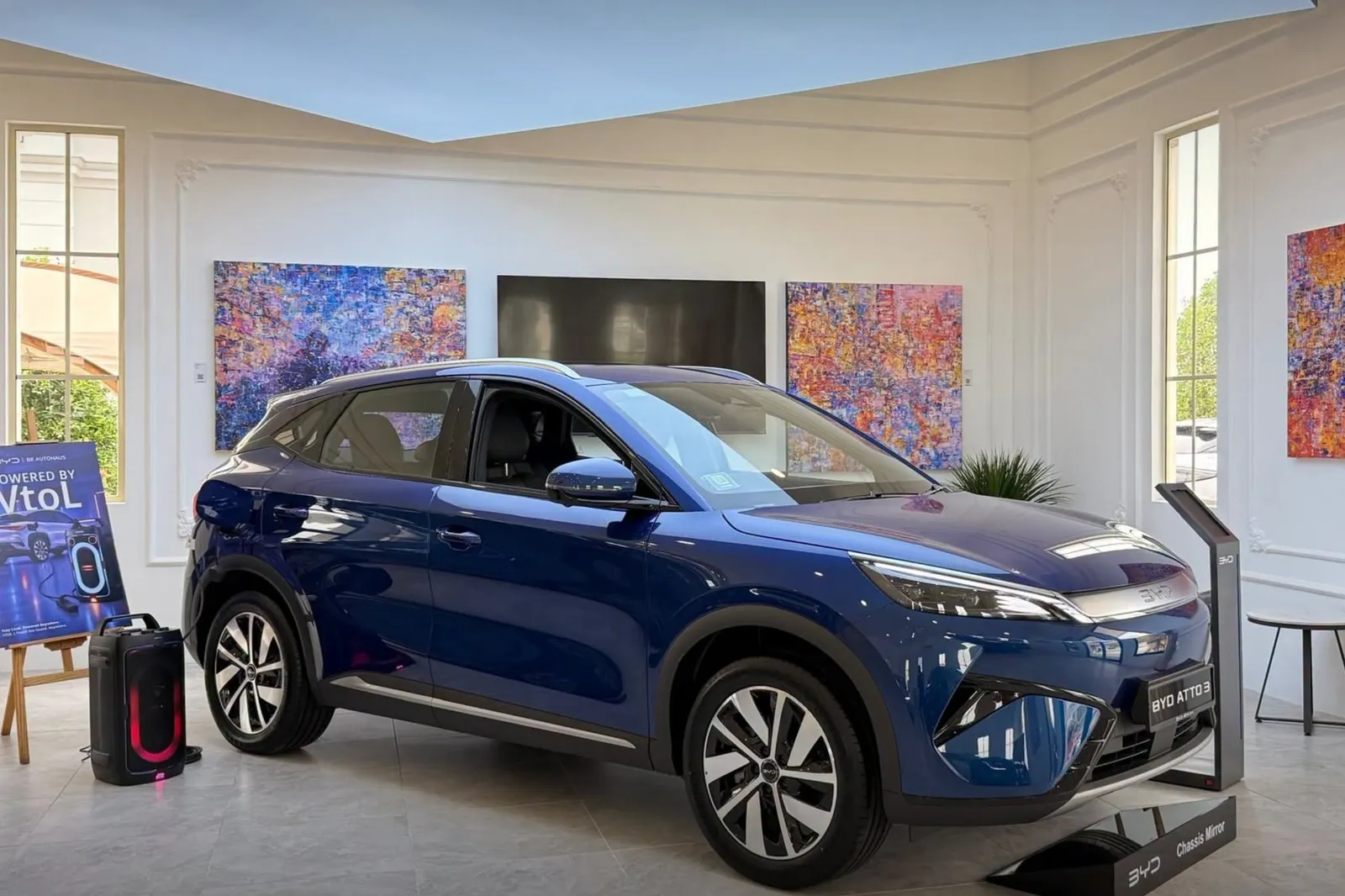
BYD has decided to start local assembly of electric vehicles in Malaysia together with contract manufacturer Inokom. This decision is likely driven by significantly tightened import regulations. Inokom is also the local manufacturer of the BMW i5 for the Malaysian market.
BYD Atto 3 in a showroom in Malaysia
Image: BYD
In its expansion into Southeast Asia, Chinese automaker BYD has secured a key partner: contract manufacturer Inokom from the Sime Darby conglomerate, which already handles BYD’s distribution in Malaysia under the name Sime Motors.
Inokom has operated a vehicle manufacturing plant in Padang Meha, Kulim District, since 1997, serving automotive brands such as BMW, Chery, Hyundai, Kia, Mazda, Mini, and Porsche. Since January, the plant has also been assembling the all-electric BMW i5 using kit components.
By choosing to partner with Inokom, BYD is also setting aside rumors about potentially building its own vehicle factory in Malaysia. However, this is not a full assembly operation; instead, the agreement involves assembling vehicles using the CKD (Completely Knocked Down) method, where vehicles are built on site from imported parts and components. The companies have not yet disclosed which models will be assembled in Malaysia or when production will begin.
"Local assembly is a crucial part of BYD’s long-term commitment in Malaysia. The partnership with Sime for assembly at Inokom allows us to build on our established expertise in automotive manufacturing and further develop our plans for local assembly. We aim to bring BYD’s expertise in new energy vehicles and battery technologies to the Malaysian market while contributing to the growth of the local automotive industry," said Jacob Ma, CEO of BYD Malaysia.
New import rules force BYD to assemble locally
The move is likely driven primarily by an tightening of Malaysia’s import rules: since July 1, 2026, fully assembled electric vehicles abroad can only be imported if their CIF value is at least 200,000 Ringgit (approximately 44,000 euros) and their engine power reaches at least 180 kW. The CIF value (Cost, Insurance and Freight) includes the goods’ value plus transportation and insurance costs up to the port of import, but before any import duties and taxes apply there. Previously, at the end of 2025, a four-year special tax exemption for such imports expired.
The new regulations particularly make it harder for cheaper electric cars, such as those offered by BYD, to enter the market. Local assembly at Inokom could therefore help the Chinese manufacturer expand its presence in Malaysia despite the changed conditions. BYD has not yet confirmed a direct connection between the new rules and the specific partner choice.
The extent to which the changed import rules are putting pressure on BYD and its Malaysian distributor Sime Motors is evident from a recent advertising campaign on the latter’s website: there, the company promotes “final 2026 CBU units” of the Atto 3 and Sealion 7 — referring to the last fully assembled imported units of these models, which are also well below the 200,000 Ringgit threshold. By doing so, BYD and Sime Motors are taking advantage of the opportunity to sell off certain remaining stock, as permitted under previous rules. However, since the Atto 3 and Sealion 7 are too cheap under the new import rules, BYD can no longer import them fully assembled into Malaysia — thus both models are likely to be candidates for CKD assembly at the local partner Inokom.