
BYD files six more patents for solid-state batteries
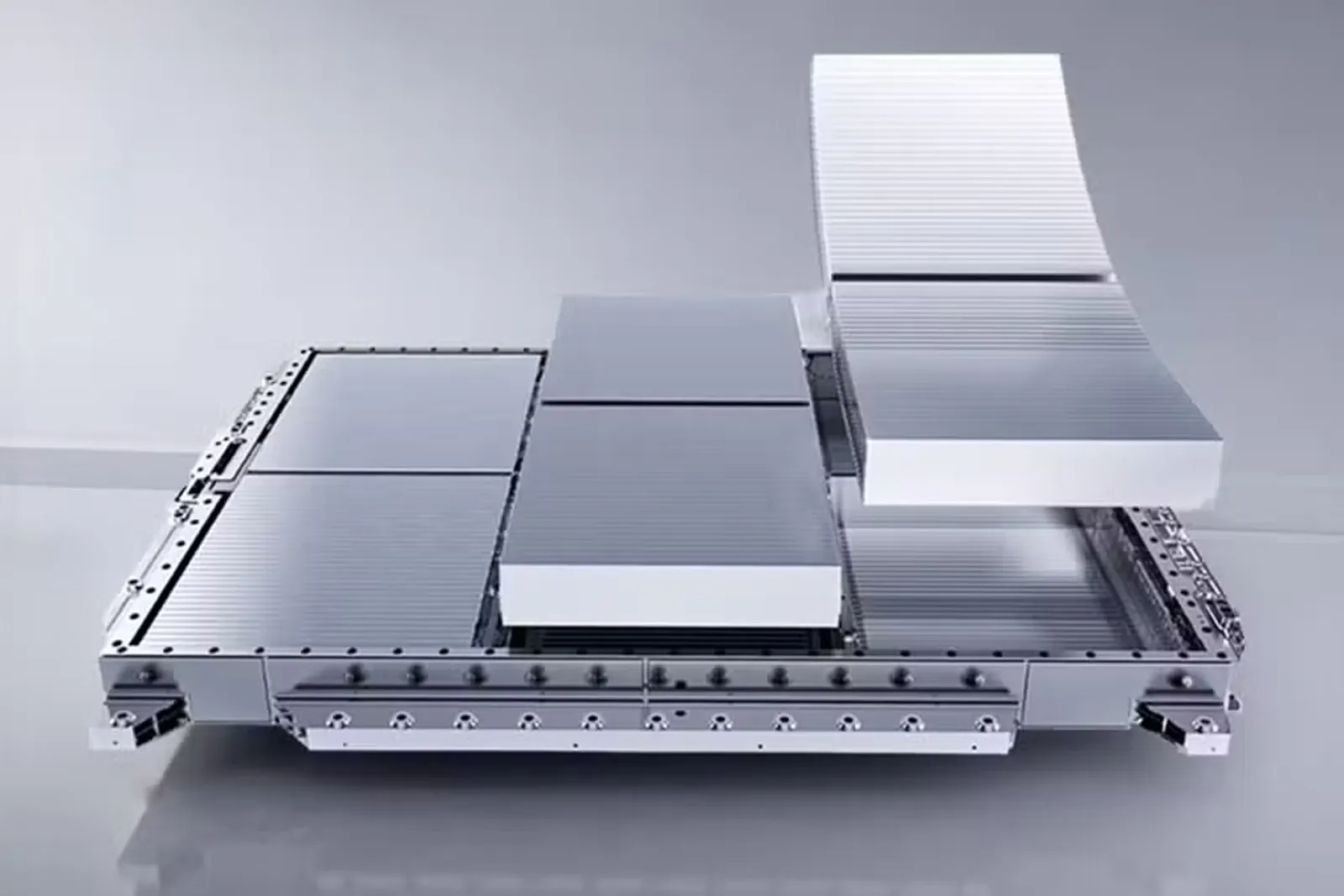
BYD has filed six new patents related to key aspects of solid-state battery technology. The applications focus on improving the contact between electrodes and solid electrolytes, as the company aims to begin pilot production of cells with dual electrolyte systems by 2027, according to reports.
Four of the new patents focus on materials and cell chemistry. One proposes inserting an ion-conducting, electrochemically stable interlayer between halide and sulfide electrolytes to prevent unwanted chemical reactions and extend cycle life. Another patent suggests using a solid electrolyte as a buffer layer between the active cathode material and a sulfide electrolyte, aiming to improve stability while limiting heat generation. According to the patent, the active cathode layer should release no more than 117 joules per gram under thermal stress.
Two additional patents relate to the cathode structure itself. One describes a two-layer composite cathode that combines monocrystalline and polycrystalline cathode materials with different solid electrolytes. According to BYD, this design aims to combine the higher structural stability of monocrystalline materials with the superior rate performance of polycrystalline materials.
Another patent proposes a cathode based on three materials, in which lithiated metal oxides and metal sulfides are mixed with a solid electrolyte to reduce interfacial resistance, increase specific capacity, and extend cycle life.
The remaining two patents go beyond materials science and focus on manufacturing. One introduces wetting agents based on ionic liquids that are applied across the electrode using a gradient distribution to improve ion transport and ensure reliable contact between solids. The other defines a quality parameter called “Re” for the contact ratio between cathode and electrolyte particles. BYD states that at least 60 percent of the surface area of a cathode particle should be in contact with electrolyte particles to enhance charging performance, capacity, and durability.
These recent patents follow one for solid-state batteries issued by China’s National Intellectual Property Administration (CNIPA) at the end of July, which focuses on composite cathode structures. According to Chinese media reports, BYD plans to begin small-scale production of solid-state cells based on its proprietary cathode design with a dual electrolyte by 2027. Before broader deployment, these initial cells are set to be tested in prototype vehicles first. BYD has not yet officially confirmed the reported production timeline.
These new updates build on the company’s previously released roadmap for solid-state batteries. Last year, BYD confirmed it had already produced the first solid-state battery cells and planned to develop demonstration vehicles by 2027, with broader commercialization targeted by the end of the decade. Additionally, the Chinese automaker and battery manufacturer reported progress in both sodium-ion and solid-state battery technologies earlier this year, reinforcing its strategy of developing various next-generation cell chemistries simultaneously.
While BYD continues to advance the technology, mass production remains a challenge for the entire industry. In June, CATL CEO Robin Zeng noted that technical and manufacturing hurdles mean solid-state batteries will not be available in the mass market for several more years. Nevertheless, this technology remains a key focus for battery manufacturers.
carnewschina.com
This article by Carla Westerheide originally appeared in our English-language edition, electrive.com.