
BYD currently has 10,000 flash charging stations in China. It now needs to add 80 more per day.
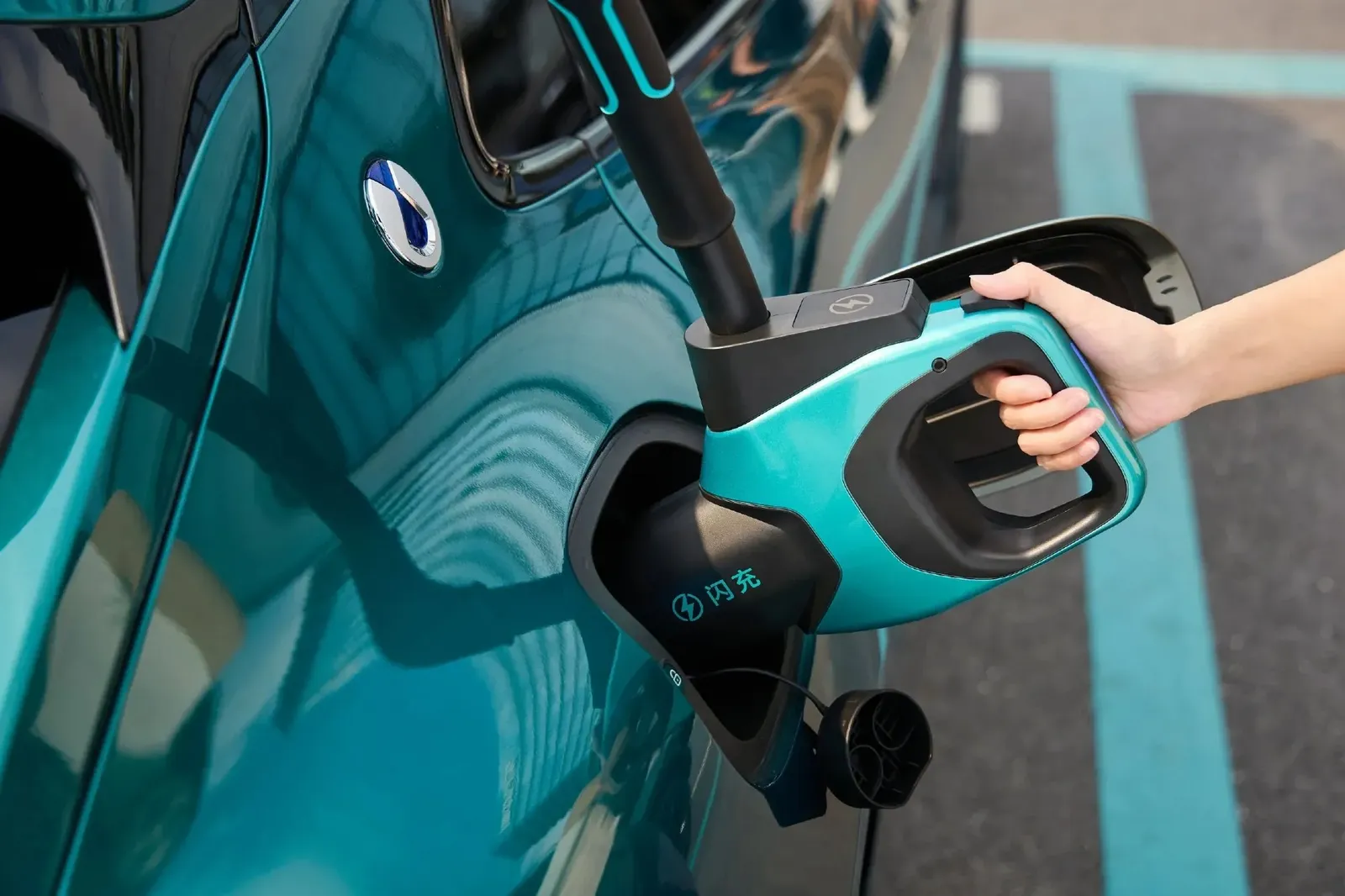
BYD announced that it will complete construction of its 10,000th fast charging station in China on August 28. This marks halfway to its 2026 goal, as the manufacturer aims to reach 20,000 locations by the end of December, including 18,000 in urban areas and 2,000 along highways.
Table of Contents
Show
Hide
On paper, this looks impressive. In practice, the second half of the plan is more challenging, as BYD must now maintain a pace of around 2,500 stations per month, or approximately 80 per day.
1.5 MW sounds powerful, but it doesn’t mean constant charging at that power level
The entire network relies on technology demonstrated by BYD in March 2026 along with the second generation of Blade batteries. The manufacturer refers to chargers capable of delivering up to 1,500 kW through a single cable, which technically puts us at the megawatt level.
The claims are very specific. A car compatible with this ecosystem should be able to charge from 10% to 70% in about 5 minutes and from 10% to 97% in about 9 minutes. BYD also provides a winter scenario: from 20% to 97% at -30 degrees Celsius in about 12 minutes.
This is where a star rating is needed. 1.5 MW refers to the peak power of the equipment, not a guarantee that the car will actually draw that much power throughout the charging session. The actual power drawn by the car depends on its charge level, battery temperature, pack architecture, and thermal management. Additionally, there is no widely available, standardized external charging curve that shows the full power progression from 10% to 97%.
In short: the equipment is very powerful, but marketing mixes two different concepts here. One is the charging station’s capabilities, and the other is the actual rate at which the car absorbs energy.
BYD employs interesting technical solutions here. The cable features liquid cooling, and the gun itself weighs around 2 kg. Additionally, part of the charging stations utilizes local energy storage to mitigate sudden spikes in power demand. Without this, connecting many 1.5 MW stations in one location would be simply too much for the power grid.
10,000 in less than half a year, but the toughest part is yet to come
BYD launched its “Flash Charging China” plan in March. By April 1, the company reported around 5,000 stations; by the end of June, that number rose to 7,018, and by July the network was set to cover 325 cities. Now the count is approaching 10,000.
This is a rapid pace. One of the flagship stations in Shenzhen’s Longhua district, where the ceremony will take place, was built in less than six months from start to completion.
However, the second half of the plan is not a mirror image of the first. If BYD truly wants to reach 20,000 stations by year’s end, it must add another 10,000 stations in about four months. That means 2,500 stations per month. At this scale, technology itself is no longer the main issue—logistics, connections, land acquisition, and cooperation with local operators become critical.
And that’s why BYD isn’t building these stations solely on its own.

Sinopec provides BYD with what every operator lacks: locations
In June, BYD signed an agreement with Sinopec, a Chinese energy giant. This is a highly pragmatic move. Instead of searching for each location separately, the manufacturer can access an existing network of service stations that already have access roads, customer traffic, and supporting infrastructure.
Sinopec operates over 30,000 stations in China. The deal does not mean converting the entire network into electric hubs, but it allows for the addition of fast charging stations at selected locations alongside traditional fuel services.
One example is already in operation. On August 6, a joint flagship station was opened in Shanghai on Huqingping Highway, in the Hongqiao area. According to descriptions, it features liquid-cooled chargers with a capacity of up to 1,500 kW per connector. Some reports also mention that at this specific location, old fuel dispensers have been replaced by charging bays.
This is actually a more interesting signal than just power alone. The Chinese fuel company no longer views charging as an afterthought in a parking lot corner. It is moving toward a model where EVs occupy a central position at the station.
BYD aims to expand this system beyond its own brands and outside China
The flash charging network is meant to support not only BYD vehicles. The first publicly confirmed external technology partner has already emerged, namely Hongqi from the FAW group. FAW-FinDreams will supply second-generation Blade Battery technology and flash charging architecture for Hongqi’s new EV platform.
For now, there are no model names or production start dates. But the fact itself is significant. If BYD wants its charging standard to truly grow, it must go beyond its own ecosystem. This is exactly what Tesla did with its ecosystem, though in a different way and in a different market.
Meanwhile, BYD began exporting this type of infrastructure. The first European BYD flash charging station opened in Germany in May 2026. The company plans to build 6,000 stations overseas, including 3,000 in Europe, 2,000 in the Americas, and 1,000 in the Asia-Pacific region.
As of now, this sounds ambitious, perhaps even extremely ambitious. Europe has stricter connection procedures, a more fragmented market of operators, and a different project economics model compared to China. Simply installing a charging post is not yet a success—it needs to be powered, maintained, and used by vehicles capable of utilizing that capacity.
For Polish drivers, the conclusion is simple: if BYD brings to Europe vehicles truly ready for such high power levels, pressure on local operators will increase. Not because we’ll see 1.5 MW charging stations at Lidls tomorrow, but because 250-400 kW will suddenly no longer seem like the absolute maximum.
Awards exist, but the market will judge it its own way
In August, BYD’s flash charging technology received the Paul Pietsch Award in Germany. It is the first Chinese company to receive this honor since the award was established in 1989. In July, the technology also made it onto China’s list of significant technological projects by the Ministry of Industry.
That’s nice. But drivers don’t charge their cars with medals. Ultimately, three things matter: how much power the car can actually draw, how long it can maintain that high level of power, and how many such charging stations are in use not just in demonstration settings but in regular traffic.
BYD has taken a huge step forward in terms of its network coverage. Now it must prove it can deliver on the second part of its promise just as well. Do you think Europe will see this system before there are a sufficient number of cars capable of handling such high power levels?