
BYD exported over 1,000,000 cars in 2026: it has now made a radical decision to keep growing
14/09/2026 14:30
Updated to
14/09/2026 14:30
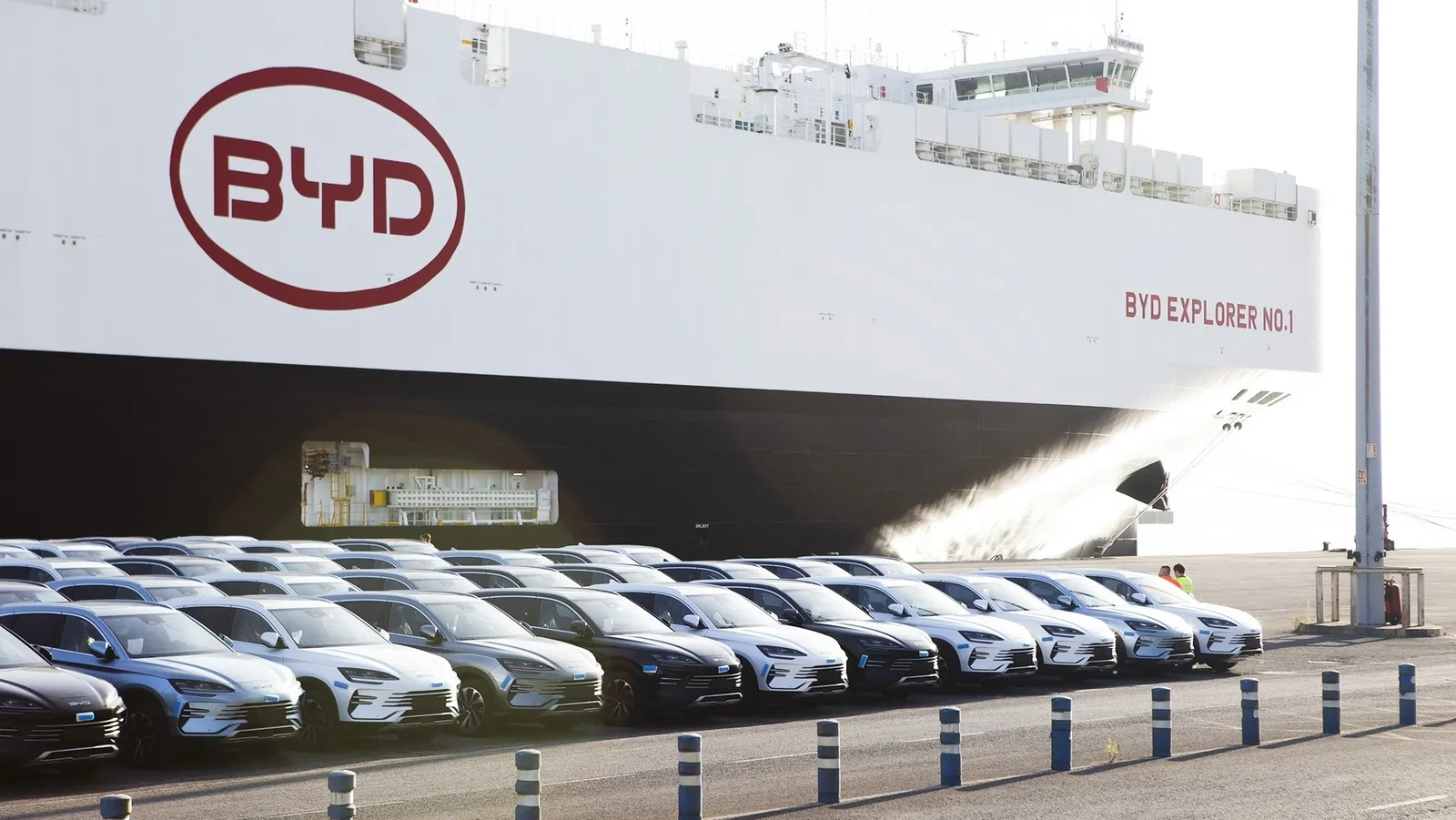
BYD’s international expansion is beginning to require logistics infrastructure that matches the volume of vehicles the company is exporting from China. From January to August 2026 alone, the manufacturer exported 1,126,797 passenger cars, an 88% increase from the same period last year, according to data from the China Passenger Car Association cited by CnEVPost.
This increase explains the company’s next move. Various industry publications report that BYD has ordered ten new ships for vehicle transportation, each with a capacity of approximately 9,200 car equivalents. If this plan is carried out as announced, the brand will move from its current eight ships to a fleet of 18 vessels.

Ten new ships to expand an already massive fleet
The new vessels would be of the PCTC type, large transport ships equipped to load and unload vehicles on their own using ramps. Capacity is measured in CEUs, a unit equivalent to the space occupied by a standard passenger car, so the ten ships together would add around 92,000 CEUs of simultaneous capacity.
The construction would be carried out by China Merchants Industry and take place at its shipyards in Jinling and Haimen. Deliveries are expected between 2027 and 2029, though the cost of the project has not yet been disclosed, nor has there been an official announcement from BYD or the builder confirming the order formally.
BYD now has eight large transport vessels, a fleet that was fully completed in 2025 after putting into service ships such as Explorer No.1, Hefei, Changzhou, Shenzhen, Xi’an, Changsha, Zhengzhou, and Jinan. Depending on the model, these ships can carry approximately between 7,200 and 9,000 vehicles, and their addition has allowed the company to reduce its reliance on external shipping operators.
Exports explain the scale of the investment
Recent figures show just how much the demand for transportation has increased. BYD exported 183,746 electric vehicles from China alone in August, which is 130.8% more than a year earlier and 5.8% higher than in July. That figure accounted for 35.4% of all Chinese exports of new energy passenger vehicles that month.
The utility of this fleet is not limited to cars produced in China. BYD has already used some of its ships to transport vehicles manufactured in Thailand to other markets, a model that may gain importance as more international plants come online. In the European case, moreover, electric vehicles produced in China by BYD are currently subject to an additional 17% compensation duty under current EU regulations.
If these ten new ships are eventually added to the fleet, BYD will have a combined capacity of over 130,000 CEUs across all its vessels. This figure does not represent the number of cars it can export each year, as each unit can make multiple trips, but it does reflect the scale of the logistics infrastructure the company is deploying to support an international business that has shipped over a million vehicles out of China in just eight months.