
BYD Fang Cheng Bao Tai 3 starting at 143,800 yuan. The lower-end version has a range of 510 km and can charge from 10% to 97% in 9 minutes.
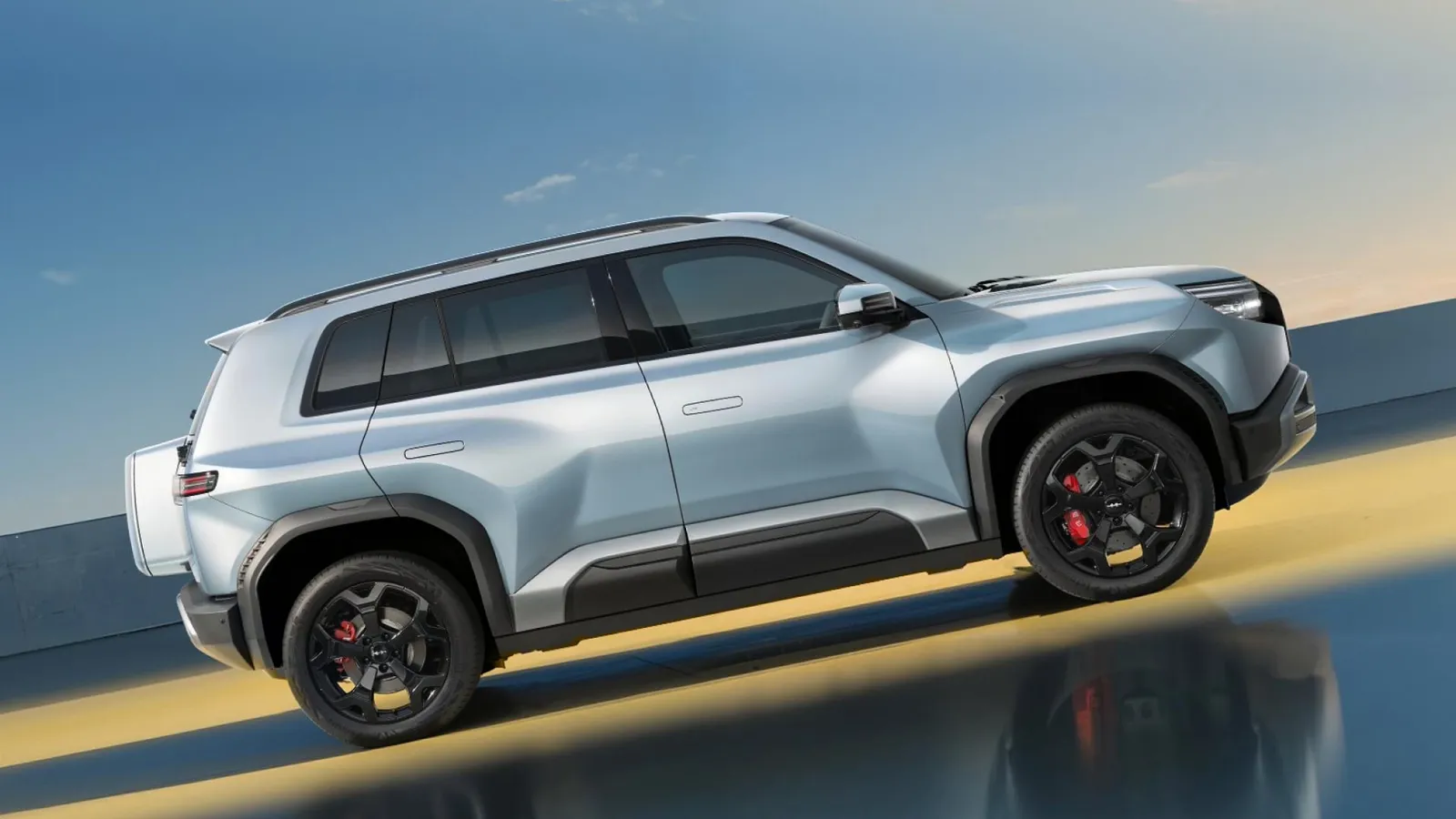
BYD has introduced a new base version of the electric crossover Fang Cheng Bao Tai 3 in China, pricing it at 143,800 yuan, which is around $21,200–$21,300. The vehicle features a smaller battery of 64.3/65.3 kWh but retains 322 horsepower, and according to the manufacturer, it can charge from 10% to 97% in 9 minutes using BYD’s megawatt chargers.
Table of Contents
Show
Hide
For buyers, the simplest message is that BYD has lowered the entry price by 10,000 yuan without changing the engine. However, as usual, the advantage lies in the charging conditions under China’s CLTC cycle.
The cheaper variant cuts the entry price by 10,000 yuan
The new Tai 3 version is the RWD Flash Charging 510 km model, priced at 143,800 yuan. Previously, the cheapest version of this model cost 153,800 yuan and offered 620 km of range per CLTC cycle.
The difference mainly comes from the battery. The new variant uses a second-generation Blade LFP battery with a capacity of either 64.3 kWh or 65.3 kWh depending on the materials, while the higher RWD version has a 75.6 kWh battery pack. As a result, the range drops from 620 to 510 km according to CLTC standards, but the price becomes significantly more competitive.
This is a typical BYD strategy: first launching at a higher price point, then adding a cheaper version when increasing sales volume is needed. Especially since the Tai 3 isn’t a niche vehicle but rather a model aimed at a broader audience, more “family-oriented” than BYD’s off-road Bao series.
Smaller battery, same power, better 0-100 km/h acceleration
Interestingly, the base version hasn’t been stripped of its drive system. It still features an engine at the rear axle with 240 kW of power, equivalent to 322 horsepower, and 305 Nm of torque.
With a smaller battery, its curb weight is 1,920 kg, and its 0-100 km/h sprint time is 6.9 seconds. For comparison, the more expensive rear-wheel-drive version 620 km takes 7.3 seconds to reach 100 km/h. Paradoxically, the cheaper variant is thus slightly quicker.
The top speed is said to reach 210 km/h. On paper, this seems quite high for a city-family crossover with a length of 4,605 mm. Its width is 1,900 mm, height is 1,720 mm, and wheelbase is 2,745 mm.
More powerful configurations are also available at the higher end of the range. The top model with two engines and AWD delivers 375 kW, or 503 horsepower, along with a 0-100 km/h acceleration time of 4.7 seconds.
BYD’s strongest advantage is charging, but with a clear standout feature
Today, the biggest selling point of the Tai 3 isn’t range but charging speed. According to BYD, all versions with “flash charging” can charge from 10% to 70% in 5 minutes and from 10% to 97% in 9 minutes.
That sounds impressive. Very impressive. The issue is we’re talking about charging using BYD’s megawatt chargers, which are in the manufacturer’s tightly controlled environment. In other words: it’s a great demonstration of the platform and battery’s capabilities, but this shouldn’t be automatically assumed to apply in everyday use outside of China.
The second point is the CLTC rating. The claimed 510 km in China’s testing cycle doesn’t mean 510 km in European driving conditions. The figure would be lower under WLTP standards, and in reality it still depends on speed and weather. Nothing new, but it’s worth mentioning right away with such launches.
The Tai 3 aims at the mass market, but it also comes with some high-end features.
The Tai 3 isn’t a small, budget car like the Seagull. It’s rather a compact yet full-fledged crossover with features that would have required us to look at a higher price tier just a few years ago.
Inside, we find a 15.6-inch central screen, an 8.8-inch gauge cluster, and a 12-inch HUD display. The front seats are expected to have heating, ventilation, and electric adjustment. Additionally, there are acoustic front windows, tinted rear windows, a heated steering wheel, and ambient lighting.
There are also features that BYD likes to market as practical perks: a front trunk with a capacity of 151 liters and an additional 28-liter storage compartment mounted on the tilting rear lid.
The suspension is DiSus-C, which is a adjustable system already known from other models in the group. Optionally, the car can be equipped with the DiPilot 300 driving assistance system, also known as God’s Eye B, featuring a lidar sensor suite. The manufacturer promises driving on urban roads and highways. The key word here is obviously “assistance,” not autonomy.
Sales are decent, but BYD clearly wants more
The Tai 3 was launched in March 2026. Sales off to a start were not ideal due to shortages in the supply of second-generation Blade batteries. Deliveries, originally scheduled for mid-April, were pushed back to May, with the Fang Cheng Bao team sending workers to BYD’s factories in Shaanxi, Anhui, and Zhengzhou to boost production.
Despite this, the model has already achieved a solid sales volume. Around 5,900 vehicles were delivered to customers in July. Various reports cite figures of 5,945 or 5,145 units, so it’s safe to assume monthly sales are around 6,000.
From January to July 2026, the Tai 3 saw 30,372 deliveries, with a total of about 95,628 units sold since its launch. This isn’t a bad result, but it also doesn’t seem like a model with explosive demand on its own. A new, cheaper variant is expected to significantly improve this situation.
The Fang Cheng Bao brand as a whole performs much better. In July, it delivered 41,213 vehicles, representing a year-on-year increase of 190.64 percent and a 15.74 percent rise compared to June. Since the beginning of the year, the brand has reached 200,687 deliveries, indicating a year-on-year growth of 167.85 percent.
What this means for Europe and Poland
For now, the Tai 3 is mainly news from the Chinese market, but it’s worth closely watching BYD’s moves in this area. The company is testing how low it can price a vehicle with strong performance, a large screen, LFP batteries, and very fast charging without entering the segment of the cheapest urban cars.
If such a model were to make it to Europe someday, the issue wouldn’t be the specifications themselves, but rather the price after tariffs, homologation, and adjustments to local requirements. After all, $21,300 in China doesn’t magically turn into 21,300 euros in the EU. It’s a shame.
BYD shows something else as well: fast charging is no longer the domain of expensive sedans and luxury cars. The question is, who can bring this to markets outside of China’s own charging ecosystem?