
BYD received the Paul Pietsch Award for flash charging. It was the first time such an award was given to a Chinese company.
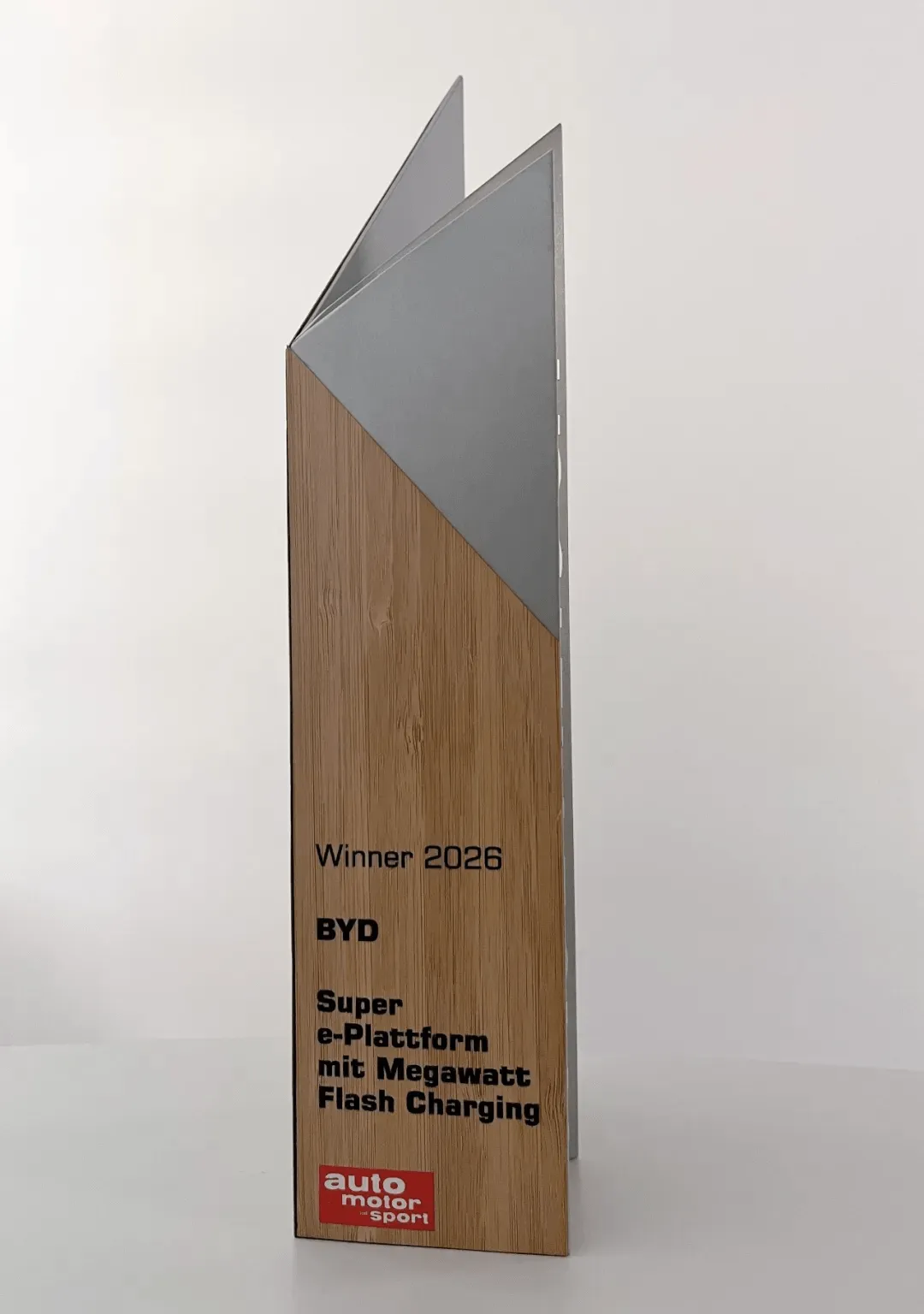
BYD announced on August 11 that its flash charging technology won the International Paul Pietsch Award in Germany. This is the first time since 1989 that this award has gone to a Chinese company, and it recognized an electric vehicle charging technology rather than sales performance or brand popularity.
The award is presented by the German group Motor Presse Stuttgart along with a network of automotive news outlets, including Auto Motor und Sport. What’s interesting is that the Paul Pietsch Award typically aims to honor genuine technical progress, rather than PR-driven “bests” that have been common in the EV industry recently.
BYD claims that its flash charging system, combined with the Blade Battery 2nd generation, allows it to raise the charge level from 10% to 70% in 5 minutes and reach 97% in 9 minutes. It sounds very good on paper, though as usual the real test lies in actual conditions: cell temperature, charging curve, and the power available at the charger.
BYD is building its own charging network, and not just in China
As of the end of June 2026, BYD had 7,018 flash charging stations in 325 cities across China. The goal for the end of the year is much more ambitious: 20,000 stations nationwide.
In Europe, BYD’s first megawatt-scale project started in Germany in May 2026. By the end of 2026, the company aims to have around 6,000 such stations overseas, with about 3,000 located in Europe and developed through the brand’s dealer network.
This is movement that says more about the “ecosystem” than the slides themselves. If BYD truly delivers thousands of its own high-power charging stations, it will stop being just a car manufacturer and start becoming an infrastructure player — the key factor behind half of the convenience in using EVs today.
Germans Are Buying BYD More and More
In July 2026, BYD registered 5,240 new vehicles in Germany, a 365.4 percent increase year-on-year. This made the brand the best-selling Chinese car manufacturer in that market.
After seven months of 2026, BYD’s registrations in Germany rose to 31,492 units, representing a 322.8 percent year-on-year increase. Technological innovation and growing sales in Europe’s largest market are starting to combine into a cohesive story here.
If BYD combines such sales momentum with its own megawatt-level charging network, Germany could become more important to the brand than many Asian markets – do you think European manufacturers currently have an answer to such a package: car, battery, and infrastructure in one?
LovEV Newsletter
Want more content like this?
Sign up – we’ll send you a weekly summary once the newsletter starts.