
BYD takes another step toward dominating the world: orders 10 ships capable of transporting 2,500,000 cars per year
15/09/2026 12:00
Updated to
15/09/2026 12:00
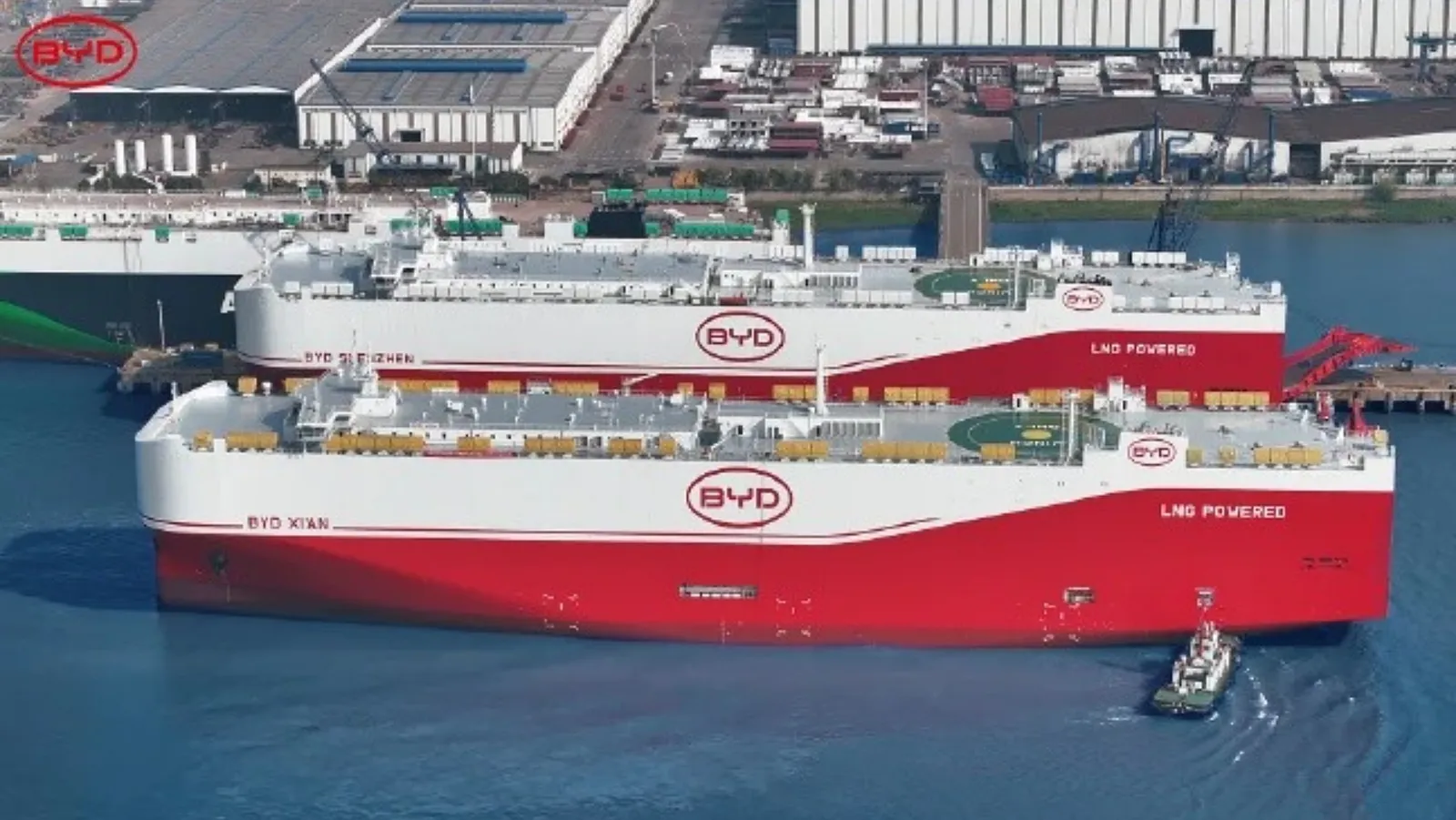
Selling cars outside China no longer depends solely on manufacturing them well, but also on being able to transport them across the world without relying on third parties. BYD knows this better than anyone, which is why it has decided to continue investing in its own car carrier fleet. According to specialized maritime publications, the Chinese brand has ordered 10 additional ships, each with a capacity of 9,200 vehicle equivalents.
This expansion is not a one-off decision but rather the continuation of a strategy that BYD has been developing for several years. With these 10 new ships, the company’s total fleet will rise to 18 vessels, boasting a combined capacity of over 130,000 units. This figure places BYD among the automakers with the strongest in-house logistics capabilities in the world, a rarity in the automotive industry. Meanwhile, BYD continues to expand its industrial presence in Europe following the upcoming opening of its factory in Hungary, the first of such facilities.
What exactly are these ships and how are they measured?
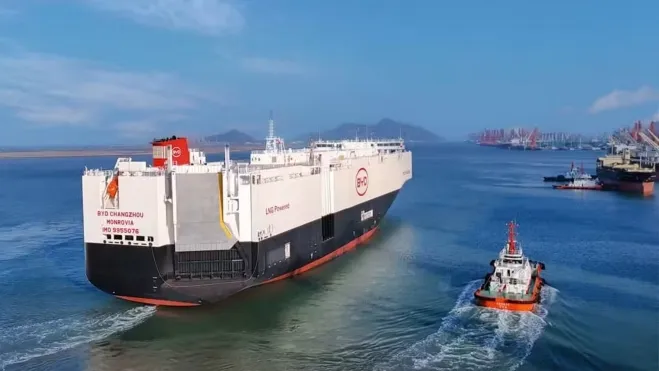
The new ships will be of the PCTC type, which stands for pure car and truck carrier, meaning vessels designed specifically for transporting vehicles and trucks. All of them are RoRo type, or roll-on/roll-off: cars board and disembark from the ship on their own wheels, without the need for containers or special cranes for each vehicle. Their capacity is measured in CEUs, a unit that does not correspond to a fixed number of cars but varies depending on the size of the vehicles being transported.
The construction of these 10 ships will be carried out by China Merchants Industry, which will build them at its shipyards in Jinling and Haimen. Deliveries are scheduled gradually between 2027 and 2029. Neither the cited reports nor BYD have revealed the value of the contract, and there is still no official announcement from either the manufacturer or the shipyard.
From eight ships to a fleet that more than doubles its capacity
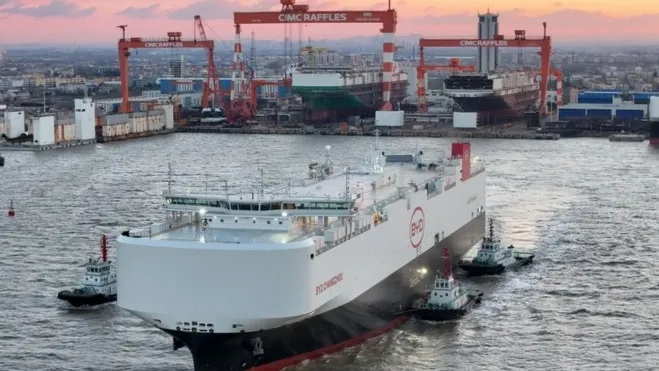
BYD completed its initial fleet of eight ships in September 2025 when the BYD Jinan entered service. The rest of the current fleet consists of Explorer No. 1, Hefei, Changzhou, Shenzhen, Xi'an, Changsha, and Zhengzhou, with capacities of 7,200 or 9,000 cars depending on the ship model. The first of these, Explorer No. 1, was delivered to BYD in January 2024 by the CIMC shipyard, though ownership of the ship remained with Zodiac Maritime, which leased it to the Chinese brand.
The original fleet of eight ships was capable of exporting one million cars per year. With the addition of 10 new vessels, BYD’s export capacity could reach up to 2.5 million cars annually—this is the figure BYD aims to sell in Europe by 2027. BYD’s fleet transports not only cars manufactured in China. In September 2025, the BYD Zhengzhou ship carried right-hand drive vehicles from the brand’s factory in Thailand to the United Kingdom, marking the first exports from that Asian plant. Unlike China, Thailand is not subject to the compensatory tariffs imposed by the European Union.
Exporting to Counter Domestic Market Pressure
BYD’s growth in the automotive sector comes at a time when exports have become a lifeline for businesses. In August, the brand exported 184,000 passenger vehicles from China, a 131% increase from the previous year, accounting for 35.4% of all Chinese exports of new energy vehicles. From January to August, its cumulative exports reached 1,127,000 units, an 88% rise compared to the same period in 2025. Meanwhile, in the domestic market, BYD sold 184,000 cars in China during August, a 35% decline from the previous year, reflecting the fierce price war ongoing in the industry within China itself.