
BYD has ordered 10 new giant ships to deliver its cars around the world
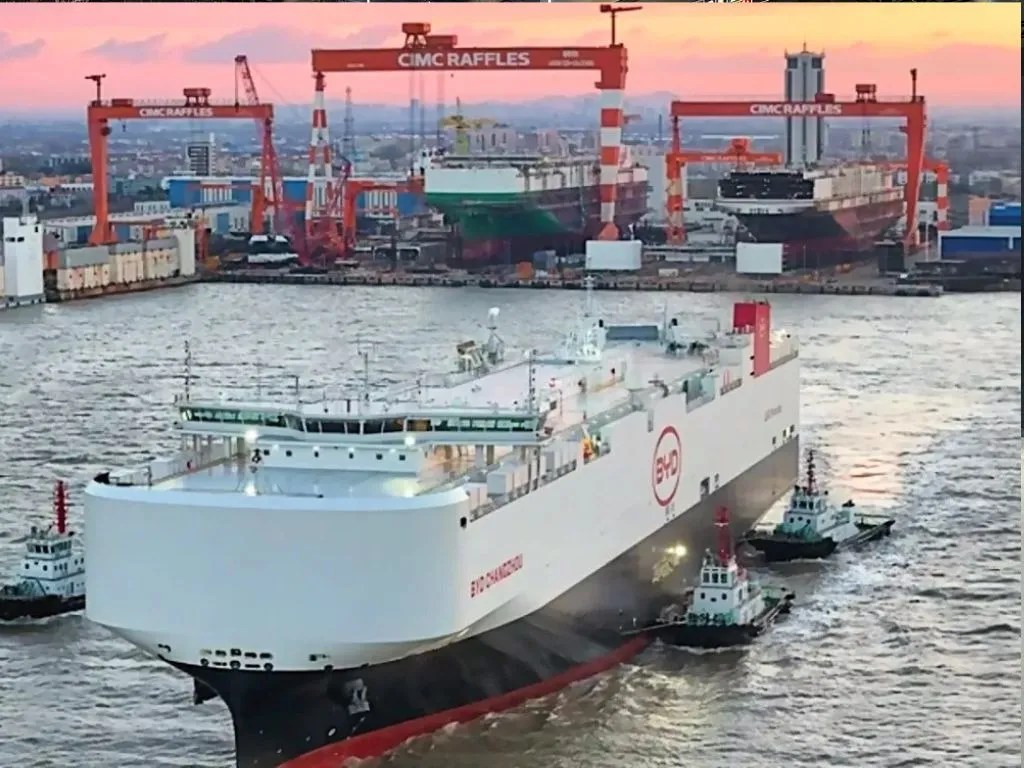
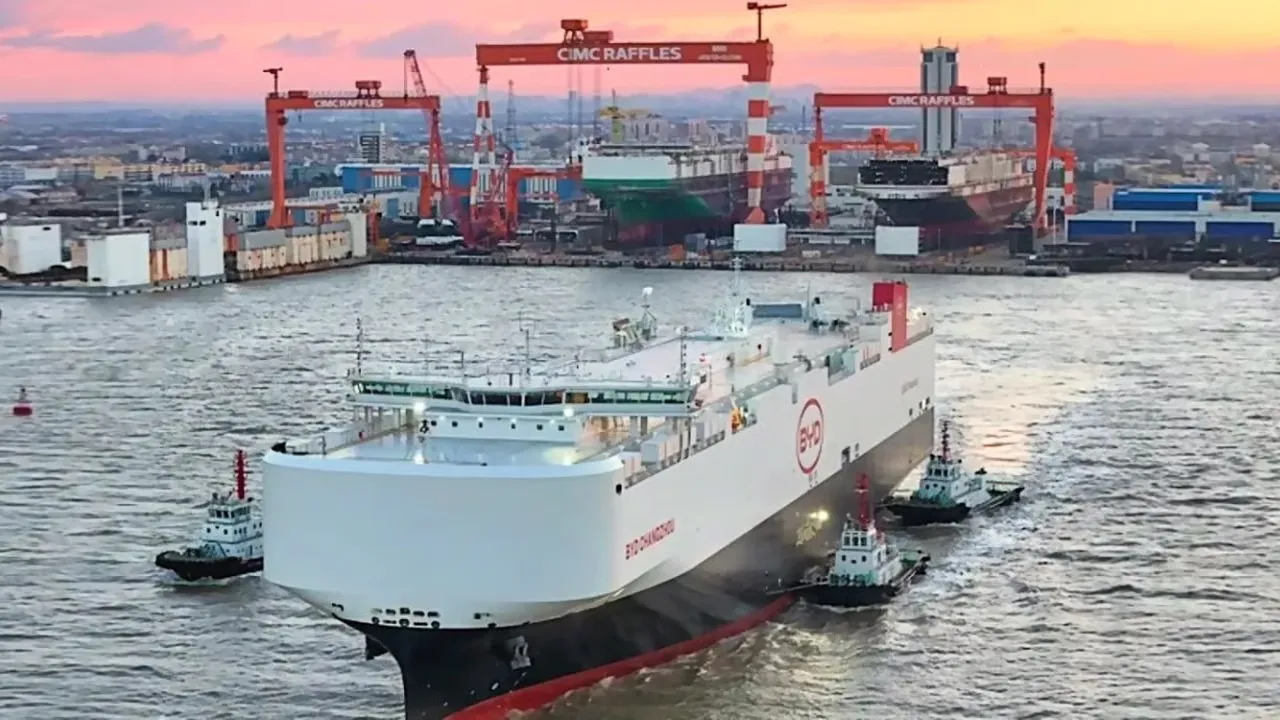
BYD clearly does not intend to slow down its international expansion. The Chinese manufacturer has reportedly ordered ten new ships, each capable of carrying the equivalent of 9,200 cars. Eventually, its fleet could consist of 18 ships.
BYD is no longer content with just manufacturing its cars: the Chinese giant also aims to control their transportation around the world. Although its fleet of ships dedicated to exports is still relatively new, the company appears ready to more than double it. According to industry publications New Ships and Robin Assasfina via CarNewsChina, BYD has ordered 10 new roll-on/roll-off ships, or PCTC (Pure Car and Truck Carrier), from China Merchants Industry. Their construction is scheduled to take place at the shipyards in Jinling and Haimen.
The deliveries are set to take place between 2027 and 2029. However, neither BYD nor the shipbuilder has officially announced this order yet, and its cost remains unknown.
Over 9,000 cars per ship
The size of this new fleet gives a good idea of BYD’s international ambitions. Each of these ten new ships is said to have a capacity of 9,200 CEU, which stands for Car Equivalent Unit. This is a unit used in maritime transport to represent the space occupied by a standard car, not necessarily the exact number of vehicles transported on each journey. Thus, this new order represents an additional capacity of 92,000 CEU.
Also read
10 to 80% in 6 minutes: Could BYD’s ultra-fast charging damage batteries?
BYD already has eight ships capable of carrying, depending on the model, between 7,200 and 9,000 cars. With these ten new vessels, its fleet would total 18 ships and offer a combined capacity of over 130,000 CEUs. It’s important not to confuse this figure with the annual export capacity, as a single ship naturally makes multiple trips per year.
According to an estimate by CarNewsChina, the existing eight ships alone would already allow BYD to export around one million cars per year. With 18 ships, this theoretical capacity could rise to 2.5 million vehicles per year. However, this latter figure is an estimate by the Chinese media and not a target announced by BYD.
A fleet being built at an impressive pace
The expansion is all the more remarkable given that BYD entered this maritime venture quite recently. The first ship in this fleet, the Explorer Nº1, was delivered in January 2024. Less than two years later, in September 2025, the arrival of the BYD Jinan allowed the manufacturer to complete its first fleet of eight vessels. In the meantime, ships such as the BYD Hefei, Changzhou, Shenzhen, Xi’an, Changsha, and Zhengzhou were also put into service.
All of them are RoRo ships, meaning roll-on/roll-off vessels. Unlike container shipping, cars can enter and exit the ship directly by rolling, allowing thousands of vehicles to be transported on each voyage. The order announced today shows that these first eight ships were actually just the beginning.
BYD is exporting more and more cars
This massive naval fleet is needed to support the automaker’s accelerated internationalization. In August 2026, BYD exported 184,000 passenger cars from China, representing a 131% increase in just one year. In the first eight months of the year, its exports reached 1.127 million vehicles, up 88% from the same period in 2025.
Also read
BYD Dolphin G DM-i review: a rechargeable super hybrid city car, but why?
This situation contrasts with BYD’s performance in its domestic market: sales in China actually declined by 35% year-on-year in August and by 43% in the first eight months of 2026. Therefore, it is in the automaker’s best interest to continue expanding beyond its borders, where it is also developing local manufacturing facilities.
Ships That Won’t Necessarily Set Sail from China
In fact, these vessels are no longer used solely to transport cars manufactured in China. In September 2025, the BYD Zhengzhou loaded vehicles produced at BYD’s factory in Thailand to ship them to the United Kingdom. This represents an important development as the manufacturer expands its production sites across different regions of the world.
BYD produces cars in Thailand, among other places, and continues to expand its industrial presence internationally. Its maritime fleet can thus gradually evolve into a true global logistics network rather than just a tool for sending Chinese vehicles abroad.
If this new order for ten ships is confirmed, BYD will have a fleet of 18 vessels by 2029, capable of carrying the equivalent of over 130,000 cars simultaneously. A logistical force matching the manufacturer’s global ambitions.