
Burgenland: VBB are putting more electric buses and charging stations into operation
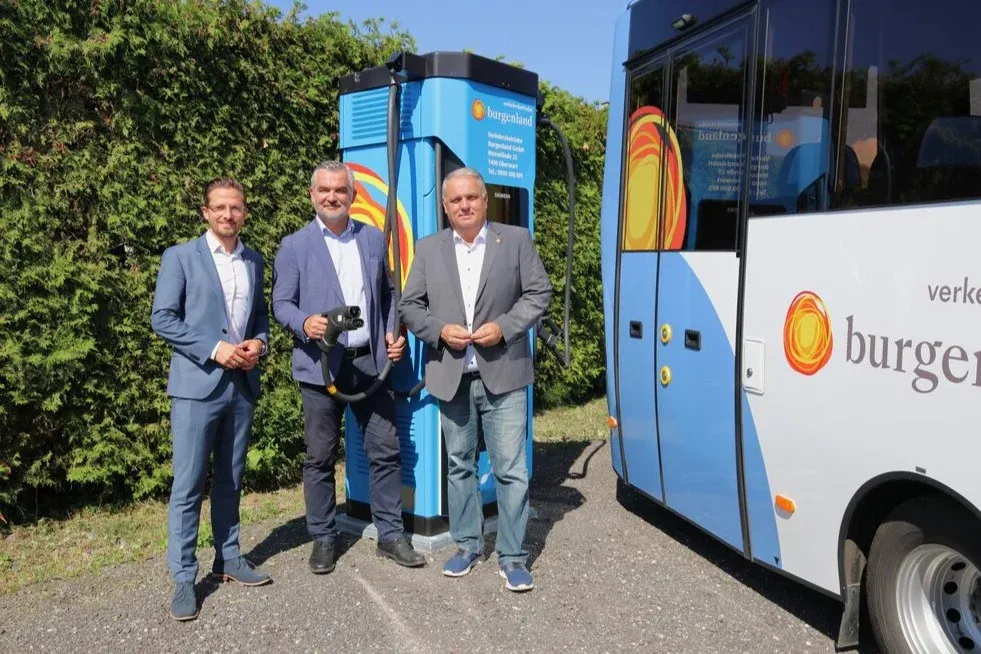
The Burgenland Transport Companies (VBB) have installed 20 new charging stations for electric buses. Meanwhile, nine electric buses are now in operation, serving mainly feeder routes in central and southern Burgenland.
Currently, VBB operates around 60 charging stations in Austria’s easternmost state. As part of the latest expansion phase, 20 new stations were built, including 13 DC chargers with 160 kW or two units at 80 kW each, as well as seven AC chargers, each with two charging points and 22 kW capacity. The latter are primarily used for pre-conditioning smaller buses and charging BAST vehicles (call-based shuttle taxis).
Recently, Burgenland’s public transportation agencies have put nine fully electric route buses into service. Following a pilot project with an electric route bus in Parndorf, five feeder routes in central and southern Burgenland have now been equipped with these new electric vehicles, which connect communities and villages to the main hubs along the VBB routes.
Currently, the VBB uses two different types of electric buses: the 12-meter version of the Mercedes-Benz e-Citaro, as well as smaller vehicles from the Austrian manufacturer K-Bus, specifically compact 20-seater models with an additional 15 standing spaces. K-Bus specializes in modifying buses and, for example, delivered ten fully electric Midi-buses based on the Mercedes-Benz EQV or eVito, each with 17 seats, to Sicily last year. However, it is unknown which specific K-Bus model was purchased by the VBB.
The 5.7 million euro electric bus project funded by the Verkehrsbetriebe Burgenland is supported by funds from the EU and the Austrian Research Promotion Agency. The higher cost of electric buses compared to diesel buses was subsidized by about 80 percent, while the installation of charging infrastructure received 40 percent funding.