
Improper wiring, cables lying on the sidewalk: what are the best practices and what does the law say?
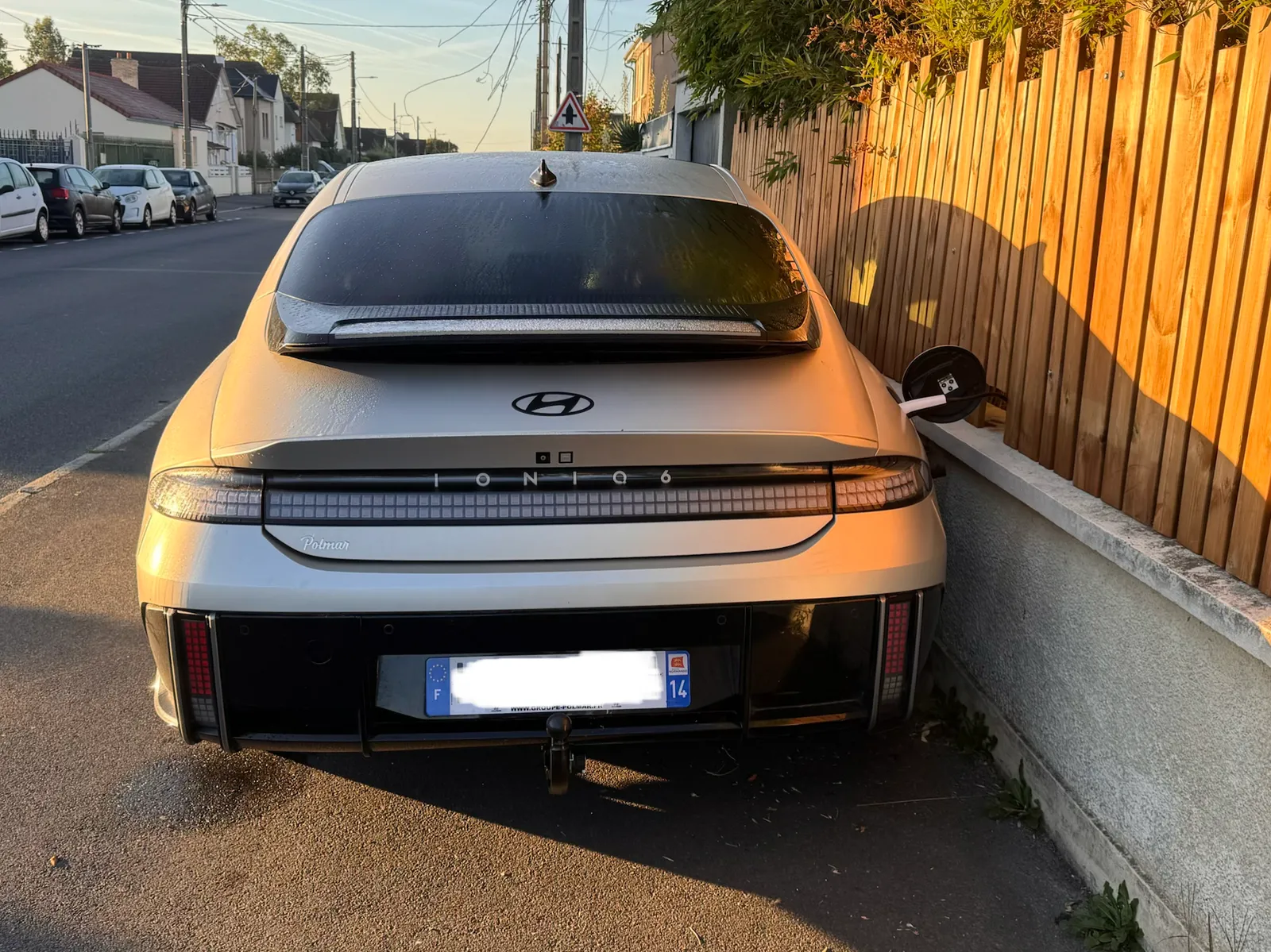
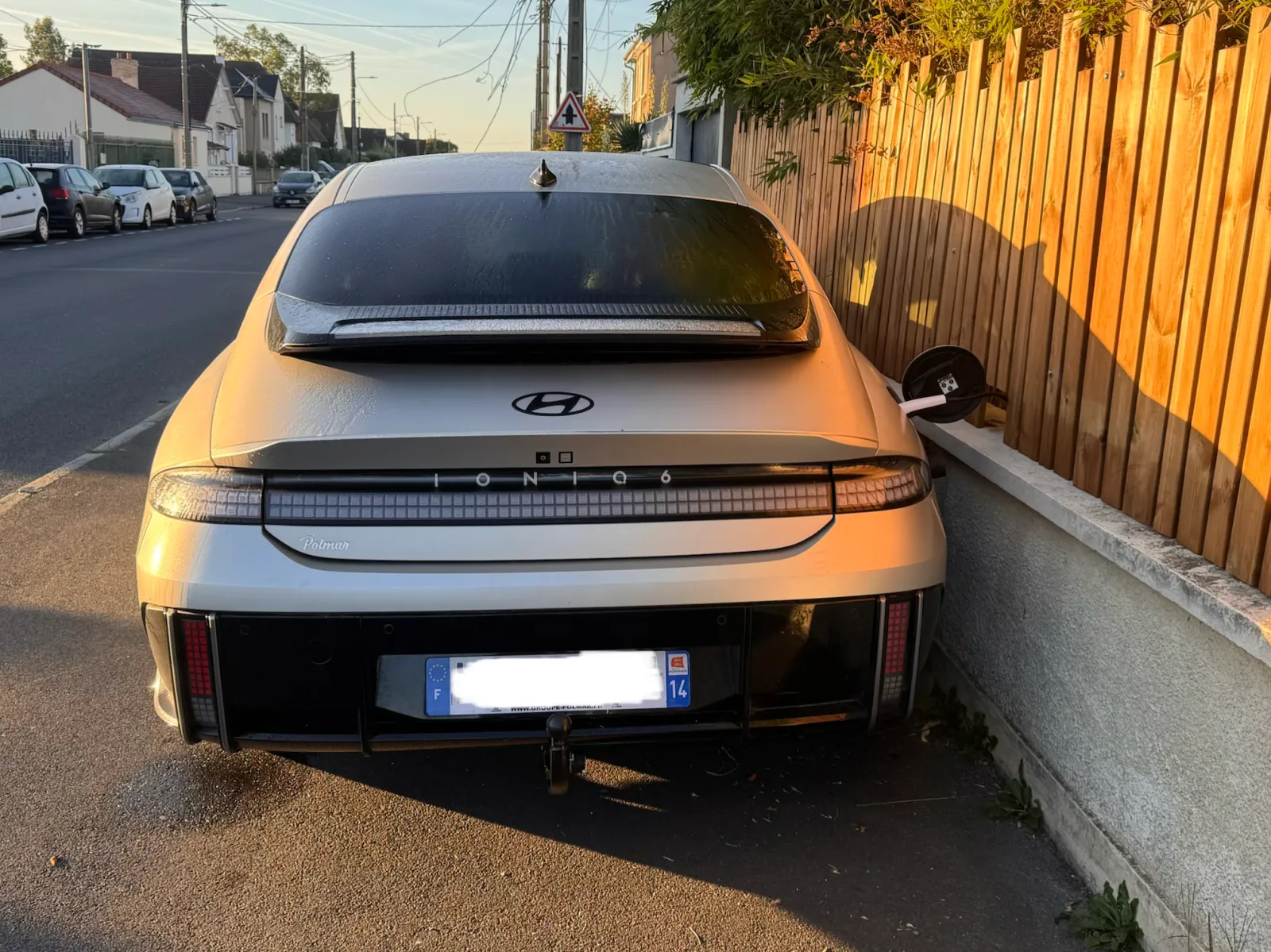
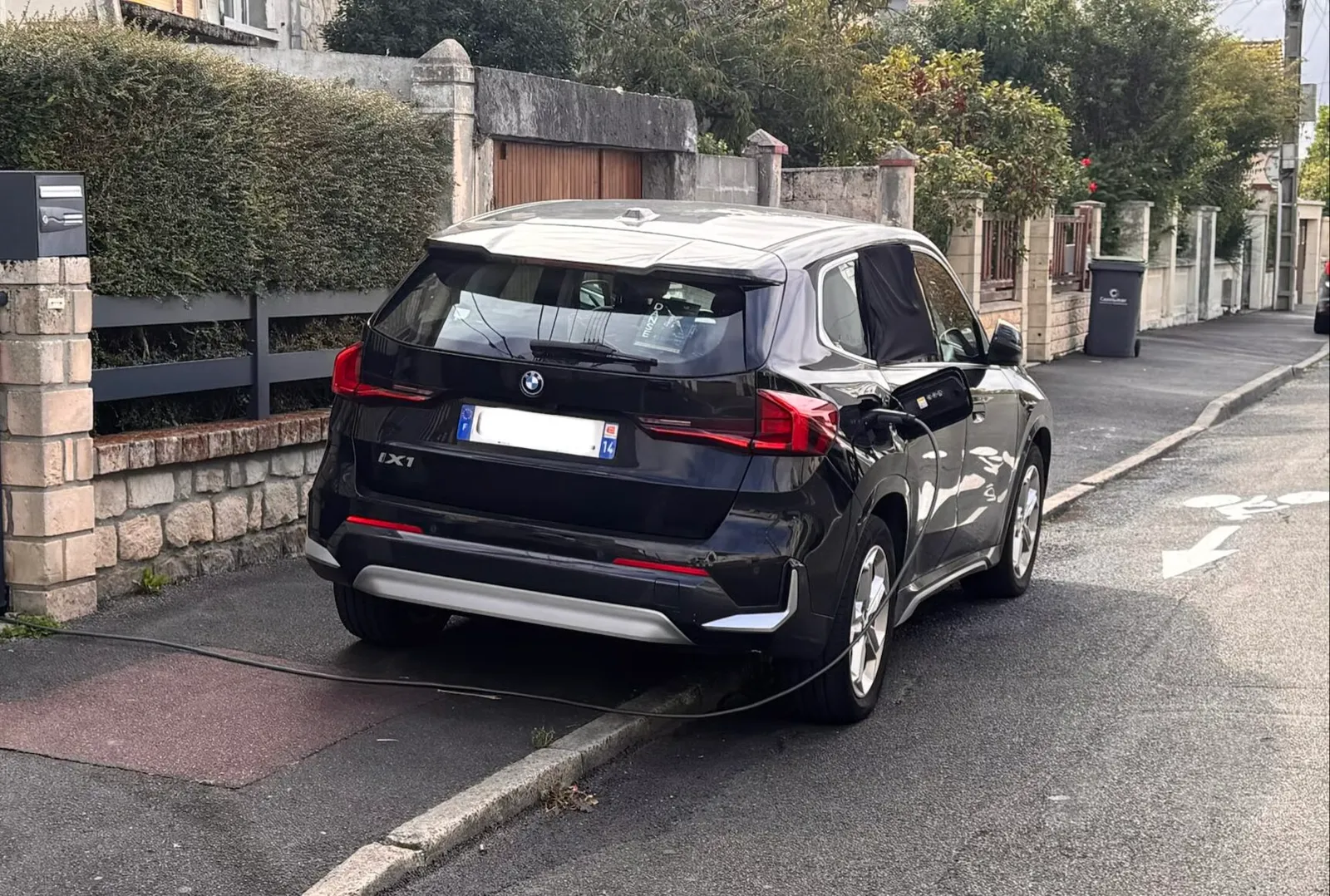
A house, a power outlet, and an electric car parked in front: on paper, everything is in place for a hassle-free charge. The problem is that between the outlet and the car, there’s often a sidewalk. In my neighborhood in Caen, about a dozen electric vehicle owners have clearly decided to make do with the situation. So what does the law say about this?
When driving an electric vehicle, one eventually develops some strange habits. Looking for charging stations in parking lots, checking if they’re occupied even when there’s no need to charge at all, or noticing cables coming out of houses. Everyone has their own quirks… That’s how I observed in my neighborhood in Caen a dozen vehicles plugged in from a residence, with cables sometimes crossing the sidewalk. Naturally, a question arose: do we really have the right to do this?
Before assigning good or bad points, let’s admit that this issue deserves more than just a shrug. After all, home charging, presented as an obvious solution once you own a house, still requires being able to park your car there. A detail that suddenly becomes quite significant.
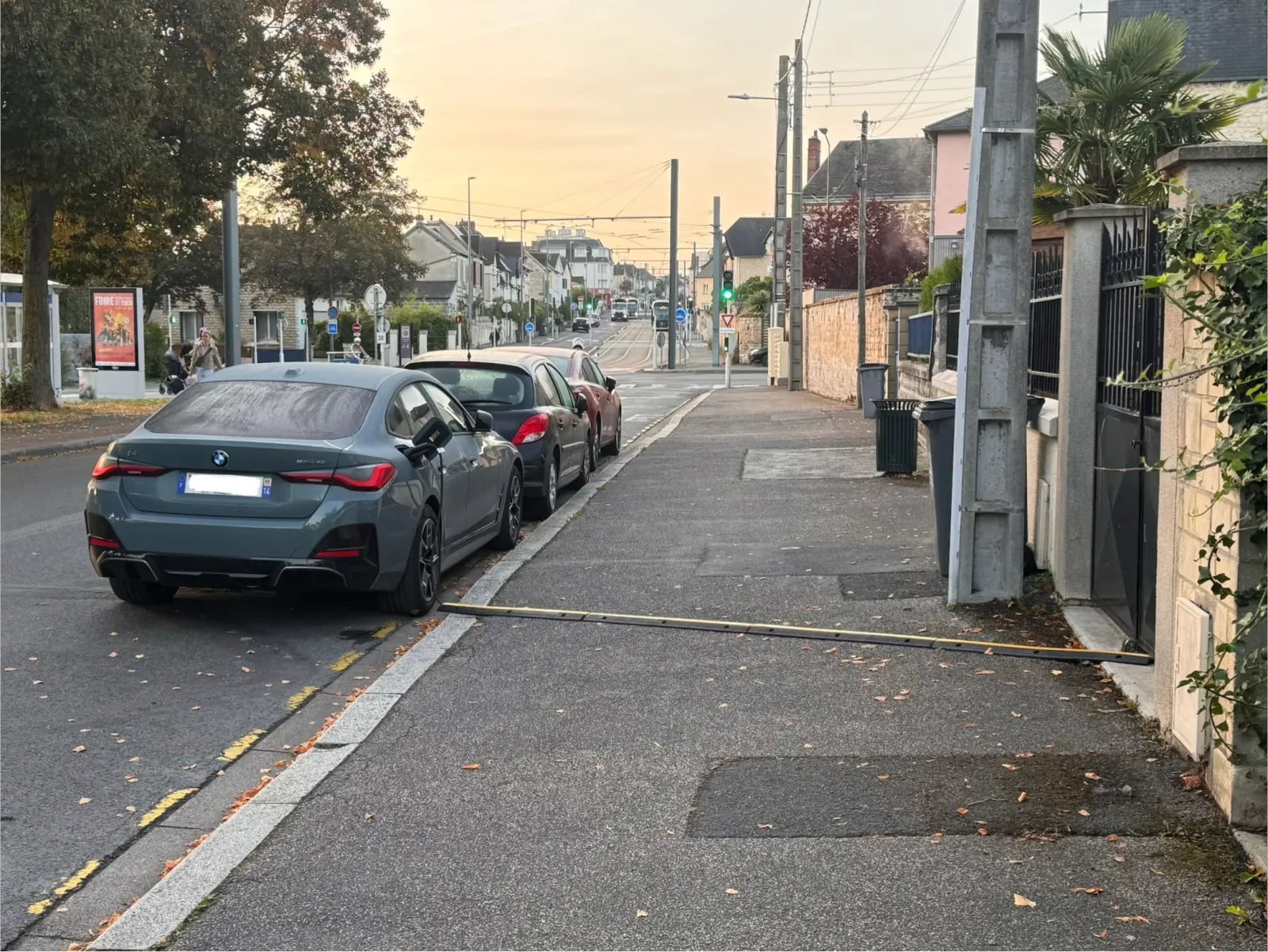
A house isn’t always delivered with its driveway
In builders’ presentations or advertisements, it’s usually quite simple: a beautiful house, a power outlet on the wall, and a car parked in front, ideally under lighting that makes one want to upgrade the kitchen too. In real life, however, one might have a house facing directly onto the street, an inaccessible garage, or a yard where only a bicycle can barely fit. In such cases, the car has to park in a public space. It’s hard then not to consider running a cable out…
Also read
Did Tesla launch the most important car in years amid general indifference?
Yet, a few extra meters would be enough to make use of one’s own installation. The reasoning is understandable. But the sidewalk remains a shared space. It should also be noted that a visible cable does not necessarily mean it is an improvised electrical connection. Behind the gate, there could be a perfectly suitable installation. I would even go further—nothing proves this situation isn’t covered by some kind of authorization. So let’s postpone the legal action for now. Or avoid it altogether.
Can one claim ownership of a sidewalk?
To better understand, let’s examine a text with a rather unappealing name: the General Code on the Property of Public Persons. Its article L. 2122-1 requires a title to occupy public domain land or use it beyond what is open to everyone. The meter may be in your name, but that does not grant you ownership of the land in front of the gate. Does this mean any such recharging is impossible? To answer definitively yes or no would be misleading, as there are nuances involved.
In an analysis from October 2024, Haute-Garonne Ingénierie considers running a cable across or above a sidewalk to be an “irregular” practice. However, in its studies, the agency proposes regulated authorization: time limits, protection for the cable path, and potential fees could all be part of the requirements. The proper approach is therefore to contact the city hall or road management authority before installing such equipment. Buying a cable guard does not, on its own, grant permission to occupy the sidewalk. And hanging the cord does not resolve the legal issue.
To some, it’s just a cable. To others, it’s an obstacle.
With two healthy legs, one can step over a cord without thinking. But with a cane, reduced vision, or a wheelchair, the task becomes much different. A sidewalk shouldn’t require special skills to cross. Article R. 644-2 of the Penal Code penalizes objects left unnecessarily on public roads when they hinder or compromise freedom or safety of passage. An improperly placed cable may fall under this provision, depending on the circumstances. In fact, there’s no need to wait for someone to fall—law enforcement can take action as a preventive measure.
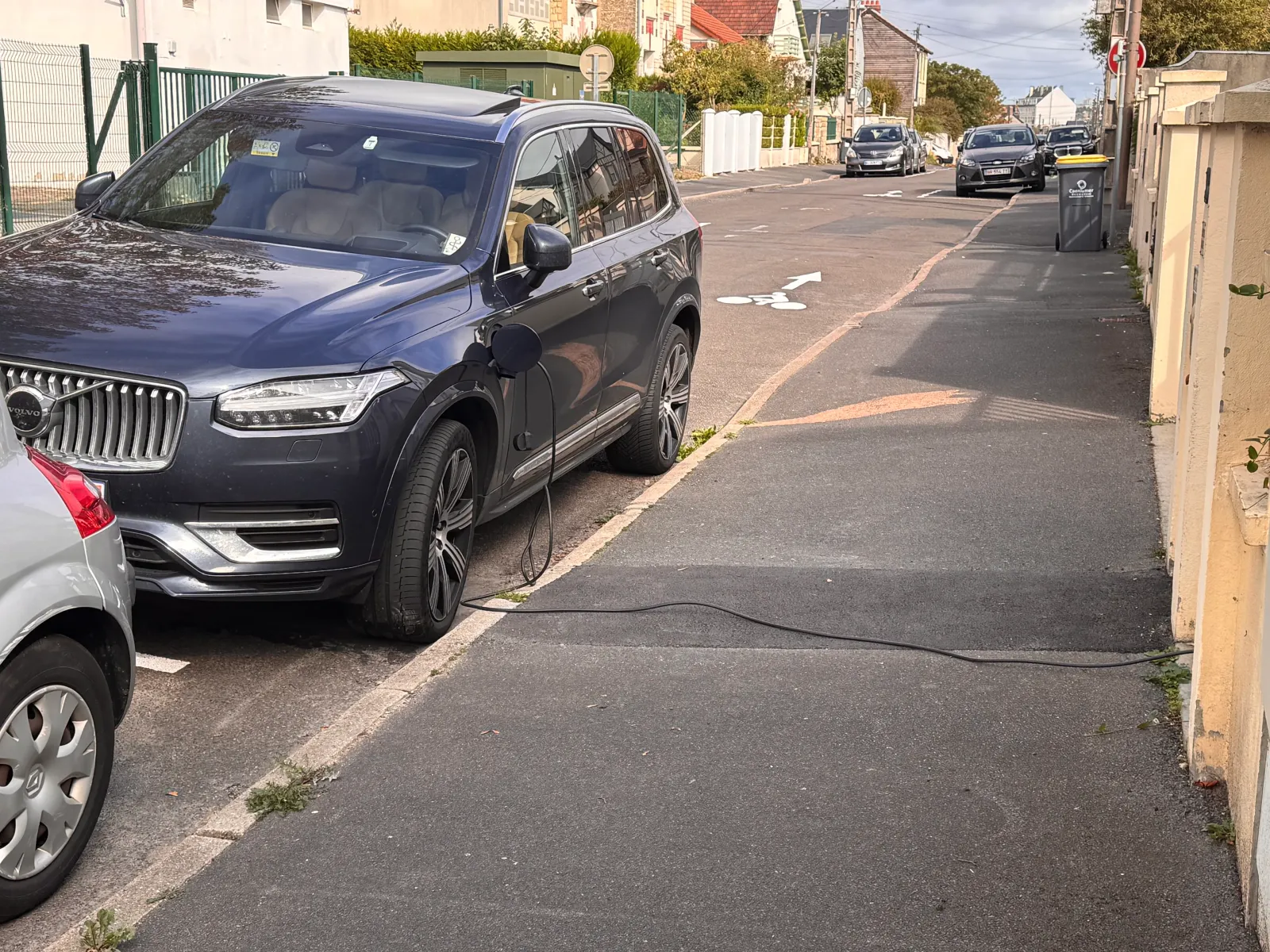
The offense falls under the fourth category, with a legal maximum fine of 750 euros for an individual. Note that this is the upper limit, not the automatic charge applied by cable providers. This distinction should be made before calculating how many public charging sessions this amount could cover.
Getting closer to the outlet doesn’t solve everything
Another temptation is to raise part of the car onto the sidewalk to facilitate wiring. This increases cable length but significantly reduces space for pedestrians. Parking a car on the sidewalk is generally considered very disruptive: it results in a fixed fine of 135 euros and possible seizure under applicable regulations. Charging does not create any general exemption from these rules. Nor does permission for cable passage alone legalize parking there.
If a passerby falls, that’s another matter… Article 1241 of the Civil Code establishes liability for damages caused by negligence or carelessness. Depending on the circumstances and their connection to the accident, the person responsible for installing it may therefore have to face legal consequences. Ouch!
Also read
Hidden charging stations in the sidewalk? This is what we saw in Germany
A understandable frustration?
Let’s put ourselves in the shoes of those who resort to this practice for just two minutes. A charging port behind a wall, a car right in front, but no way to connect the two: admit it’s very tempting. Especially when charging at a public station requires taking a detour or making another trip to get the car. One might want to switch to electric without having bought a house with a double garage.
These connections thus also highlight the limitations of the solutions offered to those who park on the street. This doesn’t mean it’s unnecessary to keep the passage clear, but before reaching for a notepad, offering them a practical alternative wouldn’t be bad. How about hidden charging stations in the sidewalks, as we saw in Düsseldorf a few days ago? We’re also thinking of street lamps that can be converted into charging stations, as is the case in Prague for several months now.
The lawnmower extension can stay in the garage
We haven’t discussed yet what happens behind the portal. As you know, a suitable charging cable and a household extension cord do not serve the same purpose. In their user manuals, manufacturers generally advise against extending the connection using an extension cord, power strip, or adapter. They also recommend having a professional inspect the outlet and discarding any damaged cables. This does not mean that all household outlets should be avoided, but it is necessary to follow the requirements of the vehicle and its equipment. The fact that the battery does gain some range from charging is not enough to validate the installation.
Sometimes, it’s just a few meters that are missing...
Lacking authorized and secure cable installation, there are still other options such as public charging stations, working from home where possible, or a privately equipped parking space. These solutions sometimes require more organization than simply getting a plug installed in front of one’s door. Because, to avoid disappointing you, you should know that the “right to a plug” cannot turn the street into a personal parking lot. It facilitates, under certain conditions, equipping a private space within a building. But it does not grant any right to reserve a spot in front of one’s home...
The charging cables seen in the Norman capital (sorry, Rouen) highlight a real need for nearby charging options. We can understand electric vehicle owners seeking a simple solution, but it shouldn’t come at the expense of others. That’s kind of the principle behind living in society, right? In short, having a home can help with electric vehicle use, but the car still needs to be able to return to that home. Feel free to comment and share your personal stories on this topic.